Before Kieran Furlong tried to bottle a star, he helped bottle a Coke. The bottle was made entirely from plants, the kind of industrial trick that sounds simple only after somebody has survived the chemistry, supply chain, corporate partnership and manufacturing scale-up. Before that came algae, catalysts and chemical plants. After it came food waste, farm robots and venture capital. Fusion, in this company, is less a career change than the latest difficult material to move from a clever place to a useful one.
Furlong is the CEO and one of five co-founders of Realta Fusion, a Madison company spun out of the University of Wisconsin-Madison in 2022. Realta is developing a magnetic-mirror fusion system: a long cylinder with powerful magnets at either end, designed to keep intensely hot plasma from escaping. Most popular sketches of fusion show a doughnut. Realta prefers something closer to a pipe, although calling it a pipe is rather like calling a Stradivarius a wooden box with strings.
The straight line matters. Realta argues that a linear machine can be built in modules, maintained more easily and placed beside an industrial customer. Its first pitch is not merely electricity. It is heat, the prosaic commodity that bakes cement, refines chemicals and keeps large plants alive through every hour of the week. Furlong's talent is seeing that the route from plasma physics to a purchase order might begin with steam.
A career built from hard things
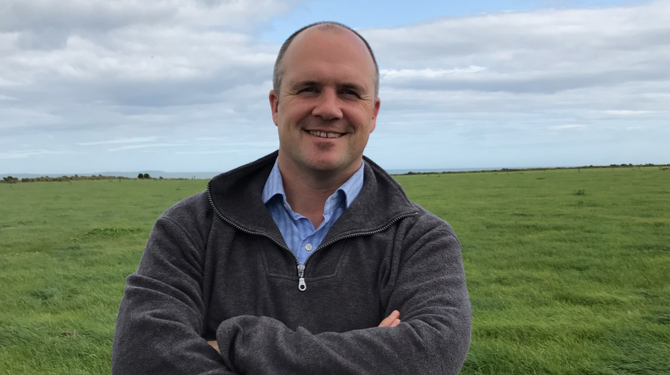
Furlong grew up in County Wexford, Ireland, in what he has called a country family rather than a farming household. His uncle had a farm. Young Kieran picked berries and harvested potatoes, early proof that nature produces food only after somebody bends down. He studied chemical engineering at University College Dublin, then left for Argentina immediately after graduating. His early chemical-industry years also carried him through Germany, Britain and the United States.
At Johnson Matthey, he worked with catalysts and agribusiness customers. An MBA at Stanford followed, where he was named an Arjay Miller Scholar. Then his career began hopping between variations of the same question: can science be persuaded to behave like a business without losing the reason it was interesting?
At Solazyme, an algae-biotechnology startup later known as TerraVia, he helped assemble an early manufacturing supply chain and launch a skincare serum. At Virent in Wisconsin, he worked on renewable chemicals and a partnership with Coca-Cola to develop a fully bio-based PET bottle. At Harvest Power, he worked in waste-to-energy. Finistere Ventures recruited him into agricultural technology investing, and he later opened its European office in Dublin and led the Ireland Agtech Fund.
The list looks unruly until you notice that every stop involved atoms, factories, farms or capital. Furlong is a translator of physical technology. He can speak to the researcher guarding an elegant invention, the investor guarding a fund and the customer guarding a production line. His patents in biological crop protection and quantum computing suggest the same refusal to stay inside a tidy industry box.
“In my business, you have to be open to abandoning one way of doing things for a better way of doing it.”Kieran Furlong, on agricultural technology
How to pronounce a star
The company's name carries a piece of home. Realta comes from the Irish word for star. Furlong has joked that Irish speakers may debate the pronunciation, but his preferred version offers a mnemonic: they are making fusion real. It is a neat founder's line because it does three jobs at once. It explains the name, makes the company memorable and moves the discussion from celestial romance to terrestrial engineering.
Fusion combines light atomic nuclei and releases energy. Doing it on Earth means creating plasma at extreme temperatures and holding charged particles away from the machine's walls with magnetic fields. Realta's intellectual foundation is WHAM, the Wisconsin HTS Axisymmetric Mirror experiment at UW-Madison. High-temperature superconducting magnets strengthened an old fusion concept that had once fallen from favor. The result gave a group of university physicists reason to revisit the mirror and gave Furlong a technology to commercialize.
His assignment is not to become the best plasma physicist in the room. It is to keep the room pointed toward a product. In a 2025 conversation about leading a deep-tech spinout, he described the balance as preserving scientific creativity while keeping one eye on the destination: commercial fusion energy. Curiosity opens doors. A company eventually has to walk through one.
Heat before headlines
Realta's commercial argument is unusually grounded for a technology associated with suns. A fusion reaction produces heat. Converting that heat to electricity through a steam cycle loses some energy. Certain factories already buy heat directly, operate continuously and struggle to replace fossil fuel. Put a modular fusion system next door, the thesis goes, and Realta can avoid part of the conversion loss while serving customers accustomed to large capital projects.
A second market appeared in plain sight as artificial intelligence pushed data-center demand upward. Furlong argues that large computing campuses concentrate enormous energy use at one location. If fusion becomes reliable and cost-effective, a plant beside the campus could supply firm, zero-carbon power without beginning its life in an interconnection queue.
That last detail is personal experience converted into strategy. Years earlier, while working on a Bay Area project that would turn food waste into energy, Furlong encountered a grid connection that threatened to occupy roughly a decade of the project schedule. Electric grids are complex for good reasons, he acknowledges. They are also capable of turning a promising machine into an administrative heirloom.
This is the practical streak beneath his broader aspiration. Furlong speaks about abundant energy as a way to support a planet of 10 billion people. He has also insisted that fusion must be commercially viable by the mid-2030s to matter for climate and rising energy demand. The ambition is moral; the calendar is operational.
Wisconsin's jigsaw
In July 2026, the company's geographic bet became physical. Realta chose OM Station, Madison's former Oscar Mayer complex, for a planned corporate headquarters and research facility. A site once organized around packaged meat is being prepared for superconducting magnets, plasma experiments and a prototype fusion machine. Industrial history has a sly sense of humor.
The planned development is large. Public documents describe 205,000 square feet, tens of millions of dollars in building improvements and equipment costs that could exceed $500 million over a full build-out. Realta has said it expects to grow from roughly 50 employees toward more than 600. Wisconsin and Madison announced incentive mechanisms worth up to $55 million, much of it contingent on investment and job creation.
Furlong says Wisconsin has the jigsaw pieces: fusion research at UW-Madison, manufacturing knowledge across the state, an available industrial site and political support that crosses party lines. He frames fusion as a manufacturing industry, closer to automobiles or aircraft than oil extraction. That shifts the regional question. The prize is not merely hosting a laboratory. It is making magnets, vacuum vessels, power electronics and all the anonymous components that turn physics into infrastructure.
“Wisconsin has all the jigsaw pieces.”Kieran Furlong, after Realta chose Madison for its expansion
The pleasure of process
There is a pleasingly earthly detail in Furlong's biography. He earned a winemaking certificate from the University of California, Davis. He has explained that wine joins process engineering with microbiology and gives the maker a direct view of where the raw material came from. His taste runs toward spicy, warm-weather reds: Malbec on an ordinary evening, Chateauneuf-du-Pape when the wallet has temporarily misplaced its caution.
Wine also offers a tidy picture of his temperament. The raw ingredients matter, but so do vessels, temperatures, time and thousands of choices between field and glass. Furlong's career has lived in those middle spaces. He is interested in discovery, yet most animated by what happens after discovery has to meet procurement, manufacturing and a stubborn customer.
Fusion will test that disposition more severely than any bottle or farm robot. Realta must still prove its physics at larger scales, build a prototype, secure capital, satisfy regulators, develop a supply chain and convince buyers to plan around a technology not yet available. The company raised a $36 million Series A in 2025 and added a $9.5 million growth-capital facility in early 2026. Those numbers are meaningful and modest beside the machinery ahead.
Furlong's answer is neither a promise of instant energy nor a request to admire the experiment forever. It is a sequence: stronger magnets, better confinement, a prototype, industrial partnerships and a commercial machine. The steps are difficult. At least they point in one direction.
A boy from Wexford once picked potatoes on his uncle's farm. Decades later, he is planning a fusion workshop in a Wisconsin factory that used to make hot dogs. Between those two fields sits a career's worth of chemistry, capital and patient translation. If Realta succeeds, the star will be the glamorous part. The real achievement will be making it clock in for a shift.