The battery had already been to space. The business still had to learn how to land. EnerVenue’s underlying nickel-hydrogen chemistry had served spacecraft, including Hubble, long before the company existed. On Earth, however, the problem was less romantic: how do you make a durable battery cheaply enough, and consistently enough, for an electricity customer to buy thousands of them?
- The bet: water-based nickel-hydrogen storage designed for 30,000 cycles.
- The turn: a shelved Kentucky factory plan, followed by high-volume production in Changzhou.
- The test: convert longevity and fire-safety claims into delivered projects and useful lifetime economics.
In September 2026, EnerVenue opened its high-volume Aqueous Metal Cell production line in China. That is the event to watch. The spacecraft connection is a splendid conversation starter. A working factory is what turns the conversation into equipment.
The factory came down to Earth
EnerVenue had announced a Kentucky manufacturing project with a $264 million first phase and 450 planned jobs. Reuters reported in September that the company abandoned that plan a year after its 2023 announcement. Chief executive Henning Rath described the attempted project as a “valuable learning experience.” The technology, he said, had not been ready. Both the battery and the factory subsequently changed.
The new Changzhou facility was estimated by Rath at $20 million to $50 million. Those figures are not a clean country-versus-country price comparison: the product and production design had changed. They do explain why manufacturing strategy became central. Rath’s case for China included access to an established equipment and engineering ecosystem, rather than simply an inexpensive address.
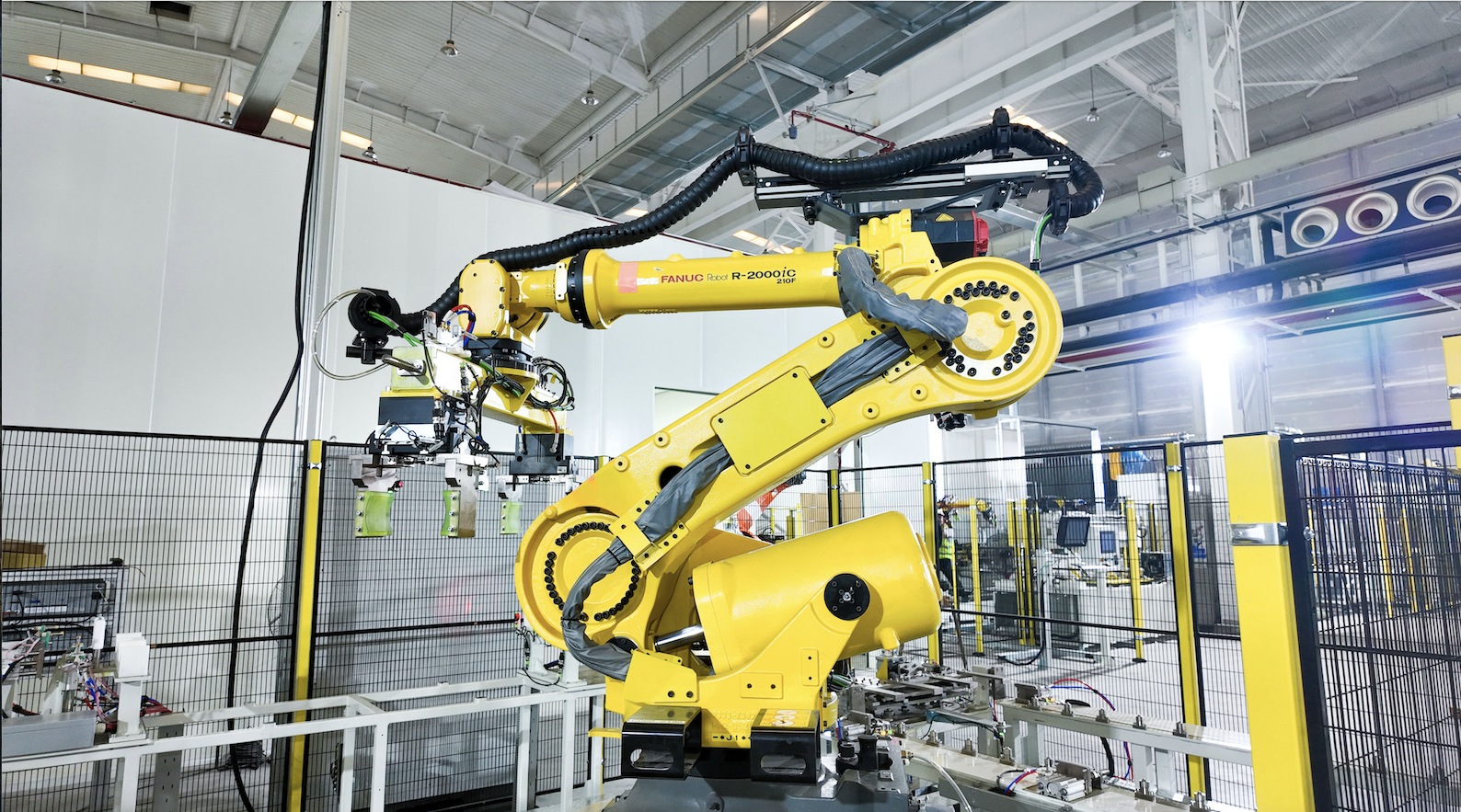
The capital behind the shift is substantial. A $12 million seed launch in 2020 was followed by a $100 million Series A in 2021. In March 2026, EnerVenue announced a $300 million Series B extension led by Full Vision Capital, alongside Rath’s appointment. That round was intended to fund manufacturing scale-up, supply-chain development and commercial expansion. Investors were financing the transition from promising cell to industrial supplier.
A spacecraft’s chemistry, a factory’s patience
EnerVenue grew out of EEnotech, a materials-focused startup foundry. Stanford materials scientist Yi Cui supplied the scientific foundation; the company identifies him as co-founder and chairman. Alan Chan, managing partner of Full Vision Capital, is also identified as a co-founder. The original proposition was to adapt an expensive aerospace battery chemistry with lower-cost materials for stationary storage.
The distinction matters. EnerVenue did not invent the batteries that powered Hubble. It is trying to commercialize a terrestrial version of a chemistry with an unusually demanding résumé. In orbit, replacing a battery is inconvenient in a way that makes a warehouse service visit seem positively festive.

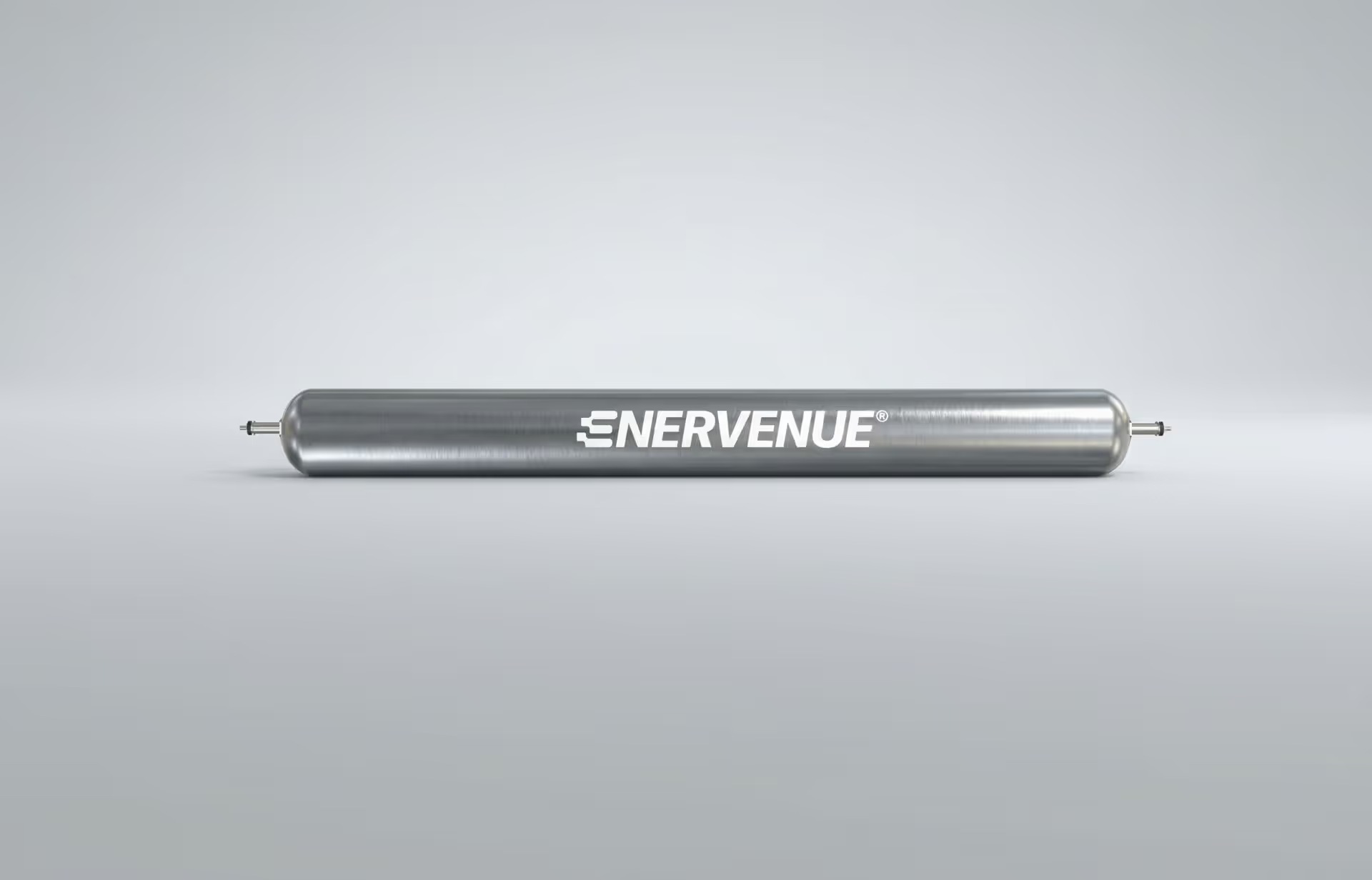
Inside today’s Aqueous Metal Cell are a nickel hydroxide cathode, a nickel-alloy anode and an alkaline electrolyte. Charging produces hydrogen, stored inside the sealed vessel; discharge reverses the reaction. This is a battery containing hydrogen, rather than a power plant waiting for a delivery of hydrogen fuel.
The surrounding vessel is part of the engineering. EnerVenue’s fourth-generation design houses the cell train in a plastic liner inside a steel tube, reinforced with glass fiber. Its explanation of the design links that reinforcement to strength, material efficiency and manufacturability. Even a space-derived battery has to answer a rather terrestrial question: how much steel are we paying for?
The bus charger is the better exhibit
Consider the Towngas pilot in Jintan, Changzhou. Its job is specific: combine onsite renewable generation with electric-bus charging. The customized outdoor Energy Rack contains 50 cells, giving 150 kWh of storage, with an inverter and battery management system. EnerVenue describes continuous charging and discharging over two-to-four-hour periods to match demand. Later releases date its operation to November 2025; the company announced the pilot publicly in May 2026.
This is a useful demonstration because it gives the battery work to do. A long cycle life becomes relevant when a site cycles repeatedly. A pilot also leaves room for measurement: efficiency, availability, temperature, capacity and the service interventions required along the way.
In September 2026, EnerVenue announced an 11 MWh order for a northern Chinese oilfield, using 26 Energy Prism containers to shift onsite solar generation. The first three units are scheduled to ship in December, with the rest in March 2027. EnerVenue says fire safety helped determine the choice. An operating oilfield is an exacting audience for any apparatus that stores electricity.
Earlier announcements included a 2.4 GWh agreement with Pine Gate Renewables and a 525 MWh agreement with Brazil’s VedantaESS. Those are supply commitments, not a census of commissioned batteries. The useful distinction is between interest, orders, deliveries and operation. Each is a different stage of the same industrial courtship.
Four packages, one argument
EnerVenue sells business equipment to utilities, industrial operators and project integrators. Its current family includes Energy Core for distributed sites, Energy Cube for in-building applications, Energy Rack for configurable installations and Energy Prism for containerized deployment. The chemistry stays the same while the enclosure and integration change.
These are building blocks within a power system. The Rack ships with cells, management electronics and connections; a Prism provides a containerized DC block. Integrators connect power-conversion equipment to complete an AC installation. Compatibility with the customer’s controls and electrical design remains part of the purchase.
The company’s safety case rests on its water-based electrolyte and chemistry. In 2023 it announced UL 1973 certification for its Energy Storage Vessel and completion of UL 9540A fire-propagation testing. Those are distinct achievements: one is certification, the other a test method. The claim is consequential, but the final site still has electrical, structural and local-code requirements.
Cheap gets older
EnerVenue’s proposed advantage is easiest to understand through a ledger. Buying a battery buys installed capacity today. Owning it buys years of delivered electricity, along with efficiency losses, auxiliary consumption, maintenance and any extra cells needed to preserve capacity. The cheapest opening bid need not deliver the cheapest lifetime energy.
The AMC datasheet advertises 30,000 cycles, 100% depth of discharge and peak round-trip efficiency above 90%. Those are specifications and design targets, rather than thirty years of EnerVenue operating history. Nor does thirty years mean every component around the cell needs no attention. Inverters, controls and site infrastructure have their own lives.
A buyer can copy the company’s evaluation method without accepting its sales conclusion. Model the actual dispatch schedule. Count charging energy and auxiliary loads. Price replacement capacity and service visits. Then rerun the calculation with fewer cycles, a shorter ownership period and less favorable financing. If the advantage survives, the longevity claim is doing economic work.
That test also reveals the limits. Rarely used backup may never exploit a large cycle allowance. A tightly constrained site may value footprint or another integration path more. EnerVenue’s own current use-case discussion says sub-second smoothing behind a GPU cluster is not today’s AMC job; a higher-rate cell is on its roadmap. Duration, power and longevity are three different specifications. Mixing them up produces an elegant spreadsheet and an awkward installation.
The morning after the ribbon
The careers page emphasizes precision, ownership and safety. More revealingly, EnerVenue has been publishing factory videos while equipment is installed and commissioned. Its own account acknowledges that opening a line and demonstrating industrial scale are different things. Showing the process gives customers something more useful than another rendering of a desert full of containers.
“Anyone can make one good vessel.”
TJ HUA · HEAD OF PRODUCTION
At the new line, the company says cells go through 41 checks across 11 stations. The factory has to reproduce the result, again and again.
That is EnerVenue’s next chapter. Buyers should watch repeatability, ramp-up and deliveries, then the behavior of those batteries in service. The practical lesson is to develop the manufacturing process alongside the product, and sell against the customer’s lifetime operating job. The spacecraft story earns a hearing. The ten-thousandth ordinary, conforming cell earns a place on the grid.
Follow the cell
See the hardware, watch the assembly and hear the engineers explain the chemistry.