long-duration-energy-storage
(11)
EnerVenue and the battery that outlived its business plan
A battery chemistry that served spacecraft is getting a second career on the grid. EnerVenue’s harder invention has been the factory that can make it.

The Battery Was Hiding in the Well
Sage Geosystems set out to make electricity from hot rock. A Texas test revealed a second business: use the same underground fractures as a place to store pressure until the grid needs it.

Vimano
Vimano is a Bengaluru-based deep-tech startup building PFAS-free, ion-selective nanotech membranes for the electrochemical devices that power the energy transition - redox flow batteries, AEM electrolyzers, and hydrogen fuel cells. Its proprietary membrane platform tackles the ion-crossover problem that limits efficiency in long-duration energy storage and green hydrogen, and it also adapts the same polymer-film science to thermal management films for satellites. The company's stated goal is to sit inside 1 out of every 2 large-scale energy storage devices, electrolyzers and fuel cells on the planet.

XL Batteries
XL Batteries is a Marlborough, Massachusetts startup building an Organic Flow Battery for grid-scale, long-duration energy storage. Spun out of Columbia University chemistry research, the company uses proprietary organic molecules dissolved in pH-neutral water instead of vanadium in acid - producing a non-flammable, non-toxic, non-corrosive battery assembled from commodity pumps, tanks and tubes. The pitch: safe, scalable storage that can run for 10, 20, even 50 hours by simply enlarging the tanks, at costs targeted below lithium-ion for long durations.
Edward Shaffer
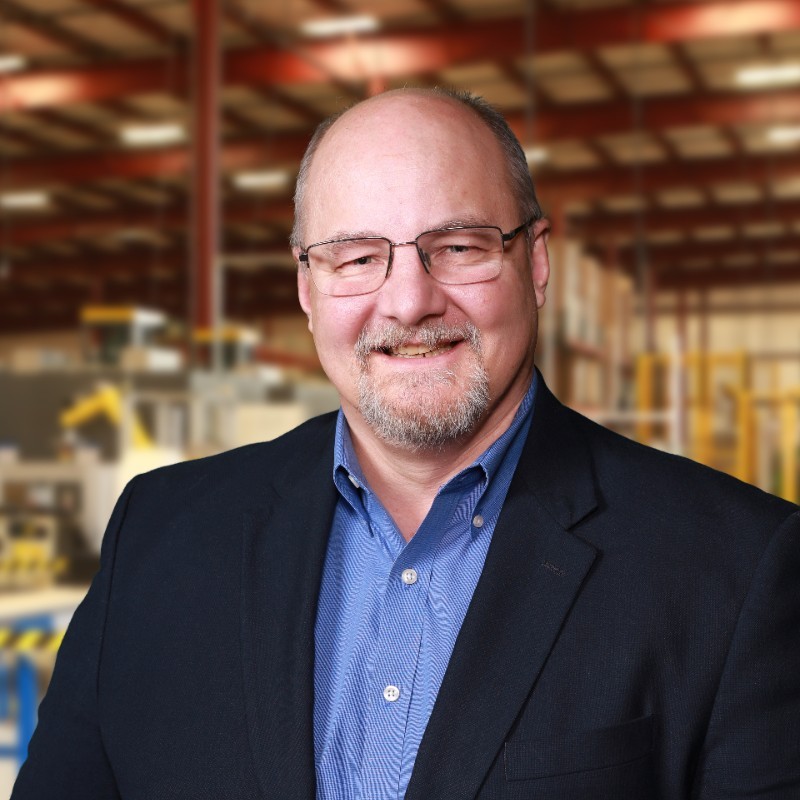
Dr. Edward O. Shaffer II is the CEO and founder of Advanced Battery Concepts, a Clare, Michigan company he started in 2009 to reinvent the 160-year-old lead-acid battery instead of chasing lithium. His patented GreenSeal bipolar architecture strips cost, lead and weight out of large-format storage while keeping the batteries fully recyclable, and it has been licensed to battery makers around the world including Crown, Clarios, EnerSys, Exide, Trojan and Monbat. An MIT-trained materials scientist and former Dow Chemical R&D manager, Shaffer argues that energy storage only scales when it is economically, socially and environmentally responsible - all three at once.

Thomas Sisto
Thomas Sisto is the CEO and co-founder of XL Batteries, a Marlborough, Massachusetts startup commercializing water-based organic flow batteries for long-duration, grid-scale energy storage. A synthetic organic chemist by training, Sisto discovered the company's core molecule during a Columbia University postdoc - a compound he originally designed for solar cells that turned out to be extraordinarily stable in pH-neutral saltwater. He spun XL out of Columbia in 2019 and has since steered it from a lab curiosity to its first commercial pilot, betting that cheap, abundant organic chemicals can break China's grip on the battery supply chain.
Form Energy
Form Energy is an American energy-storage company building iron-air batteries that store electricity for 100 hours - multiple days - at roughly one-tenth the cost of lithium-ion. Founded in 2017 by a group of storage veterans, the company uses 'reversible rusting' of cheap, abundant iron to let renewable grids stay reliable through long stretches of low wind and sun. Its first high-volume factory, Form Factory 1, sits on the site of the former Weirton Steel mill in West Virginia, and its batteries are now being deployed with utilities including Great River Energy, Xcel Energy, Georgia Power and Dominion Energy.
Quino Energy
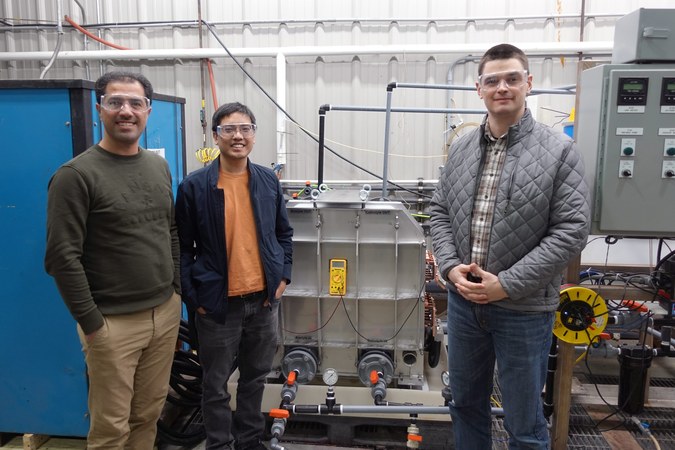
Quino Energy is a clean-tech startup commercializing aqueous organic flow batteries that store electricity in water-soluble quinone molecules instead of vanadium or lithium. Spun out of Harvard University in 2021, the company makes a low-cost, non-flammable organic electrolyte - derived from inexpensive coal-tar dyestuff chemicals through a zero-waste, continuous-flow process - that drops into existing vanadium flow battery hardware. The result targets long-duration grid and commercial energy storage at roughly a quarter the cost of vanadium, with a degradation rate about ten times slower than lithium iron phosphate.

Eugene Beh
Eugene Beh is the founder and CEO of Quino Energy, a clean-tech startup commercializing water-based redox flow batteries that store grid-scale renewable energy using quinones - organic molecules dissolved in water. A chemist trained at Harvard and Stanford, he spun the technology out of Harvard's Aziz and Gordon labs and built a single-step, zero-waste manufacturing process that turns coal-tar feedstock into non-flammable battery electrolyte. Before Quino, he was Xerox PARC's most prolific inventor two years running.

Mateo Jaramillo
Mateo Jaramillo is the co-founder and CEO of Form Energy, a Somerville, Massachusetts company building 100-hour iron-air batteries that store electricity by rusting and un-rusting iron. After more than seven years at Tesla, where he started and ran the stationary storage business behind the Powerwall and Powerpack, he co-founded Form in 2017 on a contrarian bet: skip lithium, find a chemistry cheap enough to store power for days instead of hours. The company has raised over $1.3 billion, revived an abandoned West Virginia steel mill as its first factory, and signed a roughly $1 billion deal with Google for the world's largest battery system.
Advanced Battery Concepts
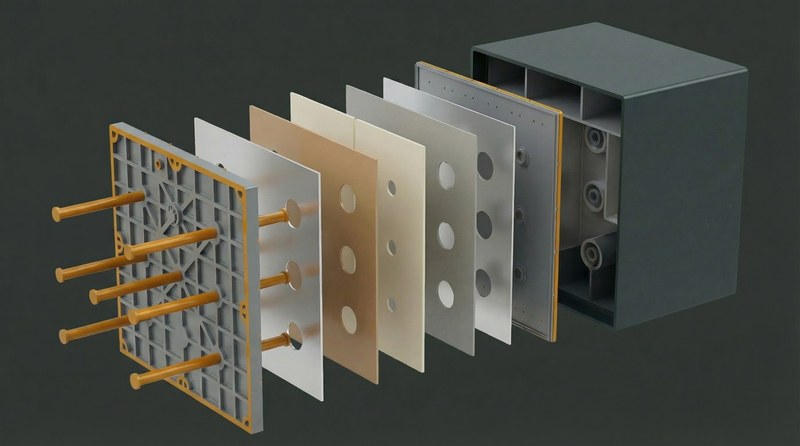
Advanced Battery Concepts is a Clare, Michigan battery maker that did something contrarian: instead of chasing lithium, it went back to lead-acid and reinvented it. Its patented GreenSeal bipolar architecture cuts lead content while boosting cycle life, and the company has licensed the design to global battery giants like Clarios, EnerSys, Exide, Crown and Trojan. With its EverGreenSeal line and BatteryBarn utility systems, ABC builds non-flammable, fully recyclable, domestically manufactured energy storage for critical infrastructure and the grid.