In South Texas, Sage Geosystems learned that a deep fracture could do two jobs. The Houston company had built a way to move water through hot rock and bring energy back up a well. During testing in Starr County in late 2021, its team saw another possibility: pump water into the fracture when power is plentiful, let underground pressure hold the energy, and release it when electricity is scarce. A geothermal project had accidentally acquired the makings of a battery.
- Sage engineers reservoirs in hot, dry rock for geothermal power and underground energy storage.
- Its 3 MW South Texas facility sold first electricity in the second quarter of 2026.
- More than 120 operating days showed repeatable behavior and water losses below 10% across cycles, according to Sage.
- The next test is Project Vector at Ormat's Blue Mountain plant in Nevada.
The word battery makes the idea sound small. It is neither a lithium cell nor a box beside a substation. Sage's EarthStore system uses a well and a fracture in rock thousands of feet below the surface. Pumps push water down; the rock resists and the water stays under pressure. When the grid needs power, the pressurized water returns and can drive a turbine. The same subsurface engineering also underpins Sage's larger ambition: geothermal electricity from rock that contains heat but lacks a natural reservoir of hot water.
The old industry had the right tools
Lev Ring and Lance Cook founded Sage in 2020 after careers spent figuring out difficult wells. Ring came from oilfield technology firm Weatherford; Cook was a chief scientist of wells at Shell. The company says its leaders have prior experience drilling more than 5,000 wells around the world. That number is a résumé, not a geothermal output figure, but it explains the wager. If drilling, fracture control and reservoir management can work in oil and gas, perhaps they can make geothermal less dependent on the geological luck of a natural hot spring.
Cindy Taff, now Sage's chief executive and identified by the company as a co-founder, arrived after its launch. At Shell, she had wanted to explore geothermal; those projects were passed over because the expected payback was too slow. Her daughter Brianna also pressed her to move into cleaner energy. It is a charming family argument with an unusually industrial answer: take the methods of an oilfield and point them at heat instead of hydrocarbons.
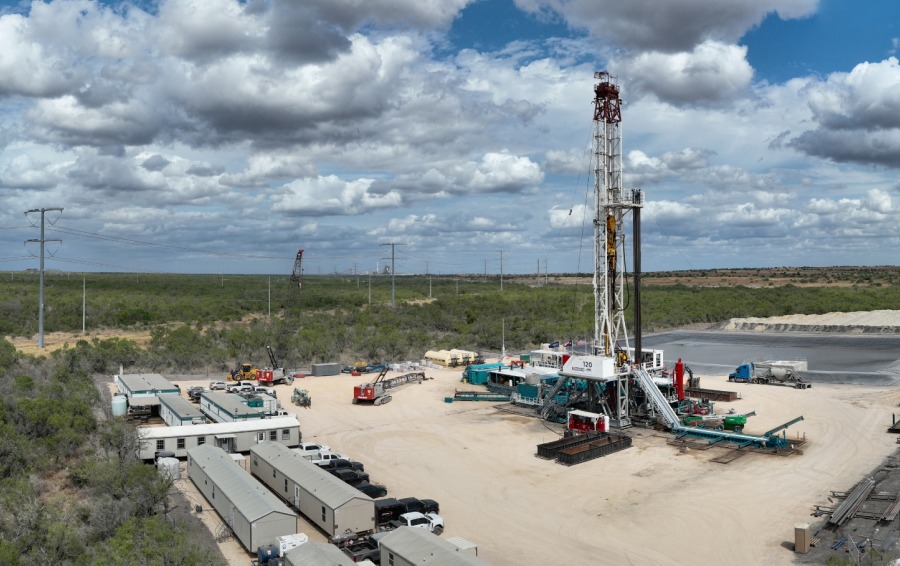
Conventional geothermal plants usually start where nature has already provided hot water or steam. Sage works in hot, dry rock. It creates and manages a reservoir, then circulates water through it. The two-well power design brings heated fluid to the surface, transfers its heat into power-generating equipment and sends cooled water back down. Sage says its pressure management can also recover energy that other approaches leave behind. That is a technical distinction worth watching, but commercial power output and long-run economics will be settled by operating plants, not diagrams.
A rock reservoir, in three moves
Power generation uses a two-well loop. EarthStore's storage configuration uses a single well.
The first customer bought a question
San Miguel Electric Cooperative agreed to host Sage's 3 MW facility near Christine, Texas. Sage announced a $17 million Series A first close in February 2024 and said the proceeds would fully fund that plant. That is a financing figure, not a published final construction bill. The site was conceived as energy storage; it became a place to examine the reservoir behavior on which Sage's power-generation plans depend.
The schedule tells its own story. Sage initially targeted a late-2024 commissioning. It said the site was commissioned and cycling in 2025, then reported its first electricity sale in the second quarter of 2026. In August 2026, Sage placed the facility in service and described more than 120 days of operating results. The project is real, but the gap between target and milestone is a useful reminder that a deep well rarely reads a press release.
Why dwell on water loss? Because a reservoir that drinks too much water makes every watt harder to earn. Sage says the Texas system lost less than 10% across multiple cycles and behaved as its GeoTwin model predicted. The company wants losses below 5% in later designs. A model that correctly predicts the field could help choose sites, size wells and convince project backers that the next installation will behave like the last one. So far, the evidence comes from Sage's own operating report.
“Commercial geothermal isn't just about creating a reservoir; it's about creating one whose performance can be engineered, predicted, and consistent.”Lev Ring, Sage president and CTO, August 2026
Earlier pilot numbers belong in their proper drawer. Sage reported that a 2023 EarthStore pilot produced 200 kilowatts for more than 18 hours and one megawatt for 30 minutes. Those runs demonstrated different discharge durations; they were not proof that the 3 MW Texas facility can deliver either level indefinitely. The most valuable result may be the operating record: pressure, flow and water accounting over time.
A shortcut through Nevada
The next address is Ormat Technologies' Blue Mountain geothermal power plant near Winnemucca, Nevada. Sage selected the site in September 2026 for Project Vector, a two-well system that would supply geothermal heat to the existing plant for conversion to electricity. The choice matters. Ormat already has power equipment and grid infrastructure there, so Sage can concentrate more of its capital and attention on the part it claims to do differently: engineering the reservoir.
Sage expects to start drilling in the fourth quarter of 2026, produce first electricity in 2027 and reach full-scale production in 2028, subject to permits and regulatory steps. Those dates are targets. Project Vector will test whether Texas's promising pressure and water behavior can be reproduced in a different geological setting. It will also test a business arrangement: Ormat has rights under its strategic agreement to develop, build, own and operate geothermal and storage projects using Sage's methods after a successful pilot.

Who needs an obedient well?
Data centers, for one. Meta announced an agreement in 2024 for up to 150 MW of geothermal baseload power from Sage, with an initial phase aimed at 2027. That figure describes a planned supply agreement, not generation already flowing to Meta. Utilities and industrial customers are another audience: they need firm power when sun and wind are unavailable, and storage that can move electricity from a cheap hour to an expensive one. Sage has also assessed geothermal possibilities for military installations including Fort Bliss and Naval Air Station Corpus Christi, where uninterrupted power has a different kind of value.
There are rivals to each part of this story. Other enhanced geothermal developers are trying to get steady electricity from hot rock. Batteries and pumped hydro compete with EarthStore for storage. Conventional geothermal can be simpler where nature has already done the reservoir engineering. Sage's pitch is the combination of engineered hot-rock generation, recoverable pressure and a model that can forecast a reservoir's behavior. Whether that combination wins depends on geology, drilling costs, recoverable water, connection capacity and a buyer willing to pay for firm power.
The company has attracted capital in stages: $17 million at a Series A first close in 2024, then more than $97 million in a Series B co-led by Ormat and Carbon Direct Capital in January 2026. It has also brought Chiyoda into a feasibility study of the high-pressure equipment needed at the surface. Money and engineering partners buy time to answer the next question. They do not answer it by themselves.
There is something pleasingly literal about Sage's position. The company wants to make a familiar industrial skill useful in a different energy system. It began by asking what could be brought out of a well. The Texas result asked what could be put back in. At Blue Mountain, the two questions finally have to work together.