The awkward thing about a well-stocked refrigerator is that it can still contain no dinner. There are ingredients, certainly. Perhaps there is even ambition. What is missing is the small chain of decisions that turns one into the other. Hungryroot has built its grocery business around that gap. It delivers food, but its more interesting proposition is that somebody has already thought about Tuesday.
- A weekly grocery cart assembled around your tastes, with recipes attached.
- Every recommendation is editable. Breakfast and snacks can travel with dinner.
- $700 million in 2025 net revenue, according to the company.
- The turning point: learning which work to stop doing.
01 / The kitchen became the problem
Hungryroot began in April 2015 with six seven-minute meals, produced in a small Queens kitchen. Its founders were Ben McKean, chef Franklin Becker, and Greg Struck. Vegetable-centered convenience was the premise. Almond Chickpea Cookie Dough supplied a little mischief: dessert could be made from something ordinarily consigned to hummus.
Then the kitchen filled up. By the end of 2016, production involved more than 150 ingredients, 20 specialized pieces of equipment, and over 70 staff working multiple shifts. Early in 2017, capacity constraints prevented new orders. More demand had become a problem.
McKean’s response was drastic. Hungryroot closed the facility, paused shipments for six months, and selected twelve specialist manufacturers. The kitchen jobs disappeared. Sales stopped during the transition. This was the price of changing the operation, even before any investment in its replacement. The company resumed shipping in September 2017; McKean later reported repeat ordering up more than 40%.
02 / Sixty products still weren’t a grocery store
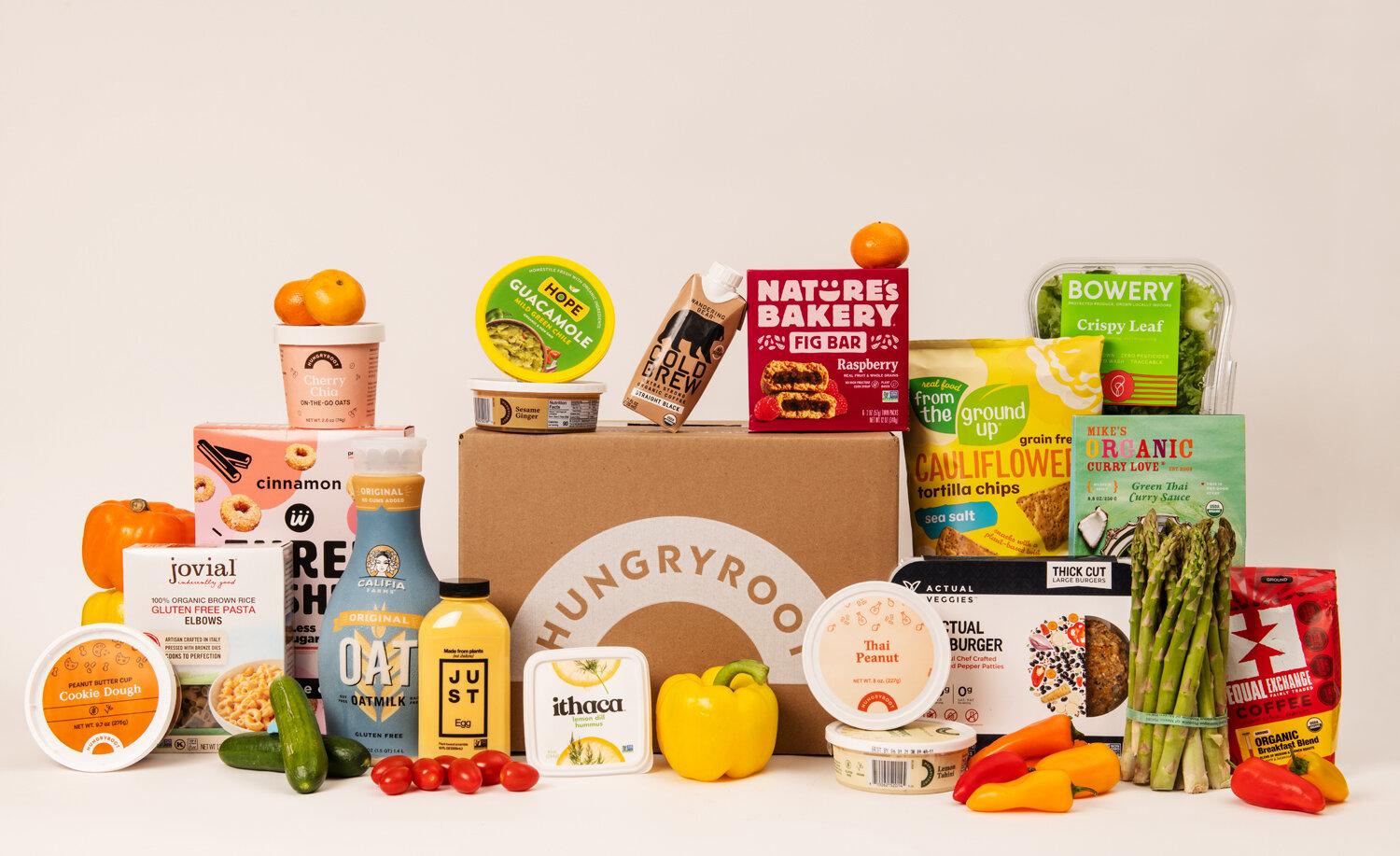
Outsourcing production solved one constraint. It did not answer what customers wanted to buy. By 2019, the range had grown to about 60 products. Still, McKean concluded, shoppers wanted a grocery experience. Hungryroot began carrying other brands and treating the weekly basket as the product.
The shift sounds modest until you consider the job being sold. A food brand asks whether you like its sauce. A grocer has to ask what that sauce goes with, who will eat it, and whether there is enough breakfast left. Recipes became a way to explain the basket. They gave unfamiliar ingredients somewhere to go.
“No two deliveries are the same.”Ben McKean · 2021 financing announcement
Today, customers describe their household, tastes, dietary preferences, and budget. Hungryroot suggests groceries and meals; they can change the recommendations before shipment. Feedback informs later selections. The useful feature is the starting point: the customer gets something concrete to accept or correct, rather than another empty cart.
03 / A fuller basket pays the freight
This puts Hungryroot between familiar shopping habits. A conventional meal kit starts with dishes and sends their components. A supermarket offers a broad assortment and lets you build the plan. Hungryroot combines groceries with suggested uses, alongside prepared meals and snacks. HelloFresh, Home Chef, Factor, and Instacart therefore compete for different pieces of the same household spending.
The financial logic lives in the shipping box. In 2022, McKean explained that freight for $70 of food was not much cheaper than freight for $120. A larger order spreads relatively fixed delivery costs across more revenue. Selling somebody breakfast as well as dinner matters to the economics.
Investors supplied expansion capital: a $22 million growth investment announced in 2018, followed by a $40 million Series C led by L Catterton in 2021. That money was earmarked for assortment, hiring, automation, personalization, and marketing. Profitability was uneven: McKean said fiscal 2020 was profitable, but investment pushed 2021 into the red.
Advertised starting prices per serving. Your basket determines the bill. Shipping: $6.99 below $70; free at $70 or more.
Those starting prices are useful orientation, not a weekly quote. The plan depends on household size and selections. A shopper can skip, pause, or cancel. The practical comparison is the complete basket against the groceries and takeout it would replace. Buying food you will actually use matters more than an attractive headline price.
04 / The recommendation has to survive dinner
Hungryroot calls its proprietary AI system SmartCart. In its February 2026 results announcement, the company said customers buy more than 60% of its recommendations. That is an unusually tangible test of a recommendation engine: the suggestion must become something a person is willing to pay for and eat.
The same announcement reported $700 million in 2025 net revenue, up 55%, and another profitable year. It said the service reached nearly 1.5 million people in more than 700,000 households during that year. Those households are an annual reach figure, not a disclosed count of current subscribers.
Nearly half of revenue came from Hungryroot’s own products. The business described five fulfillment centers, nearly 1,000 grocery items, and more than 50,000 recipes. Behind the personalized cart sit ordinary, demanding tasks: forecasting stock, keeping food cold, and getting a box to the correct doorstep.
The organization reflects that mixture. Hungryroot describes its corporate team as remote-first, spread across more than 28 states, with free groceries and deliberate in-person gatherings. Its careers language emphasizes ownership and transparency. Those are the employer’s claims about working there. The operational challenge is concrete: a distributed team building software must stay connected to the people who receive, pack, and ship perishable food.

05 / Give dinner a first draft
The assortment now includes prepared salads developed with Sakara. Its Rainbow Harvest Salad arrives ready to eat, with rice, vegetables, seeds, and sumac-tahini dressing. That is a revealing extension: sometimes the most useful recipe is no cooking at all.
For a new customer, a sensible trial would cover the meals that usually cause trouble. Pick a realistic week, review the proposed basket, and check whether the recipes match the time available. Afterward, compare what was eaten with what was ordered. A service built around learning preferences needs useful corrections. Keeping an unwanted recommendation out of the next box is part of making the convenience work.
The fit has limits. A bargain hunter may prefer a local store. Someone who enjoys choosing every ingredient may gain little from a suggested cart. Delivery covers most ZIP codes in the contiguous United States and Washington, D.C., leaving other households outside the service. Personalization also depends on preferences staying accurate.
The copyable idea is straightforward: ask enough questions to offer a useful first draft, then make correction easy. Hungryroot’s history adds a harder condition. You need the supply chain to deliver what the draft promises. A thoughtful suggestion earns very little credit when Tuesday’s dinner fails to arrive.