At a hotel, a room can be empty and still be unavailable. The previous guest has left, but housekeeping has not cleared it. A reservation exists, but its payment needs attention. Each fact belongs to somebody. The front desk has to make them agree while a traveler stands there holding a suitcase. HotelKey builds software for that moment, and for the thousands of ordinary decisions that precede it.
- Cloud software connects reservations, room status, billing, and hotel teams.
- Customers include global chains and independent properties.
- The practical pitch: make adoption easier, then repeat it across a portfolio.
Its category is property management software, usually shortened to PMS. Its business is selling hotels a coordinated view of what is happening. The interesting question is how a young supplier persuades an established operator to change the system sitting underneath every arrival.
01 First, keep the lobby open.
HotelKey traces its beginnings to Fareed Ahmad and Aditya Thyagarajan talking around a dining table. In 2015, its first customer, Orange Show Inn in San Bernardino, went live. Ahmad became CEO; Thyagarajan became president. An inn gives software an immediate examination: can the people on shift actually use it?


The stakes became clearer with enterprise customers. Hilton co-developed its Property Engagement Platform, or PEP, with HotelKey for exclusive use at Hilton properties. In April 2023, Hilton said the platform had passed 1,000 hotels. Its announcement paired that milestone with an expected reduction in upfront PMS training from 40 hours to four, using TrainKey.
That was an expectation, rather than a published controlled study. Still, it identifies an expense buyers recognize. Every hour spent learning the screen is an hour somebody has to schedule, supervise, or cover. Interface design reaches the payroll.
A 90% reduction in the stated target. Expected upfront training, not a measured result.
02 The room has several lives.
HotelKey's PMS handles reservations, check-in, billing, housekeeping, maintenance, and reporting. Staff can follow guided workflows on iOS or the web. Housekeeping can update room status; maintenance can attach photographs to issues and assign work. A manager gets a shared operational picture instead of chasing separate accounts of the same room.
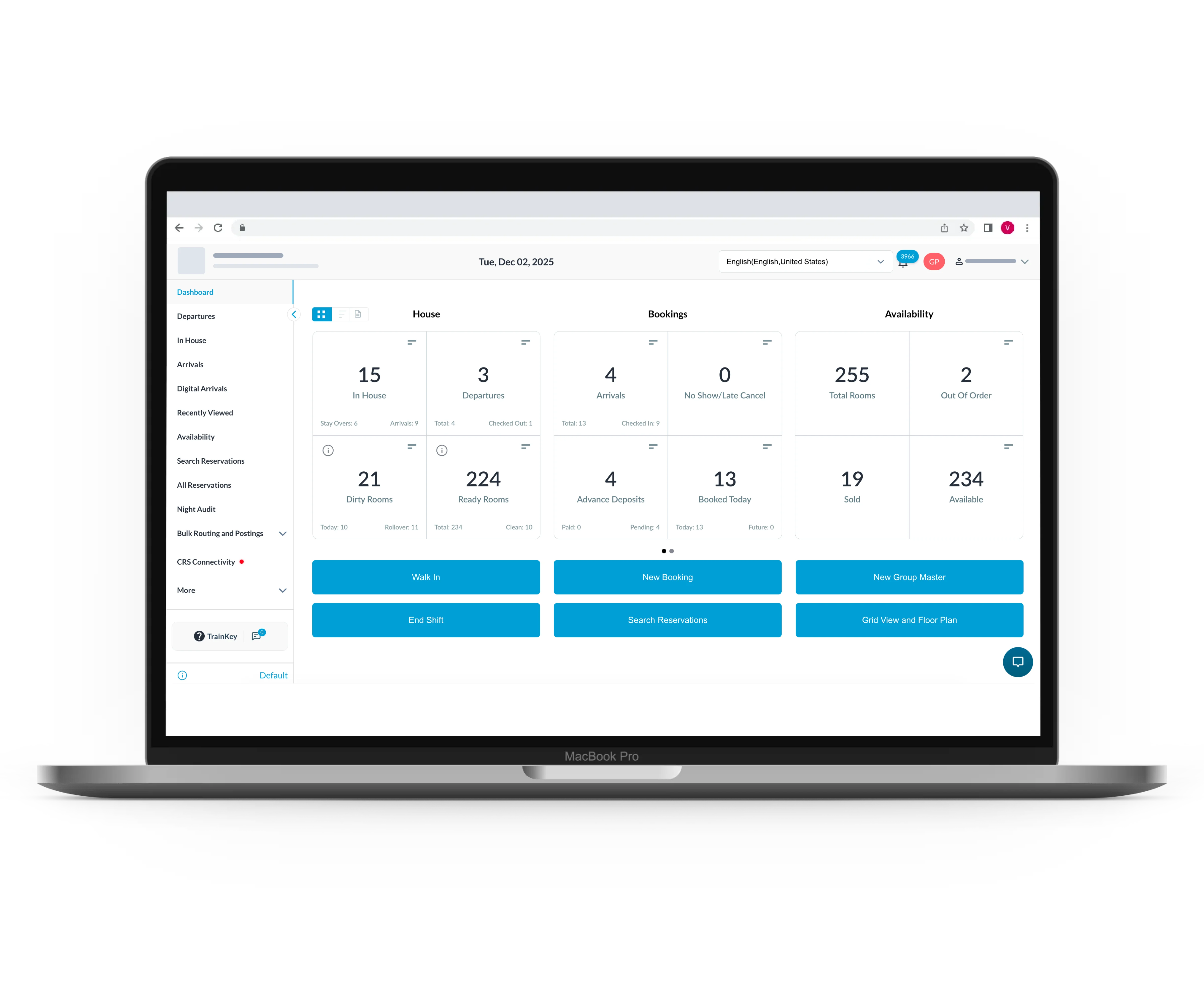
The surrounding products tackle adjacent chores. The Central Reservation System manages rates, inventory, and bookings across direct websites, online travel agencies, and distribution systems. RetailKey handles restaurant and retail sales, including pantry inventory and purchasing. PaymentKey follows transactions through refunds, payouts, and chargebacks. Its dispute workflow assembles supporting material such as folios and audit logs. EventKey covers event management. These are recognizable hotel jobs, gathered into a wider suite.
- 01 / BookRates + inventory
- 02 / ArriveRoom + registration
- 03 / SettleFolio + payment
Illustrative workflow across HotelKey's reservations, property, and payment tools.
The product is sold to businesses: chains, franchise operators, management groups, and independents. HotelKey's August 2026 announcement reported over 25,000 contracted hotels, over 15,000 live, and more than 800 independent properties. A signed contract and a working installation are different achievements. The gap contains much of the work.
03 The upgrade is a product, too.
IHG's selection process makes that work tangible. In its 2024 results, the group described assessing more than 30 vendors and systems through pilots in over 150 hotels. It approved HotelKey for select-service hotels in the Americas and EMEAA and reported 250 properties live across 17 countries by year-end. That is evidence of a demanding buying process and an initial deployment, rather than proof that every hotel should buy the same system.
HotelKey's July 2026 deployment article describes a repeatable process: validate migrated data, check integrations, plan the cutover, train staff, and provide concentrated support afterward. The company says this framework can onboard 100 or more hotels weekly, with most implementation activities delivered remotely. The figure is its own claim. The sequence is useful even without accepting the sales pitch.
The gap between a signed contract and a working installation contains much of the work.
The adoption problem
Competitors include Oracle OPERA Cloud, Mews, and Cloudbeds. They also offer cloud hotel software and connected operations. HotelKey's case rests on the fit between its workflows, brand relationships, integrations, and rollout method. “Cloud” alone does little to settle the buying decision.
04 The key still needs a door.
In a July 2026 interview, the founders described an integration box connecting existing hotel equipment to their cloud systems. They also emphasized supporting other suppliers' reservation and payment products. Hotels have equipment and commercial relationships already. Accommodating those investments can make a change less formidable.

The same interview linked renewed kiosk interest to labor costs. In August, HotelKey announced that NSR Hotel Group had selected its kiosks for more than 20 G6 properties. The release described potential savings exceeding 2,000 labor hours annually per property. Potential matters: staffing patterns and guest behavior determine what an individual hotel can actually recover.
A separate August partnership with KIOSK Information Systems combines GuestKey with self-service hardware and managed services. The promised journey includes registration, identity verification, payment, room assignment, and key issuance. Aditya Thyagarajan called HotelKey “a critical layer of operational support.” The physical machine has to complete the administrative chain before it can hand over the key.
05 Price the handover.
HotelKey quotes pricing by requirements. GuestKey describes setup, training, and ongoing maintenance or subscription costs. A buyer should therefore price a working changeover, including equipment compatibility and staff readiness. Faster installation requires clean data and functioning integrations; a self-service arrival still needs a plan for exceptions.
The lesson a software builder can copy is concrete: include adoption in the thing being sold. For a hotel owner, the corresponding test is a rehearsal of a busy shift. Can the team resolve a payment problem, find a ready room, and finish the arrival? The guest is still holding that suitcase.