Consider the bacon. In its 1997 annual report, Radiant Systems described a useful habit of the ordering kiosks it supplied to Sheetz: they consistently suggested extras, including bacon. A cashier might remember to ask. Software could remember every time. The same installation connected ordering, checkout, inventory and headquarters. One little prompt sat inside a much bigger machine for running a convenience store.
- Industry-specific POS, with the rest of the operation attached.
- Equipment brought customers in. Services kept the relationship going.
- NCR bought the company in 2011. Aloha’s lineage continues.
That is a good place to begin with Radiant, the Georgia hospitality and retail technology company founded in 1985. Its work happened where appetites met arithmetic: restaurant counters, fuel stations, cinema concessions and stadium queues. By 2011, its systems had more than 100,000 installations worldwide. That August, NCR completed its acquisition for approximately $1.2 billion. The interesting question is what, exactly, was hiding behind the touchscreen.
01The counter was only the beginning
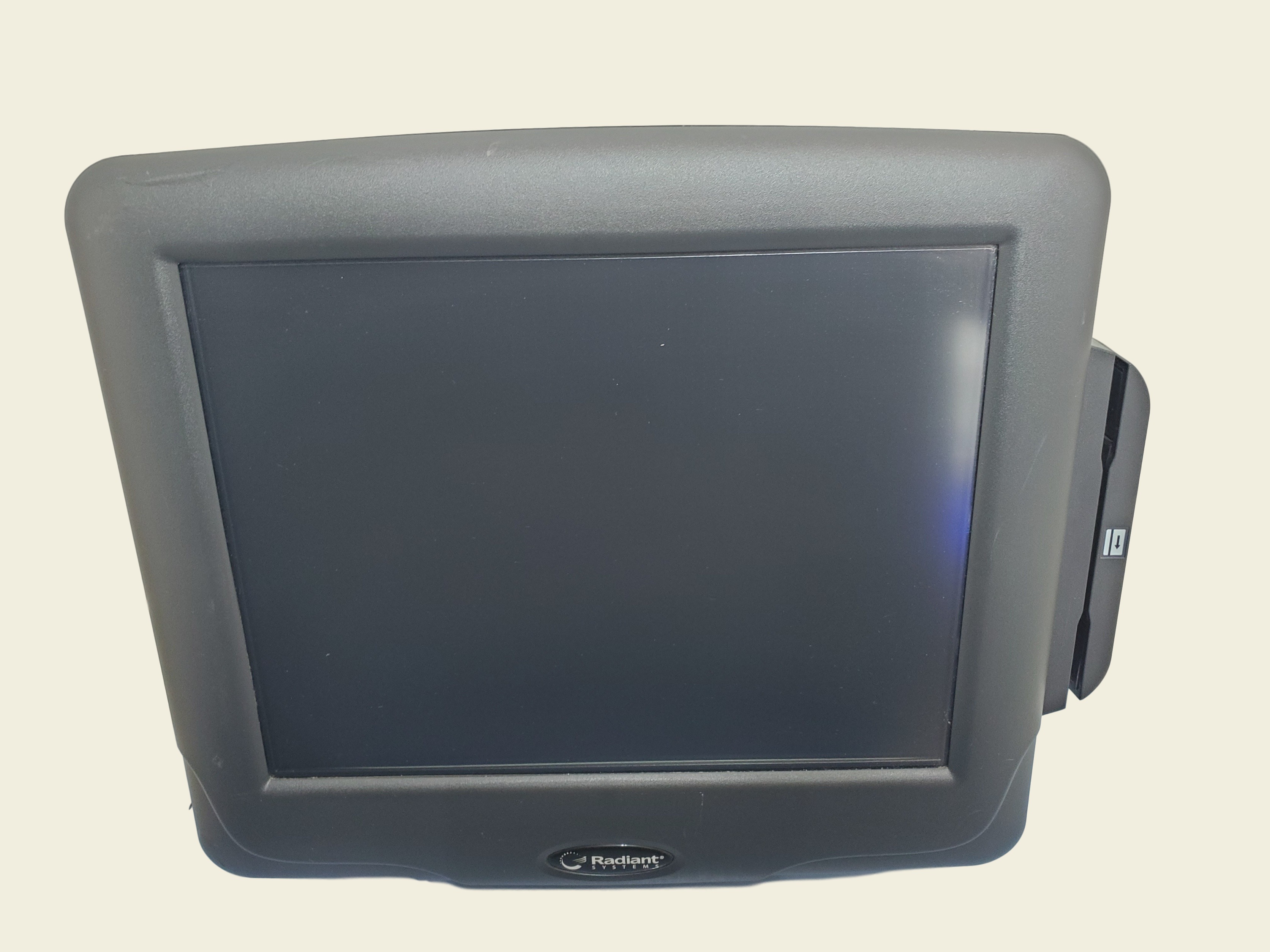
A point-of-sale system records a sale. Radiant built outward from that moment. Its hardware included touchscreen terminals, kiosks and handheld devices. Its software handled restaurant orders, retail inventory and the less photogenic business of managing labor, reporting results and spotting losses. Installation, training and ongoing support made the package usable after the sales demonstration ended.
Aloha, which joined Radiant through the January 2004 acquisition of Aloha Technologies, became a central restaurant offering. CounterPoint served specialty retailers. Orderman supplied wireless ordering and payment devices; Quest brought technology for sports and entertainment venues. Each addressed a different setting. A server moving between tables and a cashier facing a halftime crowd have different constraints, even if both eventually need to collect money.
The customer list made those differences visible. Radiant reported relationships with restaurant operators including Chick-fil-A, Chipotle and Texas Roadhouse, alongside Wawa, AMC Entertainment and Yankee Stadium. These were customers of products or services, rather than evidence that every location used an identical system. Radiant’s expertise lay in understanding the operational details well enough to connect them.
02The best feature might be invisible
An older CounterPoint case study published by Progress offers a revealing engineering problem. Stores needed shared information, but a slow or broken connection to headquarters could interrupt centralized systems. For the person waiting to pay, the database architecture was irrelevant. The delay was painfully relevant. Reliability became a feature the customer could experience without ever knowing how it worked.
Jeff Goldstein, who led the CounterPoint business, initially thought the synchronization technology would have to be built internally. “We didn’t think we had another option,” he said. Progress’s DataXtend RE changed that assessment. It supplied the needed replication capabilities and transferred changed information rather than repeatedly moving everything. Individual locations could continue operating when disconnected from the hub.
The practical lesson is specific: protect the transaction from the network, then synchronize the information. It applies wherever a local operation must continue while central systems are unavailable. It also illustrates a sensible boundary for product teams. Owning the customer’s problem does not require writing every technical component yourself.
03Sell the system. Keep earning the service.
Radiant’s commercial design mirrored its product design. It earned money from systems sales and software licenses, renewable maintenance, subscriptions, transaction services and professional services. A sale opened the relationship; support and additional applications could extend it. Large accounts were served directly, while resellers helped reach smaller operators.
The recession exposed the distinction. In 2009, systems revenue fell 23 percent to $120.5 million as customers slowed new openings and capital spending. Maintenance, subscription and transaction services revenue rose 21 percent to $132.3 million. Customers could postpone replacing equipment while continuing to pay for the systems already running their businesses. That does not make recurring revenue invulnerable. It shows why the mix matters.
The damage was real elsewhere. Radiant recorded a $20.9 million noncash impairment associated with Quest, the venue-technology acquisition, and reported a $9.4 million net loss for 2009. The hardware purchasing slowdown and acquisition write-down belong in the story alongside the subscription growth. Expansion carried a bill.
In 2010, total revenue recovered to $346.4 million. Systems contributed $162.1 million; maintenance, subscription and transaction services contributed $147.4 million; professional services supplied $36.9 million. The middle category represented about 43 percent of revenue. Calling the whole company SaaS would miss both the hardware and the people required to make it work.
04The buyer used to be a competitor
Radiant’s competition included Micros Systems, PAR Technology, POSitouch and NCR itself. Its proposition combined industry-specific workflows, integrated products and service relationships. Customers could buy modules in stages, including some services for use alongside competing POS systems. That offered a smaller first commitment than replacing an entire operation at once.
Integration had a second consequence. Radiant explicitly acknowledged that a deeply embedded system could create substantial switching costs. For an operator, that makes the buying decision larger than a terminal’s price. Evaluate installation, training, support, payment arrangements and the work of moving later. A business with simple checkout needs may find less value in an extensive suite; one with several locations and complicated workflows has more opportunities to use it.
NCR’s July 2011 offer valued Radiant’s equity at approximately $1.2 billion, or $28 a share. NCR planned roughly $1.1 billion in new funded debt to help finance the purchase. It wanted Radiant’s software, hosted services and distribution network, and proposed using its own international infrastructure to expand their reach. When the merger closed on August 24, Radiant became an NCR subsidiary and its shares stopped trading.
“Clients for Life.”
RADIANT’S CUSTOMER AMBITION / 1997 ANNUAL REPORT
05Aloha outlasted the name on the box
The product lineage continued under NCR and, later, NCR Voyix. In September 2025, Aloha Cloud version 6.16 added a modifier panel and splitting checks by item. In July 2026, NCR Voyix announced that Pizza Ranch had selected its platform, including Aloha Next, with rollout expected to start in 2027. Those are developments at the successor company, not new announcements from an independent Radiant.
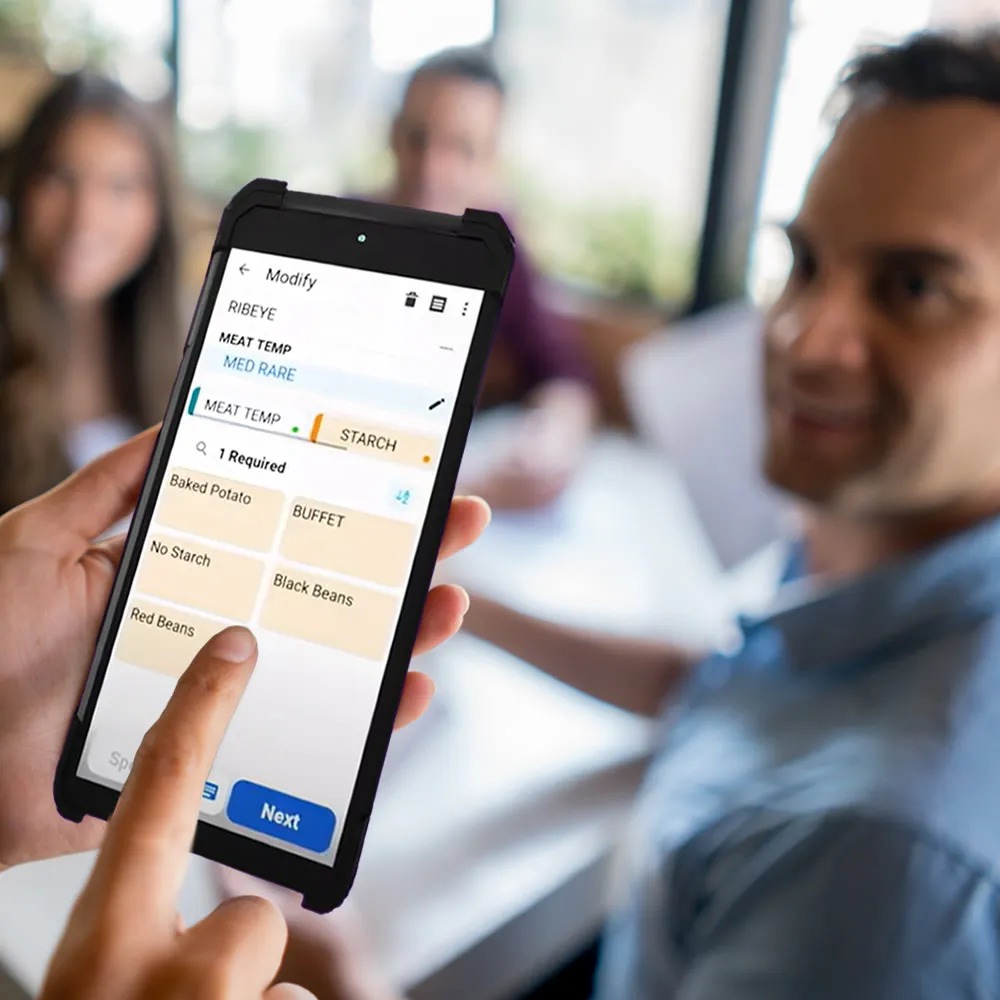
The tools have changed; the operational questions remain recognizable. Can an employee enter the order easily? Can the kitchen receive it correctly? Can a manager understand what happened across locations? Radiant’s useful example for builders is to start with one expensive piece of everyday friction and follow its connections. Sometimes that leads to a database decision. Sometimes it leads to a billion-dollar acquisition. Sometimes it begins with remembering to offer bacon.