David Krauss was the last person to hear about the party in his own rental. The neighbors heard it. The police became involved. Then came the lawyers’ letter. Guests who had promised a quiet weekend had apparently supplied something closer to a music festival. Krauss later called it “mini Coachella.” Reports put the resulting loss at about $30,000. What failed first was his ability to know what was happening while there was still time to intervene.
- The job: detect smoking-related air changes and give hotel teams a record to review.
- The buyers: hotels, management groups and rental operators protecting rooms and guest trust.
- The catch: an alert starts a decision process. The hotel owns the decision.
That experience helped produce NoiseAware, founded in 2015 by Krauss and electrical engineer Andrew Schulz. Its early proposition was delightfully literal: a “smoke detector for noise.” Measure the disturbance, alert the person responsible, and spare the neighbors a weekend they had never booked. Years later, the company expanded into smoking detection and became Rest. The metaphor had acquired a second occupation.
A business built around arriving too late
The connection between noise and smoke is timing. A property manager hears about a party after the neighbors complain. A hotel discovers a smoking incident when housekeeping enters, or when the next guest asks why a supposedly non-smoking room smells otherwise. By then, the useful moment may have passed. Cleaning, room downtime and an awkward conversation remain.
Rest sells earlier visibility. Its hotel system combines Wi-Fi-connected room sensors with a central dashboard and time-stamped environmental reports. It looks for air-quality patterns associated with tobacco, marijuana and vaping. Front desk staff and managers can examine an event while relating it to room status, housekeeping information and the property’s policy.
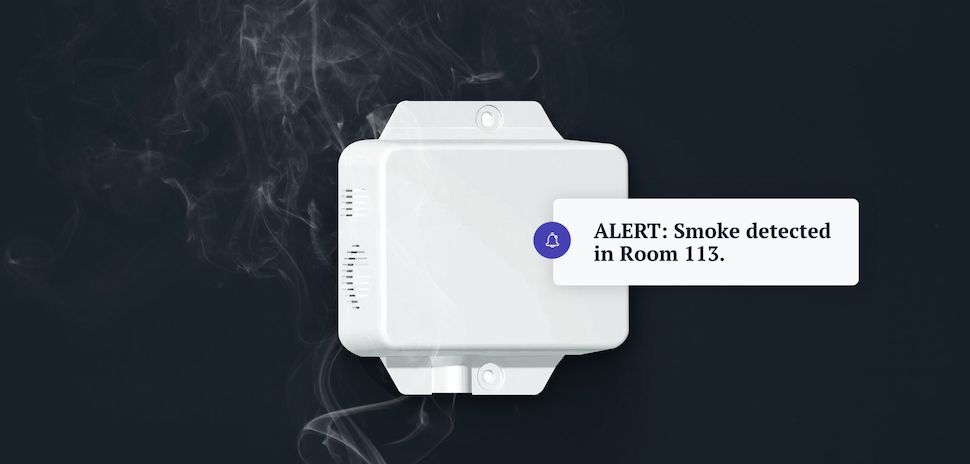
This is business software with a physical address in every room. The purchaser is the operator; the hoped-for beneficiary includes the guest arriving next. For an ownership group, the attraction extends beyond one incident to a consistent process across properties. A policy that changes with the person working reception is a difficult policy to defend.
The room is measured. The guest is not recorded.
Rest’s hotel air-quality offering has a specific privacy claim: no audio recording, video capture or personal-activity tracking. Its current website also says the system does not identify who occupies the room. It measures the environment. The earlier NoiseAware product measured noise levels without preserving conversation content - an important distinction when describing the two generations of monitoring.
The expertise lies in combining environmental sensing, detection algorithms and hospitality workflows. A graph alone is an odd thing to hand a busy receptionist. Rest organizes the information into alerts and reports that a property can use. Its stated values emphasize discretion, consistent review and professional communication, qualities with practical consequences when a conversation involves somebody’s bill.
“Data supports review. Hotels make decisions.”Rest’s product page
The company says its current product has protected 20 million room nights. That measures accumulated exposure across stays, rather than unique hotels or individual customers. It also says installation takes under five minutes per room, with no batteries or cartridges to replace. Those are company claims; neither tells us the probability that a particular disputed alert is correct.
Follow the alert into the front desk
There is a useful way to understand the product: follow an event all the way to a decision. The sensor supplies a signal. The dashboard supplies timing and a pattern. A member of staff supplies context. The property then decides what its policy requires. Each handoff matters. A precise timestamp cannot tell a manager everything that happened around it.
- 01SenseRoom air changes
- 02AlertTiming + patterns
- 03ReviewStaff + context
- 04DecideHotel policy
The hotel owns the last two steps.
In February 2026, The Points Guy described disputed smoking charges at hotels using Rest sensors, including cases in which fees were refunded. Its reporting included a $566 charge reversed at The Strat after intervention. These accounts are evidence of disputed enforcement and resolution, rather than a controlled measurement of sensor accuracy. They nevertheless show how quickly a clean-room promise can become a trust problem.
Rest’s response emphasized that properties interpret the data and handle charges. Its current guest guidance asks staff to consider adjacent rooms, building conditions, housekeeping activity and guest feedback. The operational lesson is plain: give an alert somebody who can investigate it. When a report becomes sufficient by itself, the review step has disappeared.
The white box meets the hotel software stack
Rest occupies a narrower corner of hospitality technology than a booking engine or a property-management system. It supplies environmental information that those operations can use. In February 2024, its smoking solution reached Oracle Cloud Marketplace, with integration into Oracle OPERA Cloud through the Oracle Hospitality Integration Platform. That gives a room-level device a route into the software hotels already operate.
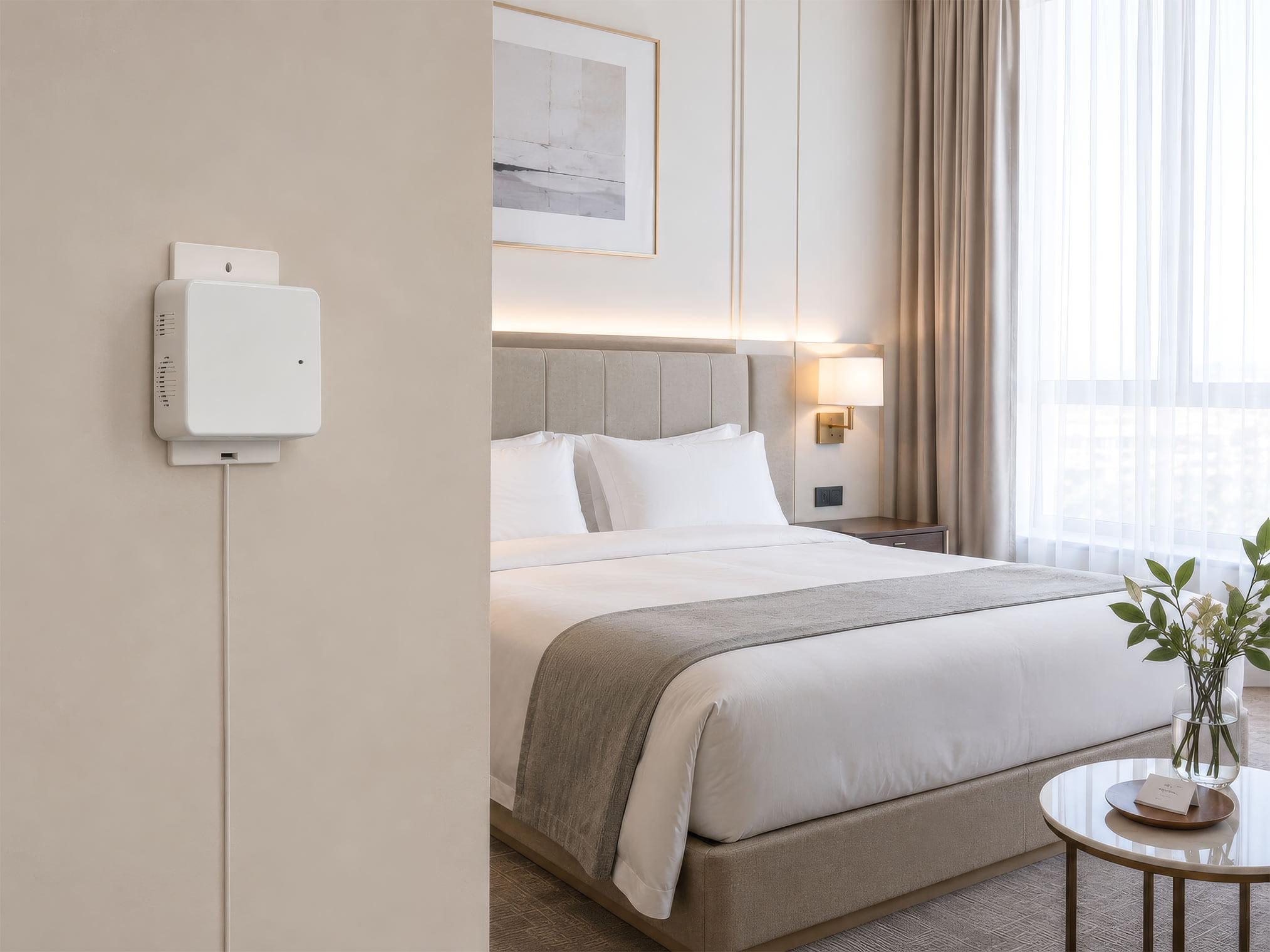
Alternatives include FreshAir Sensor’s smoking-enforcement technology and Minut’s environmental monitoring for rentals and aparthotels. Rest’s case rests on its hotel workflow, documentation and integrations; public material does not establish a comparative accuracy winner. Manual observation remains an alternative, too, although it often begins later.
What an operator can take home
As NoiseAware, the company announced an $8 million Series A led by S3 Ventures and Thayer Ventures in April 2021. Bigfoot Capital later announced a $5 million growth capital facility heading into 2026. The facility is a different financing instrument from an equity round. In July 2026, the Rest mobile app added Gen2 support, continuing the hardware-and-software pairing.
For a prospective buyer, the useful calculation includes installation, connectivity, staff review time, cleaning and lost room availability. Rest’s commercial agreements govern the purchase; the sensor’s value depends on how the property uses the information. A team without reliable connectivity or time to investigate cannot assume that buying earlier visibility will deliver better decisions.
The transferable idea is modest and valuable: detect promptly, assign a reviewer, consider context and preserve the reasoning. It applies to a single rental as readily as a hotel portfolio. Krauss’s original problem was learning too late. Rest gives operators a chance to learn sooner. What they do with that chance still belongs to the people at the desk.