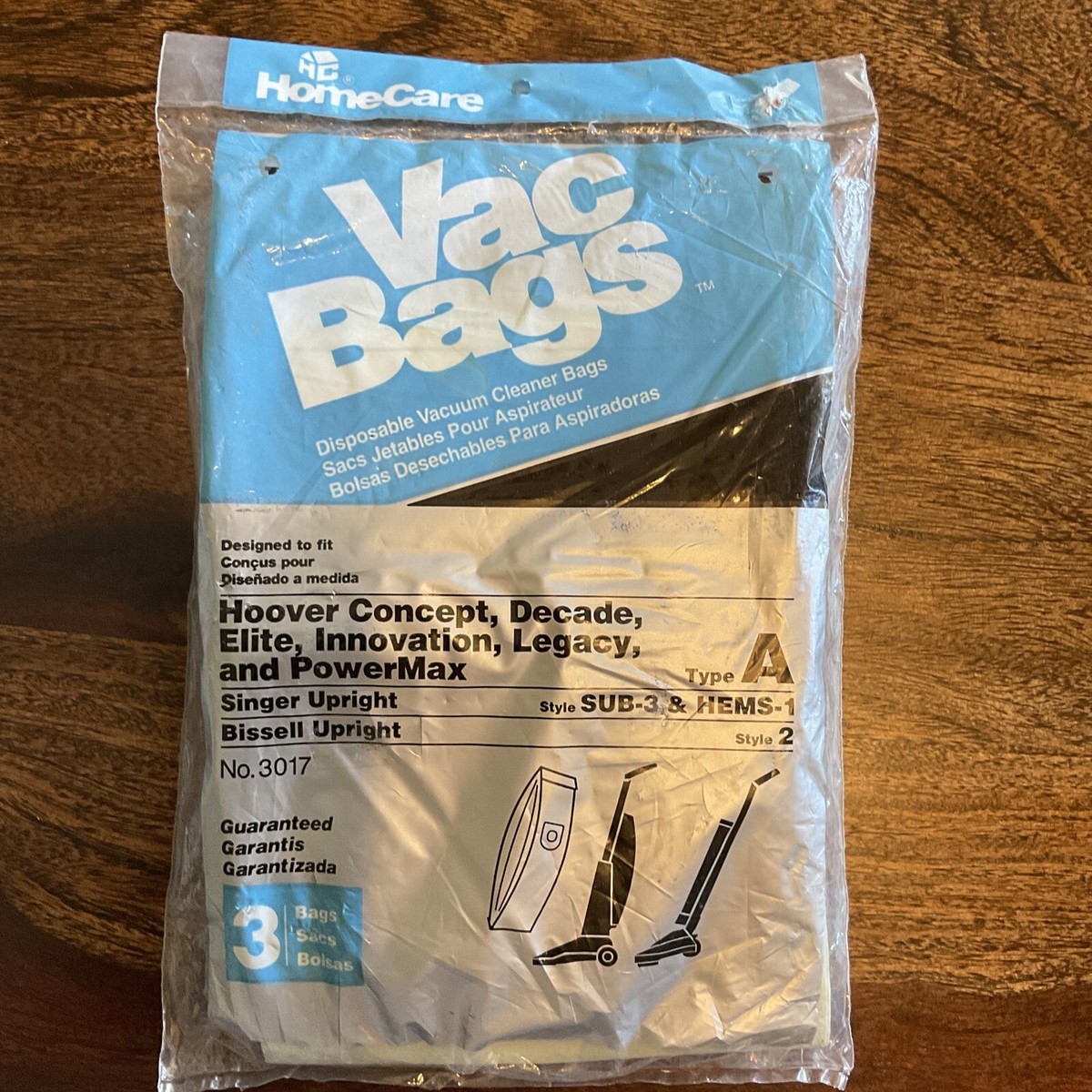
Look at the front of a HomeCare vacuum-bag packet. Beneath the cheerful blue branding comes a procession of names: Hoover Concept, Decade, Elite, Innovation, Legacy, PowerMax. Then Singer. Then Bissell. The package resembles a guest list for a party attended entirely by appliances. Its real message is less festive and more useful: somewhere in this list is the machine sitting in your cupboard.
- Home Care supplied the consumables behind familiar vacuum brands.
- Its inventions addressed filtration, fitting and dirty-bag disposal.
- A digital retail push preceded the company’s January 2013 closure.
That packet offers a way into Home Care Industries. A vacuum is a purchase; a vacuum bag is a relationship with a machine you already own. Every replacement has to fit. Every confusing model number creates work for somebody. Home Care occupied that small, consequential space between a household appliance and the person trying to keep it useful.
The bag behind the badge
The family account begins in Brooklyn. Soniclean, the later business associated with the Bosses family, describes Martin Bosses making paper vacuum bags in a two-car garage in 1953. Home Care’s own corporate history dates its founding to 1959. Those dates describe different starting points: the family’s beginnings and the company’s stated beginning.
After Martin’s son Mark entered the business in the early 1980s, the family history says Home Care supplied original-equipment filter bags to Oreck, Bissell, Hoover, Eureka, Dirt Devil, Electrolux and Kirby. A customer could recognize the name on a vacuum without recognizing its consumables manufacturer. That is a useful position for a supplier: participation in several brands’ businesses without having to sell every machine itself.
Home Care also served branded and private-label markets. Its economics centered on physical products that needed replacing, distributed through manufacturers, shops and commercial suppliers. The repeat purchase was built into the category. Winning that purchase still required the correct product to be available when the previous one filled up.
The market position was unusual because the customer had several identities. A machine maker wanted dependable supply. A shop needed a range it could explain. A household needed one correct packet. A competing replacement brand might face Home Care on a shelf, while a vacuum manufacturer could buy from it upstream. For a specialist supplier, breadth of compatibility could matter as much as the visibility of its own name.
There is engineering in the rubbish
A bag sounds simple until you follow the air. Dust enters; air must escape; the material has to hold together. Then someone has to take the thing out. Home Care’s patent record shows attention to these separate problems, rather than treating the bag as a paper envelope with a hole.
A 1997 patent described a reinforcement patch positioned to protect the bag from particles arriving at speed. Other patents addressed layered filtration media and self-aligning, self-sealing fittings. A manually closable collar used a sliding element to close the opening. The engineering followed the product through use and removal. Even the moment when the customer throws it away deserved some thought.
Design jobs illustrated from Home Care’s patent portfolio. No performance comparison implied.
Selling the answer to “will it fit?”
By May 2012, Home Care had turned the compatibility question into a website feature. Visitors could identify an accessory by machine brand and model, then find local sellers by ZIP code. Independent retailers received customizable microsites; the DVC microlined range was reserved for their channel. Janitorial distributors received their own support tools.
“taking a complex product category and simplifying it”
Robert J. Logemann, CEO, on the 2012 website
There is a practical commercial idea here. A manufacturer can make its dealers easier to buy from. A useful catalog turns scattered product knowledge into an answer a shopper can act on. For anybody selling replacement parts, the sequence is worth copying: establish the machine, establish the fit, establish where the item can be bought. The attractive photograph comes after the answer.
Borrowing a name people knew
Home Care also moved beyond dry consumables. A September 2010 licensing report named it the primary Febreze licensee for carpet-cleaning solutions, covering carpets, rugs and upholstery. Nancy Bailey & Associates brokered the arrangement with Procter & Gamble. Home Care brought manufacturing in an adjacent category; Febreze brought a name already associated with household freshness.
Recognition was accompanied by product scrutiny. In June 2011, the Febreze Allergen Removal carpet, rug and upholstery cleaner joined the Carpet and Rug Institute’s Seal of Approval list. That distinction belonged to a particular product. It did not certify the finances of the company making it. Keeping those two ideas separate becomes essential in the next chapter.
The expansion had an ending
In 2010, Virginia officials announced a Home Care manufacturing and distribution project in Mecklenburg County: a planned $1.5 million investment and 150 jobs. Approved public support included a $150,000 Governor’s Opportunity Fund grant and $390,000 in Tobacco Region Opportunity Funds. These were project commitments and approvals, not a record of everything ultimately spent or retained.
By January 2013, the company had closed. Local reporting described the loss at La Crosse’s Airport Industrial Park. A later Virginia incentives report recorded a full $150,000 grant repayment due on May 1, 2013, and subsequent collection enforcement. The expansion promise and the closure sit uncomfortably close together. Neither makes the other disappear.
Employee recollections add a human scale. Former staff described long service and valued colleagues; some criticized management and relocation. One engineering review remembered moving a manufacturing and distribution operation of more than 250,000 square feet. These are personal accounts, not an audited explanation of the shutdown.
The useful lesson is narrower than a verdict on why Home Care ended. Compatibility tools depend on accurate information and stock someone can actually supply. Product ingenuity and a familiar licensed brand cannot, by themselves, establish a factory’s viability. Home Care’s small packet remains an excellent lesson in explaining a product: tell people what fits. The business behind that promise still has to work.