The promotion should have come. Years later, Roger Wood still remembered that much. At IBM, Hemant Thapar had been doing work his manager valued, but the promotion ran into the arithmetic of corporate quotas. Wood went along with the decision. In his recollection, Thapar was understandably upset. It is a small, familiar office disappointment to find near the beginning of a career that would eventually include two acquired chip companies and election to the National Academy of Engineering.
Wood later gave Thapar an opportunity to manage the group. Thapar did so briefly, then left IBM to start a business. The sequence is tempting material for a revenge story. It deserves a little restraint. A remembered disappointment does not explain a whole career, and Thapar had already spent years developing the technical ideas that would support his companies. Still, it supplies something an awards list rarely offers: a capable person waiting for an institution to catch up.
He would become co-founder and CEO of DataPath Systems, then Link_A_Media Devices. LSI Logic acquired the first; SK hynix acquired the second. The work beneath those transactions concerned the unglamorous business of making information survive its journey through imperfect hardware. Nobody buys a disk drive hoping to admire its error correction. Thapar’s career asks us to pay attention to it anyway.
The useful difficulty of a crowded disk
Thapar completed his bachelor’s degree at Santa Clara University in 1973, then earned a master’s in electrical engineering at Purdue in 1977 and a doctorate in 1979. He joined Bell Telephone Laboratories in Holmdel that year. In 1984, he moved to IBM in San Jose, where his work included advanced recording-channel technology. Communications and storage might sound like separate departments. Both ask an engineer to recover a message after the physical world has had its say.
A magnetic disk presents a particularly fussy version of that problem. Pack information closer together and the signals become harder to distinguish. Increasing capacity therefore brings a second assignment: make the reading process clever enough to handle the crowd. A larger cupboard is useful only if you can still find the plates. Storage engineers have rather more exacting standards than most cupboard owners.
In 1987, Thapar and A. M. Patel published work on a class of partial-response systems for increasing magnetic recording density. The research examined how shaping the readback signal could allow information to be packed more densely, with a corresponding increase in detector complexity. This was a trade-off to engineer, rather than a free lunch to announce. More elaborate detection could make better use of the recording medium.
His work on Extended Partial Response systems went on to become widely used in disk and tape data recovery. The lasting achievement was the passage from mathematical possibility to a method other engineers could build upon. A paper can be admired in a library. A working read channel has to make decisions while a device is running, over and over, without expecting applause.
The other job, with homework
During his IBM years, Thapar also returned to Santa Clara as an adjunct lecturer. His teaching there stretched from 1984 to 2004, overlapping both his corporate work and the creation of DataPath. There is a pleasingly concrete trace of that second occupation: a spring 1989 course syllabus listing him and Paul Siegel as instructors for signal processing and coding.
The timetable moved from signal theory into recording-channel modelling, detection methods, partial response and code design. Homework counted for 20 percent, the midterm for 30, the final for 50. The machinery behind reliable storage had become something students had to understand well enough to answer questions about. Even a sophisticated recording channel, it seems, could not rescue anyone from the final examination.
That classroom connection matters to the shape of his career. The same subject kept appearing in different forms: a research problem, an industrial implementation, a lecture, a company. Each required its own kind of explanation. A student needed a model to understand; a chip customer needed something that worked. Moving between those audiences gave the technical ideas several chances to prove useful.
When the paper became a business
In 1994, Thapar co-founded DataPath Systems and became its CEO. He later described bringing his 1987 research into practical use there as especially rewarding. The elapsed years are part of the story. The company followed a doctorate, Bell Labs, and a decade at IBM. By the time he became a founder, he had considerable experience with both the mathematics and the organisations expected to turn it into products.
DataPath also worked in broadband communications. When LSI Logic announced its acquisition in May 2000, DataPath supplied products for areas including DSL, cable modems and high-performance transceivers. LSI valued the proposed stock transaction at approximately $420 million. The company it was buying had about 115 employees. Those figures describe the announced deal and the business, rather than Thapar’s personal proceeds.
Approximate announced value of LSI Logic’s stock acquisition of DataPath Systems.
For LSI, the appeal included analog and mixed-signal expertise and building blocks for communications chips. A founder’s exit can make a convenient full stop in a biography. Thapar stayed on as a senior vice president at LSI until 2004. The technical work had acquired a different corporate address, and his next startup would return directly to the storage problem.
The controller earns its keep
Link_A_Media Devices began in 2004, with Thapar as founder, chairman and CEO. It developed system-on-chip controllers for storage devices, working across hard disks and solid-state drives. The controller occupies a consequential position between a processor and the storage medium. The memory may get the billing on the package; the controller has to help deliver the speed and reliability a customer expects.
A manufacturing partnership with NEC Electronics began in 2005. By October 2010, after NEC Electronics had merged with Renesas Technology, Link_A_Media and Renesas announced plans to extend their collaboration into another generation of hard-disk and SSD chips. Link_A_Media brought data-recovery and error-correction technology. Renesas supplied manufacturing processes and semiconductor building blocks. Getting an idea into silicon involved partners as well as equations.
The collaboration included low-density parity-check coding and methods intended to make detection more resistant to noise. Its stated objectives also included more efficient use of the recording format and lower power consumption. These are modest-sounding engineering concerns with practical consequences: how much information fits, how reliably it can be read, and what it costs a device to do the job.
In June 2012, SK hynix announced an agreement to acquire Link_A_Media. The chipmaker wanted controller expertise as demand shifted toward more complete NAND-based products, including SSDs and embedded storage. Thapar subsequently served as CEO of SK hynix Memory Solutions in 2012 and 2013. His connection to the business now associated with SK hynix memory solutions America belongs to this chapter of his career.
Back among the new arrivals
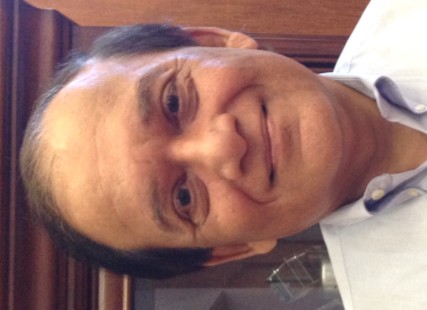
After two startups, Thapar appeared among the new arrivals at the University of California San Diego’s Center for Magnetic Recording Research. The Fall 2013 newsletter introduced him as a visiting research scientist joining Paul Siegel’s group. His interests included tiered storage at both device and system level. A founder could return to a research group with questions still worth pursuing.
In 2015, he co-founded OmniTier. Its earlier web-caching work gives a clear view of the continuing technical interest. MemStac, announced in 2016, combined NVMe solid-state storage with a smaller amount of DRAM. DRAM offered speed; SSDs offered different advantages in capacity and cost. The engineering task was to organise those resources so an application could use the combination effectively.
There is continuity here with the crowded magnetic disk. The materials and software changed, but the useful question remained: how should a system arrange its limited resources? It is easy to ask hardware to do more by buying more hardware. Deciding where each kind of memory earns its place requires another sort of attention. Thapar’s third company carried that attention into the architecture of computation.
“Coping with uncertainty is the common element between conducting research and leading a startup company.”
Hemant Thapar · 2022
What travels with an engineer
Recognition followed several strands of the work. Thapar became an IEEE Fellow in 1998 and received Santa Clara’s Distinguished Engineering Alumni Award in 2018. Election to the National Academy of Engineering followed in 2019, recognising coding and signal processing for high-density magnetic recording. Purdue named him a Distinguished Engineering Alumnus in 2022. The honours span research, commercial practice and service to engineering education.
His professional connections continued through advisory work at Santa Clara and Ambala College of Engineering and Applied Research, and a board role at ASSIA. Yet his own account of influence reaches beyond technical training. He has spoken about the importance of his liberal arts education at Santa Clara and about watching how accomplished people conduct themselves. Professor Tim Healy was among his engineering mentors.
“You see how they approach problems and treat people around them,” Thapar said of the people he looked up to. That pairing belongs comfortably beside the earlier IBM episode: technical ability and the ordinary human decisions that help or hinder it. His career contains papers, chips, acquisitions and classrooms. The connecting work is getting something valuable through a difficult channel, with enough care that it remains useful at the other end.
Follow the connections
People, papers & further reading
- Hemant Thapar on LinkedIn
- OmniTier - company website
- Purdue - 2022 alumni profile
- Santa Clara - education and mentors
- UC San Diego - Fall 2013 CMRR newsletter
- Roger Wood - oral history, pp. 26-28
- Santa Clara - spring 1989 course materials
- SK hynix - the Link_A_Media acquisition
- Renesas - the manufacturing partnership