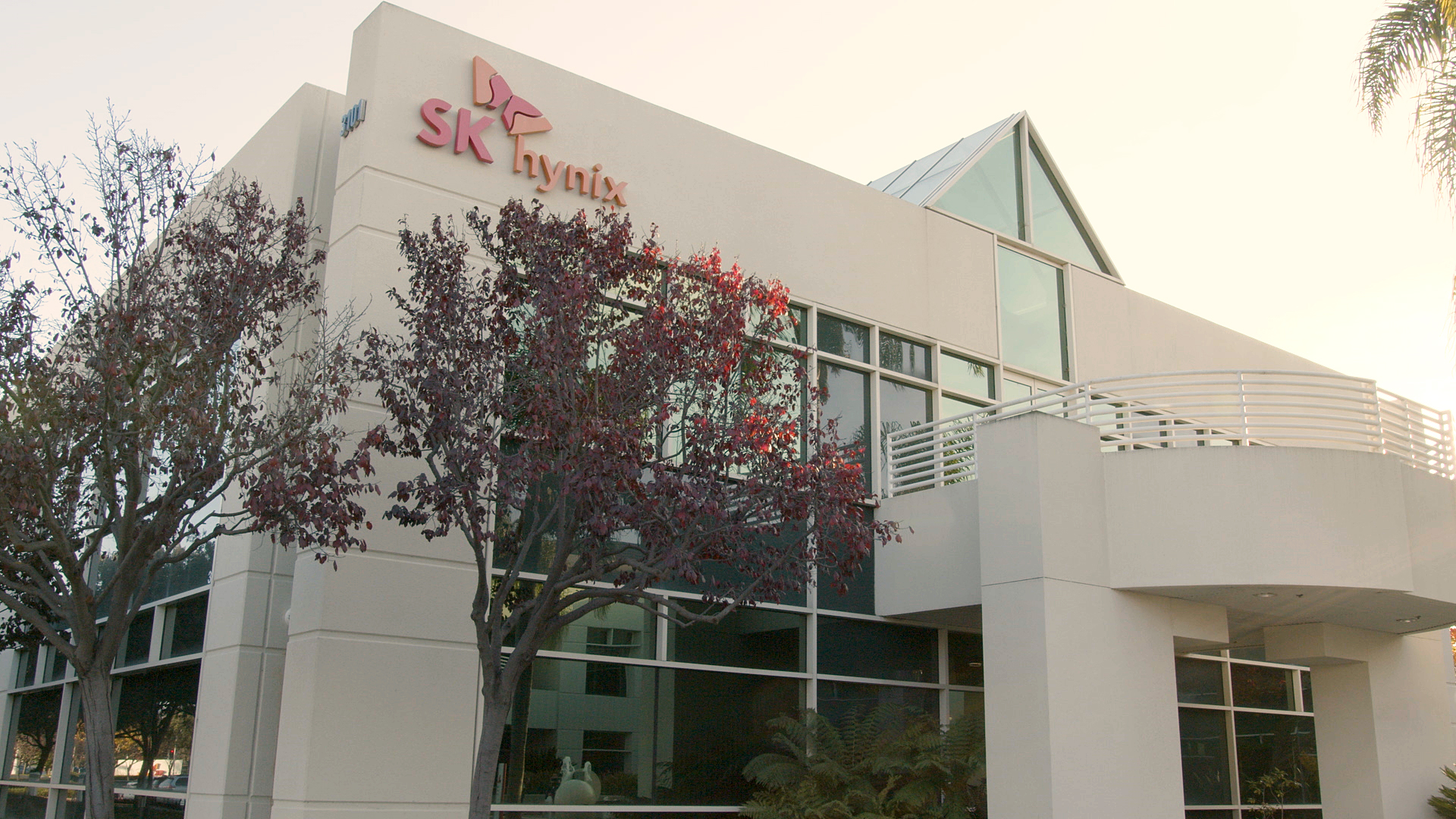
In June 2012, SK hynix announced it would buy Link_A_Media Devices, a California company that made the controllers inside storage devices. The deal was a quiet admission about the memory business: making NAND flash is one skill; persuading a server to trust it with data is another. A chip can hold an extraordinary number of bits. On its own, it has no good answer when a cell wears out, a read returns an error, or ten customers ask for data at once.
In a minute
- SK hynix memory solutions America is the San Jose R&D group descended from that 2012 acquisition.
- Its work spans SSD controller chips, firmware, NAND management and enterprise testing.
- The company serves SK hynix and global enterprise customers through storage products, rather than a public software subscription.
- The result is visible in a drive family that moved from SATA in 2016 to a 245TB PCIe Gen5 model shown in 2025.
The acquired company had some proof of its own. Founded in 2004 by Hemant Thapar, Link_A_Media Devices had shipped more than 14 million storage systems on chips over eight years, according to SK hynix. These were not finished drives. They were the interpreters between memory and the computers using it. SK hynix wanted that expertise because the profitable part of NAND was moving toward complete products: SSDs for servers and PCs, and embedded storage for mobile devices.
The useful thing the acquisition bought
A solid-state drive is a little council of specialists. NAND cells hold the information. A controller decides where to put it and how to retrieve it. Firmware gives the controller its habits: how to handle errors, distribute writes, recover from failure and keep performance from sagging as the drive fills. Systems engineers then subject the device to conditions resembling the customers’ own servers. Each layer can spoil the promise made by the last.
The San Jose operation divides the work among SoC, NAND media, firmware and systems engineering teams. Its site describes hardware accelerators for low latency, algorithms for error correction, software that manages flash, and in-house tools for testing situations commercial equipment cannot reproduce. That is an unusually precise description of what an R&D subsidiary does. It is less a separate SSD brand than an engine room for SK hynix’s storage portfolio.
“We are developing eSSD drives combining raw NAND memory devices and SoC/FW to add more value such as more reliable data retention/protection and higher data access performance.”Jay Jang, SKHMS America SoC group, 2020
Here lies its distinction. SK hynix can pair the team’s controller and firmware work with its own NAND, DRAM and manufacturing. That arrangement gives engineers access to more of the system when a problem appears. If a drive stumbles, the team can examine the flash characteristics, the chip architecture, the code and the test trace together. A buyer still needs qualification data; vertical integration is useful only when the parts actually cooperate.
How a memory chip becomes a drive
The product line became the argument
The company’s own timeline starts with SE3010, its first enterprise SATA SSD, in 2016. Two years later came PE401x, an entry into PCIe NVMe. The PE6011 in 2019 used an in-house controller, the clearest public marker that the 2012 purchase had become an integrated product capability. PCIe Gen4 followed in the PE8xxx family. The PS10xx products brought Gen5 to enterprise form factors. These names can look like a spreadsheet trying to write poetry; together, they show the customer’s changing demand for throughput and density.
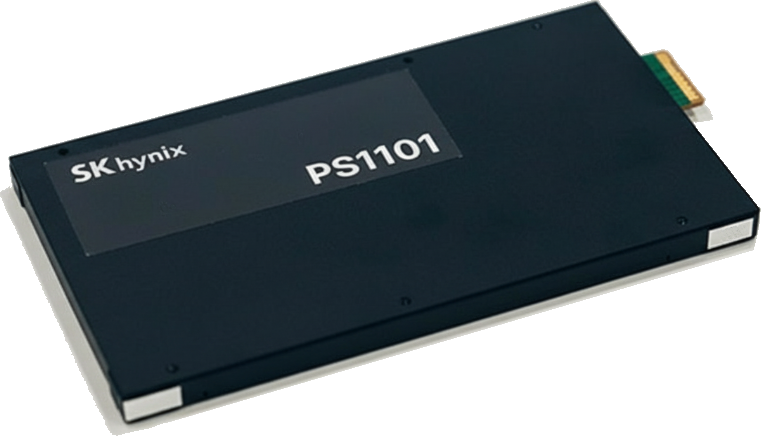
In December 2024, SK hynix announced the 61TB PS1012 U.2 for AI data centers, promising sequential reads of 13GB per second and sampling for server makers. At SC25 in 2025, it displayed the PS1101 E3.L: 245TB, PCIe Gen5, and 321-layer QLC NAND. The company’s 2026 FMS presentation discussed PS1101 variants and planned samples for major cloud providers beginning that August. A display, a sample plan and broad customer deployment are different milestones; the public record establishes the first two.
Who needs this, and what do they buy?
The immediate customer is often inside the family: SK hynix needs controller, firmware and validation work for its own storage products. Beyond that are server makers, enterprise buyers and hyperscale data centers that need SSDs in particular capacities, form factors and performance envelopes. SK hynix’s PS1012 announcement speaks explicitly of global server manufacturers and data-center compatibility. The San Jose group describes customized NAND-based solutions for global customers, though it does not publish a customer roster or unit sales for the subsidiary.
The business model follows from that role. This is a captive R&D operation tied to physical storage products, not a service with a monthly sign-up button. A customer purchases or qualifies drives through SK hynix’s commercial channels; the value of San Jose’s work appears in the device’s behavior. Public pricing and the subsidiary’s standalone revenue are not disclosed. The $16 million sometimes attached to the company belongs to a financing round for predecessor LAMD in 2011, before the acquisition. It was money raised, not the purchase price.
The competitive set is formidable: Samsung, Micron, Kioxia and other storage makers also combine flash technology with SSD products. A buyer choosing among them will care about qualification, endurance, power, support, availability and total cost, not just the capacity printed on a slide. SKHMS America’s case is strongest where detailed knowledge of SK hynix NAND and direct access to the controller and firmware teams help solve a particular workload problem. It is less compelling when a standard commodity drive meets the requirement at a lower price.
What another team could copy
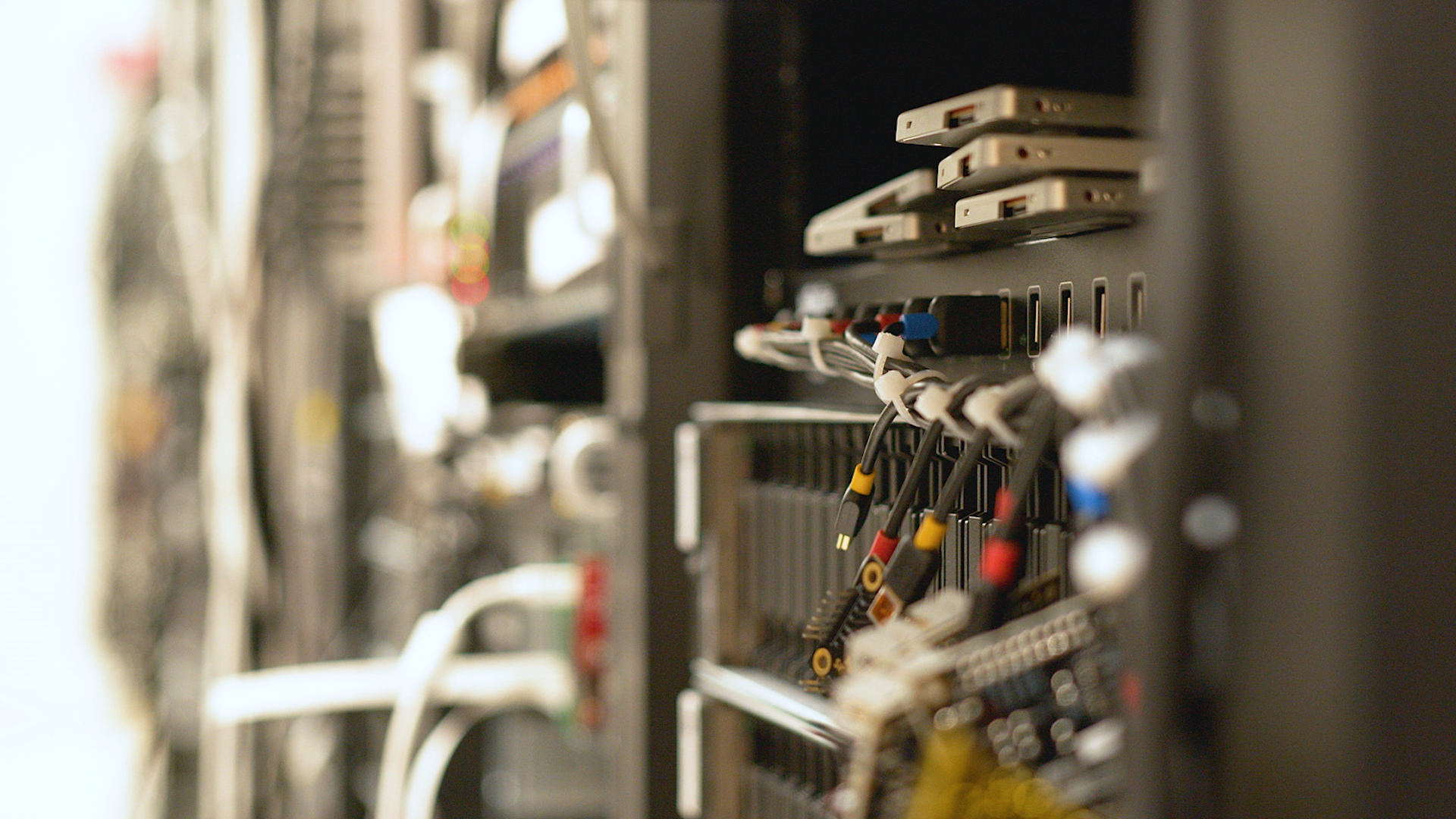
The transferable idea is not to buy a controller company. It is to place the people who understand the raw material beside the people who build the product, then let testing settle arguments. SKHMS America’s public description names NAND media analysis, controller design, firmware and systems qualification as adjacent jobs. That adjacency shortens the path from “the drive failed” to “this cell behavior, this code path, under this workload.” It is a useful blueprint for any hardware team whose product depends on a component with messy physical behavior.
The arrangement has a price in time and expertise. Link_A_Media had already spent eight years and shipped millions of SoCs when SK hynix bought it. The San Jose team then took years to move from the first enterprise SATA product to an in-house NVMe controller and beyond. There is no public evidence that the first products failed or that one customer changed the company’s mind. What is visible is the original strategic decision, the sequence of engineering milestones, and a market that moved from ordinary cloud storage to very large AI data sets. Those facts tell a better story than a tidy tale of sudden revelation.
A 245TB drive is an impressive object, but the more revealing object is the 2012 acquisition notice. It says that even a memory giant had to learn how to make memory behave. Fourteen years later, the device is larger, the interface faster, and the customer’s patience with errors no greater. Somewhere in San Jose, the little controller is still negotiating on behalf of the bits.