The first thing Heavys sold was not a headphone. It was a grievance. Metal fans knew it by ear: crowded guitars melting into one gray slab, kick drums losing their snap, vocals buried behind a polite tuning curve built for pop, podcasts and the morning train. The big audio companies had optimized for the middle. Heavys, a small New York company, went looking at the edge - where listeners buy tour shirts, memorize producers and regard a favorite band as a biographical fact.
Its answer was the H1H, a large black over-ear headphone with active noise cancellation, Bluetooth 5.1, wired listening and something genuinely uncommon in its category: four drivers on each side. Two 38-millimeter woofers handle the lower work while two tweeters, angled toward the front of the ear, pursue separation and a stage-like sense of direction. Former Sennheiser chief headphone engineer Axel Grell led the sound design. The system speaks in an amusing growl. The outer cups accept snap-on plates called Shells, turning black hardware into band merch.
The moveWhat they actually did
Heavys did not invent fandom, multi-driver audio or customized earcups. Its accomplishment was arranging those pieces into one legible promise. The company started with music rather than demographic spreadsheets: dense arrangements need more physical division of labor; metal fans want the live feeling; and a product carried in public should display allegiance. The engineering, brand voice and merchandising all point in the same direction.
That coherence made a crowdfunding pitch easy to understand. In January 2022, Heavys asked Kickstarter for $20,000. Fifty days later, 6,819 backers had pledged $1,242,155. The campaign became a “Project We Love,” and the company accumulated roughly 12,000 backorders across its launch channels. This was market research with purchase orders attached.
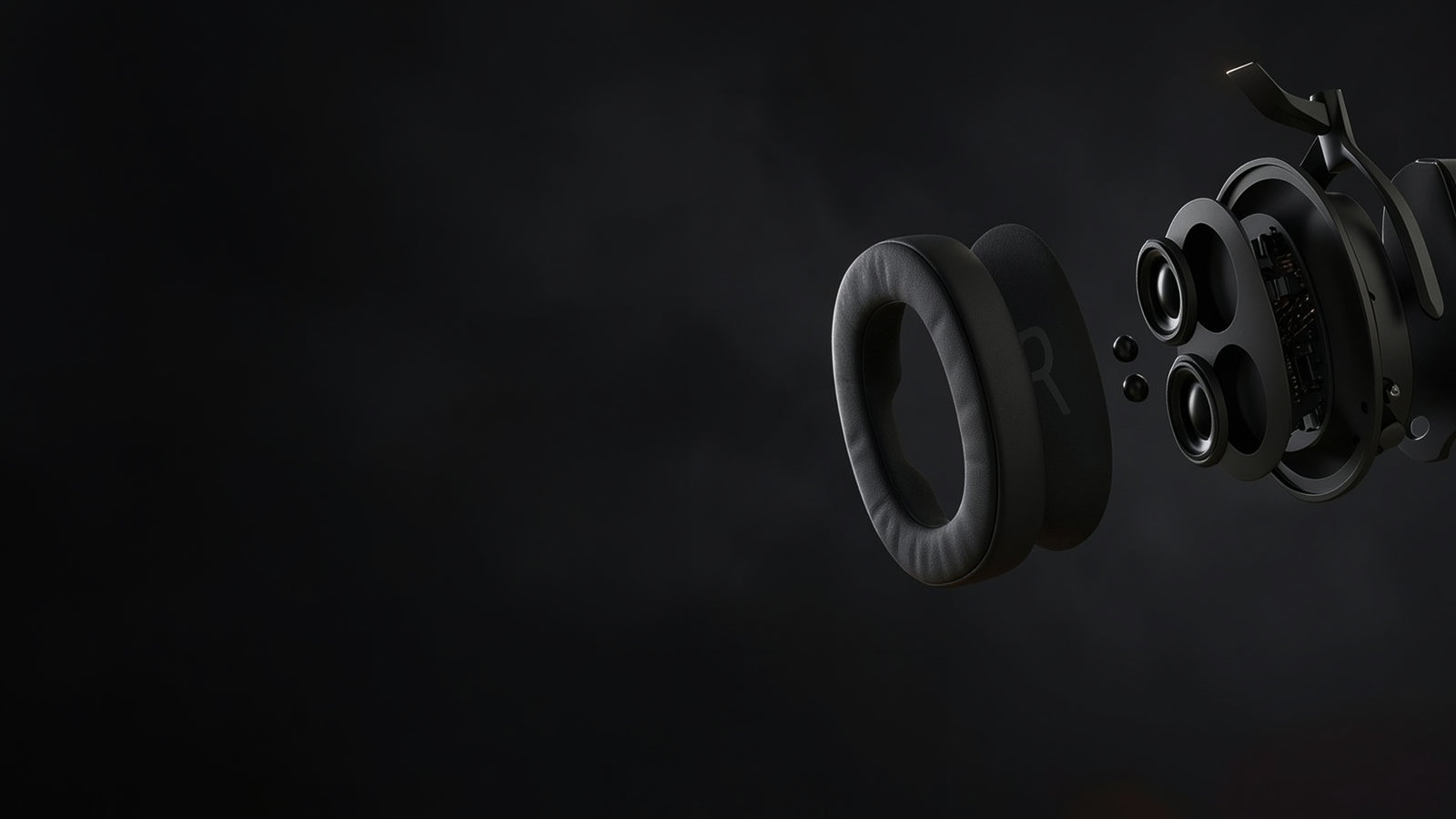
The H1H now sits in a wider catalog. Heavys sells H1E true-wireless earbuds, a HeX gaming bundle with a wired boom microphone, cases and cables, plus an app for EQ and firmware updates. The flagship was listed at $269 in August 2026, with promotional pricing changing over time. H1E earbuds were listed at $189 and Shells generally began around $29. That price ladder matters: a customer can make one expensive hardware purchase and return for a cheaper expression of taste.
“Start with the music. Engineer backwards.”Heavys' product thesis
The engineA headphone with a merch flywheel
Shells are the shrewdest part of the design. They snap onto the H1H earcups and carry licensed artwork from bands including Queen, Lamb of God, Cannibal Corpse, Opeth, Dream Theater and Nightwish. Heavys says participating artists receive an ongoing royalty on each Shell, rather than only a flat license payment. Artists get a reason to promote. Fans get something more useful than another poster. Heavys gets repeat revenue without asking the customer to replace the core device.
The identity-commerce loop
The same mechanism has started moving beyond metal. Warner Music Experience helped bring Type O Negative designs to market. Universal Music Group and Bravado opened a multi-artist relationship beginning with King Diamond. In 2026, COVER Corporation launched Shells for HOLOSTARS English musician and VTuber Banzoin Hakka. All Elite Wrestling followed with AEW, “Sickos” and Swerve Strickland editions. Heavys was no longer merely asking, “Which band do you love?” It was testing a broader question: “Which community do you wear?”
This is where Heavys fits in the market. Sony and Bose sell mature convenience - refined noise cancellation, lighter bodies and mass familiarity. Sennheiser sells decades of audio trust. Apple sells ecosystem. Skullcandy sells visceral bass. Heavys sells a narrower bundle: unusual driver architecture, heavy-music tuning and visible affiliation. It is a consumer-electronics company behaving like an artist-merch platform.
The billWhat it cost - money, weight and patience
For early believers, the obvious cost was the pledge. For Heavys, the less visible cost was producing a complicated object at unfamiliar scale. The Kickstarter FAQ originally estimated that first backers would receive headphones in August 2022. The first production batch did not begin shipping until April 2023, and the company chose a gradual three-month ramp rather than releasing the full backlog at once.
Heavys explained that a standard headphone assembly might use about 20 workers, while its own line needed at least 70. Whatever one makes of that comparison, the operational point is solid: adding parts multiplies testing, training and failure points. A product differentiated by complexity must also pay for complexity at the factory.
What failed first
The cardboard inner packaging failed a drop test. Heavys replaced it with foam, later added a protective outer carton and upgraded the travel-case zipper.
What changed the plan
Damaged shipping boxes and a faint charging-while-listening noise prompted packaging changes, a firmware fix and a roughly two-week pause for the next batch.
There was also a physical cost to the customer. Independent measurements put the H1H around 407 to 410 grams - near Apple AirPods Max territory and far above many Sony travel headphones. Headphonesty liked the padded cups but found the clamp, headband pressure and button arrangement imperfect; its reviewer also noted the lack of wear detection and middling microphones. TechRadar's metal-focused reviewer, by contrast, found the weight surprisingly comfortable over long sessions and praised the clarity and separation. That split is the product in miniature.
“You might love ’em, you might hate ’em.”Headphonesty on the H1H's colored tuning
The argumentDid the sound thesis work?
There is no neutral answer because headphones meet different ears, recordings and expectations. Heavys presents its multi-driver system as a way to keep low frequencies from muddying mids and highs. Fans and several reviewers report discovering buried details, especially in fast or raw metal mixes. TechRadar described black-metal guitars and drums staying sharp instead of collapsing into a wall. Tom's Guide heard impressive separation and a live-like presentation.
Other reviewers and owners hear boosted bass, subdued mids and less precise imaging. Some dislike the bulk, app behavior or support experience. The controversy is not an embarrassing footnote to a niche product; it is a predictable consequence of choosing a sound with a point of view. Studio-monitor buyers seeking a conventional reference curve may be the wrong customers. A metal listener who wants impact, adjustable EQ and a more theatrical soundstage may be exactly right.
The commercial numbers beyond crowdfunding remain private. Heavys does not publish audited revenue, valuation or equity funding. It describes a community of more than 200,000 fans in over 30 countries, while the H1H page separately advertises 150,000-plus listeners. Those figures are useful as scale signals, not audited customer counts. LinkedIn placed the team in the 11-to-50 employee band and displayed 27 employees in August 2026.
The stealWhat another founder can copy
The transferable idea is not “put more speakers in it.” It is to identify where a mass-market product makes a compromise that a committed group resents. Then make the difference concrete enough to demonstrate in one sentence. Heavys had four: four drivers per ear, forward-facing tweeters, metal-first tuning and replaceable licensed art. Each makes the niche visible.
The reusable five-step playbook
- Choose a community whose taste functions as identity, not merely preference.
- Name the generic compromise incumbents make and build backward from it.
- Borrow credible expertise where the promise requires technical proof.
- Use preorders to test willingness to pay, then plan operations for the success case.
- Add a repeatable identity layer that benefits the creators supplying cultural meaning.
The condition founders often miss is the last half of step four. Heavys set a modest crowdfunding target, then faced a result 62 times larger. A campaign optimized to prove desire can overwhelm a supply chain optimized for a small win. If your product includes unusual tooling, firmware, radio compliance, batteries and international shipping, the stretch goal is not more features. It is fewer surprises.
The boundaryWhen this playbook does not work
It fails when the niche exists only in ad targeting. Metal fans have venues, festivals, labels, symbols and artists with direct audiences. That social structure gives partnerships somewhere to travel. A loosely defined “enthusiast” segment may not. It also fails when the product distinction cannot survive a blind comparison. Branding can earn the first listen, but expensive audio hardware must endure the second.
The model is weaker for customers who prize light weight, class-leading ANC, seamless multipoint behavior or neutral studio sound above personality. It also depends on licensing economics and a steady flow of desirable collaborators; a shelf of obscure Shells is inventory, not a platform. Finally, support and fulfillment must match the emotional promise. The more a company speaks like a member of the tribe, the more personal a missed delivery or unresolved warranty feels.
Heavys' most interesting achievement is not convincing everyone. It is refusing the premise that a young hardware brand needs everyone. The company found enough people who wanted the product to sound, look and even speak like their music. That produced a million-dollar launch, a hard manufacturing education and a business with more places to go than its original genre suggested. The volume was never the only point. The signal was belonging.