At 9 Carnaby Street, a band has a shop. The Rolling Stones’ RS No.9 Carnaby opened in September 2020, offering fashion, merchandise and collaborations under an identity familiar enough to survive without an explanation. A tongue, a pair of lips, a little cotton: rock and roll had acquired a permanent retail address.
Bravado helps curate that address with the Stones. The arrangement offers a useful way into a company whose work is often more visible than its name. You may recognize the artist on the shirt immediately. You are less likely to recognize the business behind the design, the licensing agreement and the route to the customer.
- Bravado connects artist brands with merchandise, retail, licensing and fan experiences.
- Its clients include active musicians and estates; its end customers are fans.
- UMG ownership and teams in 40 countries support its international reach.
- The unromantic challenge is inventory: the shirts left behind when the moment passes.
A shirt with its own address
The Carnaby concept moves merchandise out of the interval between a support act and a headliner. A permanent shop has to give people reasons to return. It needs collections and collaborations, rather than relying entirely on a concert date printed across somebody’s back.
In 2022, Bravado announced a collaboration with The Great Frog, the London jewelry business. The collection drew on the Stones’ Beggars Banquet artwork and included a defaced skull ring. The Great Frog even supplied a Harley-Davidson Sportster for the shop window. Subtlety, evidently, was available elsewhere.
The choice of partner made sense beyond the decoration. The two brands could tell a shared story about London rock culture. A jewelry maker brought craft and a different product category; the band brought an archive and an audience. That is an editorial lesson from the collaboration: a convincing extension begins with something the partners already have in common.
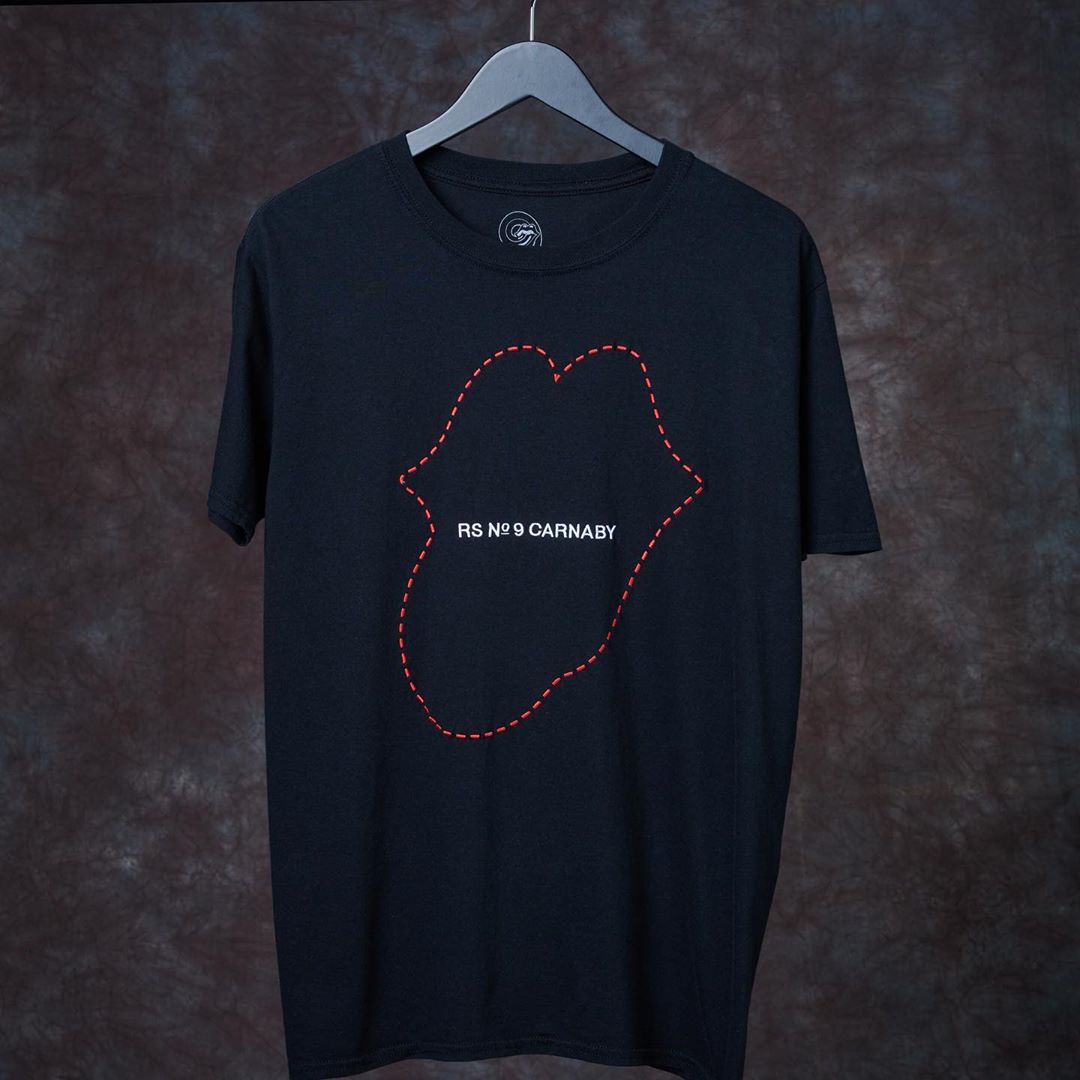
An MTV capsule followed in 2023, sold through the London store and online. Its references reached back to the channel’s history with the band. Later that year, Universal Music Japan opened a Harajuku retail destination containing a second permanent RS No.9 home. The underlying idea traveled; the Tokyo offering also included Japan-exclusive products.
The business behind the souvenir
Bravado’s menu runs from creative services and brand marketing to retail, licensing, e-commerce and touring experiences. Its website describes in-house design, local-market retail teams and digital analytics. For an artist’s team, the practical appeal is coordination. A product idea has somewhere to go after the drawing is approved.
Consider the ordinary complications hidden inside an extraordinary-looking object. Someone must have permission to use the artwork. A manufacturer must be able to reproduce it. The product must reach a tour, a shop or a customer’s front door. A campaign must announce it while the audience still cares. Each handoff can make the final purchase better or worse.
Licensing opens additional categories.
Purchasing data informs the next collection.
Its business model draws on merchandise sales and licensed brand partnerships across these channels. Artist economics depend on the particular agreement. Anyone considering a partner in this market should distinguish the retail price on a shirt from the money an artist ultimately receives: production, selling arrangements and contractual terms sit between those two numbers.
Bravado occupies the space between a music company, a consumer-products operation and a creative agency. UMG supplies a corporate network; the merchandise business supplies the product and commercial work. Independent alternative Global Merchandising Services offers many overlapping services, including live sales, retail, e-commerce, licensing and VIP experiences. Breadth alone does not settle the choice.
For a rights holder, the useful comparison is concrete: which partner understands the audience, which can deliver the product, and which contract makes sense? A globally recognized artist may need international coordination. A smaller act with a narrow range and modest demand may find a simpler arrangement easier to manage. The scale of the apparatus should match the scale of the brief.
A legacy needs a wardrobe, too
The customer is not always an artist preparing another tour. In January 2017, the Prince estate appointed Bravado its exclusive worldwide branding and licensing partner. The agreement covered retail and licensing programs built around Prince’s identity and legacy. Here, the creative brief carried an additional burden: make new objects without making the artist feel interchangeable.
An estate has an archive, but an archive is not automatically a collection. Images, symbols and references need selection. A product can help a younger fan discover a world they never experienced firsthand. It can also disappoint an older fan who knows exactly what a careless reference gets wrong. That tension makes taste a commercial responsibility.
Bravado expanded its roster through the January 2019 acquisition of Epic Rights. The acquired business worked with artists and brands including KISS, Aerosmith, Billy Joel and David Bowie; founder Dell Furano and his team were to continue building merchandise opportunities. The announcement described a portfolio expansion, bringing more established identities into the operation.
The company has also taken artist commerce into conventional fashion retail. Its 2018 Music Is Universal promotion with Bloomingdale’s tied merchandise and in-store activations to the Grammy Awards’ return to New York. A department store became another place to encounter an artist’s world. A fan did not need a concert ticket to participate.
What the warehouse remembers
Every collection has another possible destination: a shelf where it remains. In July 2025, Bravado announced that more than 400,000 unsold shirts and other merchandise items had left its Nashville warehouse for Hallotex in Tangiers, Morocco. The plan was to break the material down and spin new yarn for an estimated 280,000 recycled-cotton T-shirt blanks.
Reported input and estimated output. Different item mixes make this unsuitable as a recycling-yield calculation.
The quantities establish a stock problem; they do not identify a particular failed campaign. Matt Young credited artist pressure, especially from Billie Eilish and her mother Maggie Baird, with pushing the company toward more sustainable practices. By March 2026, UMG said the first upcycled products were expected on tours that spring. Those are announced expectations, rather than a completed environmental scorecard.
A September 2025 partnership with nonprofit REVERB added another route for that work. REVERB would help communicate the initiatives through live events and social channels; Bravado would advise on merchandise production and supply volunteer shirts. The partnership links the backstage production question with the people meeting fans at concerts.
The commercial lesson is less photogenic than a shop window, but easier to copy. Decide what happens to obsolete stock before ordering it. Recovery has its own logistics, processing and timing. A second life for a garment is useful; it does not remove the need to make a careful first production decision.
The plus sign has a management team
In March 2026, Bravado promoted Matt Young to CEO after his arrival as president in 2021. The strengthened senior team brought together general management, strategy and new ventures, artist strategy and A&R. Its stated focus was products and experiences for artists’ most passionate fans, with work extending into lifestyle partnerships and non-music brands.
“In the equation of Artists + Fans, we are the plus sign.”
Matt Young, CEO / March 2026
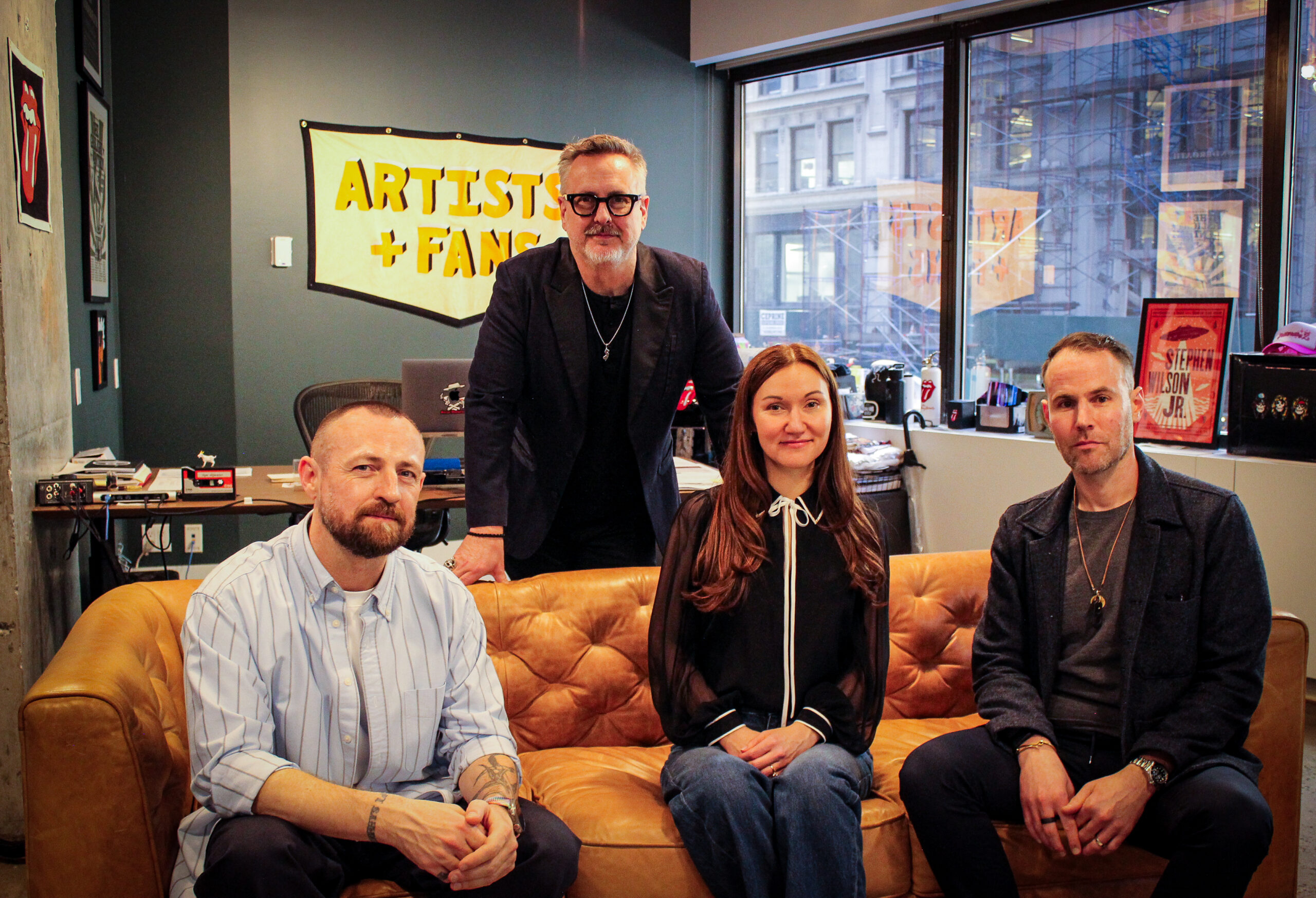
It is a tidy metaphor for a complicated assignment. The fan sees one purchase. Inside the business, artist approvals, design, manufacturing and commerce have to agree on what that purchase should be. The new roles make the coordination visible, even if the customer never needs to know their names.
What a smaller business can borrow
You do not need a famous band to learn from the Carnaby case. Start with an identity people already care about. Choose a collaborator who contributes a credible craft or history. Give a release a reason to happen now. Make the buying experience match the promise on the product. These are deductions from Bravado’s examples, rather than a guaranteed recipe.
The conditions matter. Merchandise needs permission to use the identity, enough demand to justify production and a product people will want after the announcement fades. A recognizable symbol cannot rescue poor fulfillment. Nor does a fashion collaboration manufacture an audience from nothing. The most persuasive merchandise gives an existing attachment somewhere useful to live.
That is what the shirt at Carnaby Street makes plain. The song supplies the association; the object carries it into ordinary life. Bravado’s job is to make that journey work, from an artist’s world to a fan’s wardrobe, and to deal with the cotton that never gets there.
Follow the merchandise
Bravado · Explore its services · Artist stores · Company news