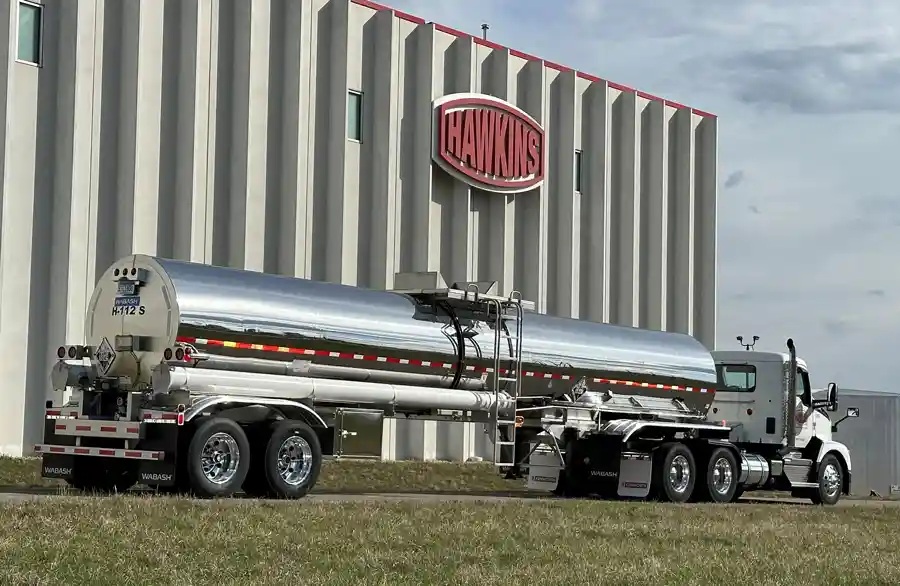
Look closely at a Hawkins delivery truck. The revealing cargo may be the spare parts. The company says its water-treatment drivers are trained technicians who can troubleshoot and repair chemical-feed equipment in the field. Their trucks carry parts and, when needed, loaner equipment. A chemical shipment arrives with someone who might fix the machinery that uses it.
- Hawkins combines chemicals, equipment and local technical help.
- Fiscal 2026 sales passed $1 billion; water treatment supplied about half.
- Acquisitions expanded the offer and increased expenses.
That small detail explains a surprisingly large business. Hawkins formulates, manufactures, blends and distributes chemicals and specialty ingredients. Its customers include municipal utilities, factories, food producers and pharmaceutical manufacturers. They need the right material, in the right concentration, with the right equipment working beside it. Hawkins has built a business around taking responsibility for more of that combination.
“To supply quality products and innovative solutions with exceptional service.”
Hawkins’ published mission
The interesting word is service. A drum can be purchased from another distributor. A technician who understands a particular installation is a more involved replacement.
02A river is useful. Until it rises.
Howard J. Hawkins and his brother Kent started the business in 1938. Its original range comprised 12 products. The subsequent history reads less like a parade of inventions than a patient accumulation of useful capabilities: bleach, terminals, water-treatment equipment, food ingredients and additional places to make or store them.
The purchase of Feed-Rite Controls in 1976 brought water-treatment chemicals and equipment together. River access helped Hawkins receive bulk material. Rail and trucks connected that inventory to customers. This is a business in which a warehouse’s location can matter as much as the contents of a laboratory.
Geography also supplied an uncomfortable lesson. The fiscal 2026 annual report says Mississippi River flooding had temporarily pushed terminal operations out of their buildings four times since spring 2010. Hawkins’ history describes its Rosemount development as reducing dependence on flood-prone river sites. The facility opened in 2013. Redundancy became a concrete investment in land, rail access and tanks.
03Three businesses, one practical habit
Water Treatment serves drinking-water plants, wastewater facilities, industrial systems and commercial pools. The work includes disinfection, corrosion control, phosphorus removal and treatment programs tailored to individual facilities. A buyer can obtain chemistry, testing, equipment installation and local technical support. Hawkins sells to organizations and government entities, rather than individual consumers.
Food & Health Sciences supplies food and beverage ingredients, nutrition products, pharmaceutical excipients and agricultural chemistry. Excipients are ingredients used alongside a medicine’s active substance. Here, the problem is consistency and documented quality. Industrial Solutions supplies manufacturing chemistry and related services, including surface finishing and custom blending.
Patrick H. Hawkins joined in 1992 and became chief executive in 2011. His earlier jobs included plant manager, quality director and technical director. The person running the business has worked on the operational details its customers depend on.
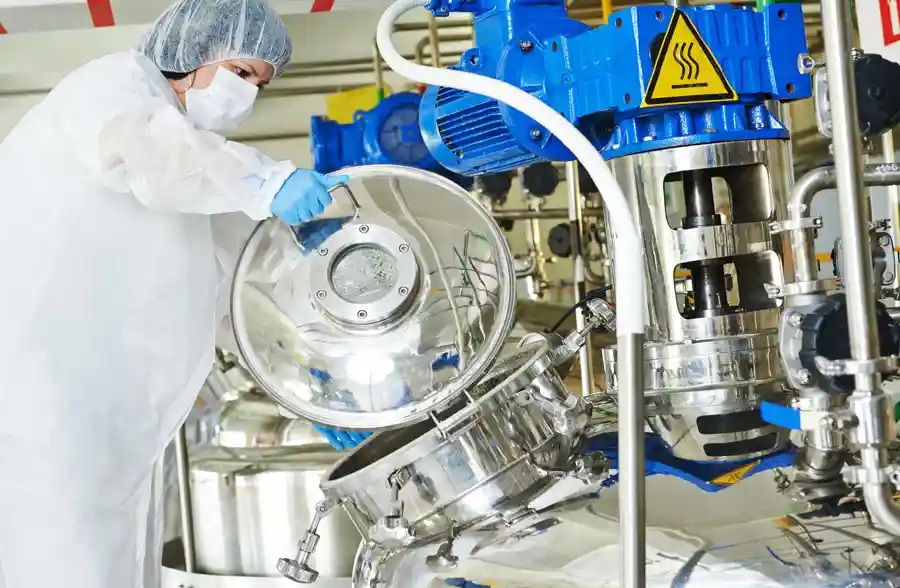
Toll blending makes the practical habit explicit: Hawkins prepares formulations to a customer’s specifications, with options for packaging, private labeling, storage and delivery. Its stated expertise includes liquid acid-base reactions. Customers can buy production capability alongside ingredients. The business earns principally through product sales; manufacturing, formulation and service help make those products useful.
04The $149.9 million addition
WaterSurplus changed the scope of the proposition. Acquired in April 2025, it added membrane separation systems, engineering, filtration equipment and rentals. Hawkins could offer more of the treatment system surrounding the chemical. The initial cash price was approximately $149.9 million, with a potential additional earnout of up to $53.7 million tied to five years of cumulative gross profit.
There is a useful example in Orange County, California. In February 2026, Hawkins announced that a multiyear NanoStack membrane-coating pilot had led the water district to plan installation of 1,050 coated membranes. Hawkins reported more than a 15% reduction in reverse-osmosis energy consumption and more than halved cleaning requirements during the pilot. Those are results from that pilot, rather than promises for every plant.
The coating addresses fouling: material accumulating on membranes and making treatment harder. WaterSurplus’ technology chief estimated payback below two years. The sequence matters for anyone buying equipment: test within an operating system, measure cleaning and power requirements, then decide whether wider installation earns its keep.
Multiyear NanoStack test. Results depend on the application; these are not universal savings guarantees.
05Growth has a receipt
Fiscal 2026 sales reached $1.084 billion. Water Treatment contributed $543.3 million, about half the total. Its sales rose 22%, but acquired businesses supplied $83.3 million of the $96.8 million increase. The arithmetic matters: most of that segment’s additional revenue came from purchases. It should not be read as growth from existing operations alone.
The costs arrived promptly. Hawkins spent $167.1 million on acquisitions and $58.2 million on capital projects during the year. Diluted earnings per share fell 3% to $3.91. The company attributed the decline primarily to added amortization, interest and earnout-related expense. Operating cash flow rose to $144.3 million, while year-end debt reached $244 million. More sales and lower per-share earnings occupied the same report.
The buying continued. September 2026 brought Dave Symonds & Associates in Florida and Eagle Labs in Texas. The latter added two locations and brought Hawkins to seven Texas water-treatment facilities. The September announcement counted 69 facilities companywide across 28 states. Expansion means adding established local relationships as well as dots on a map.
Fiscal 2026 revenue by segment / USD millions
Water treatment accounted for 50.1% of total sales. Values rounded.
06What travels beyond the route
Univar Solutions and Brenntag also sell municipal and industrial water-treatment chemistry. Hawkins’ local service model is a reason to consider it, rather than proof that rivals cannot provide support. A procurement team should compare the actual route, technical coverage, equipment compatibility and delivered price at its own facility. The catalog alone cannot settle that decision.
The transferable lesson is specific: put expertise at the point where the customer encounters trouble, and add adjacent capabilities that solve the next problem. Doing so takes trained people, inventory and working capital. It becomes harder when transport fails, raw-material increases outrun selling prices, or acquisitions consume more attention and money than they return.
The latest reported quarter available on October 24, 2026 offered that same mixture. Fiscal 2027 first-quarter revenue increased 8% to $315.7 million; diluted earnings per share declined 4%. Hawkins keeps broadening what arrives with the delivery. The test is whether customers receive enough practical help, and shareholders enough earnings, to justify the heavier truck.