A trash bag is an unlikely place to look for industrial strategy. Yet one of the ingredients used to make its polyethylene, butene-1, belongs to the same chemical neighborhood as the butadiene in synthetic tire rubber. Both pass through a business most shoppers never encounter: separating a mixed stream of four-carbon hydrocarbons into something another factory can use.
- TPC turns crude C4 streams into ingredients for rubber, plastics, fuels and additives.
- Its Gulf Coast storage and transport network is part of the product.
- A serious weakness in process controls, followed by restructuring, makes reliability the central question.
Houston-based TPC Group occupies this middle ground. Its suppliers have mixed molecules; its customers need particular ones, with particular specifications, delivered on time. The company earns its place by solving both problems together. The chemistry matters. So does the barge.
Four carbons, many destinations
The business has roots in wartime production. TPC’s historical timeline dates construction at its Houston and Port Neches predecessors to 1942, with production beginning in 1944. The plants went on standby after World War II, then restarted during the Korean conflict. Their later history is a succession of owners, processes and new uses for existing equipment.
Today, crude C4 from ethylene crackers is a central feedstock. TPC separates and purifies its components. Butadiene goes into synthetic rubber and other materials. Butene-1 helps manufacturers make polyethylene for bags, bottles and containers. Polyisobutylene, or PIB, serves lubricant and fuel additives, adhesives and sealants. Di-isobutylene supplies another set of specialty applications. These are ingredients sold to manufacturers, several steps before the finished product reaches a shelf.
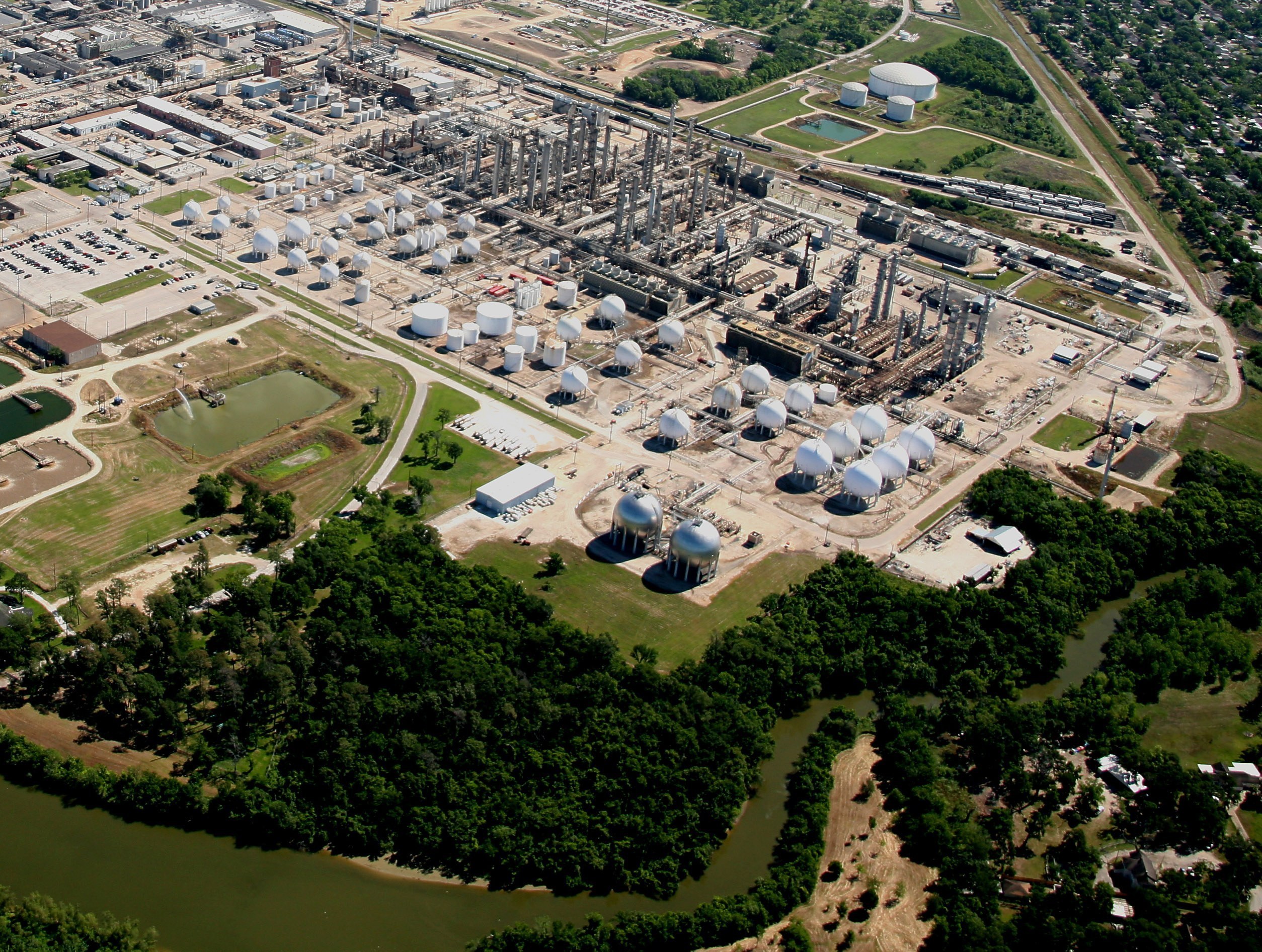
For a rubber producer, TPC offers access to a usable raw material. For an ethylene producer, it offers an outlet for a mixed stream requiring further processing. That two-sided usefulness explains its position as an independent merchant processor: it connects businesses whose production systems need one another but do different jobs.
The advantage has a shipping schedule
Consider what a customer actually buys. The molecule has to meet a specification. It also has to arrive without interrupting the customer’s plant. TPC’s C4 processing page describes substantial storage, more than 230 miles of pipeline, and dock and rail facilities. Houston manufacturing is supported by terminals at Port Neches and Lake Charles, plus a southeast Texas toll-processing arrangement.
Physical connections make the offer harder to reproduce than a product list suggests. An alternative supplier must satisfy the chemistry and the delivery requirement. BASF, for example, offers competing polyisobutene products for lubricant applications. The practical comparison involves grades, qualification and transport access, rather than a single contest between company names.
TPC also develops its own processes. Its technology work with UOP concerns OXO-D, a route to making butadiene deliberately rather than relying entirely on byproduct supply. Its PIB portfolio uses proprietary technology. The commercial proposition combines chemical expertise with the less photogenic work of keeping material moving.
The pipe that stopped the story
On November 27, 2019, that proposition suffered a devastating failure at Port Neches. Federal investigators traced the initial rupture to popcorn polymer growing inside a temporary dead leg: piping connected to a pump that had been out of service for months. The material expanded until the pipe failed, releasing flammable butadiene.
The Chemical Safety Board identified shortcomings in dead-leg control, polymer management and emergency isolation. A maintenance change had created a hazardous configuration that the safeguards did not adequately control. The butadiene unit was destroyed. Fires continued for more than a month, and surrounding communities faced evacuation and extensive damage.
“We always follow procedures”TPC Group’s published culture commitments
Those five words set a demanding standard against the record. In May 2024, TPC pleaded guilty to a Clean Air Act violation. The Justice Department said the resolution involved more than $30 million in criminal fines and civil penalties, plus approximately $80 million in risk-management and safety improvements. Those amounts describe the resolution, rather than the full cost of the disaster.
The company had already completed Chapter 11 in December 2022, eliminating more than $950 million of approximately $1.3 billion in secured funded debt. Management had cited the explosion alongside pandemic disruption, energy costs and Winter Storm Uri as sources of financial strain. Financial repair and safe operation remained distinct jobs.
Finding a bigger plant inside the old one
The subsequent investment story is unusually concrete. In December 2024, TPC reported that Houston improvements had raised its demonstrated maximum sustained daily butadiene rate by 20%, taking nameplate capacity to 1.1 billion pounds annually. That measures capability, not actual yearly sales or production.
Another cross-functional effort increased di-isobutylene capacity by 27% over the 2023 level, according to an October 2024 announcement. TPC linked demand partly to lubricants used with newer, lower-global-warming-potential refrigerants. Process changes and export-loading improvements addressed the same commercial problem from different ends.
In March 2026, TPC outlined further debottlenecking: a targeted 19% hydrotreating capacity increase during 2026 and incremental extraction improvements through 2029. Together, the projects aim for 14% more crude C4 processing capacity by the end of 2029. The percentages describe different parts of the system; adding them would invent a result.
Why the middle still matters
ENEOS agreed to acquire TPC in August 2026, citing North American supply opportunities and tighter Asian butadiene supply-demand conditions. The announcement made completion conditional on approvals and other requirements. It gives a clear reason for wanting the assets: a position between available feedstocks and customers needing dependable ingredients.
There is something other operators can copy here: inspect the constraints across an entire system, including loading and delivery, before assuming expansion requires a new site. The approach depends on usable equipment, demand and permission to operate safely. It offers little when the limiting problem is inadequate safeguards. At TPC, the same network that creates commercial value also concentrates responsibility. Every customer delivery begins with what happens inside the pipe.