Harry Zheng began YouArt with a question about software and arrived at a question about power. The software question was elegantly nerdy: what should the workspace for intelligent creation look like? The power question was older, larger and rather less obedient: once anyone can make a cinematic world on a laptop, who finances the next episode, who finds the audience, and who keeps the value?
YouArt's first form answered the first question. It was an agentic creative workflow, a bridge between the intimidating flexibility of node-based systems such as ComfyUI and the breezy simplicity of a chat box. A creator could describe an idea; an agent could assemble models, tools and prompts into a workflow; an expert could still open the machine and adjust its nodes. The point was not to hide complexity under a tasteful rug. It was to make complexity negotiable.
Then the founders listened. The rendering problem was shrinking, but the career problem remained. An AI filmmaker might produce a striking trailer and still possess no budget for a longer work, no reliable storefront, and no direct line to the people willing to pay. YouArt widened accordingly. Today it presents itself as a place to produce an original with a video agent, show the concept to early fans, raise money, offer subscriptions and build a body of intellectual property without handing the audience relationship to a studio or a feed.
01 / The apprenticeshipBefore the film set, the systems diagram
Zheng's route into the creator economy runs through engineering. He studied Electronic Information Science and Technology at Harbin Institute of Technology from 2012 to 2016, then completed a master's degree in Computer Engineering at Cornell University in 2019. His public Cornell record has the pleasing density of somebody who enjoyed the whole toolbox: cloud computing, databases, networks, robotics and machine learning all appear. So does a 3.98 grade-point average.
One student project was a 24-hour cryptocurrency news and price system called Bitcoin Club. Zheng described a back end built from five microservices, with Node.js, MongoDB, Redis, Docker and AWS, plus an LSTM model for price prediction. It is a small biographical tell. Long before YouArt, he was already thinking in connected systems where information enters, moves, changes form and produces an action. The nouns changed. The appetite for orchestration did not.
Engineering roles at Alibaba Group, Google and TikTok followed. His Y Combinator biography says he helped found and grow TikTok Shop Ads from zero to $100 million. The wording leaves room for a useful distinction: Zheng was not merely tuning infrastructure in a quiet corner. He was close to the loop where product behavior becomes commercial behavior. He later co-founded Speaking AI, a text-to-speech company. By the time YouArt appeared, the ingredients were already on the counter: machine learning, consumer distribution, monetization and generated media.
“What is the right software layer for intelligent creation?”Harry Zheng, introducing YouArt in 2025
02 / The co-founder conversationA company hiding inside a recurring chat
Zheng met YouArt co-founder Edward Ma at TikTok. Their founding story contains no garage, no napkin and, mercifully, no apple falling from a tree. They talked about multimodal AI and agents. The conversations became a shared conviction that they should build together. Their initial thesis was specific: combine the power of ComfyUI with the accessibility of agents and make video production available to people who did not wish to earn a minor degree in node management.
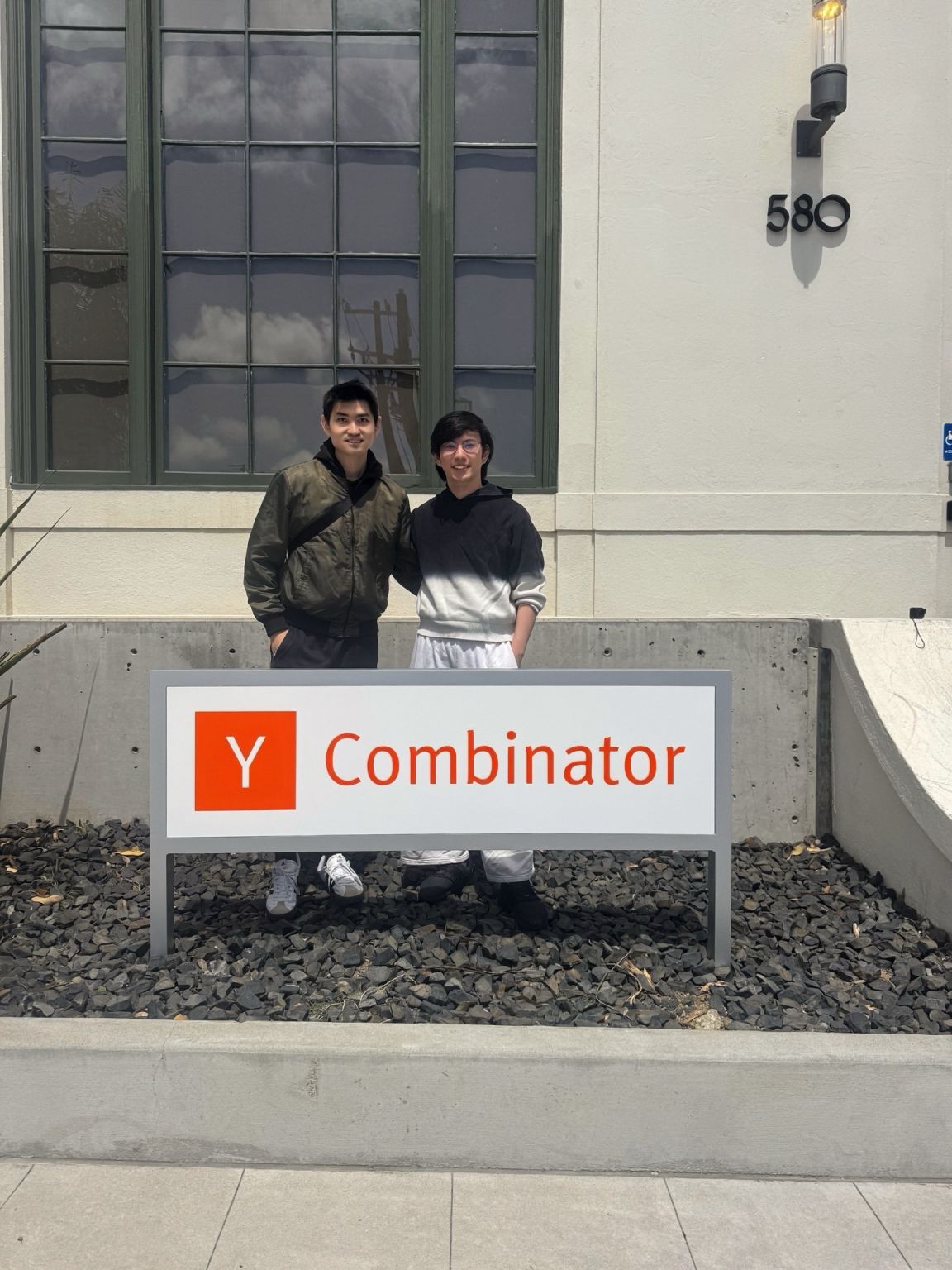
YouArt launched on Product Hunt in November 2025 and finished fifth for the day. Zheng's launch note described three foundations: a workflow engine connecting models, traditional tools and prompts; a marketplace where creators could share and remix workflows; and agents able to learn from those workflows. It was an engineer's vision of creativity as a living system rather than a one-off prompt.
By the time YouArt entered Y Combinator's Spring 2026 batch, the thesis had stretched past tooling. The company began talking about “AI originals,” the films and series that creators wanted to own rather than simply generate. The expensive camera and enormous crew were no longer mandatory, but production was not free. YouArt estimated that a full-length AI series or independent film could still require roughly $50,000 in generation credits, voice work and post-production. The old gate was a studio executive. The new gate might be a credit card bill.
03 / Growth without a séanceThe feature must carry its own invitation
In July 2026, Zheng wrote that YouArt had reached a $1 million annualized revenue run rate in four months and become profitable. Soon afterward, the company's YC page reported more than $120,000 in monthly revenue after five months. These are company-reported numbers, early and unaudited, but they reveal why Zheng's operating notes attracted attention. He offered four lessons, all sturdier than “post more.”
First, a small AI-native team can trade headcount for speed and clear judgment. Second, consumer distribution should shape the product before launch, not arrive afterward carrying a tray of hashtags. Zheng asks whether a new feature can act as its own organic campaign. Video has an unusual advantage here: the output is also the advertisement. A useful effect travels because people want to show what it made.
Third, the work that discovers product-market fit and the work that sustains growth are different species. YouArt's early jumps came from viral creative trends. Trends are lively guests and poor tenants. The team moved toward standard operating procedures, reusable workflows and repeatable creative systems. Fourth, the plain old requirement survives every technological costume change: make something people return to because it relieves a real frustration.
Read the chart carefullyThe endpoints come from YouArt's public YC launch page. The curve between them is illustrative because the company has not published a month-by-month breakdown.
04 / The larger betA tool grows up and acquires an economy
The change in YouArt's pitch is a revealing part of Zheng's story. In 2025 he asked what the workspace of intelligent creation should be. In 2026 he was discussing the unbundling of the entertainment value chain. The first question is about interface. The second is about institutions.
Production, funding and distribution were once bundled inside a studio because cameras, crews, marketing and theatrical access were expensive. AI loosens the production knot. It does not automatically replace financing or confer an audience. Zheng's answer is to bundle a different set of functions around the creator: the agent that helps make the work, the page where fans encounter the proposal, the mechanism through which they fund it, and the subscription through which the relationship continues.
There is a mild irony in calling this the democratization of filmmaking. Democracies are famous for requiring infrastructure. YouArt is trying to build some: payment rails, publishing spaces, workflow memory, model access and a marketplace of ideas. Its August 2026 addition of Wan 3.0, with native 4K video, synchronized audio and connected shots, shows the production layer continuing to widen even as the company's story moves beyond production.
The choice of models also says something about Zheng's product instinct. Creators rarely stay inside one generator from idea to export. A working afternoon can move through concept development, still images, motion, voice, editing and asset organization. YouArt's promise is continuity across that untidy sequence. Wan 3.0 joined a library rather than becoming a separate destination, while its Identity Lock feature addressed the prosaic but important problem of keeping a character's face and clothing consistent across shots. The magic trick is continuity; the craft is preventing the rabbit from changing jackets between camera angles.
The aspiration is franchises. Zheng believes many AI-native creators can build enduring fictional worlds instead of producing anonymous clips for a passing feed. Ownership matters in that sentence. A creator who owns the IP, the paying relationship and the audience has a business with memory. A creator who owns only yesterday's viral clip has a demanding hobby.
“Launch fast. Let the market correct you.”Harry Zheng on operating an AI-native company
Whether YouArt becomes that infrastructure will depend on unglamorous details: creators returning after the novelty fades, fans paying for works still in progress, costs staying tolerable, and the marketplace producing more signal than noise. Zheng has not chosen an easy business. He has chosen one whose difficulties begin precisely where the demo ends.
That may be the cleanest way to understand him. Zheng is an engineer who keeps following the system downstream. At Cornell, data moved through microservices. At TikTok, ads moved through a commercial loop. At YouArt, a creative idea is meant to move from prompt to workflow, trailer to funding, audience to recurring income. The screen may show a film. Behind it, he is drawing arrows.