Before Hal Lawton was responsible for a store full of work boots, he wore the industrial version himself. His first job after college was in a paper mill in rural North Carolina. There were safety goggles, steel toes and a satisfyingly concrete measure of accomplishment: tons of paper made. An engineering degree could help explain the machinery. Running the business raised questions he had yet to answer.
That gap sent him to business school. Other gaps would send him into consulting, home improvement, online marketplaces and department stores. Eventually, the student of chemical engineering became president and chief executive of Tractor Supply, a business where an understanding of processes has to coexist with an understanding of people who need fence posts.
Lawton’s career is easier to follow if you think of it as a continuing education. The company names change. The appetite for another lesson seems to survive the move.
An engineer goes shopping
He grew up in Kingsport, in northeast Tennessee, good at mathematics and science. His father worked in finance at Eastman Chemical, where chemical engineers occupied an important place in the corporate imagination. Lawton absorbed the suggestion. He went to North Carolina State University and graduated in 1996 with degrees in chemical engineering and pulp and paper science technology.
The combination is a useful corrective to the idea that a retail executive must have spent childhood rearranging shop windows. Lawton’s early training concerned how things were made. The work of deciding what people wanted to buy came later.
At the University of Virginia’s Darden School of Business, he earned his MBA in 2000. McKinsey followed. Consulting offered access to management problems and executive teams, and he became an associate principal. It also left an itch: he wanted responsibility for operating a business.
He later described his career’s recurring interests as “intellectual curiosity and the desire to learn.” Those are agreeable qualities in a consultant. To become an operator, he needed a place to exercise them with consequences attached.
- 1996NC State
Two engineering degrees - 2000Darden + McKinsey
Learning the business - 2005Home Depot
Stores meet screens - 2015eBay
The marketplace years - 2017Macy’s
The department store - 2020Tractor Supply
Back to Tennessee
The job after the job he wanted
Home Depot became the workshop. Across ten years, from 2005 to 2015, Lawton held roles that took him through business development, finance, online retail and merchandising. He helped develop its internet business, which reached nearly $2 billion in sales. He also became senior vice president of merchandising. The experience joined the website to the merchandise and the merchandise to the store.
At eBay, where he became senior vice president for North America in 2015, the center of gravity shifted. His responsibilities included buying and selling activity, marketing and operations, alongside global shipping, payments, risk and trust. A marketplace presents an executive with a different problem from a shelf: the relationship depends on transactions between people the business does not employ.
Then came Macy’s. As president from September 2017 through December 2019, he oversaw the brand’s merchandising, marketing, store operations, technology and consumer analysis. His route had taken him from power equipment to online sellers to department-store customers. Each setting enlarged the range of things a retailer could get wrong before somebody reached the checkout.
When Tractor Supply recruited him, it was buying experience across those settings. Lawton arrived in January 2020, succeeding Greg Sandfort. On his first day, January 13, he wrote that he would spend the coming weeks and months visiting stores and distribution centers and listening. He acknowledged how much he still had to learn. For a new chief executive, that is a useful opening line. It leaves the people doing the work somewhere to enter the conversation.

His predecessor mattered to the way he introduced himself. Lawton paid tribute to Sandfort’s work and referred to the company’s existing culture before setting out his own priorities. There was an inherited business to understand. An incoming executive can bring experience without assuming that every useful idea must arrive in his suitcase.
An app with mud on its boots
Lawton’s explanation of Tractor Supply begins with a customer’s day. There may be animals to feed or chores on the land before the customer heads to a job elsewhere. More chores wait afterward. The store’s assortment follows that routine: work gloves, birdseed, feed, fencing, garden supplies and trailers can belong on the same shopping list.
That helps explain his preference for describing the business through a lifestyle. The relevant question is what the customer needs to get done. A tidy merchandise category can be less helpful than an untidy list of actual errands.
His 2021 account of curbside pickup made the technology equally tangible. A customer could enter vehicle details and instructions in the app. An employee’s headset announced the order. Handheld devices helped the team pick and complete it. Wireless access extended outside the store. Digital convenience required a series of physical jobs to happen in the right order.
A beautifully designed button cannot carry a heavy bag to a truck. Someone has to do that part. Lawton’s interest lies in connecting the button to the person.
The boss at the bottom
For all the systems in his account, Lawton’s leadership advice keeps returning to the employee. He has described an inverted pyramid, with customers and frontline workers above the chief executive. “My role is to be a servant to the organization,” he said in 2021.
He puts weight on empathy and decency, and advises people choosing a job to pay attention to the boss they will have. Location and salary are easier to compare. The person deciding which opportunities reach you can matter just as much. His prescription includes reading, too: “Leaders are readers.” It is a compact instruction with an indefinitely expanding homework assignment.
At NRF’s 2024 gathering, he described bringing new store managers to Nashville for a week of training that included dinner with the executive team. He discussed giving employees access to knowledge through headsets and using technology to spot when customers needed assistance. The recurring idea was practical: make the employee better equipped to help.
“Leaders are readers.”
Hal Lawton, 2021
When values become decisions
A leadership philosophy also has to account for decisions that disappoint people. In June 2024, Tractor Supply announced it would eliminate diversity, equity and inclusion roles, retire its existing DEI goals and withdraw carbon-emissions goals. It also said it would stop sponsoring nonbusiness activities such as Pride festivals. The company presented the changes as a response to customer feedback.
The reversal drew criticism, including from the National Black Farmers Association, which called for Lawton’s resignation. For a business built around belonging to a community, the episode exposed how contested that belonging could become. Public commitments create expectations among employees and customers; withdrawing them creates another set of judgments. That is part of the record alongside the sales growth.
By November 2024, NC State was recognizing Lawton as its College of Natural Resources Distinguished Alumnus of the Year. Its account credited his tenure with a 70 percent increase in Tractor Supply’s net sales to that point. In November 2025, he joined Wayfair’s board, carrying his experience into another business where the relationship between products, screens and delivery matters.
The operating numbers became more difficult in 2026. Second-quarter net sales rose 2.3 percent to $4.54 billion, while comparable store sales fell 1.5 percent. Tractor Supply lowered its annual outlook. Growth from an expanding business and weaker sales at comparable stores can happen together, an awkward detail for anyone who prefers a single reassuring number.
Tractor Supply, Q2 2026. Total sales: $4.54 billion.
The investment program continued. In September 2026, Tractor Supply celebrated its eleventh distribution center in Nampa, Idaho. The project represented more than $200 million and was designed initially to serve 123 stores across nine states. Its automated storage systems are a long way from the paper mill, although the questions about moving materials efficiently would sound familiar.
For Lawton, this is the ongoing test of the operator’s job he once wanted: choose where to spend, keep the existing business working and answer for the results. His current commitments also include the National Retail Federation and the Business Roundtable. Those connections offer other executives to learn from. Back inside Tractor Supply, the decisions still arrive with local consequences, at individual stores and distribution centers.
A teacher keeps the notes
There is a quieter way to understand what Lawton values. At NC State, professor Hasan Jameel remembered the young engineering student arriving in a tie-dye shirt. After graduation, Lawton kept sending him thank-you notes. Jameel saved them.
In 2024, Lawton and his wife endowed the Dr. Hasan Jameel and Hal Lawton Distinguished Professorship. Its purpose includes supporting a professor committed to undergraduate students’ leadership, professional development and personal growth. The gift carries the name of a teacher whose influence survived a considerable collection of corporate titles.
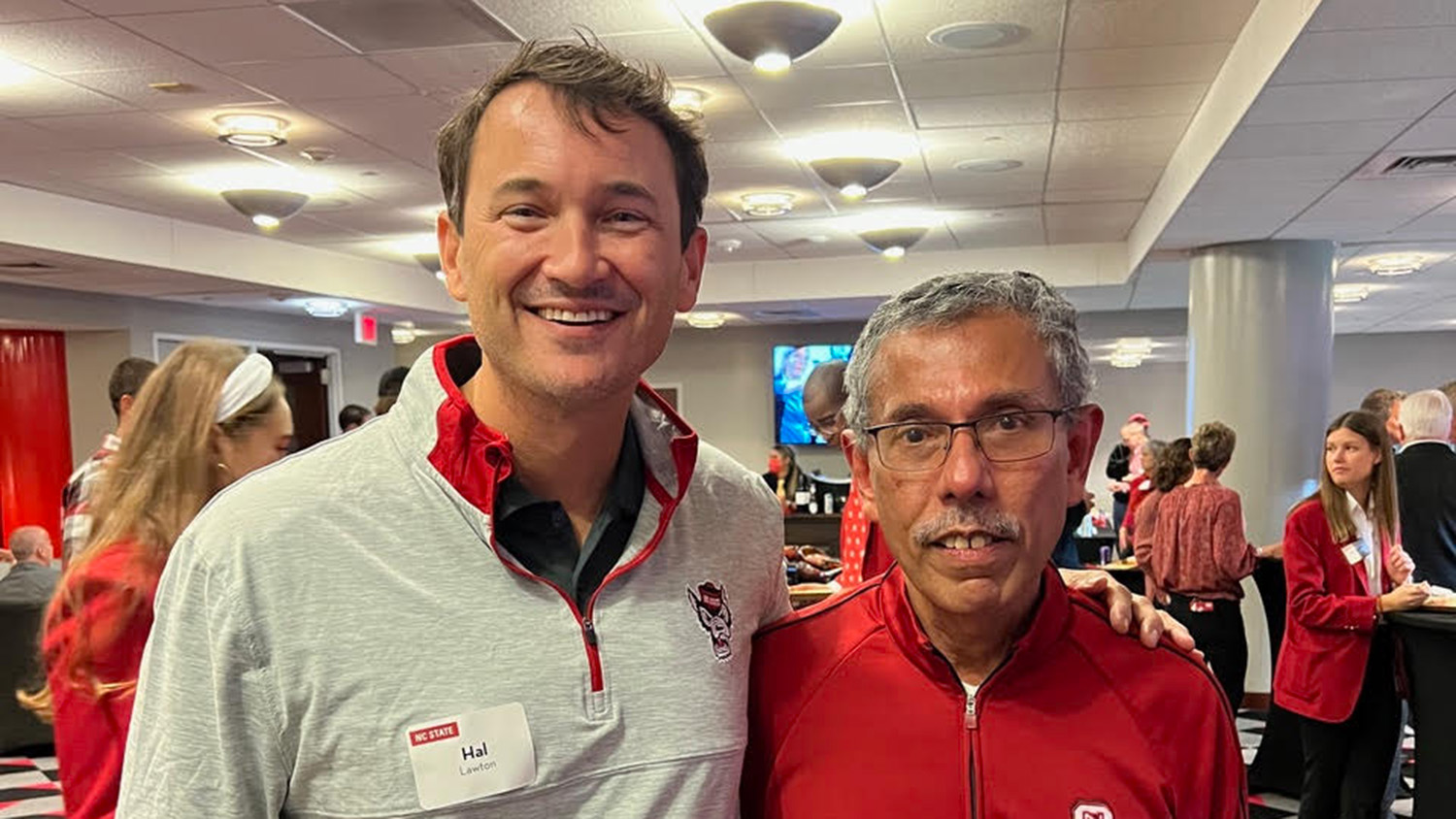
Lawton has spoken about the scholarship that made his education possible and the effect of Jameel’s support. Remembering that help became a way of extending it. A professor would have resources to do for other students some of what had been done for him.
The paper mill, the stores and the boardrooms all belong in his story. So do those saved notes. A career spends years collecting new responsibilities. Lawton’s gesture suggests that it can also be a way of remembering who helped you become ready for them.
Continue the conversation
READ, WATCH & FOLLOW