Before SolarEdge had a solar business, it had five people who wanted to work together. Guy Sella and four former colleagues were looking for a problem worth their time. The familiar version of a technology company’s birth begins with an invention. This one allows for a less cinematic, more useful beginning: people sitting down, examining possibilities, and changing their minds.
Sella would help turn that search into a company selling equipment across international markets. He would also insist on a consequential detail. SolarEdge should make the system that delivered the result, including the inverter, rather than leave the essential partnership to someone else. Much of his career becomes easier to understand through that decision. He liked to know how the pieces fitted together, whether the pieces were electronics, an investment, or the people around a table.
A team looking for its problem
The five founders were Sella, Lior Handelsman, Yoav Galin, Meir Adest and Amir Fishelov. Their shared background was in military technology. Their commercial destination was still open. Handelsman later recalled that their early thinking included power management for laptops and mobile devices. Investors were unconvinced by the market. The team had to look elsewhere.
Solar appeared among the possibilities Sella drew up. In Handelsman’s recollection, it sat well down the list, around fifteenth or eighteenth place, yet they examined it first. The attraction combined a growing market with an engineering problem their knowledge could address. They moved their efforts into it. SolarEdge was founded in 2006.
There is something refreshing about that sequence. The founders did not need a childhood prophecy about solar panels. They needed enough confidence in one another to keep examining where their skills could matter. A team can be certain about working together while remaining quite uncertain about what should occupy its working day.
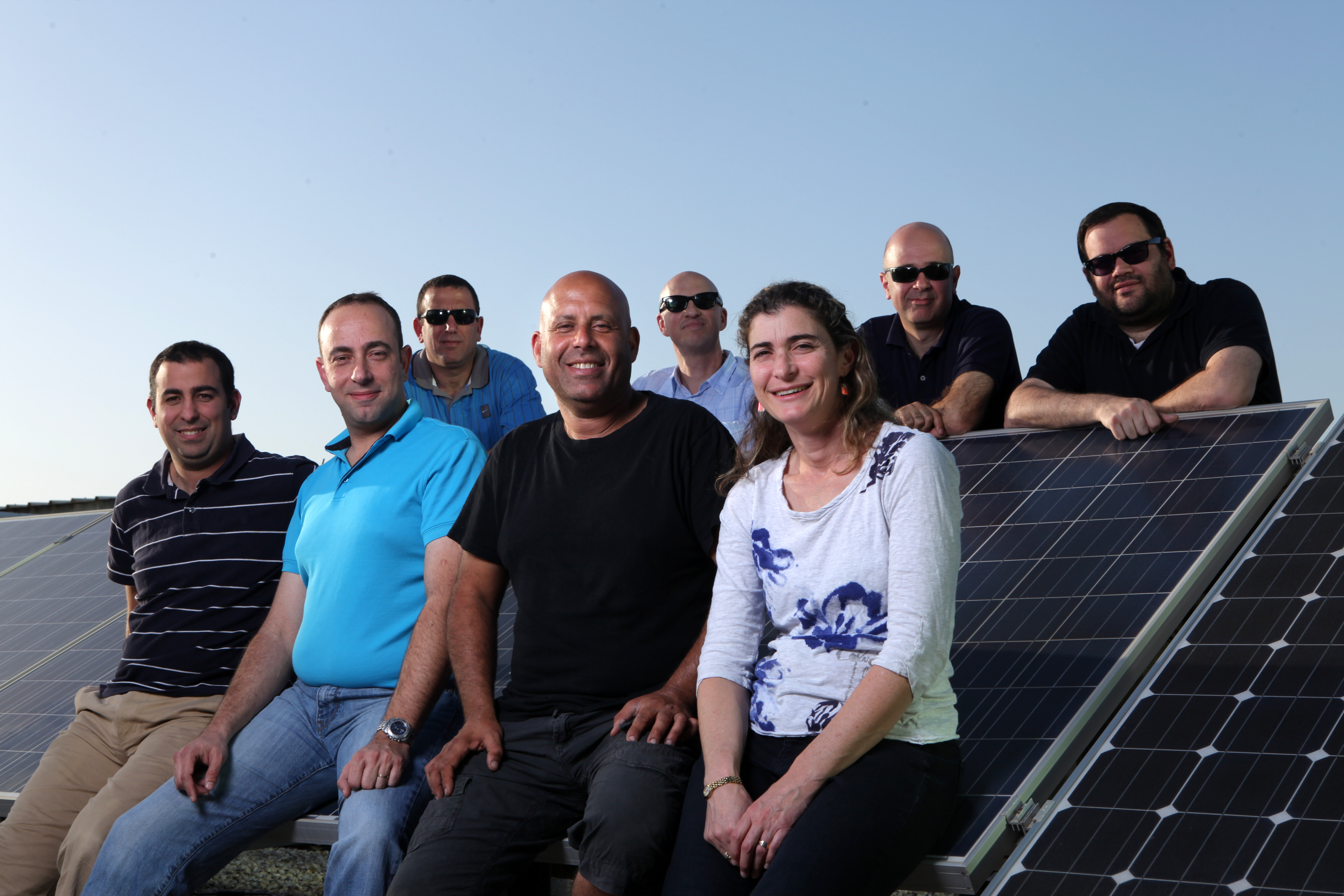
The shaded panel and the larger bet
To understand the opportunity, look at a roof. The panels appear to be doing the same job under the same sky. In practice, one might sit in a chimney’s shadow while another catches unobstructed sunlight. Dirt, orientation and differences between modules complicate the picture. A neat rectangle in a sales brochure becomes a collection of individual electrical circumstances.
SolarEdge’s approach put power optimization at the module level. An optimizer adjusts electrical operation so that a panel can work at its own maximum power point. The inverter then converts direct current into alternating current. Monitoring gives the owner or installer a view of what the system is doing. Each part has a job; the relationship between them determines the result.
Simplified architecture. System monitoring adds visibility into individual module performance.
One technical example makes the point tangible. In a SolarEdge application note, nine modules each produce 200 watts while a shaded tenth produces 40. Together they contribute 1,840 watts before conversion losses. The optimizers adjust their output voltages while maintaining the required string voltage. The shaded module still has a reduced contribution, but its neighbors can continue contributing theirs.
Early investors suggested selling the panel-side technology to established inverter companies. Sella supported developing the inverter as well. The founders’ reasoning was commercial as much as technical: relying on someone else for the other essential component could leave the complete system expensive and the company dependent. Building both meant accepting a bigger development task in exchange for greater control of the finished offering.
The investor crosses the table
Sella had seen young companies from the other side of the investment conversation. Before SolarEdge, he was a partner at Star Ventures, leading investments that included AeroScout and Vidyo. It is a useful distinction in his biography. He arrived at entrepreneurship with experience assessing what other founders proposed to do.
His earlier responsibilities spanned engineering and public service. A Technion engineering graduate, he headed the Electronics Research Department and served as director of technology for the Israeli National Security Council. He also held the secretary role for the National Committee for Cyber Protection. Those positions placed complex technical systems and organizational decisions in the same working life.
His life outside those positions was rather less deskbound. Born in Haifa on February 22, 1964, he went on to work summer fishing seasons in Alaska and travel through South America by motorcycle. After university, he opened a restaurant with friends. It lasted eleven months. The restaurant supplies a small, welcome correction to the idea that an accomplished founder’s every undertaking must have been destined for permanence.
By 2006, the experience of investing, engineering and managing had a new outlet. SolarEdge would demand decisions about products and money, but also about how far the founders wanted their company to go. Sella’s preferred answer required an independent business with enough substance to sell its own system.
When the work reached Nasdaq
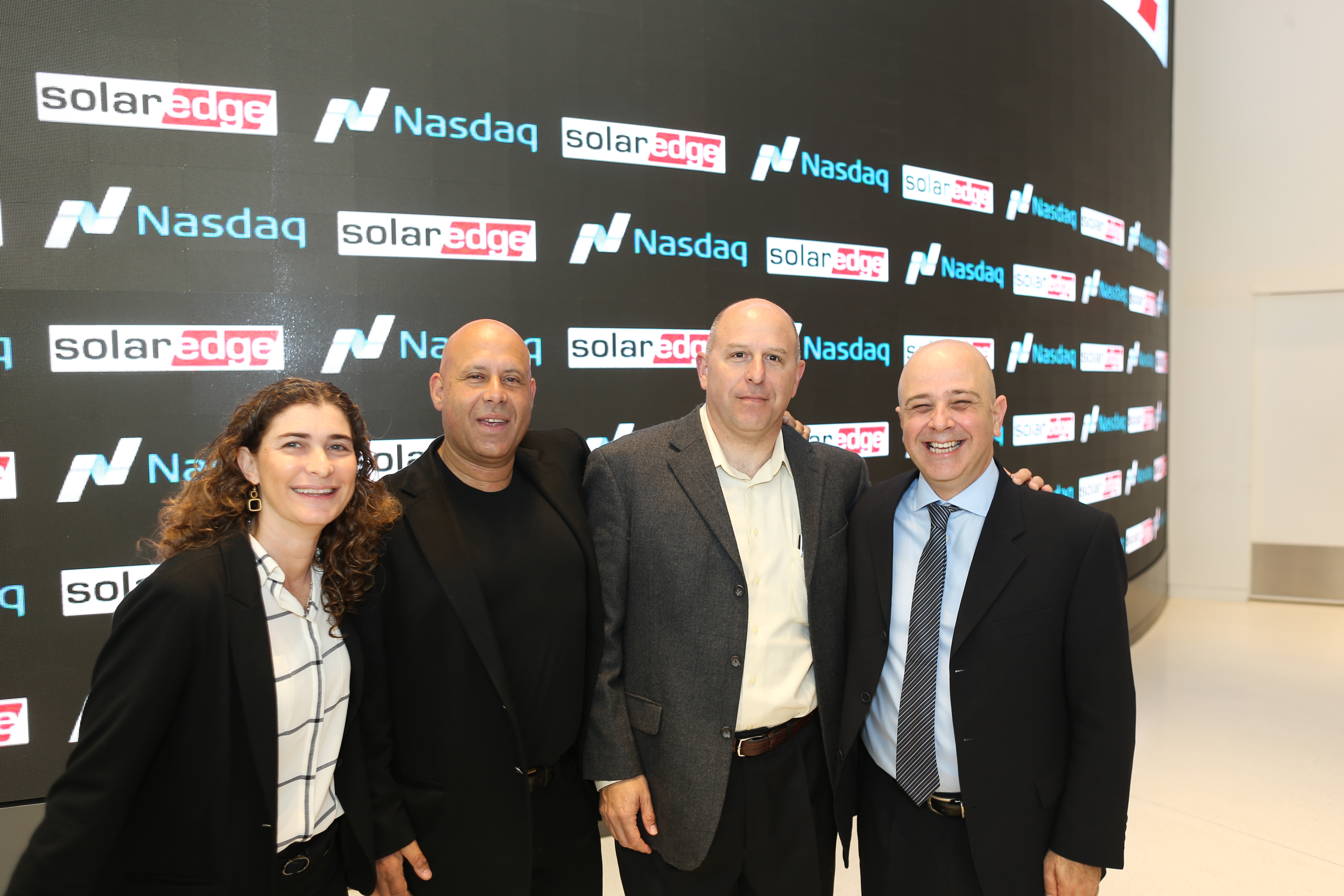
SolarEdge began commercial sales in 2010. On March 26, 2015, it announced an initial public offering priced at $18 a share, with seven million shares in the initial offering. Trading was expected to begin that day under SEDG. The announcement put a public date and price on years of private engineering decisions.
The original seven-million-share offering represented $126 million before fees and any exercise of the underwriters’ option. A market ceremony is an unusually tidy event in a company’s untidy development. There is a price, a ticker, a photograph. Customers still expect the equipment to arrive and work the following morning.
By 2018, annual revenue was $937.2 million, up 54% from the preceding year. The year’s inverter shipments represented 3.9 gigawatts of AC capacity. These figures describe a business that had moved beyond proving its original idea. It had to manufacture, deliver and support equipment at scale while continuing to develop what came next.
Company revenue, US dollars. Bars share a zero baseline. Historical results during Sella’s tenure.
The ambitions were widening too. Acquisitions brought batteries, uninterruptible power supplies and electric-vehicle powertrain technology into the picture. Sella’s discussion of the 2018 results looked toward clean energy and electric mobility. Solar power had provided the opening. Power electronics offered further places to apply the company’s experience.
Sella’s ambition connected the production of energy to its use. He wanted renewable generation and smarter consumption to develop together, reducing reliance on fossil fuels while allowing technology and living standards to advance. That gave the engineering work a purpose extending beyond the next shipment. He also looked toward the judgment of children and grandchildren: whether they would see the company’s efforts as a useful contribution to reducing the carbon footprint they inherited. The business had immediate customers, but the consequences of its work would belong to other people too.
The flip-flops were part of the picture
The corporate milestones leave out a useful part of Sella’s presence. Colleagues remembered someone determined, mechanically attentive, sociable and adventurous. Zvi Lando, who succeeded him as CEO in 2019, also remembered a founder fond of wearing flip-flops, even at formal occasions. Succession, Lando joked, meant: “I had big flip-flops to fill.”
“I had big flip-flops to fill.”
Zvi Lando, remembering his predecessor
Lando’s recollections included their daughters’ tennis competitions and late-night ice-cream outings during business travel. That gives their working relationship a recognizable texture. The people discussing sales and engineering also had families, interests and an appetite at an inconvenient hour. Friendship could occupy the gaps between the appointments.
After Sella died in August 2019, colleagues could still imagine his reaction to a decision. Lando described looking toward his photograph and joking about shielding it from an unwelcome discussion. The affectionate joke suggests how firmly Sella’s preferences had become part of the office’s everyday conversation. He remained a participant people could picture, even when the decisions belonged to them.
Keep management near the machinery
One of those preferences survives in Sella 1, the manufacturing facility in northern Israel named in his memory. Sella wanted management close to production and different disciplines working together. Locating manufacturing near research and development could shorten the journey between a prototype and the discovery of what needed fixing.
He also supported one-piece flow: following individual units along a production line rather than allowing large batches to obscure their progress. Improvements developed at Sella 1 could then inform other manufacturing sites. The practical attraction is easy to see. When design and production can learn from each other, fewer lessons need to wait for a formal meeting.
A factory requires decisions about distance, responsibility and feedback as surely as it requires machines. Sella’s interest in the whole system reached beyond the box sold to a customer. It included the organization making that box. A product that works on a bench still needs a dependable way to be made again.
Another generation at the bench
The Technion offers another continuation. In 2020, SolarEdge committed $1 million over ten years to a joint educational and technological project in Sella’s memory, with the Technion committing matching support. The plans included teaching, graduate fellowships and research awards. His former university would give other people time and equipment to work on energy problems.
The Power Electronics and Renewable Energy Laboratory, inaugurated in 2022, made that connection practical. Students could work on power conversion and applications involving photovoltaics and electric mobility. The laboratory brought renewable energy into hands-on engineering education, joining the act of understanding a circuit to the act of making one perform.
The work continued through research calls. The 2024-2025 memorial program invited collaborative Technion proposals across power electronics, electrochemistry, photovoltaics, the electrical grid and energy storage. It offered a grant of up to $20,000. The amount is modest beside a public company’s revenue, but the scale suits a beginning: enough support to investigate a question before anyone knows what it might become.
Sella’s story comes back to that stage, when useful people gather around an unresolved problem. He helped five colleagues turn such a beginning into SolarEdge. Now his name appears where other engineers can start: near the equipment, with something still to work out.
Keep reading, watching & exploring
- Guy Sella’s life, in the memorial archive ↗BIOGRAPHY, FAMILY MEMORIES AND PHOTOGRAPHS
- The poems he left behind ↗WRITING FROM THE GUY SELLA MEMORIAL SITE
- Life and legacy: SolarEdge’s video tribute ↗MEMORIAL AND VIDEO
- Zvi Lando remembers his friend and former boss ↗CTECH · FEBRUARY 2021
- How Sella’s factory plans took shape ↗SOLAREDGE · AUGUST 2023
- Energy research supported in his name ↗GRAND TECHNION ENERGY PROGRAM
- SolarEdge’s tribute on LinkedIn ↗COMPANY POST AND COLLEAGUE REMEMBRANCES
- The founders recall SolarEdge’s early decisions ↗GLOBES · SEPTEMBER 2019
- The 2015 offering announcement ↗SOLAREDGE INVESTOR RELATIONS