The first useful clue in Guy Mansueto’s career is not the title he holds now. It is the title he held in 1997: director of integration and implementation at QuadraMed. Before the brand plans and product launches, before Watson and the executive suite, he was close to the difficult seam where software meets an actual organization. The diagrams are tidy there. The work rarely is.
Implementation teaches a particular kind of humility. A product can be clever and still fail to fit the day. A feature can be technically correct and operationally irrelevant. The people using a system do not experience its strategy deck; they experience the extra click, the missing field, the handoff at 4:47 on a Friday afternoon. Mansueto carried that education into marketing, and it explains the unusual coherence of a résumé that has otherwise crossed several eras of healthcare technology.
His public biography calls him a healthcare technology marketing executive with more than 25 years of experience. His LinkedIn introduction rounds the span past 30. Either count points to the same fact: this has not been a tour through fashionable software categories. It has been a long argument for making complicated systems legible.
A career built from the workflow outward
After QuadraMed, Mansueto joined Allscripts in 2000 as vice president of marketing. Electronic health records were moving toward the center of American healthcare, though the destination was much clearer than the route. A 2004 industry newsletter places him on a program about information technology and the national healthcare agenda, demonstrating Allscripts’ offerings alongside speakers from Siemens, Microsoft and Sprint. The conversation concerned readiness, accountability and return on investment. It sounds remarkably contemporary because healthcare technology has a habit of changing its nouns faster than its problems.
In 2009 he moved to Phytel, the Dallas population-health software company. Here the central object was no longer only the record. It was the space between visits: the patient who needed a test, the practice trying to spot a gap, the outreach that might bring someone back into contact with care. Mansueto described Phytel’s automated outreach as a way to engage patients across “an entire community.” He connected the software to accountable care and the patient-centered medical home, two models then moving from policy circles into the operating vocabulary of provider organizations.
“Thought leadership is one component of a content marketing strategy focused on adding value.”Guy Mansueto, while at IBM Watson Health
He did more than promote the category. He helped produce some of its working literature. His listed publications include a peer-reviewed 2011 study on physician-led automated communications, a care-coordination guide he co-chaired, a 2012 roadmap for provider-based population-health automation, and a contribution to the 2014 book Provider Led Population Health Management. He also moderated industry discussions and served as a co-chair in the Primary Care Collaborative’s Care Delivery & Integration Center.
This is marketing behaving less like decoration and more like fieldwork. To explain a young category, you first help people name its moving parts. Then you provide a language sturdy enough for customers, clinicians, operators and buyers to stand on together.
The academic line is similarly practical. Mansueto graduated from Loyola University Chicago and earned a master’s degree in management from North Park University, two institutions rooted in the city where his current profile locates him. Later came a Wharton Executive Education credential in marketing analytics, issued in 2022. The sequence suits the career: broad business formation first, quantitative sharpening later, once marketing departments had become data operations as well as creative ones.
He also took the classroom in the opposite direction. Publicly listed service includes advisory work for digital-marketing programs associated with George Washington University and the University of South Florida. Those appointments put a working executive beside academic faculty, helping shape what the next group of marketers would learn. His membership in senior marketing groups and the CEO Council of Tampa Bay extended the same habit of comparing notes. For a profession prone to issuing commandments, Mansueto’s record suggests a preference for councils, guides and panels: places where the answer has to survive other people’s experience.
Thirty years, six shifts in the health-tech vocabulary
implementation
EHRs
population health
analytics
clinical assets
connected care
The bars mark sequence, not company size. The vocabulary changed; the work of translation remained.
The Watson chapter, without the magic act
IBM acquired Phytel in 2015. Mansueto crossed the bridge into IBM Watson Health, becoming vice president of portfolio marketing. Scale arrived all at once: a broader product set, a global company, and a brand whose name invited extravagant expectations. His published definition of thought leadership from that period is notably sober. It is about adding value, engaging an audience on subjects customers care about, and building relationships. No incantations. No suggestion that a white paper ought to descend from the clouds with a trumpet section.
That restraint is useful in healthcare, where theatrical claims age poorly. Mansueto’s PartsSource biography says he specializes in positioning complex platforms, building scalable marketing organizations and translating innovation into clear market value. “Translate” is the important verb. Translation preserves meaning while changing the language. It requires knowing both sides.
Documented span
30 yrsFrom implementation work in 1997 to executive marketing in 2026.
IBM transition
2015Phytel was acquired, moving his work into Watson Health.
PartsSource
2 actsAn initial 2017-22 tenure, followed by a return to leadership.
Selling the importance of an unglamorous part
Mansueto joined PartsSource’s executive team in late 2017. The announcement gave him an expansive brief: go-to-market strategy, overall product strategy and global marketing for technology-enabled healthcare supply-chain services. The company’s world includes replacement parts, repairs, supplier networks, clinical engineering and asset data. These are not objects that naturally yearn for a billboard. They become interesting at precisely the moment something stops working.
That makes availability the real product. A hospital does not want a procurement workflow for its own sake. It wants the bed, monitor or imaging system ready when a clinician needs it, with cost and quality under control. PartsSource’s current language emphasizes clinical asset performance and care capacity. Behind those polished phrases is a wonderfully blunt test: can the equipment do its job?
Mansueto left in May 2022 to become chief marketing officer of Bamboo Health. There he led brand and communications, commercial marketing, product marketing and demand generation. The company was knitting together the identities of Appriss Health and PatientPing around “real-time care intelligence.” Once again, a category needed a common sentence before it could have a common market.
By April 2023, his public timeline shows him founding a new Helium Interactive entity, returning to an entrepreneurial name connected with his earlier healthcare marketing work. His record also widens beyond the corporate lane. He has advised university digital-marketing programs, served with professional marketing groups, joined humane-society boards and listed an executive-director role with Patients for a Cure. The pattern is not a tidy ascent. It is a portfolio of operating, teaching, advising and service.
The return tells its own story
In 2026, PartsSource again lists Mansueto as its SVP and chief marketing officer. The return is more revealing than a promotion would have been. Returning to a company suggests unfinished work, renewed trust or both. His recent public activity supports a PartsSource campaign around “Capacity in Action,” customer accounts of improving equipment availability, response times and operational control. At the AAMI eXchange in Denver, the company put predictive insights and asset uptime at the center of its message. At the HFMA annual conference, it carried the conversation into capital planning and healthcare finance.
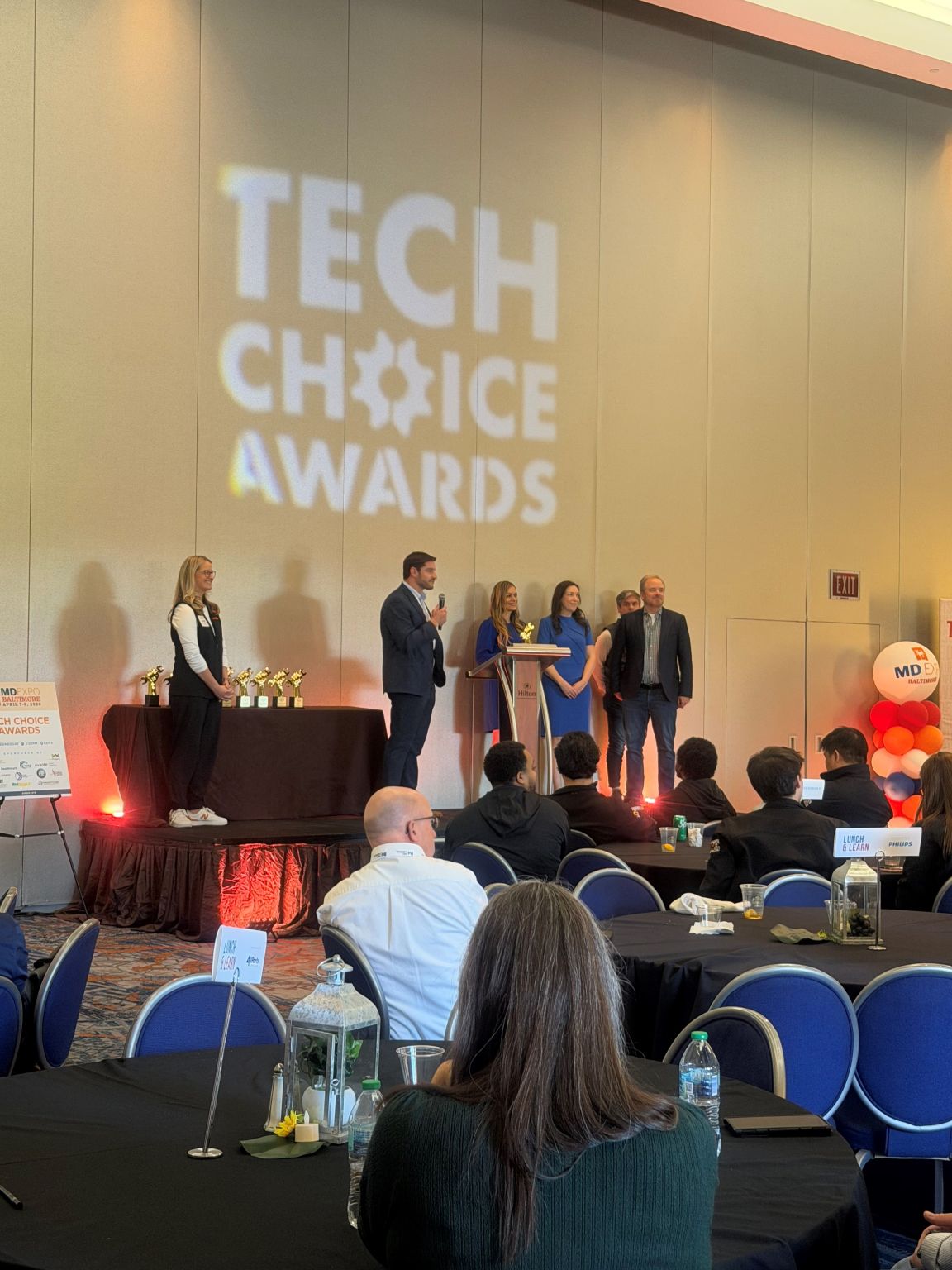
He was also present when PartsSource accepted TechNation’s 2026 Outstanding Vendor of the Year award at MD Expo in Baltimore. The event photograph is pleasingly ordinary: a conference ballroom, projected lettering, people waiting at round tables, a line of colleagues on a low stage. Industry achievement usually looks like this. Less marble staircase, more convention carpet.
There is a useful tension in Mansueto’s work. Marketing likes novelty. Healthcare operations prize reliability. A good technology executive must respect both without confusing them. The new idea earns attention; the dependable result earns renewal. Mansueto’s recurring vocabulary of evidence, workflow, value and availability suggests he knows which one keeps the lights on.
The product may be technical. The value has to survive the walk from the boardroom to the equipment bay.The thread running through Mansueto’s career
His story is not built around a single celebrated invention or a dramatic founding myth. It is more instructive than that. It shows how a career acquires force through repeated exposure to the same hard problem. QuadraMed taught the implementation. Allscripts supplied the records. Phytel brought population workflows. IBM enlarged the portfolio. Bamboo Health connected the signals. PartsSource returned the argument to the physical world.
Across those chapters, Mansueto kept working on the sentence between a complex system and the person expected to care about it. That sentence is easy to underestimate. In healthcare technology, it may be part of the infrastructure.