Allison Dancy’s first useful marketing education happened before she was a marketer. She worked in sales. The job put her close enough to buyers to hear the difference between language that sounded impressive inside a company and language that helped somebody make a decision. Product value had to meet an actual pain point. A journey had to be mapped from the customer’s side, not drawn as a tidy funnel for the convenience of a slide.
That field lesson became the durable idea in a career spanning more than two decades of enterprise software and services. The company names form a compact history of business technology: IBM, Vignette, OpenText, CDS Global and goTransverse, followed by CMO posts at OneTouchPoint, Kibo Commerce, Billd and now Red Oak. The products changed from content management and subscription billing to omnichannel commerce, construction finance and compliance software. The assignment kept rhyming: find the buyer’s real problem, organize the machinery around it and give a complex business a sentence it can honestly inhabit.
The sales floor before the dashboard
Dancy has described the move plainly: sales taught her how to connect with buyers, shape a message around value and pain, and line up outreach with the route to a purchase. She moved from there into marketing and demand generation, then spent more than a decade leading teams. The progression matters because enterprise marketing can drift toward abstraction. A pipeline becomes colored stages. A person becomes an account. Curiosity is outsourced to intent data.
Her view runs in the opposite direction. Digital signals matter, but relevance matters first. Buyers research quietly, compare alternatives at odd hours and arrive at a sales conversation with much of their education already complete. Blind targeting only adds noise. The marketer’s task is to understand who is looking, what problem brought them there and which next piece of information would be useful. Technology can make that work scalable. It cannot excuse an empty message.
“Buying is a non-linear journey.”Allison Dancy, on modern B2B marketing
The line explains her suspicion of the ceremonial funnel. No single touch reliably captures a buyer and carries them downward. A useful article may prepare a later search. A product page may answer the objection that makes a demo worth booking. Another employee at the same company may become the visible lead. The work compounds, but its effects refuse to stand neatly where an attribution report would like them.
A website with a job to do
Among Dancy’s more memorable operating opinions is that the website sits at both the beginning and the end of marketing. It carries the brand story, houses the content, receives campaign traffic, gives search engines something to understand and provides the conversion trail. For her, marketing should own its information architecture, navigation, design, content and measures of usefulness. A campaign loses its rhythm when every change waits in somebody else’s technical queue.
That ownership is not a bid for decorative control. It is a demand for coherence. Customer records, marketing automation, intent signals and account-based tools should speak to one another. Personas should inform content. Sales and marketing should agree on targets, timing, handoffs and the rules inside an account. When they do not, money goes toward the wrong leads, work overlaps and colleagues start behaving like rivals with adjacent expense accounts.
Connect the digital systems so a signal can become context rather than another isolated event.
Give sales and marketing common goals, shared language and explicit handoffs.
Let every useful page help a buyer reach the next useful page on their own schedule.
Treat marketing as repeated observation, testing and revision rather than a permanent answer.
Four CMO seats, no easy categories
In 2018, OneTouchPoint hired Dancy from goTransverse, where she had built a demand-generation center, helped earn analyst attention and contributed to pipeline and revenue growth. OneTouchPoint was turning a production business into a broader marketing-services proposition. Her period there included a corporate rebrand and acquisition integration, the sort of work that forces a company to decide which old truths deserve keeping and which new ones need saying.
Kibo recruited her in 2021 as it assembled ecommerce, order management and personalization in one platform. She arrived at a moment when retailers were learning that “omnichannel” meant more than offering several checkout buttons. Inventory, identity, fulfillment and experience had to behave as parts of one system. In 2022, she spoke for Kibo when Forrester placed it as the only Leader in its B2C Commerce Solutions evaluation, pointing to a modular, API-first platform designed around how clients’ customers actually shop.
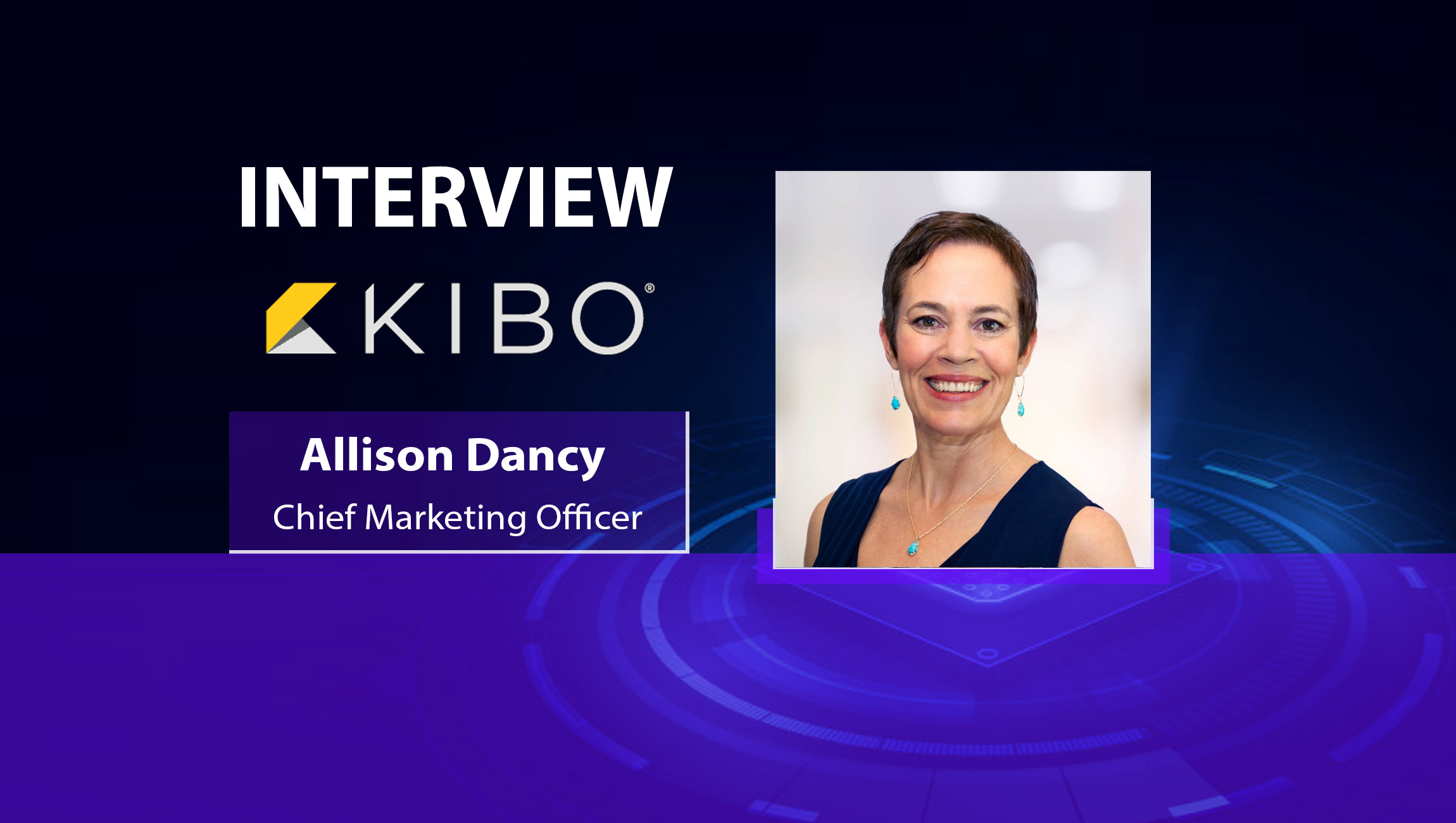
After a period as an independent CMO and go-to-market adviser, Dancy joined Billd in 2023. The Austin fintech offers financial tools to commercial subcontractors, a market where the customer problem is less abstract than most SaaS copy: materials must be bought and crews paid before a general contractor’s check arrives. Her brief covered demand generation, brand management and product marketing, and again asked marketing to translate a complicated financial mechanism into practical value.
The anthropology that stayed
There is another way to read this career. At Iowa State University, Dancy studied marketing and international studies. She spent time in the South of France during college, then taught English in Japan for two years. She has said that an alternate life might have led to advanced study in cultural, linguistic or food anthropology. It is tempting to call that the road not taken. It may be more accurate to say the instinct took a corporate job.
Markets have dialects, rituals and unspoken hierarchies. A construction subcontractor and a retail technologist do not describe risk in the same way. A financial-services compliance officer and a creative director may work on the same communication while experiencing opposite pressures. Product marketing begins to work when it notices these differences without turning people into types. Dancy’s language about personalization is careful on this point: tracking alone is not understanding, and automation without relevance merely produces industrial quantities of irritation.
Her Austin civic work adds a delightful footnote. From 2020 to 2024, she served on the board of Forklift Danceworks, a nonprofit known for making dances with people rarely presented as dancers: sanitation workers, power-line crews, warehouse employees and others whose physical skill is usually hidden inside the word “labor.” She later served on the Austin Community Foundation Women’s Fund Grant Committee. Neither role needs to be bent into a business parable. Still, a person interested in the choreography of buyer journeys found herself supporting an organization that asks audiences to look again at how work moves.
Marketing meets the rulebook
Red Oak appointed Dancy Chief Marketing Officer in July 2025. Her remit included brand positioning, go-to-market strategy and pipeline acceleration for software serving investment firms, insurers and wealth managers. The platform deals with the full regulated-communications lifecycle: content creation, advertising review, distribution, supervision and recordkeeping. Every claim wants speed; every regulator quite reasonably wants receipts.
This is a suitable test of her systems view. In regulated markets, marketing cannot operate as the department that invents promises and sends them down the hall for approval. Compliance cannot be treated as the department where language goes to wait. The operating advantage comes from connecting the workflow so each side can see what the other needs. Red Oak made that thesis physical in 2026 with its first Accelerate conference, placing marketing and compliance leaders in the same Austin rooms. Later that year, Red Oak and MirrorWeb combined, extending the platform from content review and distribution into communications supervision and archiving.
The company around Dancy is larger and more integrated than the one she joined. The basic challenge is familiar. Acquisition creates new capabilities faster than a market can absorb new nouns. A CMO must decide what the combined system means, for whom, and why the change deserves attention. She has done versions of that work before, across rebrands, product launches and integrations. Here the answer must also survive scrutiny from buyers whose profession is scrutiny.
The useful discipline of no straight lines
Dancy once described the CMO as strategist, technologist, artist, executor, communicator, leader and politician. The list sounds excessive until one watches a launch cross product, sales, customer service, finance and the executive suite. The title is singular. The constituencies are not. Data can reveal movement, but somebody still has to build a credible narrative from partial numbers and explain it quickly to people with different definitions of success.
Her answer is an operating rhythm rather than a grand formula: form a hypothesis, run a play, learn and iterate. Hire well where your own skill is thin. Make the technology connect. Build content that stays useful after launch day. Keep sales and marketing on the same side of the table. Most of all, remember that a buyer is not a bead sliding obediently down a funnel.
That may be why the varied pieces of Dancy’s biography fit. Sales supplied contact with the buyer. International study supplied an appetite for context. Enterprise software supplied complexity. Civic work supplied another view of labor and community. Four CMO roles supplied repetition under different constraints. Red Oak now supplies the rulebook. Her career has not been a straight line, but then neither is the journey she has spent it trying to understand.
Keep reading