Guy Gal's first useful lesson about real estate was that he wanted very little to do with it. About a decade before Side became a national brokerage platform, he was living in Toronto and needed a home. The agent assigned to the job spoke confidently about the brokerage's past success. Only later did Gal discover that the person handling one of his largest financial decisions worked part time and completed roughly two deals a year. The experience left a mark. Gal carried what he later called a stigma against the profession.
This is not the usual origin story for a real estate founder. There was no childhood fascination with floor plans, no family brokerage waiting to be modernized. Gal came from technology and digital media. He studied History and Philosophy at York University, worked in business development in Toronto, and built companies around online content. His video-commerce startup Kingmaker paired YouTube creators with products their viewers could buy. When Joyus acquired it in 2013, Gal moved his six-person team from Los Angeles to San Francisco.
Kingmaker's sale was a success, though Gal refused to dress it in ceremonial robes. He called it “base success” rather than success in capital letters. The remark contains much of his public manner: ambitious, a little dry, and wary of congratulating himself before the machinery has proved durable. After Joyus, he became an entrepreneur-in-residence at Matrix Partners, paid to look for consequential problems and imagine companies that might solve them.
The second house changed the question
By then Gal was buying a home in the Bay Area. This time the agent was experienced, full time and plainly excellent. Gal praised the brokerage. The compliment landed badly. The agent explained that the work, reputation and customer experience were his own; the large company above him had contributed comparatively little, yet received the credit. He wanted to start a brokerage but found the legal, operational and administrative burden forbidding.
Gal had entered the transaction expecting the brokerage brand to guarantee quality. He left seeing the opposite: quality lived in the individual, while the brand often captured the value. A bad agent had made the whole profession look bad. A good one revealed that the institution could hide the source of the good work just as efficiently.
“I realized, these are my people, they're entrepreneurs.”Guy Gal, on the agents he met while researching Side
He and Ed Wu did not rush to write software. They spent eight months interviewing, meeting and shadowing more than 20 agents. The work produced over 400 pages of notes. The numbers sound comically analog for a technology company, but that was the discipline: watch the job before automating it. They learned that accomplished agents were already running small companies. They recruited, marketed, managed clients and generated revenue. What they did not own was the company carrying their work into the market.
The missing piece arrived over coffee. Gal and Wu asked Hilary Saunders, then a real estate broker who had also practiced real estate law, for 15 minutes. The conversation lasted roughly three hours. Saunders understood the problem from inside: she had left a large brokerage to open a boutique and knew how thin traditional support could feel. She also understood the less glamorous portions of the answer, including licensing, compliance and liability. In 2017, the three launched Side from Gal's apartment.
The art of being the plumbing
Side's idea is easiest to understand by noticing what the customer does not see. A productive agent or team creates a company with its own name, identity and local point of view. Side acts as broker of record and handles the back office: transactions, compliance, payments, technology and support. The agent owns the brand. Side operates beneath it.
Gal compares the arrangement to Shopify or Amazon Web Services, systems that let other businesses exist at scale without insisting that the infrastructure become the storefront. He calls Side an invisible brokerage. The description is both boast and job specification. In most startups, obscurity is an emergency. At Side, it can be evidence that the product is behaving properly.
There is a neat inversion here. The familiar national brokerage puts its logo everywhere and treats agents as people who rent the logo. Side centralizes many of the difficult functions but gives the public identity away. Its partners can look small while borrowing large-company systems. Gal's version of boutique is not lonely. “Historically, being boutique meant being isolated,” he has said. “Today, it means being networked.”
The argument is not sentimental. Ownership, in Gal's telling, changes the economics of a career. A successful agent working under somebody else's banner can build a team and a book of business yet finish with no transferable company. Side is meant to turn that labor into an asset, while sparing the founder from becoming an amateur compliance department.
From agent experiment to operating layer
Annual partner transaction volume figures reported at each period. Different disclosures describe a growing platform, not a valuation chart.
The unicorn met the weather
Money arrived quickly once the model began to travel. In March 2021, Side raised $150 million at a $1 billion valuation. Three months later, another financing valued it at $2.5 billion. Gal talked about entering 15 new states and, eventually, the public markets. The company's annual partner production had already climbed from more than $5 billion in 2019 to more than $15 billion by early 2021.
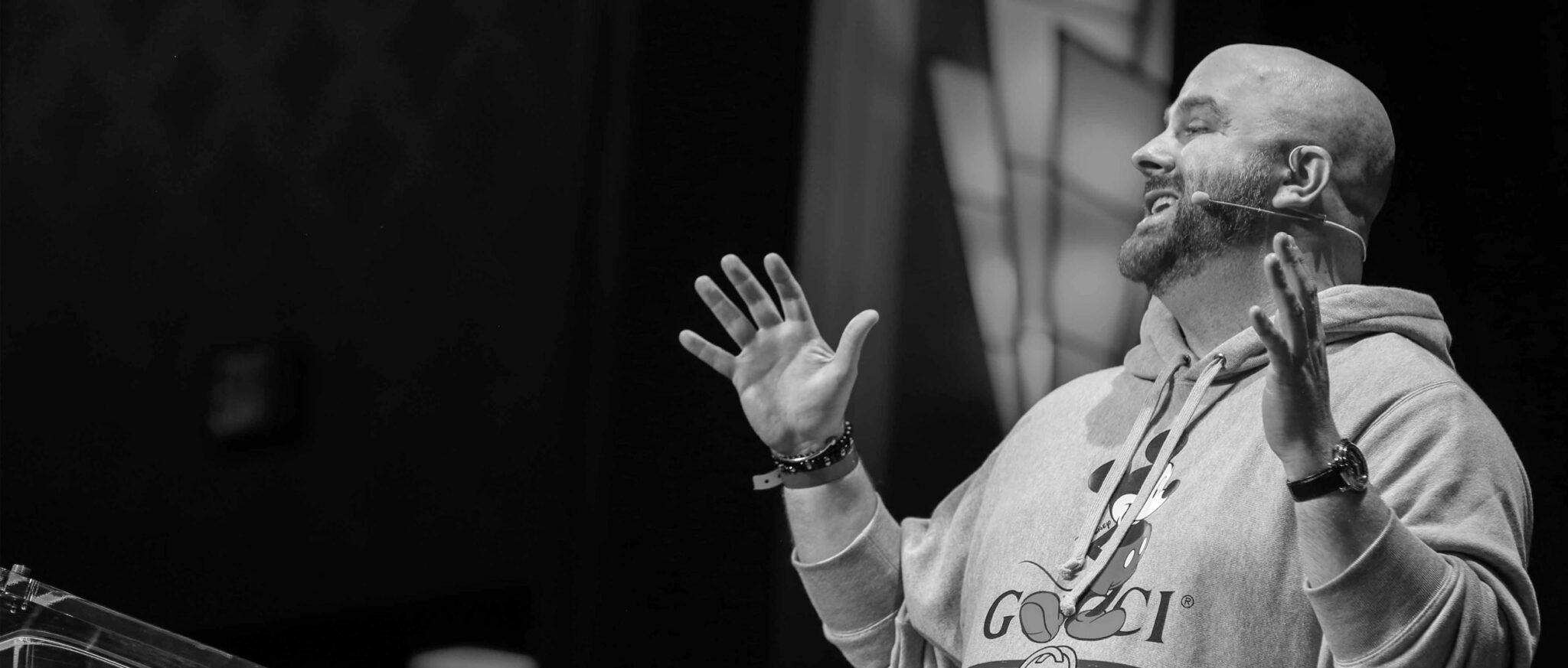
Then housing cooled, mortgage rates rose and proptech's carnival lights went dim. Side reduced staff in multiple rounds, including cuts to its sales organization in 2023. The conditions tested a founder whose product was built for growth. At a company gathering that year, Gal reminded agents that some of them had wished for a harder market during the frenzy. “Here it is. Thanks a lot!” he said, dressed in a hoodie and Kobe sneakers. The line got the laugh it deserved.
His more serious answer came the following year. Gal described finding himself caught in the industry's scarcity and negativity, then relying on Side's community to pull him out. This was not a spreadsheet remedy. It was a statement about the kind of network Side claimed to be. Local owners were supposed to share knowledge rather than face the downturn as unrelated tenants beneath one corporate sign.
“The most enduring structure in nature is community.”Guy Gal, arguing for local brokerage in 2026
The downturn also clarified his quarrel with the traditional model. Large brokerages often benefit from adding many low-producing agents who pay fees and surrender larger commission splits. Gal wants fewer agents completing more transactions, supported by apprenticeships and mentorship. It is an argument for professional concentration, and it invites a fair question about how newcomers enter the trade. His answer is not a closed door so much as a different doorway: learn inside a productive team rather than collect a license and improvise on a client's largest purchase.
A platform steps farther backstage
In 2026, Side made its original wager broader. SideOS, the operating system developed for companies on its platform, opened to independent and franchise-affiliated brokerages nationwide. Those firms could keep their licenses, leadership and brands while using Side's systems for compliance, reporting, payments, agent support and AI-assisted workflows. The platform was processing more than 30,000 transactions a year, and Side said it returned more than six hours to agents on each transaction.
The move is a revealing evolution. Side began by helping an agent leave a conventional brokerage and form a new company. SideOS can now help an existing brokerage modernize without leaving itself. The customer changes; the principle survives. Gal is still selling the right to remain recognizable.
He remains fond of grand horizons. In ten years, he says, he wants far fewer agents, far more ownership and far more excellence. Yet his best stories are strikingly small: a frustrating home purchase, a compliment that annoyed an agent, a coffee that ran two hours and forty-five minutes long. Even the moment that settled his confidence in Side happened in a coffee shop. A friend who had dismissed agents used a Side partner named Val to sell his house, loved the experience and tried to tip her. She refused. Gal saw proof that the model did more than improve an agent's economics. It could improve the customer's experience, too.
Technology founders are often tempted to place themselves in the middle of every exchange. Gal built the opposite arrangement. Side handles the tedious and consequential parts, then leaves the frame to the expert who knows the street, the client and the temper of the local market. It is infrastructure with theatrical manners: set the stage, secure the scenery, pay everyone promptly and resist wandering into the spotlight.