The first thing Grubhub had to deliver was proof. In Chicago in 2004, Matt Maloney and Mike Evans were building a way to find restaurants that delivered to a particular address. The diner’s problem was obvious. The restaurant’s willingness to pay was considerably less obvious.
Maloney later recalled asking restaurants for $140 for six months of premium placement. Owners had already paid for websites that nobody visited. Another promise of internet exposure was a difficult sell. A commission on actual orders made the proposition easier to understand. The restaurant could see the result before paying for it.
- For diners: restaurant discovery, pickup, delivery, and groceries in one place.
- For merchants: demand and delivery, with commissions that need careful arithmetic.
- The current bet: reach customers through Prime, partner apps, and lower fees on larger orders.
A menu with an address attached
Grubhub’s original insight was geographical. A restaurant could be nearby and still refuse to deliver to your building. A useful directory therefore had to organize choices around the customer’s address. As Evans put it in a 2012 founders’ talk: “I am here, who will deliver to me?” That small question contained a business.
The marketplace brought hungry people and restaurants together at a particularly valuable moment: when somebody was ready to buy. Restaurants could reach customers without adding dining-room seats. Diners could compare menus without performing a telephone relay. Grubhub’s expertise grew around search, payments, order management, merchant integrations, and the less tidy business of moving dinner through traffic.
The 2013 Seamless merger widened the network. An IPO followed in April 2014. By June 2026, Grubhub reported more than 415,000 merchants in over 4,000 U.S. cities. Its customers include households, employers arranging meals, and universities connecting campus dining to student accounts. The app is the visible part of a business with several different buyers.
The order is revenue. Then comes subtraction.
A restaurant buys access to demand. Grubhub’s published marketing tiers are 5%, 15%, and 20%; delivery starts at another 10%. Processing and other charges can apply. A higher order count can look encouraging on a dashboard while leaving the kitchen with disappointing economics.
$1.00 marketing + $2.00 delivery = $3.00
Illustration using a 10% delivery rate. Excludes processing, promotions, taxes, food, labor, packaging, refunds, and other costs. Actual agreements and local rates vary. This is restaurant arithmetic, not a diner’s checkout bill.
Consider an illustrative $20 order with a 5% marketing commission and a 10% delivery charge. That leaves $17 before processing, ingredients, labor, packaging, and other expenses. The useful question is whether the order brings profitable business the restaurant would otherwise miss. Moving an existing customer onto a commission-bearing channel can produce a very different answer.
This is where Grubhub competes with DoorDash and Uber Eats, but also with the restaurant’s own website, telephone, and delivery staff. Its appeal depends on the local selection, the actual checkout total, and the merchant’s contract. A national network does not guarantee that your favorite neighborhood kitchen is available tonight.
Amazon becomes another front door
The Prime partnership changes where the customer enters. A one-year Grubhub+ offer arrived in 2022. In 2024, Amazon made the benefit ongoing for U.S. Prime members and added Grubhub ordering to Amazon.com and its shopping app. Customers could order without switching to a dedicated delivery app.
The restaurant could see the result before paying for it.An early pricing lesson that still matters
Grubhub+ normally costs $9.99 a month before applicable tax. Eligible Prime members can activate it as part of their existing membership. Benefits include eligible-order delivery savings, lower service fees, and pickup credits. Minimums and exclusions matter. A waived delivery fee has never meant that the food, taxes, and every possible charge disappear.
In February 2026, Grubhub added a separate proposition: no delivery or service fees on eligible restaurant orders over $50. Taxes and certain mandated charges remain. Its product team described progress indicators that show diners how close their basket is to the threshold. That design invites a practical calculation: does combining dinner orders save money, or merely encourage you to buy another appetizer?
The engineering work was unusually broad. Grubhub says more than 100 colleagues worked on the fee benefit, with two internal beta phases testing the journey and its calculations. Group orders and combined carts needed the same logic. The lesson for another company is concrete: when a price changes, audit every screen that explains it. Otherwise the old promise survives somewhere in the interface.
A delivery app that travels
The same distribution logic extends beyond Amazon. June 2026 integrations connected Grubhub ordering with restaurant discovery on Eater and Beli, voice ordering through Alexa+, and rewards through Bilt. The strategic inference is straightforward: make the path from a recommendation to an order shorter.
Groceries take a different route. An October 2025 Instacart partnership put grocery shopping inside Grubhub, with Instacart shoppers fulfilling and delivering orders. Grubhub gets another reason for customers to open its app without recreating the entire grocery operation.
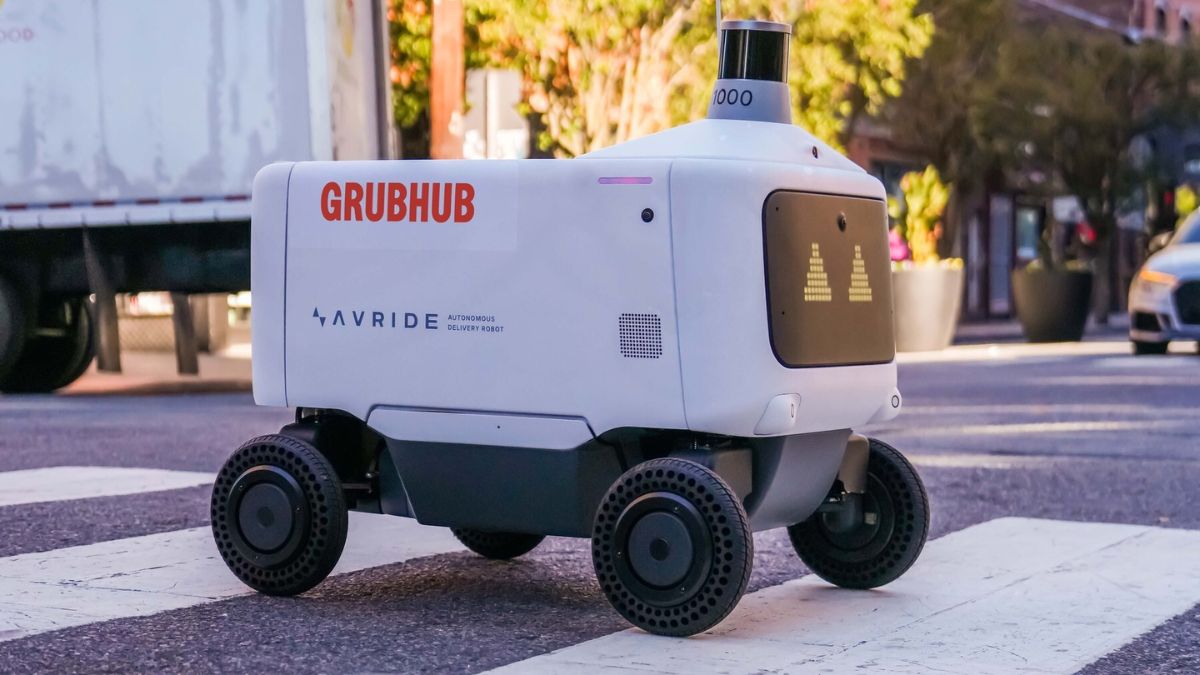
Merchants have a second kind of choice. Grubhub Direct offers restaurant-branded online ordering advertised as commission-free, distinct from buying demand through the marketplace. That distinction helps explain the product portfolio: a restaurant may need discovery, ordering software, delivery capacity, or some combination of them. Buying all three makes sense only when the resulting orders justify the cost. There is no universal answer for every kitchen.
New owner. Unfinished arithmetic.
Wonder completed its purchase of Grubhub in January 2025 at $650 million enterprise value, including $500 million of senior notes. Those numbers belong together. Enterprise value is not the seller’s cash proceeds. The following month, Grubhub announced roughly 500 job eliminations as it integrated with Wonder and removed overlapping functions.
Trust also carried a bill. In December 2024, Grubhub agreed to a $25 million settlement with the FTC and Illinois over alleged deceptive practices involving diners, drivers, and restaurants. Grubhub denied wrongdoing. In August 2026, the FTC announced more than $23.8 million in payments to affected drivers and diners.
Then came a boundary change. In September 2026, DoorDash agreed to acquire Grubhub Campus Dining for $300 million. Closing was anticipated in the first half of 2027, subject to conditions and regulatory review. The proposed sale concerns the campus business, rather than the whole Grubhub marketplace.
The lesson worth borrowing is specific: sell a measurable result, then put the purchase close to the moment someone wants it. For a restaurant, that still requires spare capacity, reliable fulfillment, and enough margin after fees. For a diner, the test remains pleasantly ordinary. Find something worth eating. Read the final total. Decide whether the convenience earns its price.