Imagine a customer who already knows where dinner should come from. The restaurant has been chosen. The menu is familiar. All that remains is placing the order. It sounds like the easy part. Yet the address typed, the search result tapped and the button pressed decide which business gets to manage that transaction. Fox Ordering has built a company around those last few inches between intention and purchase.
- Direct ordering through a restaurant’s own website.
- A published 5% convenience fee, which customers can pay.
- Websites, apps, marketing and call relay in the same offering.
- DoorDash handles delivery as a listed partner.
The customer was already looking for you
Fox Ordering supplies the digital counter: a menu, checkout and ordering tools for pickup or delivery. A restaurant can use its existing website; Fox also advertises creating one at no cost. The company says it serves more than 5,000 restaurants across the United States. Its public company profile extends its operating territory to Canada.
The distinction begins with discovery. Fox’s illustrated customer journey starts with a Google search and a visit to the restaurant’s website. Its Google integration similarly points people from Search and Maps toward that site. This makes the product particularly interesting for a restaurant that already has people looking for it. The customer’s intention is an asset. The website gives that intention somewhere useful to go.
- 01Find the restaurantSearch or Maps
- 02Order on its websiteMenu and checkout
- 03Collect or receivePickup or delivery
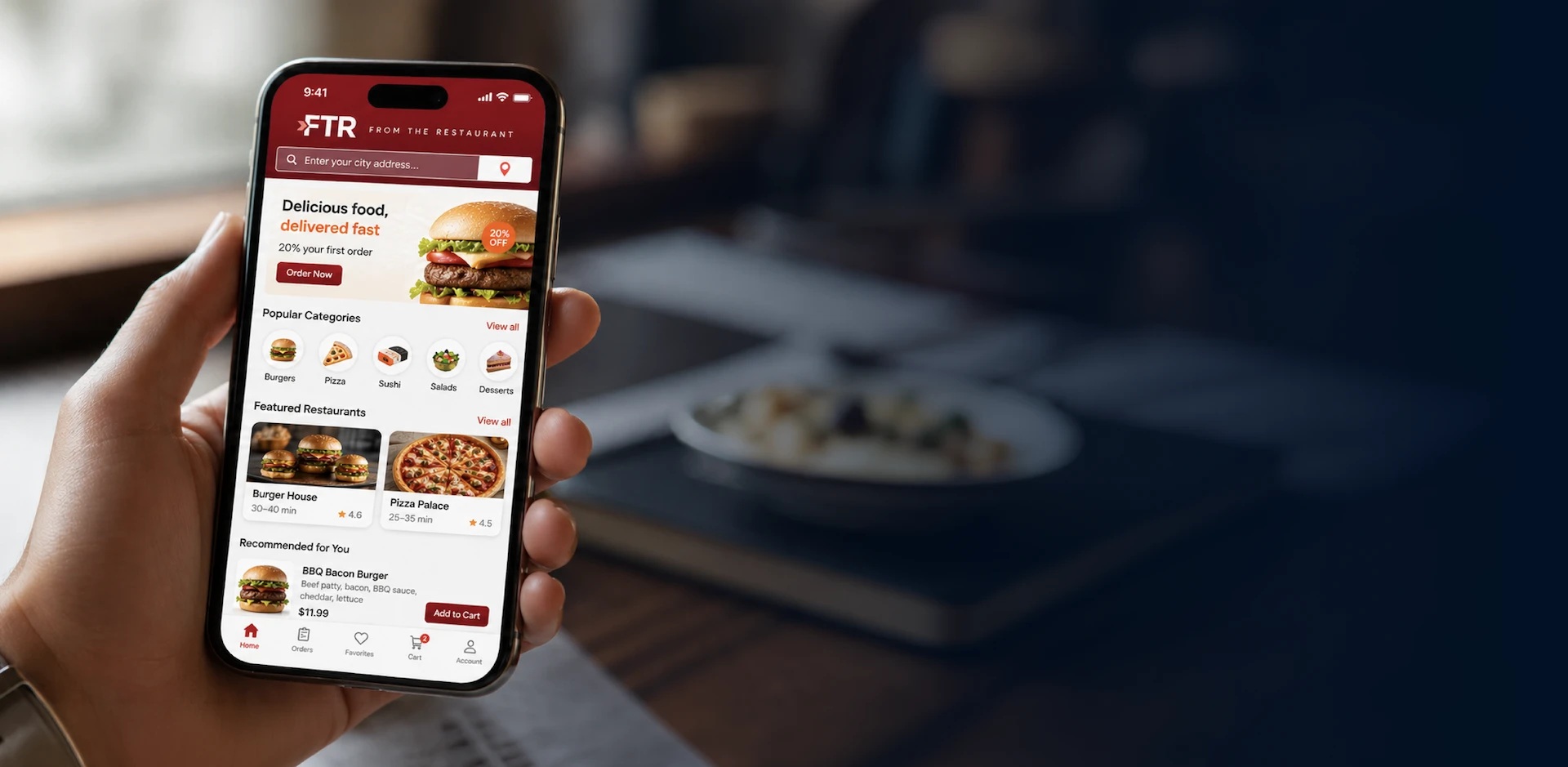
“We don’t operate as a marketplace,” says Fox’s FAQ. That describes its core website service. Fox also promotes FromTheRestaurant, a consumer app that gathers affiliated restaurants in one place. The offering therefore includes both a restaurant’s own destination and a shared discovery surface. An owner should distinguish the two when deciding where to send regular customers.
The arithmetic at checkout
The advertised convenience fee is 5% of the order subtotal. The current product page says customers can pay it. On a $40 food subtotal, that calculation produces $2. This is a transaction-based model: a cost attached to an order, with the possibility of passing that charge to the diner.
Food subtotal → convenience fee.
Excludes taxes, tips, delivery and any other applicable charges.
The practical question is what happens at checkout. A charge paid by the customer still becomes part of the customer’s decision. A restaurant evaluating the service should compare completed orders and net proceeds, including the full delivered price. Moving a fee does not make it disappear.
Fox’s FAQ says the order tablet is included, while a compatible printer must be purchased separately. Deposits go out on Thursdays, with one to three business days allowed for arrival. Those details belong beside the headline percentage. A kitchen needs a workable ticket flow; an owner needs to know when money reaches the bank.
The phone is part of the software
Fox’s product collection reveals how many entrances a restaurant has. A diner can visit a website, open an app or call. The company offers branded apps that it builds and maintains, alongside its shared consumer app. Automated email and SMS marketing are intended to encourage another order. Its expertise sits where ordering software meets customer follow-up.
Call relay is the revealing detail. Fox says the service handles phone orders and inquiries, then uses SMS to share the menu and guide callers toward online ordering. A phone call becomes an introduction to a digital menu. The point is to connect an existing habit to a purchase path the restaurant can use again.
That combination places Fox among restaurant commerce providers, beside alternatives such as ChowNow, Owner and Olo. The distinction to examine is the bundle: website setup, direct ordering, communications and advertised freedom from restrictive contracts. The useful comparison is the complete workflow an owner receives for the complete price.
A growth chart with a slowdown in it
Co-founder and CEO Juan Pico leads a business founded in 2014. Fox’s own chronology separates product development in 2015 from its minimum viable product launch in 2016. Then comes an unusually candid label for 2017: “First slowdown.” Later entries mark new markets and the pandemic crisis.
That sequence is more instructive than a frictionless origin story. The product took time. Expansion met resistance. What followed can be measured: Inc. ranked Fox No. 830 in 2021, No. 218 in 2022 and No. 120 in 2023. Deloitte placed it No. 41 on its 2023 North American Technology Fast 500, reporting 4,143% growth.
The ordering button is the beginning. The test is whether the customer comes back.Analysis
By 2026, Fox had made the Inc. 5000 six consecutive times. Its latest position was No. 1,815, with Inc. reporting 191% three-year growth. Those are growth rankings, rather than customer satisfaction scores. They establish commercial momentum without telling an owner how a particular Friday-night service will go.
Direct still needs a way to the door
The partner list explains another part of the model. Fox names Stripe for payments, Twilio for communications and DoorDash for delivery. A direct restaurant order can therefore travel with a DoorDash driver. The digital storefront and the physical trip are separate jobs, even when the diner experiences them as one purchase.
That separation creates dependencies. A checkout cannot repair an inaccurate menu or make an overloaded kitchen faster. A direct website also needs visitors; it cannot assume the demand available inside a large marketplace. Restaurants seeking new customers must judge discovery separately from the ability to accept an order.
A useful trial would follow one ordinary order all the way through: finding the menu, choosing modifiers, paying, receiving a kitchen ticket and collecting the food. Then repeat the exercise with delivery. Ask whether staff can spot a missing order and whether the customer knows whom to contact. These are small questions with consequences that a polished demo can hide.
There is also a reason to watch returning customers separately. A restaurant may be paying to reach strangers in one channel while serving familiar names through another. Putting every order into a single sales total would conceal whether the direct route is doing its particular job. The comparison should follow the customer, as well as the money.
The copyable lesson is modest: start with customers already trying to buy, then shorten their route. An owner can trial that idea by measuring checkout completion, repeat purchases, net proceeds and delivery problems. Fox offers the machinery for the experiment. The result still has to survive the dinner rush.