When Greg Anderson introduced himself to Sun Country employees in January 2026, he had a large acquisition to explain. He began with something smaller. He was a Las Vegas native. He and his wife had four young children. They liked to travel. Before the discussion reached operating bases and integration teams, the incoming boss had established that he, too, had reasons to care about where an airplane could take a family.
Anderson runs a business that sells escape, but his own career has been unusually rooted. He joined Allegiant’s accounting department in 2010. He became its chief executive in September 2024. The intervening years took him through accounting, treasury, finance and the presidency. His route to the top involved learning the same company from several increasingly expensive angles.
Then came two decisions that look, together, like a definition of the job. Allegiant sold its Florida resort in 2025. In May 2026, it completed its acquisition of Sun Country. One business left the balance sheet; another airline arrived. For Anderson, deciding what Allegiant should become has involved deciding what it should stop trying to be.
The apprenticeship behind the appointment
Anderson’s early professional life ran through Ernst & Young and corporate accounting at US Airways. He is a certified public accountant. These are useful credentials in aviation, where a seat can be sold only once per flight and an empty one has an uncompromising habit of expiring at departure.
At Allegiant, the promotions came in stages. He became principal accounting officer in 2015 and senior vice president of treasury in January 2017. His appointment as executive vice president and chief financial officer followed in April 2019. By August 2022, he was president; he continued as CFO until January 2023. Each role widened the view, from reporting what had happened to helping decide what would happen next.
When Maurice “Maury” Gallagher announced Anderson’s succession in July 2024, he described an executive who had already been doing much of the work. Anderson, in turn, credited Gallagher with teaching him to think like an owner. The relationship matters because the appointment carried a particular kind of continuity: the person inheriting the strategy had spent years helping fund and administer it.
“He has shown me the importance of thinking like an owner”
Greg Anderson on Maury Gallagher, July 2024
His career also belongs to a wider Allegiant network. Former executives went on to leadership roles at Avelo, Breeze and Sun Country. Jude Bricker, Sun Country’s CEO before the acquisition, had worked at Allegiant. The industry connections behind the transaction were therefore older than the transaction itself. Familiarity offered a starting point, though it could hardly substitute for making the numbers work.
The curious business of flying less
To understand Anderson’s decisions, it helps to understand the calendar. In a March 2024 conversation in Bogotá, he described an airline built around weekly frequencies rather than a promise to fly every route every day. March, summer and the holidays bring more leisure demand. September brings less. He said Allegiant could cut capacity by 40 to 50 percent in that quieter month.
This gives the chief executive an unusual sales pitch. Sometimes the sensible thing to do with an airplane is to resist flying it. The calculation depends on ownership costs, staffing, fares and demand. A departure that looks industrious on a schedule can still look foolish in the accounts. Anderson’s financial background sits comfortably inside that argument.
The other half is geography. Allegiant’s business has long connected small and medium-sized communities with vacation destinations through nonstop flights. At a September 2025 Senate hearing, Anderson described a network of 577 routes serving 122 communities; roughly 70 percent had no other nonstop operator. Those were the figures at that time, before the Sun Country combination. They explain why convenience figures so prominently alongside price in his case for the airline.
A cheap ticket has more appeal when it also removes a connection. For a family, the product includes time: fewer transfers, fewer boarding processes, a more direct journey. Anderson’s task is to make that convenience economical in places where demand might support a few departures a week rather than a busy daily timetable.
A hotel leaves the picture
Sunseeker Resort Charlotte Harbor represented a different way to follow the vacation dollar. Allegiant already sold hotel rooms and rental cars alongside flights. Owning a resort took that relationship further, putting the company on both sides of the journey from airline seat to hotel room. The theory had an understandable symmetry. The money committed to it made the consequences rather less tidy.
Anderson chose to exit. In July 2025, Allegiant agreed to sell Sunseeker, its golf course and related properties to affiliates of Blackstone Real Estate for a stated cash price of $200 million, subject to adjustments. The sale closed on September 4. The distinction between an agreed price and the final proceeds matters; a transaction announcement is not a bank statement.
The resort departure gave his airline-centered strategy a concrete form. Selling third-party vacation products could continue without owning the property in which the guest slept. It also reduced the number of different businesses competing for management attention. An airline has quite enough ways to make a long day interesting.
A familiar colleague, a larger map
Sun Country offered a different sort of expansion. The acquisition, announced in January 2026, closed on May 13. Allegiant reported a combined fleet of 195 aircraft serving nearly 175 cities. The combination added passenger flying, charter work and Amazon cargo operations. Anderson would lead a larger airline whose sources of revenue extended beyond selling seats to holidaymakers.
The appeal of those other activities is partly financial. Charter and cargo contracts can pass fuel costs through to the customer, giving the combined business a different exposure from a discretionary leisure ticket. In June, Anderson described fixed-contract revenue as a useful addition to the mix. Diversification, in this case, still involved airplanes, crews and the practical work of operating flights.
The personal connection with Bricker gave the discussions a shared vocabulary. In a filed announcement video, Anderson noted that they had known one another for a long time. Both companies used flexible capacity models. The acquisition brought that common approach together with different geographic strengths, including Sun Country’s Minneapolis-St. Paul presence. A familiar colleague was bringing a substantial new constituency into Anderson’s working life.
Transaction scale at closing, rather than a live fleet or schedule count.
The acquisition after the announcement
Closing the deal did not instantly turn two carriers into one operation. The airlines initially retained separate brands, booking channels and loyalty programs. Existing labor agreements remained in place. Passengers were told to keep using the airline with which they had booked. For a traveler, integration begins with an especially modest requirement: tomorrow’s reservation should still make sense.
Anderson’s employee introduction had acknowledged that the announcement could produce uncertainty about jobs, benefits and future changes. He committed to a significant presence in Minneapolis-St. Paul while confirming Las Vegas as the combined headquarters. These were statements of direction and responsibility. They also gave employees specific promises against which to judge the new leadership.
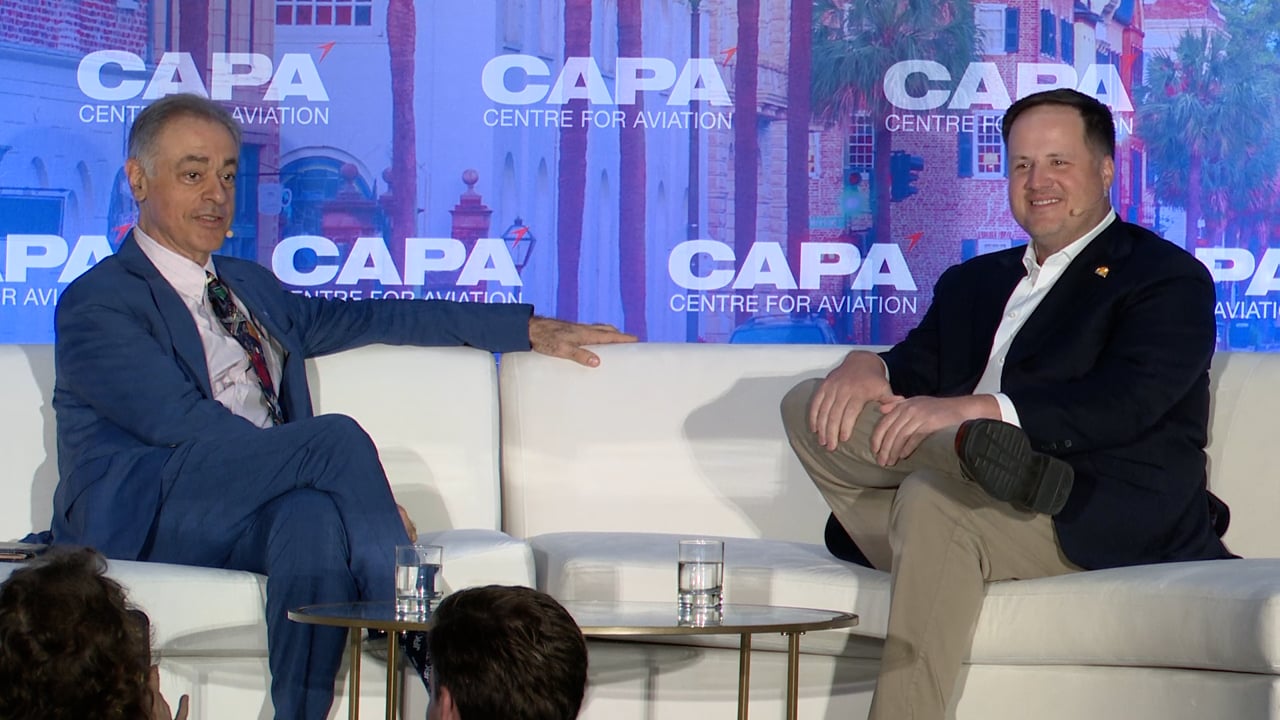
His approach in the May conference conversation was similarly practical. He described including people from both companies in integration work, seeking specialist help where needed and protecting operational stability. The business might have a new owner, but expertise in its cargo operation and its home market still belonged to people who already worked there. Listening had a commercial purpose as well as a personal one.
The accountant meets the passenger
By summer, changes were becoming visible inside the cabin. Allegiant announced complimentary soft drinks, juice and water from August 1, 2026, and a premium seating product called Allegiant First for selected aircraft in spring 2027. The planned cabin includes eight seats in a two-by-two arrangement, with additional space and bundled baggage benefits.
For an airline associated with separately priced extras, these are revealing choices. A low base fare can coexist with passengers who will pay for a different experience. The leadership question becomes which things to include, which to sell separately and how to keep the overall proposition understandable. Anderson’s airline is still serving leisure travelers; some of those travelers would simply like more room for their knees.
The financial record supplies a necessary check on any neat success story. Second-quarter 2026 results showed a consolidated GAAP net loss of $4.9 million. Adjusted operating income was $87.1 million. The measures describe different things, with the adjusted figure excluding specified charges. Allegiant’s standalone revenue rose 16.1 percent on 6.8 percent less capacity. Those numbers put both the gains and the remaining costs on the page.
Home is still Las Vegas
Anderson’s attachment to the city surfaced before he became CEO. Discussing the 2024 Super Bowl at Allegiant Stadium, he described the pride employees felt seeing their company’s name attached to the event. It was national exposure for an airline whose day-to-day business often begins in much smaller places. For a Las Vegas native, the connection was closer to home.
His own public introduction remains a useful place to finish: a career largely spent inside one company, a family that likes to travel, and a new group of colleagues waiting to hear what their future might hold. The numbers make his decisions legible. The people determine whether those decisions work. After the resort sale and the acquisition, the test for Greg Anderson is an ordinary departure, repeated thousands of times.
Read, listen, watch
- Watch / May 2026Greg Anderson in conversation with Michael Bell ↗
- Listen / March 2024Routes, leisure travelers and the airline calendar ↗
- Listen / Airlines ConfidentialA longer conversation about Allegiant and Sun Country ↗
- Interview / June 2026Anderson on the economics behind Allegiant’s model ↗
- Career / July 2024The announcement of Anderson’s CEO appointment ↗
- His words / January 2026Anderson’s introduction to Sun Country employees ↗
- Transaction / May 2026The Sun Country closing announcement ↗
- Results / August 2026The second-quarter financial figures ↗
- Cabin / July 2026Allegiant’s beverage and premium seat announcement ↗