A plane lands. Passengers reach for their phones. Somewhere inside the aircraft, another conversation is waiting to happen: recorded flight parameters need to reach the people responsible for safety, maintenance and the next departure. The flight has ended. The information still has a journey to make. That interval is where Teledyne Controls has spent decades finding work.
- The job: collect aircraft data, move it securely, make it usable.
- The buyers: airlines, aircraft manufacturers, military operators and maintenance organizations.
- The useful lesson: a better handoff can matter as much as a better dashboard.
Consider a delightfully unfashionable phrase in its GroundLink dataloading brochure: “Eliminate Floppy Disks.” Aviation software has to live with aircraft that outlast generations of office technology. A navigation database is useful only when the right version reaches the right airplane. Distribution, that supposedly solved problem, becomes an engineering business.
The flight is over. The work isn’t.
Teledyne Controls sells equipment and services across that journey. Acquisition units capture onboard information. GroundLink moves it between aircraft and ground systems. Loaders send software in the other direction. Analytics helps airline teams examine what happened. The breadth matters because a weak connection anywhere along that route can hold up everything downstream.
GroundLink Flight Data automates post-flight retrieval, making recorded data available within minutes of landing, according to Teledyne. Its stated target of complete flight recovery is an achievable objective, rather than a universal result. The distinction matters: analysts need to know which flights reached them before deciding what their charts mean.
The company’s hosted Flight Data Analytics service supplies customizable dashboards and ranks operational events by probability and severity. Its maintenance offering uses recorded time-series data to support troubleshooting and earlier intervention. That makes the purchase a chain of capabilities: recording hardware, communications, software and services, with the airline’s own judgment at the end.
Teledyne’s analysis white paper makes an unusually practical observation: the question an analyst needs to answer today may differ from tomorrow’s. AirFASE includes an editor for creating parameters, events and reports, and Teledyne offers training for customers doing that work themselves. The service therefore has to accommodate changing questions. An airline investigating an approach trend and one examining a maintenance issue may use the same recorded flight very differently. The value comes from letting qualified people ask another question without rebuilding the entire collection process. Automation gets the information there; useful analysis remains a continuing activity.
One airline persuaded the others
The most useful customer story involves ATSG. In October 2020, the group described expanding GroundLink Comm+ from Omni Air International’s Boeing 767 fleet to ABX Air and Air Transport International. Automated downloads supported its flight operational quality assurance process, reducing reliance on manually retrieving recorded information.
ATSG also selected LoadStar Server Enterprise and onboard loaders to distribute software, then added cockpit connectivity through GroundLink AID+. Integration with Jeppesen’s FliteDeck Pro connected the system to pilots’ electronic flight bags. One operational connection became several, across maintenance and the cockpit.
One fleet supplied the proof.
The wider group supplied the next order.THE ATSG ROLLOUT, IN PRACTICE
ATSG explicitly credited Omni’s experience when explaining the expansion. That is a more useful account of persuasion than a generic promise about digital transformation. An operator had used the equipment; related airlines adopted it. For other businesses, the transferable idea is straightforward: prove a workflow in a place where colleagues can inspect the result.
The clever part is knowing when to disconnect
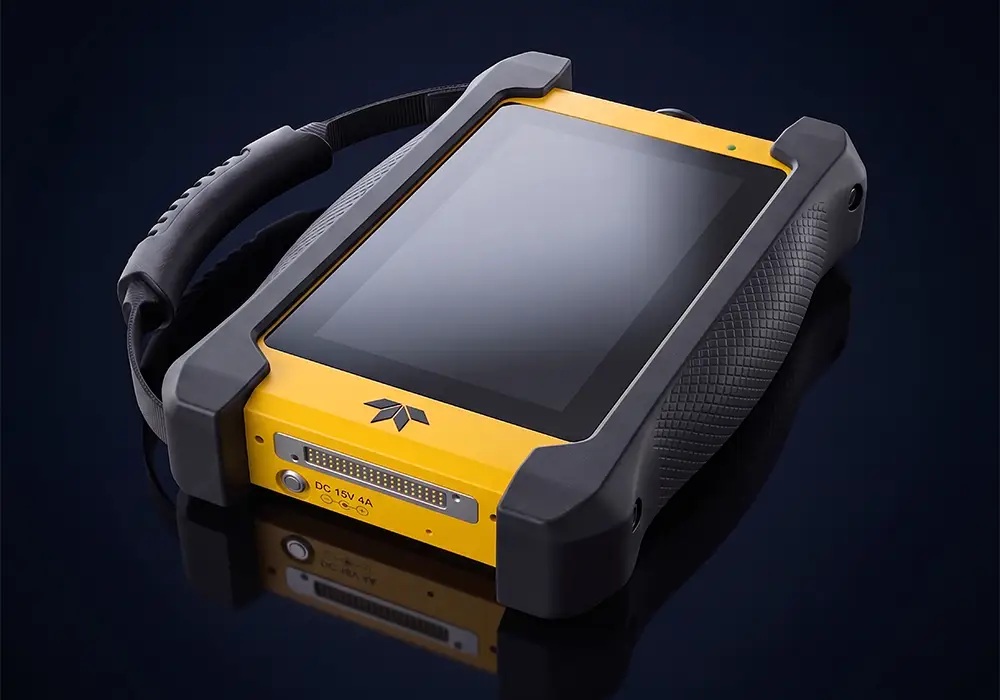
The portable PMAT XS is a compact illustration of the company’s expertise. It handles legacy avionics buses, Ethernet loading and USB-style workflows. It checks software signatures and separates aircraft-loading operations from ground-network access. The feature worth pausing over is disconnection: during loading, the ground network is physically disconnected.
That detail captures the market. Airlines operate equipment of different ages under tightly controlled procedures. Teledyne’s ARINC 615A software runs across portable loaders, onboard loaders and maintenance laptops. LoadStar manages configuration by aircraft and tail number. The practical challenge is keeping the software’s identity attached to its destination through every handoff.
Safran offers overlapping capabilities through its aircraft condition monitoring systems, WEFA wireless transfer and Cassiopée analysis. Wireless retrieval alone therefore cannot explain Teledyne’s position. Its proposition combines acquisition, loading, connectivity and downstream services. A buyer’s comparison has to follow the actual fleet and workflow, rather than a single product label.
The engine specialist gets a selective invitation
In October 2025, Teledyne and MTU Maintenance announced an engine-health monitoring partnership, with Viva Aerobus as launch customer for its A320 V2500 engines. Teledyne reported that GroundLink Comm+ was already downloading full-series flight data from more than 14,000 aircraft, including approximately 6,500 A320-family aircraft.
aircraft downloading full-series data through GroundLink Comm+, as reported by Teledyne in October 2025.
The interesting commercial detail is permission. Data Delivery Solutions lets airlines select parameters and recipients, with local decoding and redaction. An engine specialist can receive relevant information while the airline controls sharing. Teledyne has also worked with Pratt & Whitney on engine-health services. The connecting infrastructure becomes useful to businesses beyond the airline itself.
Now the software comes aboard
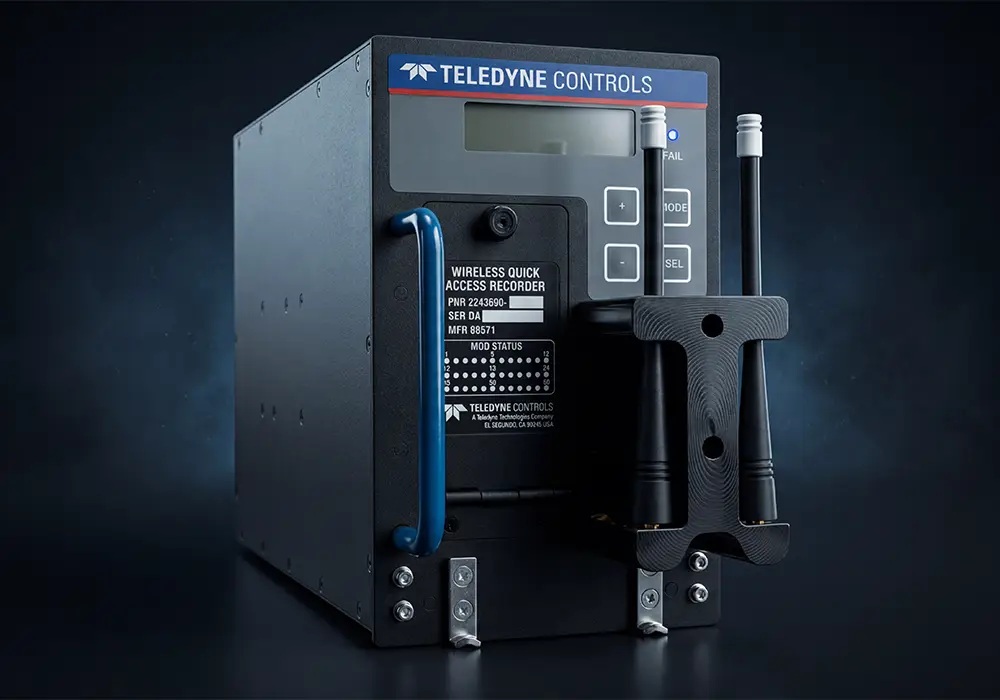
August 2026 brought another step: GroundLink ECP and its AppLink cloud service, announced after FAA supplemental type certification for installation on the Boeing 737 series. The platform combines onboard computing, aircraft interfaces and connectivity so operators can manage applications supplied by Teledyne, third parties or their own developers.
Installation approval has a specific scope. Boeing 737 certification does not establish availability across every aircraft type, and application management still operates within the platform’s approved boundaries. The appeal is easier deployment of useful software on shared infrastructure. The test is whether an airline has compatible equipment, connectivity and operational reasons to use it.
Elsewhere in the portfolio, ACES records cabin environmental conditions and transfers measurements automatically. It won the 2023 Crystal Cabin Award in Health and Safety. Cabin air, engine health and cockpit applications sound like separate subjects. Teledyne approaches them through the same practical question: how will the measurement reach the person who needs it?
For an airline evaluating these systems, the sensible starting point is a troublesome handoff: delayed downloads, awkward software distribution, or data an engine partner cannot use. Count the labor, communications and integration involved. Then test the route on the fleet concerned. Teledyne’s story makes a persuasive case for giving that ordinary work serious attention.