The drawing tablet was behaving beautifully. The pen was the nuisance. In GiGadgets’ July 2025 review of the Huion Kamvas Slate 11, an undo button near the stylus tip kept erasing strokes the reviewer meant to keep. Here was a portable art studio with a small talent for sabotage. A specification sheet could tell you how many pressure levels the pen recognized. Someone actually drawing with it could tell you where their finger landed.
- GiGadgets publishes technology news, gadget reviews, and videos made for social feeds.
- Its readers want to understand products; its brand customers want people to notice them.
- Its useful moments often come from ordinary friction: battery life, awkward buttons, missing power.
- Reviews can lead straight to purchase links and promotions. Read the demonstration and the sales pitch together.
That misplaced button offers a useful entrance to GiGadgets. Consumer technology arrives wrapped in abstractions: mobility, creativity, productivity. The purchase happens in a much smaller world. Will this fit in my bag? Will it work with my phone? Will it undo the drawing I just spent ten minutes making?
GiGadgets works between those worlds. It is a media company whose subject is technology and whose commercial offer includes helping brands tell stories about it. The talent worth examining is the ability to make a feature feel like an event. Something opens, folds, brews, or powers another thing. The audience gets a reason to keep looking.
A feature is better with a scene
Look at the tablet review. The writer begins skeptical that an Android device could become a regular painting companion, then describes using it away from a desk. The change of opinion comes through a use case: a self-contained drawing tool that does not require carrying a laptop. The review also reports roughly five hours of active painting rather than the approximately seven-hour battery claim it discusses.

The important choice is editorial. Instead of leaving the product inside a list of components, the writer gives it a job and follows it into use. The annoying button belongs in that story because the job is drawing. For a prospective buyer, a few erased strokes may be more informative than another paragraph about processing power.
This is also a lesson a small hardware company can copy. Begin with a recognizable task. Show the device doing it. Keep enough of the experience to explain the inconvenience as well as the benefit. A demonstration earns its place when a viewer can imagine using the object without needing the inventor standing beside them.
The flicker is the finding
GiGadgets’ August 2024 Maxfree S2 review provides a different kind of scene. The product adds two foldable displays to a laptop. The reviewer describes two weeks of use, adjustable hinges, and a mostly straightforward connection process. Then comes the detail that makes the piece useful to someone with an actual desk: the setup needs two computer ports.
Connecting a screen directly to the reviewer’s Samsung phone produced another problem. Without sufficient power, it flickered. External power was needed. An extra display is suddenly a conversation about cables, charging, and what the connected device can supply. The photograph looks tidy; the decision requires checking the ports.
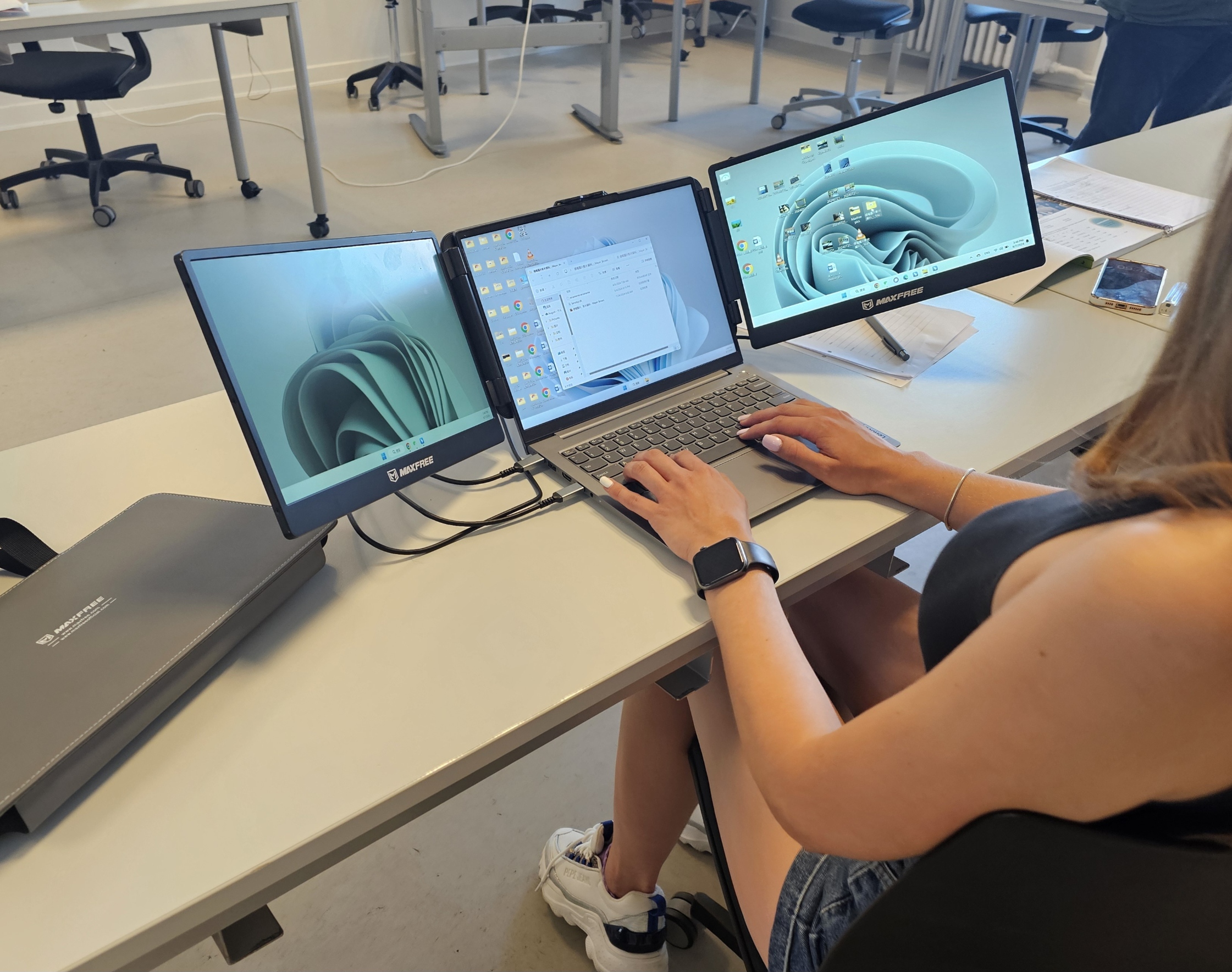
That is what failed first in this particular test: power delivery in that phone setup. It is not a verdict on every configuration. Its value lies in making a condition explicit. A reader can check their own hardware before buying. A brand can learn that an attractive demonstration ought to show what is supplying the electricity.
The missing cable can be the most useful character in the story.Editorial observation
Beer, confidence, and the checkout link
Another review begins with apprehension about home brewing. In March 2024, GiGadgets tested the iGulu F1, an automated countertop brewing machine. The writer reports three successful attempts and describes a colleague making pale ale on her first try. Preset operation made the process less intimidating, while the more adjustable Master Mode remained something the reviewer was reluctant to experiment with.
Success changed the reviewer’s confidence, but only up to a point. That qualification matters. A beginner enjoying presets has learned something different from an experienced brewer testing control over fermentation variables. The audience can decide which experience resembles its own.

The article listed a $699 price and offered readers $100 off with code GI100. Those are March 2024 figures, not a current offer. They reveal the structure of the experience: meet the device, imagine using it, consider the cost, follow the purchase link. Product discovery and promotion share the same page.
Listed iGulu F1 price, alongside a $100 reader discount. Product pricing and the offer may have changed.
A coupon is visible evidence of promotion; it does not, by itself, disclose the payment arrangement. Readers should give an account of firsthand use more weight than a cheerful recommendation alone. Brands should notice something equally practical: the route to checkout works best when the preceding explanation has answered a real question.
Two audiences, one demonstration
GiGadgets describes its approach as storytelling tailored for social media
. Its company profile advertises media marketing services and reports more than 14 million followers. That is a company-reported social audience figure. It should not be read as 14 million separate people watching each story, or as a daily traffic number.
The company therefore serves two audiences. Viewers want entertaining, understandable technology coverage. Brands considering its services want access to attention and help explaining products. The overlap is strongest when the product solves a problem that can be shown quickly. A device that needs ten minutes of background before anything happens presents a harder assignment.
The company’s expertise is presented through selection, explanation, video, and distribution. It publishes about gadgets made by other companies. Covering a medical device or an AI system does not make the publisher their manufacturer or a healthcare software provider. Its place in the market is technology media with a brand marketing offer.
The audience came before this review
GiGadgets lists 2015 as its founding year. Public profiles identify Xiaqi Huang as founder. A 36Kr company record describes an early operation producing short videos around consumer technology products, distributing them through social platforms and connecting viewers to purchases.
The same record lists angel and Series A rounds in 2017, followed by an October 2018 Series A+ round described as several million US dollars. This establishes a reported investment history, rather than the cost of producing a clip or the price of a marketing campaign. Those are different measures, and should stay different.
The early description and the current marketing pitch share a recognizable idea: explain a product where an audience already spends time. The website gives that work another home, with review articles and a broader technology archive. A social clip can introduce an object; a written review can linger over the awkward connector.
Five minutes for a battery box
GiGadgets’ December 2023 Segway Cube video shows how the approach extends beyond brief feed clips. Its description says the team tested the portable power station. The chapter sequence moves from battery essentials to requirements, performance, and consumption, giving viewers a way to follow a category that can otherwise dissolve into numbers.
The useful editorial move is to start with what someone needs from the equipment. A battery box acquires meaning when a viewer understands what they hope to power and how they intend to use it. The chapters offer a route through the demonstration instead of expecting an audience to absorb every specification at once.
That format places GiGadgets among several reader alternatives: gadget publications, independent reviewers, and technology discovery accounts. Its advertised distinction is storytelling fitted to social media. For a reader, the choice depends on the question: discovering an unfamiliar product and settling a difficult purchase deserve different amounts of scrutiny.
Curiosity travels; decisions take longer
The website’s September 2026 articles range from connected motorcycles to AI in procurement and logistics automation. Its subject mix reaches beyond the drawer of clever consumer devices. Earlier coverage of the crowdfunded Lunar folding keyboard and mini PC shows the familiar discovery impulse: an unusual physical object offers an immediate way into a technology story.
Readers can use GiGadgets to find products, learn vocabulary, and gather questions for further investigation. A crowdfunded concept needs checks on delivery and support; a promotional review needs attention to trade-offs; a purchase needs a current price. The sensible next step depends on how consequential the decision is.
For brands, the transferable lesson is modest and demanding. Choose one task. Make the benefit visible. Show the conditions required for it to work. Keep the awkward detail that helps someone decide. The tablet’s disappearing stroke and the monitor’s flicker do more explanatory work than a procession of adjectives.
A gadget gets a viewer’s attention by doing something interesting. It helps the viewer by making the consequences clear. GiGadgets’ most instructive reviews contain both: the invitation to look, and the small practical reason to think before reaching for the wallet.
Follow the devices out of the story
Explore GiGadgets’ website and its review archive. Follow the company on LinkedIn, X, Instagram, and Facebook.
On video: watch the Segway Cube demonstration, or browse the GiGadgets YouTube channel.