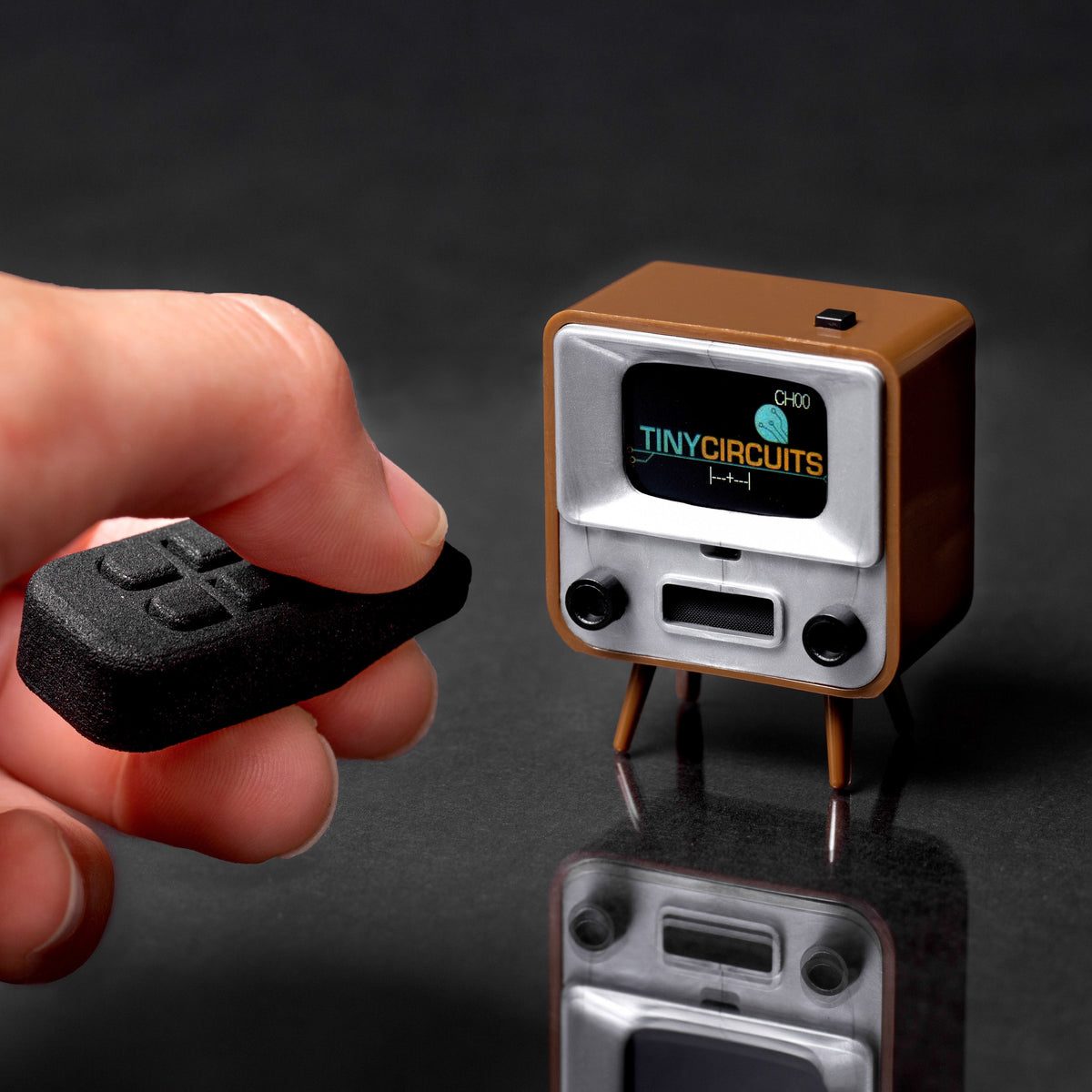
There is a television on Touch of Modern that has a one-inch screen. It has knobs. It has a remote. It can play actual videos. Nobody needs it to improve the family viewing experience, unless the family lives in a dollhouse. And yet it makes a remarkably efficient introduction to the shop selling it.
The TinyTV 2 is made by TinyCircuits, not by Touch of Modern. That distinction matters. This company’s craft is choosing the object, putting it before the right person, and making the encounter interesting enough to become a purchase. The customer may arrive without a shopping list. The store supplies the temptation.
- A changing selection of gadgets, watches, accessories and home goods makes browsing the attraction.
- The founders kept their knack for discovery after two earlier business concepts struggled.
- Historical sales growth came with practical questions about advertising costs and delivery.
- The brand continues; its current policies name TOMO Services LLC as the operator.
The shopping list comes later
Most shopping starts with a small deficiency. The charger broke. The coat is too thin. Someone has a birthday. A search box turns that deficiency into a set of options. Touch of Modern occupies a different moment: the interval before you have decided that anything is missing.
Its current storefront puts miniature electronics beside jewelry, tools, collectibles and designer accessories. The range can look eccentric until you consider the intended customer. These objects compete for discretionary attention. The common feature is that someone might enjoy discovering them.
The audience was historically quite specific. A 2015 Retail TouchPoints profile reported seven million subscribers, three-quarters male, with roughly two-thirds of purchases made on mobile devices. These are dated figures, not a count of today’s customers. They nevertheless explain the original proposition: a shop for enthusiasts who might care intensely about a watch, a speaker or a piece of outdoor equipment.
“At the end of the day, men really want expertise.”
Jerry Hum, co-founder, in a 2015 interview
That claim need not become a theory of every man on Earth. It is more useful as a buying instruction. Know enough about a hobby to choose something its practitioners would recognize as interesting. An assortment aimed at everyone can lose the judgment that makes an edited shop worth visiting.
The idea that could fit in a box
The business did not begin with watches. Its predecessor, Skyara, tried an experiences marketplace. A November 2011 post on the team’s own blog described the uncomfortable distance between a concept that attracted compliments and a business that attracted sustainable activity. An amateur-led experience did not necessarily offer a price advantage over a professional one. Novelty alone was a fragile reason to book.
The team moved toward RAVN, an events-discovery service. But a local experience carries an awkward condition: the customer must be near it. Interest in another city is of limited use. Each place needs enough relevant events and enough interested people. The same discovery problem keeps arriving with a different postcode.
In his later Up Next in Commerce interview, co-founder Jerry Hum described a simpler diagnosis. The team could engage people and introduce them to unfamiliar things. It needed a more scalable thing to introduce. Physical products offered established distribution and margins. The founders had initially disliked the prospect of dealing with shipping. After the earlier struggles, the familiar problems of moving boxes became more attractive.
“You get scale with products.”
Jerry Hum, Up Next in Commerce
Touch of Modern emerged in spring 2012. Hum, Dennis Liu, Steven Ou and Jonathan Wu are credited as its co-founders. The useful lesson is wonderfully unromantic: a team can be good at one part of a business and wrong about the surrounding machinery. They kept discovery and changed what discovery could lead to.
Liu later reported $1 million in revenue within three months. His 2013 first-person essay was less enchanted by startup social life than one might expect. “Get back to work,” he wrote. He also stressed testing, iteration and knowing when to change course. The receipt was rather more persuasive than the pitch.
An edited aisle, not an endless one
In a 2017 interview, Hum described Amazon as a search destination. Touch of Modern’s daily feed was intended for customers who did not already know what they wanted. This was his account of the distinction, rather than a complete description of everything Amazon does.
For a shopper, the difference is practical. A large catalogue helps you compare known options. An edited collection introduces options you would never have typed. Alternatives include Huckberry for men’s lifestyle shopping and Uncommon Goods for unusual gifts. Touch of Modern’s particular mixture leans into design, gadgetry and limited-time collections.
You begin with the product in mind.
The product earns a place in your mind.
This requires more than attractive photography. The buyer must understand why an unfamiliar object deserves attention. What does it do? What is unusual about the construction? Is it a toy, a tool, or both? TinyTV 2 makes the question deliciously literal: it plays videos loaded onto it, but it does not receive broadcast television. Clear explanation protects the charm from a mistaken expectation.
The revenue model is retail. Touch of Modern sells third-party merchandise through its own shopping experience. Limited-time events concentrate attention and orders. There is no need to imagine that every listed brand has signed an exclusive collaboration, or that a countdown makes an object unavailable everywhere else.
The parcel behind the promise
The historical shipping system reveals what a flash-sale clock can conceal. In the bulk-order model described on an official shipping explainer, the retailer collects orders during a sale, sends a purchase order to the supplier, receives a combined shipment, checks it and repackages it for individual customers. The page describes a normal estimate of two to four weeks.
- 01 Sale gathers orders
- 02 Supplier receives purchase order
- 03 Goods reach warehouse
- 04 Individual parcels leave
A sequence, not a delivery guarantee. Stocked items and direct supplier shipments follow different routes.
That arrangement reduces the need to buy every speculative assortment in advance. It also asks customers to wait through more steps. A late supplier shipment becomes a late customer parcel. Discovery may be instant; possession is conditional.
Hum later described an inventory-light operation and efforts to hold consigned goods in the warehouse so they could move faster. The current storefront uses different language, describing fulfillment through trusted partners. Shoppers should read the timing attached to the item they are actually buying rather than assume one historical system governs every order.
The same applies to returns. The present refund policy invites customers to raise a purchase concern during the first 30 days after delivery. It explicitly says that this help does not extend an item’s return window or make a final-sale item returnable. A gift can be wonderfully surprising. Its return terms should be pleasantly dull.
A good year is not a permanent condition
The venture funding was substantial: a $3 million Series A in 2013, followed by a $14 million equity-and-debt Series B in 2014. Together, those disclosed rounds amounted to $17 million. Partech led the latter round, with investors including Great Oaks, Lucas Venture Group, Floodgate and Hillsven, alongside Silicon Valley Bank.
$3m Series A, 2013 / $14m Series B, 2014
Series B included equity and debt. Funding is not revenue or valuation.
By November 2018, Retail TouchPoints reported $120 million in annual revenue. Hum described an effort to reduce marketing costs by keeping existing customers buying. Customer research also identified shorter delivery times as a priority. Those were ordinary retail concerns beneath an unusual assortment: earn another order, spend less acquiring it, and get the parcel there sooner.
The later chapter deserves equal billing. A creditor notice records that the original corporation made an assignment for the benefit of creditors on May 14, 2022. Substantially all its assets were sold to Touch of Modern LLC on May 27. This was an asset sale through a creditor process; it should not be casually described as a conventional growth acquisition.
A legacy 2025 privacy policy placed the brand in CSC Generation’s family. The current terms, dated May 9, 2026, name TOMO Services LLC and identify Shopify as the platform. The continuity of a shop’s name does not make every historical financial figure a measure of its present operator.
What to borrow from the curiosity shop
For shoppers, the use is straightforward: find gifts, browse unfamiliar brands, or discover a small extravagance with a good story. Compare the exact product elsewhere, examine the total checkout cost and read its delivery and return terms. A timer supplies urgency, not evidence of value.
For a founder, the more interesting copyable move is to separate an ability from a business model. Touch of Modern’s team could make discovery engaging. Local experiences proved difficult to scale; products offered another route. Later, the question became whether the customer relationship could earn its acquisition cost through repeat purchases.
This approach depends on judgment customers trust, a replenishable supply of interesting goods and fulfillment that supports another visit. Commodity buying gives novelty little room. Urgent purchases leave little tolerance for uncertain delivery. A narrow assortment may offer too few reasons to return. The tiny television earns attention in a second. The business has to earn the next visit.
Keep exploring
Browse Touch of Modern, or follow its public profiles on LinkedIn, X, Instagram and Facebook.
Listen to Jerry Hum on Up Next in Commerce or Mixergy. Watch the 2018 television spot and Tested’s hands-on TinyTV demonstration. Read the founders’ predecessor blog and Hum’s 2018 retail interview.