A shopper types “under $50” into a store’s search bar. The store has hundreds of products under $50, but its catalog contains no item named “under $50.” A literal search engine may treat the price as just another string. The shopper gets poor results, perhaps none at all, and leaves. Klevu built a business around that small betrayal: the machine and the customer were speaking different languages.
Founded in Finland in 2013, Klevu made search software for online retailers. Its work was less glamorous than the storefront photographs surrounding it, but more consequential than it looked. It used natural language processing, synonyms, typo handling and behavioral signals to turn a shopper’s rough phrase into relevant products. In January 2025, Klevu joined Searchspring and Intelligent Reach under the Athos Commerce name. The search box had acquired colleagues: merchandising controls, personalization and product feeds for places far beyond the retailer’s own site.
- Klevu began with intent-aware site search.
- Athos now links onsite discovery with external product feeds.
- Retailers buy quoted annual software plans and add-ons.
- The 2025 rollout was revised to protect peak-season trading.
The catalog and the customer have different dictionaries
A retailer may file a sofa under “settee,” list a blue sweater as “deep ocean,” or specify a roof rack by part number while a driver searches by car model. That is where Klevu’s expertise sits. Its current search tools interpret natural language, synonyms, misspellings, measurements and price conditions. They also show a merchandiser why a product ranked where it did. That last detail matters: a clever result nobody can explain is hard to manage when stock, margins or a campaign changes.
The company sells to ecommerce teams with catalogs large or intricate enough that native search becomes a bottleneck. That includes fashion, home goods, sports equipment and business-to-business sellers. Topps Tiles used Klevu on both consumer and trade sites. Kaiser Willys, which sells Jeep parts, used search and merchandising rules to help customers distinguish parts by vehicle era. At Thule, shoppers search for use cases and car models, not always the exact names in a global catalog.
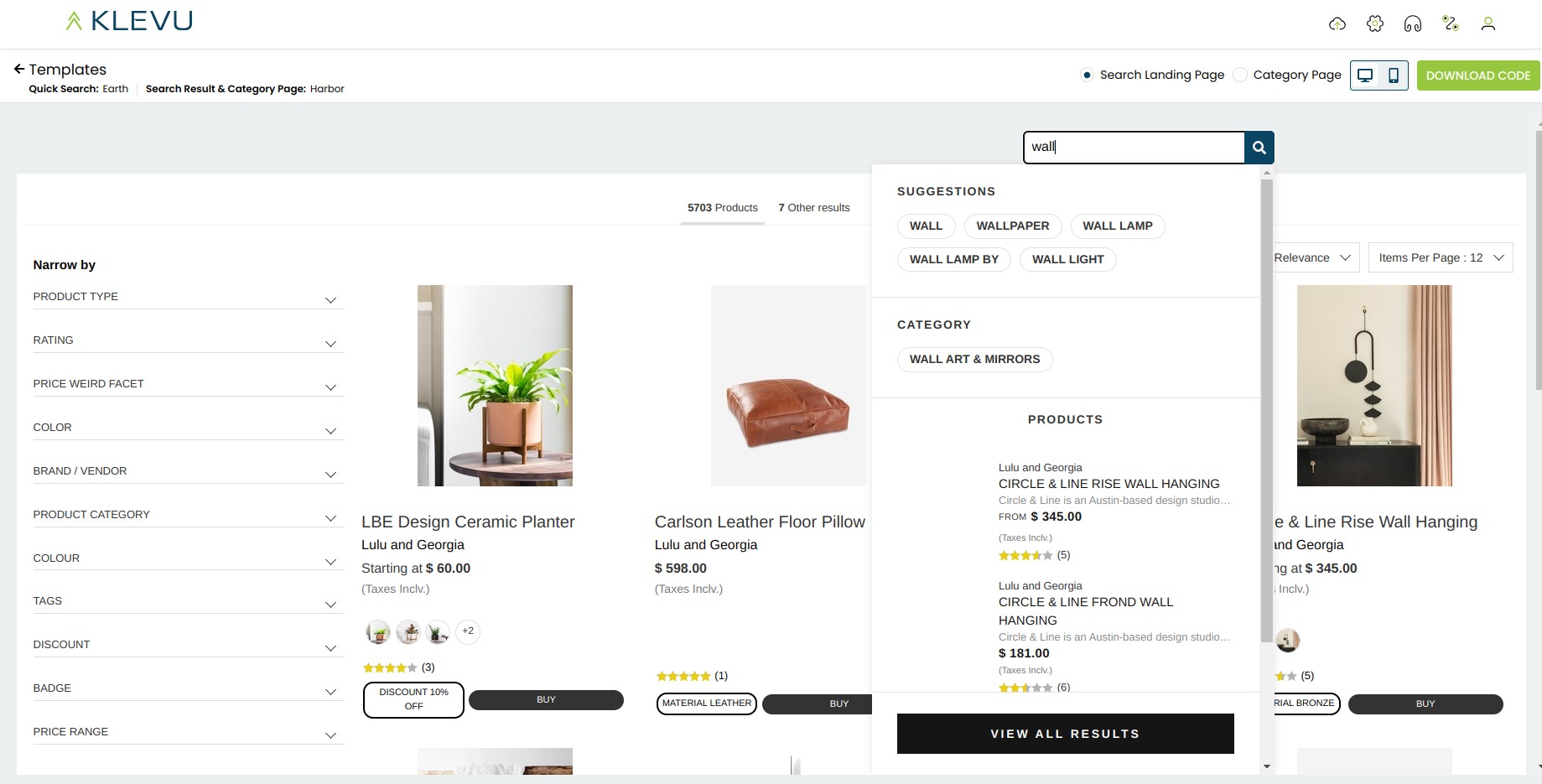
Those examples reveal the buyer’s real problem. Bad search hides products already in stock. Poor category ordering buries the right item under the wrong ones. A zero-result query is a customer volunteering a clue, then finding nobody at the desk. Athos packages the remedy as software rather than a consulting project: the retailer supplies product data and traffic, then its team can tune search, category displays and recommendations through a console.
“What really changed was visibility. We finally had insights into how customers search, where they struggle, and what we can improve.”Petter Mattsson · Head of Platform, Thule Group
A search company goes looking beyond the website
Klevu’s combination with Searchspring and Intelligent Reach was more than a change of stationery. Searchspring brought site-search, merchandising, personalization and analytics tools. Intelligent Reach brought product-feed management: the unromantic work of getting titles, attributes, prices and availability into the formats that Google Shopping, marketplaces and social channels require. Athos’s proposition is that discovery is one problem with several entrances.
Titles, attributes, inventory and product images.
Search, categories, recommendations and ranking decisions.
Feeds for marketplaces, social commerce and AI shopping tools.
The difference from a pure search vendor is the breadth of that route. Athos can address the query on a retailer’s site, the product order on a category page and the data sent to an outside shopping channel. Its feed product advertises more than 1,400 channel templates. That does not mean every merchant needs every module. A retailer with a small, tidy catalog may get enough from its commerce platform’s built-in search. A larger merchant with multiple markets and inconsistent product data has more to gain, and more integration work to budget.
Athos offers three starting plans: Onsite Discovery, Offsite Discovery and a combined plan. Search, merchandising and personalization live in the onsite plan; feed management is the heart of the offsite plan. AI features and assistants can be added. The official site asks buyers to request pricing and says plans are annual, so there is no single published cost that honestly describes a deployment. The useful procurement question is narrower: which missed searches, buried products or rejected feeds are expensive enough to justify the subscription and setup?
What the retailer reports actually show
Thule’s case gives the clearest view of an operational change. Its product line ranges from roof racks to strollers and travel gear, sold across many markets. Before Athos, search use was limited and the team had little insight into where shoppers struggled. After implementation, Thule reported an 80% increase in search use, a 41% decrease in search abandonment and a 10% increase in click-through rate. Those are Thule’s reported results, not a promise that every store will repeat them. A redesigned search bar also contributed, so the gain cannot be assigned to the algorithm alone.
Figures reported in Athos Commerce’s Thule customer case study; results are specific to that deployment.
John Smedley tells a different story. The British knitwear brand used search, recommendations and category merchandising to deal with a catalog in which color and product relationships matter. It reported search-led revenue up 300% in one September comparison and a 17% year-on-year conversion increase for September 2024. The team also tested whether showing cheaper or more expensive items first changed behavior. That is the less theatrical use of a discovery platform: make a hypothesis about shoppers, test it, then keep the version that earns its place.
The date Athos decided to move
In early 2025, Athos said its unified platform would launch fully in the third quarter. By August, it had revised the schedule. Retailers were approaching the holiday peak, when a change to search or product feeds can have an unusually costly failure. Athos announced a limited early access program for late 2025 and a broader transition in 2026. There is no public evidence that an outage forced the change. The company’s stated reason was to avoid disruption while it completed a commercially ready launch.
The small, visible step that month was revealing. Athos added a Klevu-inspired feature that reads price phrases such as “under $50” as price constraints, while updating the management console’s branding. The brand merger was becoming a product merger one query at a time. In June 2026, Athos announced its Intelligent Discovery Platform at Shoptalk Europe, with conversational, channel and generative-engine optimization assistants. The ambition had widened from interpreting a person’s search to preparing products for a world in which software agents may do some of the searching.
There is a lesson here a smaller retailer can use without buying Athos. Read the search queries that return nothing. Compare them with the language on product pages. Fix synonyms, color names, sizes and product attributes, then measure whether shoppers use search more and abandon it less. For a vendor, the lesson is just as plain: do not confuse a unified brand with a unified product. Athos’s 2025 schedule change acknowledged that a retailer’s trading calendar gets a vote.
Klevu started with a text field. Athos Commerce now sells an answer to a broader question: can a product be understood by the customer, the merchant and every channel between them? The answer will vary by catalog. But the original insight remains stubbornly useful. A product nobody can find might as well be out of stock.