A stool has no reason to be mysterious. It is wood, a fastening, a finish, and a place to sit. Yet the price of a stool can also contain a showroom lease, a warehouse, a distributor, a photograph with perfect afternoon light, and the expensive little assurance of a familiar label. The Essential, a San Francisco online retailer, has made a business of asking which of those things a buyer actually wants.
Consider its Haiku Stool. The current product page lists it at $145, names Foshan, China as its manufacturing location, and estimates five to seven weeks from order to arrival. The arithmetic is unusually candid. Production is listed at three to seven days; transit takes four to six weeks. A customer is buying a piece of furniture and agreeing to let a calendar become part of the transaction.
- The Essential sells furniture and home goods online, often made to order and shipped from the factory.
- It began as Move, an attempt to sell better groceries by shortening the supply chain.
- Nonmembers can shop. An optional membership offers a standing discount and reserved products.
- The main bargain is financial; the main costs are waiting and stricter furniture returns.
First, the grocery aisle
Founder Chai Mishra did not arrive at furniture by studying chairs. His earlier company, Move, tried to make grocery shopping fairer to both the eater and the producer. In 2019, he described a digital supermarket that would bring products directly from makers to households and reveal more of where the money went. The ambition was large enough to sound impolite in a business where scale usually belongs to the giants. Move entered Y Combinator’s Winter 2017 batch, tested orders, and sought support from customers as well as investors.
There was a snag before the furniture. In an account of Move’s early test, Mishra said the company shipped roughly 10,000 orders, then shut the site while it worked out how to scale beyond small production runs. Some makers who could supply hundreds of units could not supply tens of thousands. It is an instructive problem: removing middlemen does not remove the need to coordinate production and delivery. The first thing to fail was the assumption that a successful test would simply grow into a national grocery machine.
By 2020, Forbes described a members-only food business with 5,000 paying members, a substantial waitlist, and collaborations with chefs, bakers, farms and creameries. Those numbers describe that period, not today’s furniture customer base. What survived the change in merchandise was the operating question: can a retailer earn its place by making the route from producer to buyer shorter and clearer?
“No logos. No wasted dollars.”The Essential’s current about page
The long way to a lower price
The Essential’s current storefront gives that question a literal form. Its about page says it finds factories that make furniture for known brands, takes orders online, and ships pieces directly from the workshop. It argues that buyers should pay for materials and craft rather than showrooms, extra packaging and retail layers. These are the company’s claims, not proof that two lookalike products are identical. For the shopper, the useful part is the invitation to inspect the specifics: wood, dimensions, finish, country of manufacture, delivery window and after-sale terms.
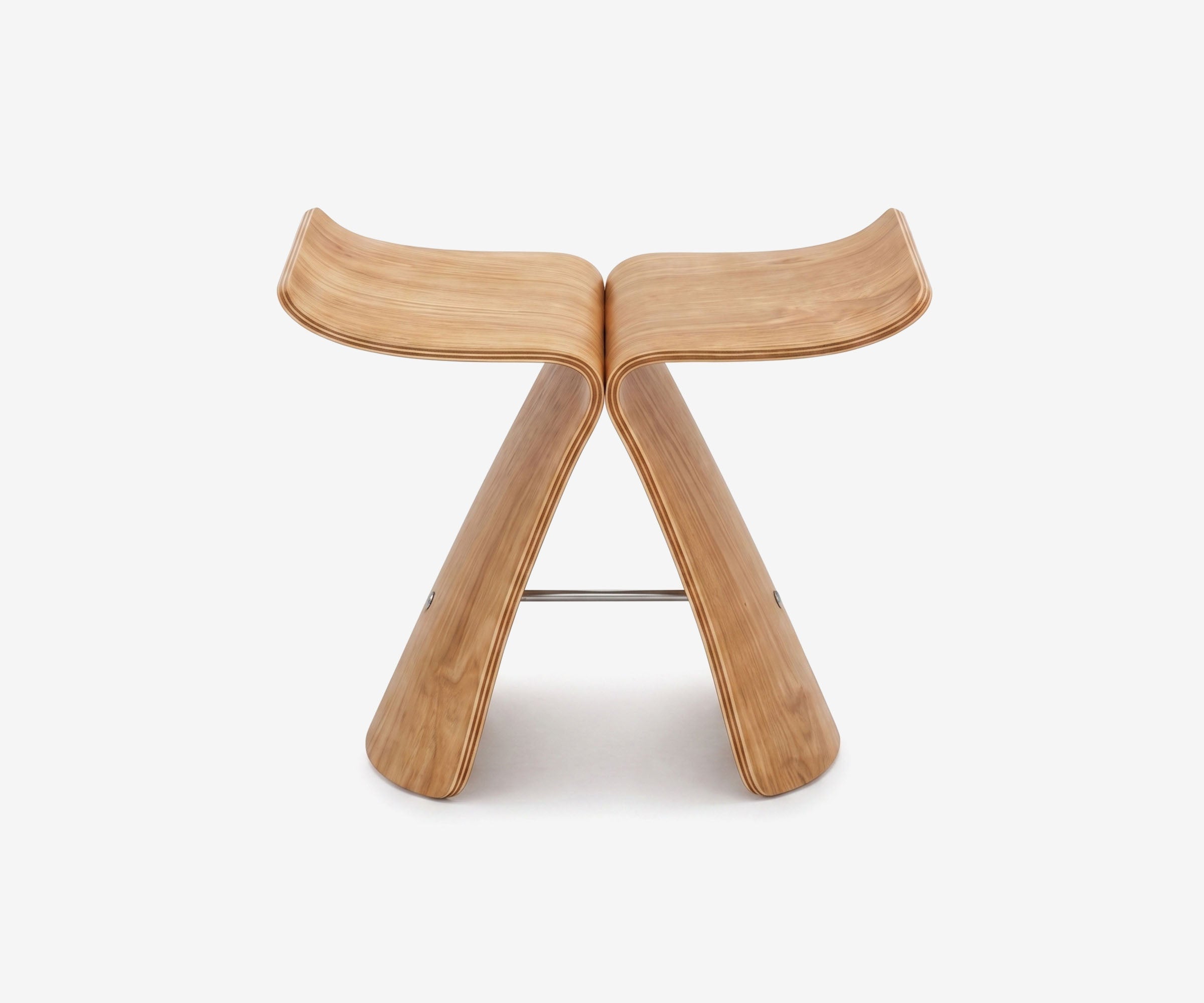
The range goes well beyond that stool. The furniture catalog includes beds, dining chairs, tables, storage, sofas and outdoor pieces. Elsewhere the site offers lighting, rugs, dinnerware, decor and other household goods. A shopper furnishing a room can move from a bed frame to a side table without changing stores. That is the familiar convenience of a broad online retailer, but the company’s stated edge lies in its route to the maker and its emphasis on design.
One order, three clocks
Illustrative path based on the company’s description. Lead times vary by product.
This is where The Essential differs from a store built around ready stock. A warehouse can send a chair quickly and accept it back into inventory when a customer changes their mind. A made-to-order retailer can avoid holding that chair, but the buyer inherits some of the friction. The company’s August 2026 policy says furniture generally cannot be returned for a change of preference. It offers remedies for damage, missing parts and incorrect goods. In other words, the checkout button demands more measuring than usual.
Membership without the velvet rope
The old Move pitch was members-only. Today, The Essential says anyone may shop. The optional membership gives a 15 percent discount, access to reserved products, early access to drops and other perks. It is an extra layer of the business model, alongside product sales, rather than a gate at the door. For a buyer considering a large furniture order, the discount can be meaningful, but the sensible calculation uses the current fee at checkout and the products actually planned for purchase.
The company now ships to the United States and Canada, according to its shipping policy. Orders above $125 ship free, and its listed furniture exceeds that threshold. The same policy notes that a domestic tracking number may appear idle while an order is moving overseas. This is retail without the comfort of instant motion. The tracking page can look silent because the product is still travelling.
That makes The Essential a particular answer to a particular buyer. Someone who knows the measurements, can wait, and cares more about the object than the store around it may find the model attractive. Someone furnishing an apartment this weekend, or needing the option to return a sofa after seeing it in person, has a different equation. The company’s prices and published production details make comparison easier, but a fair comparison must include the whole promise, not only the number in bold type.
A useful idea beyond furniture
There is a lesson here for any small retailer tempted by the phrase “cut out the middleman.” The phrase is an invitation to do more work, not less. Move discovered that producers who could serve a test could not necessarily serve a nation. The Essential’s present model answers with made-to-order production, visible lead times and tighter return terms. Each choice solves one cost problem and creates an expectation to manage.
A competitor could copy the visible part tomorrow: publish the maker, the material, the production time and the route to delivery. The harder part is keeping those promises when a shipment is late or a finish looks different under a customer’s lamp. Transparency has a peculiar consequence. Once you tell people where a chair comes from, they may begin asking where the rest of the price goes. That question was Mishra’s starting point in groceries. It has followed him all the way into the living room.