George Bolanos liked taking radios apart. Growing up on a grape ranch in California’s Central Valley, one of eight children of Mexican immigrants, he read and investigated the machinery around him. Years later, the object attracting his attention would be a smartphone. His question had grown considerably: could this small device help a computer understand the room it was sitting in?
That question sits at the center of InsideMaps, the company he co-founded with Jörgen Birkler. Its work gives a familiar object an unfamiliar assignment. An iPhone, mounted on a rotating attachment, collects photographs that become tours, floor plans and models of buildings. A house acquires a second existence in software. It can be examined without another journey to the front door.
There is something agreeably practical about the ambition. Houses are full of things people need to know and inconvenient places to retrieve that knowledge. A photograph may flatter the kitchen while saying little about how it connects to the dining room. A model can preserve those relationships. Bolanos has spent years finding customers with a reason to care about the difference.
Before the house, the handset
Bolanos attended Stanford and built a career across internet and mobile businesses. He worked in Europe helping establish Netscape’s presence, and his professional history includes Nokia. He also founded the web conferencing company Wanadu, which was sold to Latitude, later acquired by Cisco. Connecting people through screens was part of his work before he began connecting screens to physical spaces.
From August 2009 to October 2012, he served as director of technology at Sony Mobile Communications. The job involved teams developing mobile services. It placed him close to a device whose camera, sensors and computing power were opening possibilities beyond calls and messages. His next company would depend on putting several of those capabilities to work together.
His colleagues’ recollections add a useful detail to the executive résumé. Tom Schmidt, who worked with him on Sony Ericsson’s Software Innovation Center, describes someone willing to move between product decisions, staffing and senior management to get work unstuck. The phrase “smart, pragmatic” appears in Schmidt’s recommendation. Birkler remembers technical understanding combined with attention to the user’s experience. These are observations from collaborators, and they suggest why a phone-based property business suited him: the difficult engineering still had to become something another person could operate.
- InternetNetscape
- CollaborationWanadu
- MobileSony
- BuildingsInsideMaps
A conceptual route through his work, rather than a complete employment chronology.
A sofa was an excellent place to start
The early proposition was pleasingly domestic. InsideMaps’ 2013 public debut put smartphone room scanning in front of an audience. The company’s first applications included helping people see how furniture would fit. Anyone who has argued with a tape measure can appreciate the attraction. A sofa is capable of being perfectly reasonable in a showroom and wholly unreasonable at home.
By October that year, Bolanos and Birkler were describing a system for furniture retailers and interior designers. Users could share models online, change wall colors and textures, try flooring alternatives and rearrange the appearance of a home. The room became a place to test decisions before committing to their physical consequences. Such a demonstration made the underlying technical problem legible.
The customer question was already broader than furniture. In December 2014, agents at Sereno Group were giving buyers branded models and floor plans. One buyer used the material to discuss remodeling with a designer by phone, without measuring the house again. The model could keep doing a job after the sale. For the agent whose identity remained attached to it, that usefulness also offered a reason to be remembered.
Bolanos was listening to the visual demands of that market. He discussed adding photographic realism to the company’s interactive models, while preserving the tools that let users change furniture and colors. Buyers wanted to explore; agents wanted persuasive pictures. A single representation would have to serve more than one kind of attention.
The photograph needs instructions
Bolanos’ involvement extends into the technical record. He is named with Paul Joergen Birkler and Juan Lozano as an inventor on a patent titled “Methods and apparatuses for capturing images used for generating 3D models of rooms.” The application was filed in October 2014 and the patent was granted in October 2017. Its subject is a revealingly unglamorous part of making a digital room: helping a person collect the right images.
The described system includes guidance on a mobile device and communication with a remote computing system. That is an important distinction when considering the work. Before software can reconstruct a space, somebody must stand in it and capture usable information. A missed view has to be dealt with somewhere. Making the collection process orderly is part of making the eventual model useful.
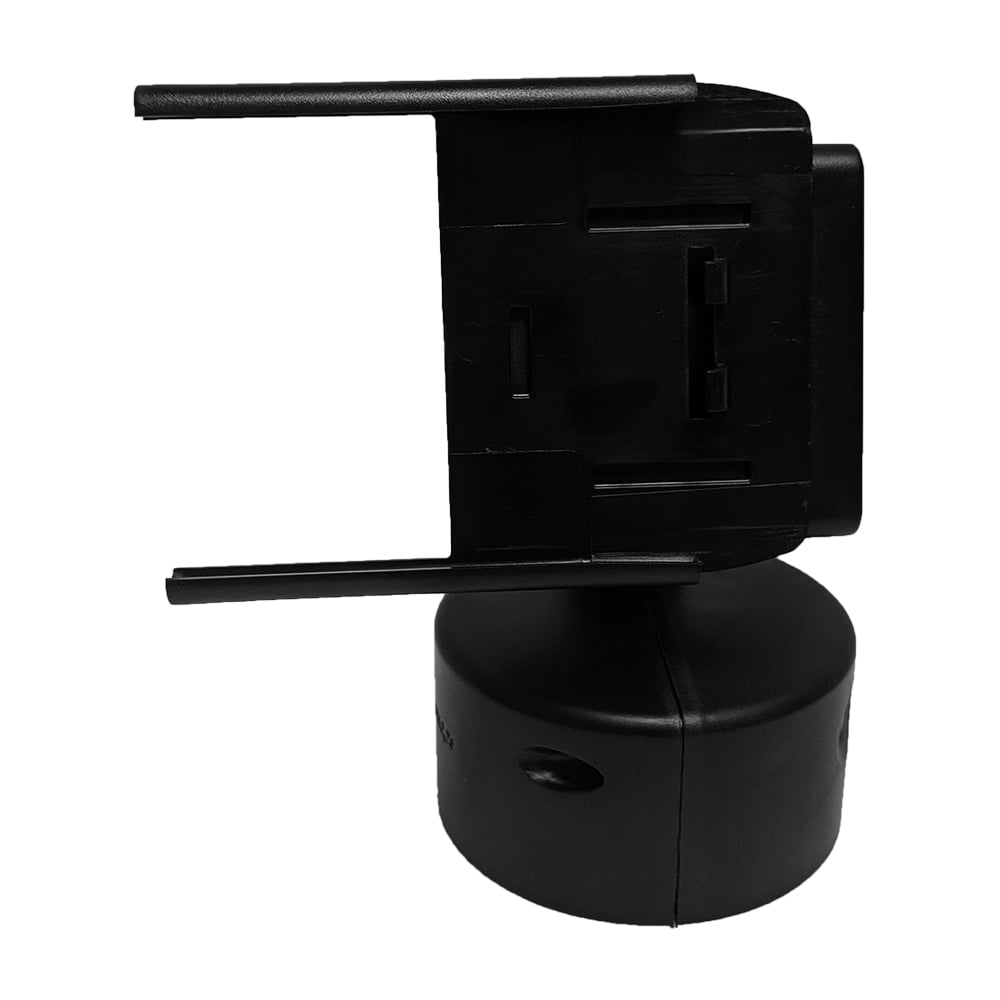
The HERO attachment gives that idea a physical form. It connects to an iPhone by Bluetooth and automates panoramic capture. The current product listing describes compatibility with a standard quarter-inch tripod mount and lists the device at $229. The phone does the seeing; the rotor makes its movements more consistent. It is a modest-looking arrangement for a task that asks rather a lot of a photograph.
Checked October 2026
Getting through somebody else’s front door
In August 2017, Bolanos described the company’s objective in terms that would make sense to a busy estate agent: simplifying the production of visual marketing material. At the time, the HERO was advertised at $189, with processing packages sold separately. That historical price helps explain the pitch; it should not be mistaken for today’s price.
The attraction was having agents create tours, floor plans, models and property photographs with equipment built around an iPhone. This put the collection work closer to the person already visiting the property. It also gave Bolanos a concrete product argument. Lower equipment costs and fewer specialist steps could matter to a brokerage making the same decision across many listings.
“We are taking out the hassle factor associated with creating high-quality visual marketing assets.”
George Bolanos · 2017
That same year, a distribution agreement carried the proposition into Japan. GREE announced the launch of InsideMaps sales on May 23, 2017, with examples involving Nomura Real Estate Urban Net and Aera Home. The announcement presented virtual viewing as a way to make property visits more efficient. The initial market was different, but the practical question traveled well: how much could someone learn about a home before arriving?
For Bolanos, the development adds an international chapter to a career that already included European work. He speaks French, Italian and Spanish. Language ability is an ordinary human skill with an especially useful application when the technology is intended to cross borders. Homes differ, as do the businesses selling and managing them. Selling the same capture idea abroad still requires understanding the local job.
When the room becomes a record
The 2019 partnership with Class Valuation gave InsideMaps another job. Class made an equity investment and planned a phased introduction of the technology into appraisals. The package included digital representations of interiors and exteriors, along with property data. A model was becoming evidence of what a building looked like at a particular inspection.
The practical details were more revealing than the usual announcement language. Class described field testing in which appraisers could avoid awkward measuring around clutter and thorn bushes. It also pointed to the benefit of retaining a digital record for later review. These were claims about a working process, rather than an invitation to admire a virtual house. The people commissioning the model needed something they could use in a consequential decision.
Bolanos had brought the company into a setting where repeatability mattered. An attractive tour can encourage a viewing. An inspection record has to help someone understand what was observed. The same family of capture tools was now addressing both demands. That expansion helps explain why his career cannot be told solely as the history of a clever camera accessory.
A simplified illustration of the outputs and uses described across InsideMaps’ products and partnerships.
The customer with a thousand keys
By a 2020 product discussion, InsideMaps’ team was explaining its focus on enterprise customers. Gabe Knox, then vice president of strategic partnerships, described rental operators managing large portfolios. They needed capture at move-in and move-out, information for maintenance decisions and material for marketing. Delivering data into their existing systems was part of the service.
In the same discussion, Birkler explained work that moved more processing onto the iPhone. The demonstrations included tours, photographs and floor plans. Together, the business and technical explanations show the demands surrounding Bolanos’ original mobile idea. Equipment must be learnable, repeat visits are costly, and the finished material needs to arrive somewhere useful. A successful scan has a destination beyond the device that made it.
That direction remains visible in Bolanos’ public comments about helping single-family rental and multifamily operators with 360-degree inspections and scopes of maintenance work. In April 2025, InsideMaps announced that its tours were integrated with Zillow Rentals. The viewer browsing a home and the operator managing it now sit at different ends of a workflow the company has spent years developing.
Away from that work, his life includes time with his wife and two children and cycling in the Silicon Valley hills. His professional ambition centers on applying computer vision and machine learning to useful representations of buildings. There is a satisfying continuity in the scale of his curiosity, from dismantling a radio to examining a house through a phone. Each starts with a familiar object. Then comes the work of finding out what else it can do.