A house is an awkward thing to buy twice. The first time, at least, you can walk through it. The second purchase comes in pieces: a roof, windows, siding, a different color for the walls. A contractor offers an estimate. A homeowner looks at a sample and tries to imagine several thousand square feet of conviction. A.J. Altman has spent years building a company around that uncomfortable pause.
Hover, the company he founded in 2011, turns smartphone photographs into measured, interactive models of buildings. The technical proposition involves computer vision and three dimensions. The human proposition is easier to recognize: let people see what they are discussing before they agree to pay for it. Home improvement already requires enough imagination. The invoice tends to arrive in rather more concrete form.
Altman arrived at this problem by a route through Notre Dame, Intel, defense work and the United States Marine Corps. It is an unusual preparation for a conversation about siding. Yet the pieces connect: an engineer’s interest in how something works, an officer’s concern with getting a job done, and a founder’s need to make the result useful to someone outside the building.
The useful thing about a difficult route
He studied computer engineering at the University of Notre Dame, attending from 1996 to 2000. Before Hover, he worked as an engineer at Intel, consulted for the U.S. Department of Defense and served as a Marine infantry officer. These were different institutions with different measures of accomplishment. They also gave him experience well beyond the circumstances of a software startup.
When Altman has explained what military service taught him, he has resisted handing it credit for every desirable character trait. He traces persistence back to his parents. The particular lessons he associates with his Marines are gratitude and selflessness. That distinction gives the familiar founder biography a little texture. He describes values accumulated through other people, including the people he was responsible for leading.
The technical spark came in 2009, when engineers introduced him to photogrammetry and photo reconstruction: the possibility of recovering three-dimensional structure from two-dimensional images. He became interested in what photographs could contain beyond their visible appearance. A picture of a building might also become a way to understand its shape and dimensions. The camera could collect information that otherwise required a separate measuring exercise.
His mother was the product test
Technical possibility, of course, is a generous employer of impractical ideas. Altman needed a reason for someone to use this one. Hover’s home modeling product reached the market in 2015, years after the company began. Its work addressed a plain task: obtaining dimensions and showing proposed improvements without asking the customer to reconstruct the entire project in their head.
In explaining his ambition in 2019, Altman used his mother as an example of the person he wanted to reach. Someone with a smartphone should be able to take photographs and receive practical help maintaining a home. The point of that example was accessibility. A computer vision system can be intricate inside; the person standing outside the house still needs to know what to do next.
He described contractors opening a laptop at the kitchen table, rotating a model of the homeowner’s actual property and trying different products on it. Measurements could then support a quote. That sequence matters. The picture helps begin the conversation, but the dimensions give it somewhere to go. A pleasing roof color eventually has to become a quantity of roofing material.
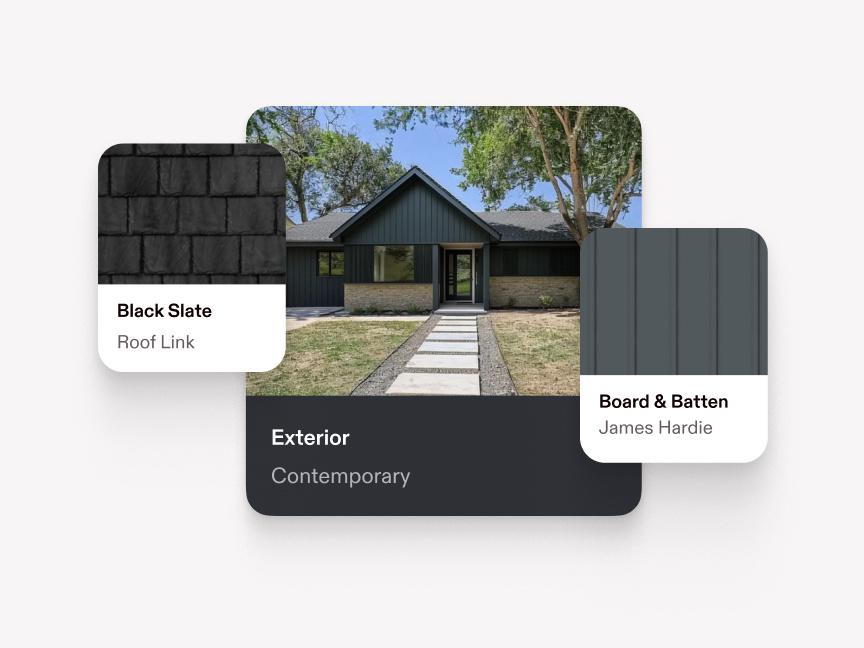
There is a modesty to this use of sophisticated software that makes the ambition more interesting. Altman was asking a contractor to make room for a new tool in an existing appointment. A product that could help explain a purchase had a place in that appointment. A product that required its own elaborate performance would have a harder time earning the chair.
The furniture came first
One of the more revealing connections in Altman’s business life began with office furniture. In 2016, Yevgenia Fink contacted him while Hipmunk was being acquired and moving offices. She and Altman had worked together at Intel. She wanted to discuss buying furniture. The inquiry reopened a professional relationship that would become part of Hover’s leadership.
Fink joined in 2017 as vice president of finance and operations. Altman offered her the CFO role at the outset; she preferred to build the finance and accounting organization first. She became CFO in 2020. Her account of the move includes a straightforward assessment: she already knew he was a leader she wanted to work with.
It is a useful counterweight to the tidy idea that companies assemble themselves through grand introductions. Here were former colleagues, an acquisition, an office move and a reason to call. Before a future executive could evaluate the startup, she had years-old experience of its founder. Sometimes the furniture is merely furniture. Sometimes it is the opening item on a much longer agenda.
Reading past the job title
Altman has also asked technology employers to reconsider the people they might overlook. In a 2021 conversation about veterans entering the industry, he argued for evaluating persistence and the ability to follow through, even when a candidate’s background does not map neatly onto a civilian job. His own company supplied an example with more substance than a recruiting slogan.
Hover’s head of engineering had served in the Marine Raiders before joining as an inexperienced intern. By the time of that conversation, he was running a team of 110. It is a striking progression because the starting role offered so little evidence of the eventual responsibility. Someone had to be willing to see a beginning where a conventional resume review might have seen a mismatch.
“Just suss out for grit and persistence.”
A.J. Altman, on hiring veterans
The advice places a demand on the employer as well as the applicant. Hiring for potential requires giving a person work in which potential can become experience. Altman’s example describes that process over time: a chance to enter, an opportunity to learn, and increasing responsibility. His Marine background informs the argument, but the question it raises belongs in any interview room.
When the customer writes the cheque
The businesses around Hover offer another way to understand Altman’s choices. A measured model can serve a contractor preparing an estimate and an insurance professional assessing property work. Those applications share a need for dimensions, even when the decisions they support differ. The same house can sit at the center of several separate transactions.
In November 2020, Hover raised a $60 million Series D led by Travelers, State Farm Ventures and Nationwide. Insurance carriers were financing a company whose output could be used in their own industry. Other participants included GV, Menlo Ventures, Alsop Louie Partners, Standard Industries and Guidewire Software. That mix put technology investors alongside organizations with a direct interest in property information.
Led by Travelers, State Farm Ventures and Nationwide.
For Altman, the financing placed the business inside an established industry’s practical calculations. The model needed to do useful work after the demonstration. A homeowner might appreciate a rendering; an insurer also needs information it can carry into a process. Hover’s position depended on making the underlying property data useful in both settings.
A prettier picture still needs an estimate
The company’s later products followed those neighboring tasks. On February 26, 2025, Hover launched Instant Design, allowing people to begin with a photo and explore interior or exterior changes. The product included visualization of materials and colors from manufacturers. Altman’s explanation kept returning to the homeowner’s decision: an expensive project asks for commitment before the finished thing exists.
“Home renovations are expensive and emotional, and homeowners today expect to see what they’re buying before they commit.”
A.J. Altman, February 2025
Then, on January 13, 2026, Hover announced a connected visual platform combining measurements, design, estimating and proposals. The company said its spatial database covered more than 10 million residential properties. The significant change for a contractor was the connection between stages: information gathered for one task could continue into the next, rather than needing to be entered again.
- 01MeasureCapture the property
- 02DesignExplore the choices
- 03EstimateScope the materials
- 04ProposePut the job in writing
A schematic of the connected workflow introduced in January 2026.
In January comments about construction’s future, Altman argued that AI should strengthen the expertise of people doing the work. His emphasis was on helping professionals advise homeowners and deliver projects. That is a concrete aspiration for a technology executive: the software should make someone else more capable at a job they already understand.
Back to the table
Across these chapters, Altman’s subject remains surprisingly consistent. A photograph becomes a model. A model supports a design. A design needs measurements, materials and a proposal. Each addition follows a decision that someone must make before work can proceed. The company has expanded the amount of that sequence it handles; the person at the table still has to understand the result.
His story has the expected ingredients of a technology career: engineering, a technical discovery, investors, successive products. It also has his mother as a test of usefulness, a veteran starting with an internship and an old colleague calling about furniture. Those details bring the work back to people. A home improvement project eventually needs a yes. Altman has made a career of giving that small word something firmer to stand on.