Geoffrey Cook had a recurring appointment with a girl who lived on a volcano. The appointment lasted twenty-five minutes, roughly the length of the drive to his daughter Madeline’s school. His wife, Kerri, had invented Veronica and begun telling stories about her at bedtime. Madeline wanted more. Cook supplied new adventures on the morning journey, then began writing them down. A school run had acquired a plot. Eventually, it acquired a book jacket.
It is an agreeable complication in the life of an internet executive. Cook helped build a business that connected millions of strangers, but one revealing project began with an audience of one. A child asked what happened next. He had to come up with an answer worth hearing.
The same small pressure runs through his career. Someone has a document to improve, a classmate to meet, an unfamiliar app to understand. Cook starts working on it. The audience grows. The original question becomes harder, more expensive, and occasionally much more interesting.
The student who kept leaving the lecture
In a first-person account published in 2000, Cook described ducking out of a Harvard lecture on Mill and utilitarianism to take a business call. Outside the classroom, he sold advertising on his website, CyberEdit, then returned to his seat. His classmate was unimpressed. Philosophy had lost a customer to commerce, at least for a few minutes.
He had started his editing businesses while still a student in 1997. EssayEdge and ResumeEdge addressed an unglamorous problem with paying customers: people needed help making applications and résumés read better. The internet made it possible to reach them beyond the campus. This was a business built around the words people use when they want a door to open.
Cook graduated from Harvard in 2000 with a degree in economics. Two years later, he sold the businesses to Thomson. The dorm-room venture had become something another company wanted to own.
Some of its value lasted beyond the sale. His Harvard roommate Spencer Rhodes had helped develop the business; that network later helped bring investors to myYearbook. Cook carried experience, relationships, and capital into his next venture. The subsequent family story began with a brother who already knew that a website could become a working company.
A yearbook with room for a reply
In 2005, his younger siblings Catherine and David were looking through a school yearbook and wondering why it could not do more. Put it online, and students could share interests, leave comments, and keep in touch. They took the idea to Geoff. He invested $250,000 and became their co-founder.
MyYearbook launched at Montgomery High School in Skillman, New Jersey, where Catherine and David were students. Catherine promoted it by wearing different company T-shirts to school. The early product gave students online yearbooks and lockers, along with games and ways to signal interest in one another. A printed yearbook generally waits until June to embarrass you. This one could arrange introductions all year.
By March 2007, the company had sixteen employees, offices in New Hope, Pennsylvania, and more than 1.8 million members. It had also raised $4.1 million from U.S. Venture Partners and First Round Capital. Infrastructure and an advertising sales team were becoming matters of urgency.
The family had some preparation for this peculiar arrangement. Catherine remembered summers around Geoff’s earlier company, with its couches, ping-pong, and foosball. She and David had seen a version of working life that appealed to them. Later, she described an office where an idea could be taken straight to Geoff. Their shared history helped make starting a company seem possible before it became practical.
Cook’s initial investment in the idea he co-founded with Catherine and David.
Growing out of the school uniform
The business eventually outgrew the promise in its name. A yearbook suggests a particular school, a particular age, and people you already recognise. The company’s longer-term opportunity was broader: helping people meet someone new.
MyYearbook merged with Quepasa in November 2011. Cook became chief operating officer and a director of the combined company. In 2012, the business became MeetMe; in March 2013, he became CEO. By the time of the merger, myYearbook had reached profitability, more than $30 million in revenue, and a staff of one hundred.
The changes continued through acquisitions. Skout joined in 2016. Tagged and LOVOO followed in 2017, the year the company adopted The Meet Group name. GROWLR came in 2019. A single social network had become a collection of communities with different audiences.
Those names can make the career sound like a procession of new stationery. Underneath them sat a less tidy assignment: keep a product useful while the people using it, and the devices in their hands, change. The teenage founders’ original setting was no longer a sufficient boundary for the company they had made.
- 2005myYearbook launches
- 2012The MeetMe name arrives
- 2017The Meet Group takes shape
- 2020Acquired; ParshipMeet Group is formed
The screen that made him look twice
Livestreaming first caught Cook’s attention during a business trip to China in 2015. The initial encounter was hardly a moment of serene recognition. He saw crowded screens, fast-moving chats, animated gifts, and presenters talking in a language he did not understand. His first impression left plenty of room for doubt.
He kept looking. By October 2016, Cook had committed nearly the whole MeetMe team to livestreaming development. The company launched the format in 2017. His eventual conviction mattered because it required moving people and resources before the outcome was settled.
Video changed what users could do between messages. They could watch a broadcast, join a conversation, or send virtual gifts to a creator. A dating app now contained entertainment that did not require a match before anything happened. The business earned money from those interactions as well as its existing activities.
The technology also became a service for other companies. The Meet Group launched its video-platform-as-a-service business in 2019; it later took the name Livebox. A tool developed inside its own apps had found another audience: businesses that wanted livestreaming without building the whole operation themselves.
In March 2020, the company announced an acquisition agreement at $6.30 per share, with an enterprise value of approximately $500 million. The transaction closed that September. The number belongs to the company’s deal, rather than a personal payday. It marked the outcome of years spent changing what the original family business could offer.
“We just had an idea and wanted to see it through.”
Geoffrey Cook, on creating his children’s book
A different kind of product deadline
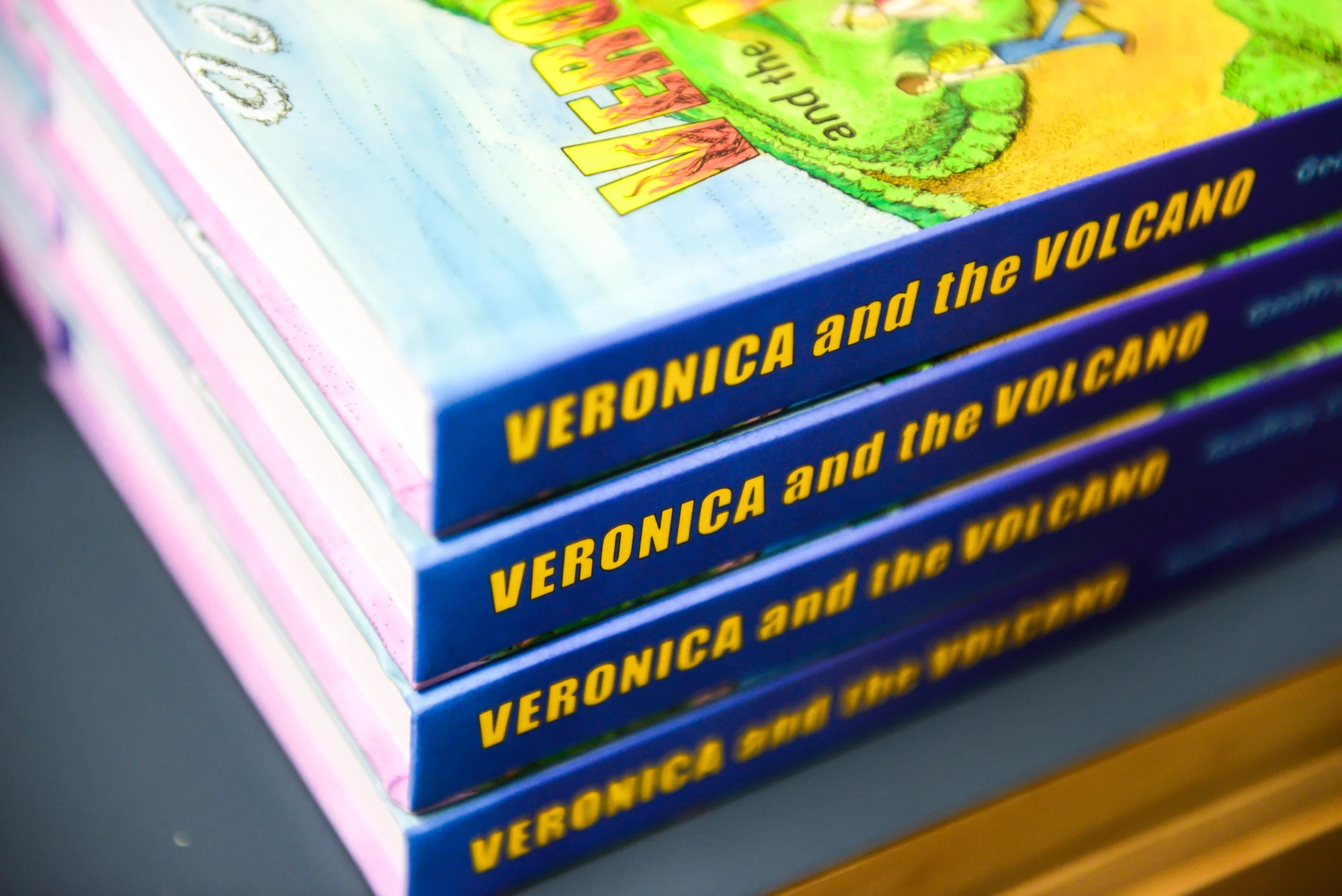
While the apps were changing, Veronica was having adventures of her own. Cook published Veronica and the Volcano in 2017, with illustrations by Gabrielle Shamsey. Its ten-year-old heroine lives in a gadget-filled house on an active volcano and travels in a Lava Car. A quest for volcanic pearls supplies a reason to leave the relative comforts of home. The geography is decidedly less forgiving than suburban New Jersey.
Cook had been reading middle-grade books with Madeline, including Harry Potter and The Princess Bride, and began reading more of them for himself. He imagined Veronica’s surroundings and drew a map. The stories accumulated enough detail to support a world beyond the next morning’s journey.
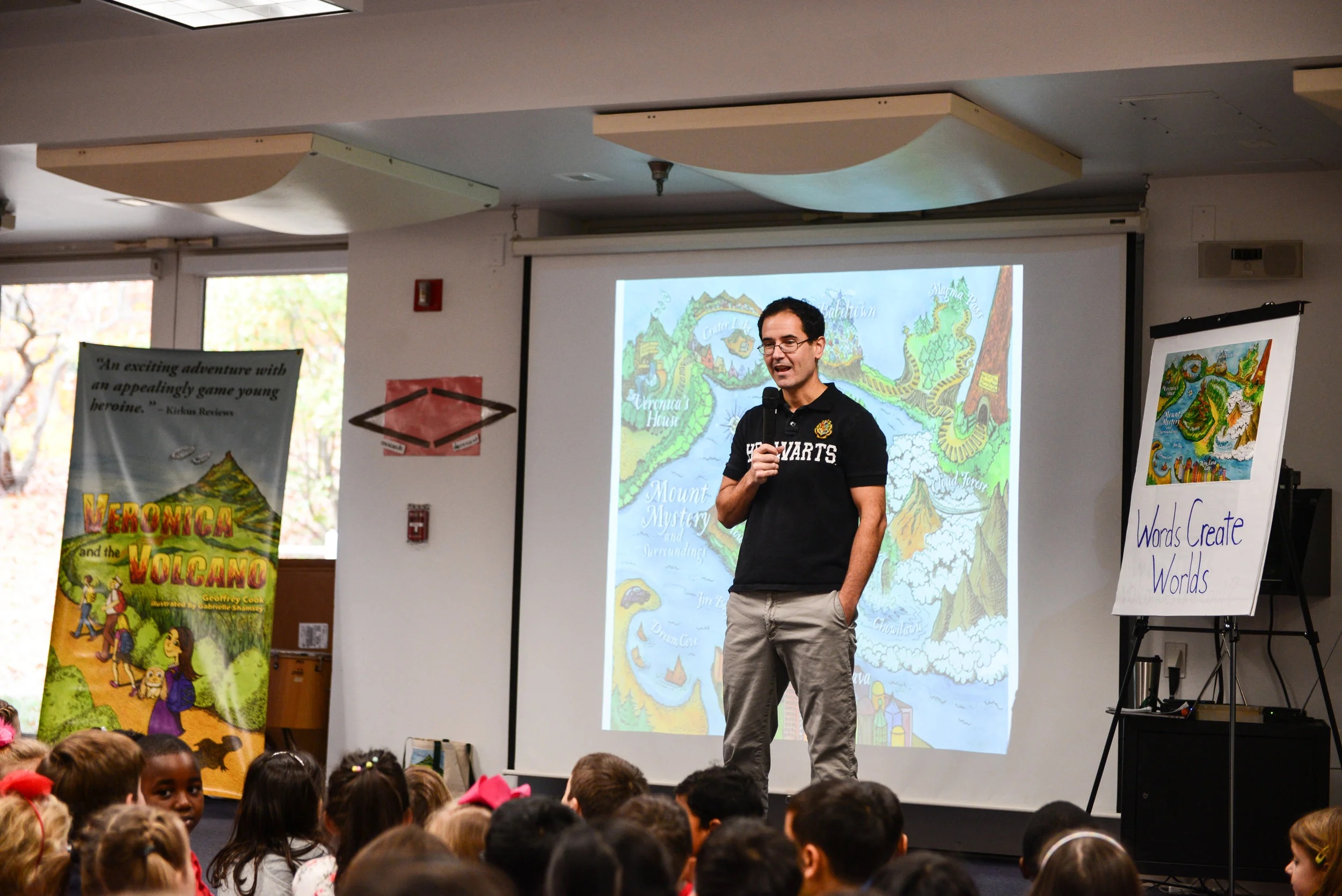
The resulting book had a practical design decision that any parent might appreciate. Its chapters were intended to take about fifteen minutes to read aloud. Cook had found some Harry Potter chapters ran considerably longer at bedtime. A parent could reach a stopping point without renegotiating the entire evening.
The fantasy also rests on recognisable people and places. Cook thanked his Lake George neighbours, including the captain of the Minne Ha Ha, for helping inspire characters. Crater Lake helped shape the setting. His own family supplied voices he knew well enough to hear when the dialogue sounded wrong.
Veronica’s task is more complicated than surviving spectacular scenery. The story gives her occasions to judge adults as well as depend on them. Its gadgets make room for scientific curiosity; its family relationships give the adventure a reason to matter. A lava shield is useful equipment. It cannot make every decision for its passenger.
Leaving room for the next question
After the acquisition, Cook became co-CEO of ParshipMeet Group in July 2021. He also participated in Angelhouse, where founders pitched investors on Clubhouse. It brought his interest in new businesses into a public audio room, with actual investment decisions behind the conversation.
His long association with the social-app business ended in March 2023, during a reorganisation at ParshipMeet Group. The departure came alongside staffing cuts, an awkward ending to a story that a sale price alone might make look too smooth. In July, he joined Noom as CEO and a board member. He remains its CEO in 2026.
That year, he and Madeline appeared together in a profile about their continuing education at Tufts. The child who once wanted another Veronica story was now pursuing fine arts and psychology, and had written and illustrated a book of her own. Their collaboration had continued to change as she grew up.
Cook has made constant reinvention an explicit personal goal. The record gives that phrase some substance: editing other people’s writing, financing his siblings’ idea, committing to an unfamiliar video format, and writing fiction for a child who expected another instalment tomorrow.
There is a pleasingly modest starting point beneath all that activity. Someone nearby is curious about something. Cook pays attention, then starts making it. For a while, the whole enterprise can still fit into the drive to school.
Keep following the questions
READ · LISTEN · CONNECT