A casino needs players. A streaming platform needs people worth watching. Easygo has built businesses on both sides of that bargain, then added a third: tools for developers who want to make the games. Stake, KICK and Stake Engine may look like separate browser tabs. Together, they reveal a Melbourne company trying to control more of how online entertainment gets made, discovered and paid for.
The combination is unusual enough to deserve a closer look. Easygo makes software, but its products live in the noisy world of bets, live chat, sports sponsorships and creator contracts. Its expertise runs from probability models to payment systems, from broadcast reliability to customer retention. A useful way to understand the company is to follow the things it has had to change.
The casino nobody queued for
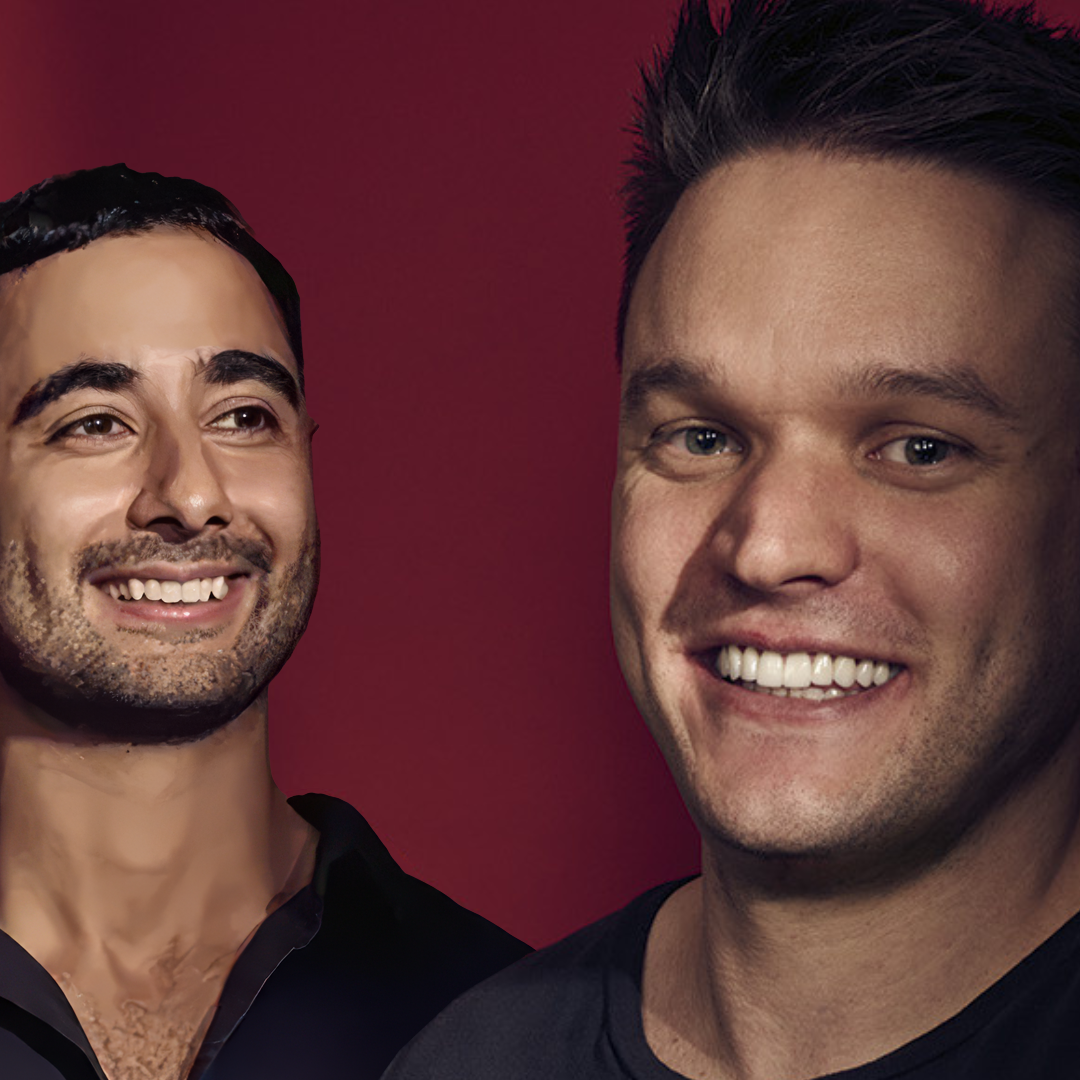
Ed Craven and Bijan Tehrani met through RuneScape before building their partnership in Melbourne. Easygo began in 2016; Stake followed in 2017. The polished success story conceals an awkward opening. In a 2025 interview, the founders recalled a disappointing launch, weak interest in their initial games and a product that needed work.
The response was practical: add games, reduce margins and remove the levels they had built into the experience. Tehrani described listening to customers and changing the product over time. The early mistake was assuming the original proposition would attract the market they imagined. Getting people to return required more than a clever technical premise.
“It was just a matter of listening to our customers and making changes over time.”
Bijan Tehrani · Co-founder
Today, Stake brings casino games, live dealers and sports betting together, with cryptocurrency among its payment options. Its customers are adults seeking gambling entertainment where the relevant service is permitted. That puts it in competition with established bookmakers and online casinos. Convenience, game choice and the experience around a wager are part of the offer; none changes the underlying possibility of losing money.
One group, three different customers
Easygo’s market position becomes clearer when the audiences are separated. Stake serves players. KICK serves viewers and the creators trying to earn their attention. Stake Engine serves developers seeking a route from a game idea to a published product. The company supplies both entertainment and some of the machinery that brings it to an audience.
Those are different businesses with different economics. Casino gaming revenue reflects stakes less winnings; sportsbook margins depend on betting outcomes and pricing. A streaming service has to deliver video and support creators. Game publishing needs usable tools, dependable integration and an audience worth building for. Calling all of this “technology” is accurate, but leaves most of the interesting work out.
Easygo’s website currently advertises more than 60 million registered Stake customers and more than 500 million monthly viewing hours on KICK. These are company-reported measures of different activities. Registered accounts are not active people; viewing hours are not viewers. Nor is the advertised $30 billion in monthly Stake wagers company revenue. The same money can be wagered repeatedly.
The 95% invitation
KICK launched in late 2022, entering a market with established destinations including Twitch and YouTube. Its creator pitch is unusually easy to explain: a 95/5 split. The current help centre illustrates it with a $5 monthly subscription, of which the streamer receives $4.75. It describes the remaining 25 cents as a processing fee.
For a working creator, that makes the decision concrete: compare what an existing audience might earn on another platform. But a generous percentage of a small audience can still produce a small income. Discovery, reliable broadcasts and viewers willing to subscribe remain essential. A revenue split is one line in the calculation, however prominently it appears in the pitch.
KICK also bought attention at a scale most new businesses cannot copy. The 2023 deal with Félix “xQc” Lengyel was reported as roughly US$70 million over two years, with incentives potentially taking it to US$100 million. It was non-exclusive. The distinction matters: this was a reported contractual commitment with conditions, not evidence that the maximum sum had already been paid.
The operating challenge continues after a creator signs. In May 2026, Easygo described a KICK engineering team of more than 30 across Melbourne and Europe and a broadcast that held 1.5 million simultaneous viewers without disruption. It also described overnight work supporting a charity stream. The account is the company’s own, but it identifies the work behind the headline: security, monitoring, customisation and fixes while people are watching.
Now the tools get their own audience
Stake Engine takes another internal capability and gives it an external customer. Developers can use front-end tooling, a mathematical engine and testing facilities to build games for submission. Easygo advertises perpetual royalties of 10% of gross gaming revenue, with monthly payment. That is a share of gaming revenue, not 10% of every bet placed.
The public StakeEngine GitHub organisation makes the proposition tangible. It hosts a TypeScript web SDK, a Python math SDK and a client for the platform’s API. Developers can inspect working materials before treating the distribution pitch as a business plan. The appeal is reducing the work between making a game and reaching a casino audience; commercial success still depends on whether anybody chooses to play it.
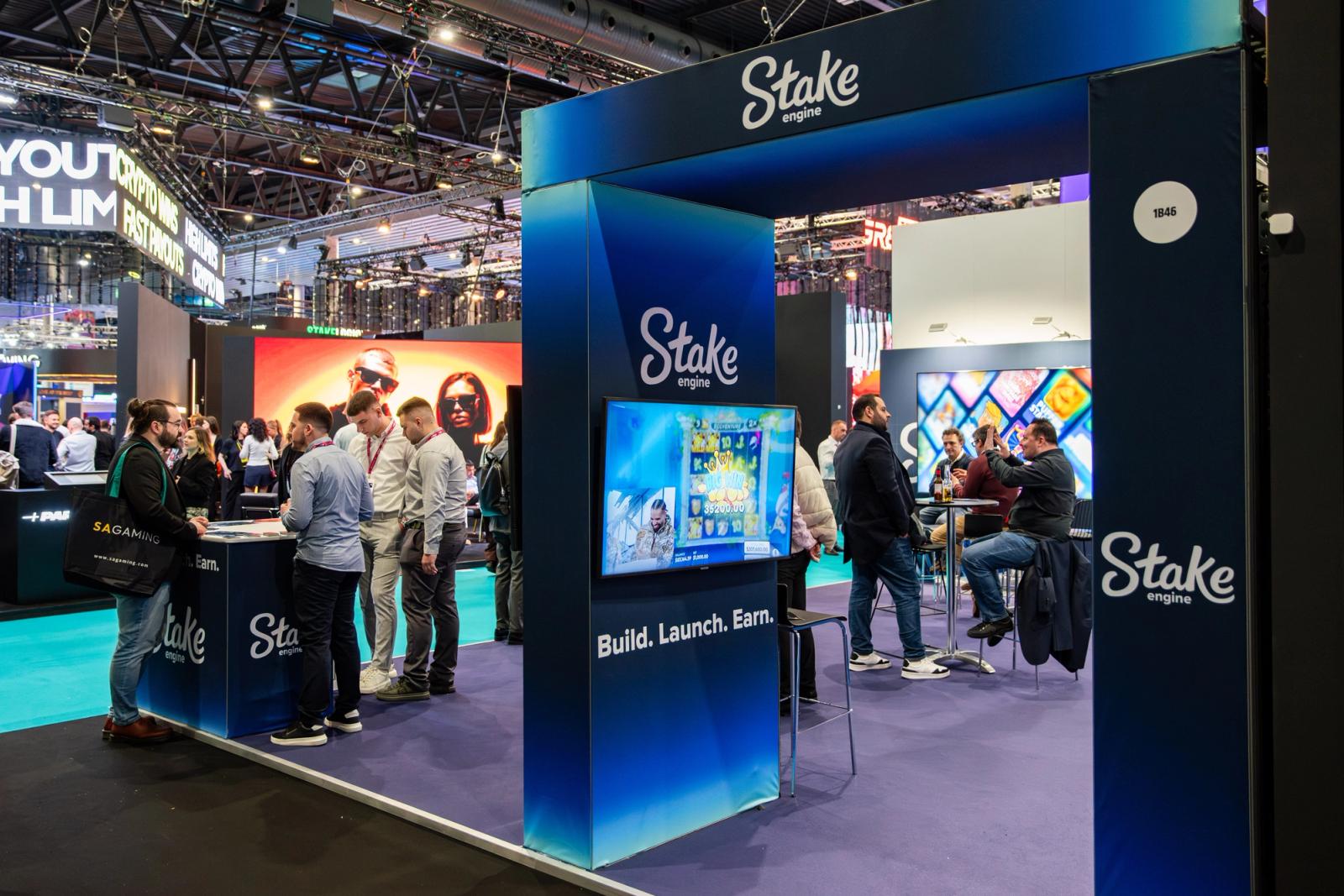
Alongside the publishing tools sits Easygo Games, a studio collective launched in January 2026. The current division includes Twist, Massive, Paperclip, Uppercut and Knucklehead Syndicate. Their roles differ: Massive tackles more complex productions; Paperclip stresses design and experimentation; Uppercut favours smaller, rapid releases. Knucklehead extends into third-party distribution. Shared technology supports several ways of making content.
The sponsorship is only the beginning
Stake’s UFC relationship shows how Easygo buys access to an existing audience. The partnership began in 2021 across Latin America, excluding Brazil, and Asia. A 2022 expansion added Brazil. The agreement covered branding inside the Octagon at selected events, digital content, VIP experiences and paid opportunities for participating athletes.
This is more involved than purchasing a logo position. The rights supply material that marketing teams can turn into campaigns and experiences. Easygo’s marketing department describes separate work in sponsorships, affiliates, paid media, search and customer relationship management. Each deals with a different step between someone noticing a brand and deciding to return.
The CRM team’s May 2026 account reports more than 500 million communications in a year, over twice the previous output. It describes local performance targets, an Italian coordinator with a dedicated platform instance, and campaigns tied to events. The copyable idea is the operating structure: give local teams measurable experiments and common standards. Sending more messages, by itself, proves little about the quality of the relationship.
What stopped working at twenty-one engineers
The clearest account of Easygo’s culture involves a smaller number. A June 2026 engineering article describes a Product Engineering team growing from four people to 21 in under 18 months. Informal knowledge sharing became less reliable. New colleagues could understand the code while struggling to learn deployment processes, internal tools and how the organisation worked.
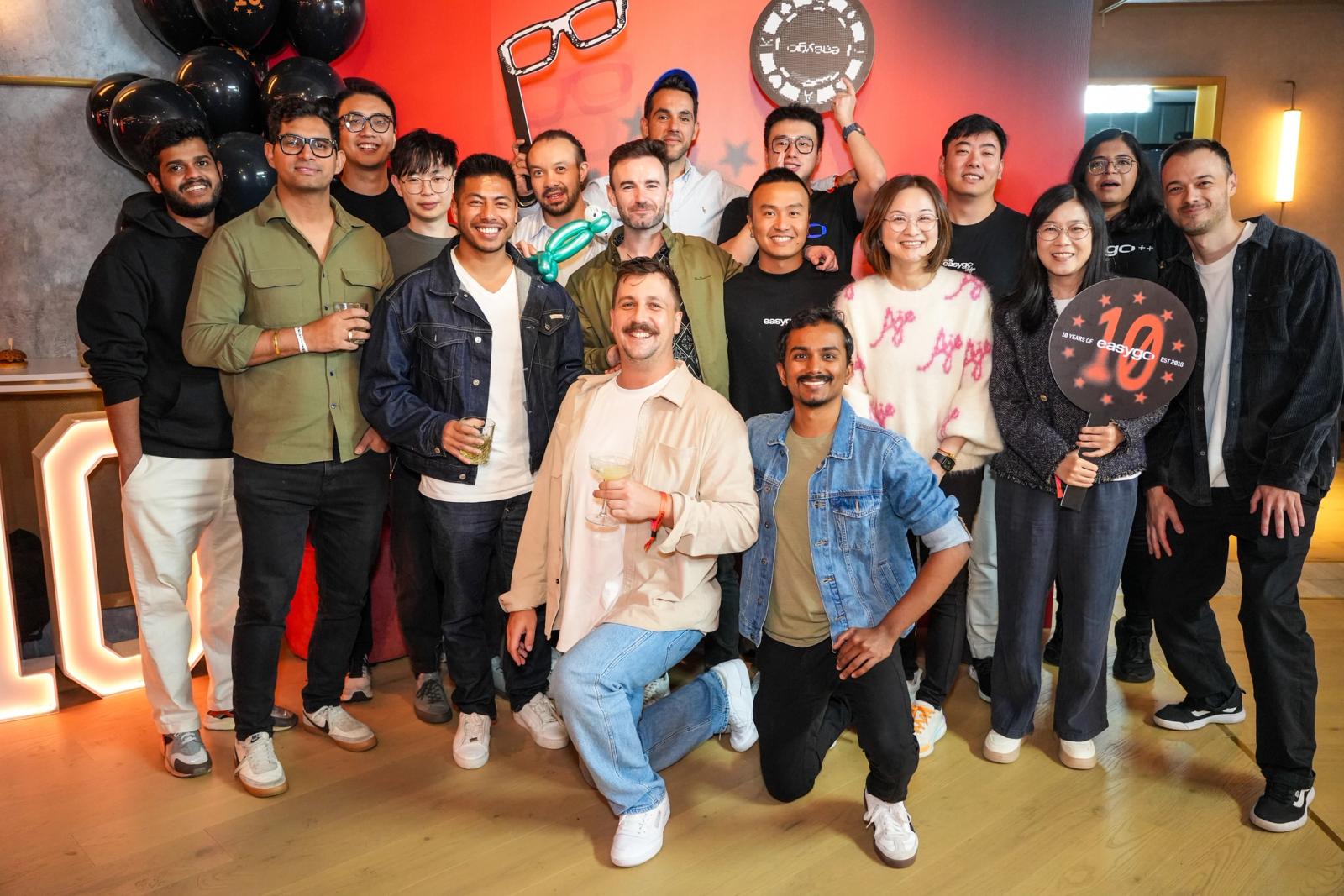
The response included better onboarding, documentation, technical discussions and engineering guilds. Teams also tracked critical customer journeys, delivery against plans and completion of post-incident actions. These practices put something testable beneath the recruitment language about ownership. They offer a useful lesson for a growing team: write down the context before the newest person has to reconstruct it through favours and interruptions.
A separate infrastructure account, published in July 2026, describes the same problem in cloud operations. Per-account deployment pipelines had initially limited the potential impact of a compromised pipeline. Beyond 100 AWS accounts, their logging, permissions and maintenance created too much work. Easygo adopted centralised Gruntwork Pipelines after working with Terragrunt, keeping its existing Terraform knowledge.
The team reports removing five to seven hours of weekly toil. Its pilot covered more than 40 environments in less than a week before a wider rollout. The instructive choice is the reversal: a design selected for a sensible reason became costly at a different scale. Centralisation made sense in that setting; a much smaller team might have little of that overhead to remove.
Attention arrives with a bill
Growth also attracts threats. Cloudflare’s Easygo case study describes a shift toward stronger security, reliability and controlled employee access as the company became more visible. Easygo adopted web protection and replaced older remote-access arrangements with more granular controls. Its stated approach is to buy specialised infrastructure so its own developers can spend more time on the products.
The stakes are measurable. The FBI attributed the theft of approximately US$41 million from Stake in September 2023 to North Korea’s Lazarus Group. Market access can disappear too: Britain’s Gambling Commission announced in February 2025 that the separately operated Stake.uk.com white-label site would close by March 11, following an investigation into a branded social-media video.
Both episodes complicate an easy growth narrative. A gambling brand needs permission to serve a market, not merely recognition within it. A streaming platform needs an audience and the systems to support that audience. Easygo’s repeatable lessons are narrower than its celebrity spending: respond to disappointing demand, make the customer’s economics legible, share useful infrastructure and revisit decisions when their costs change. The expensive part is earning the right to do all of that again tomorrow.