The machine has arrived. The paint is new, the steel is clean, and the three-volume parts manual is already lying. Back at the factory, an engineer has changed a component. A supplier number has been superseded. Somewhere in the binder, a mine operator has crossed out a number, added another, and planted a sticky note like a tiny flag of surrender. This was the scene that nagged Kristina “Kris” Harrington during a career in mining equipment and aftermarket sales. Her line about the old process is wonderfully plain: “When a product left the factory... it was moving with a static manual.”
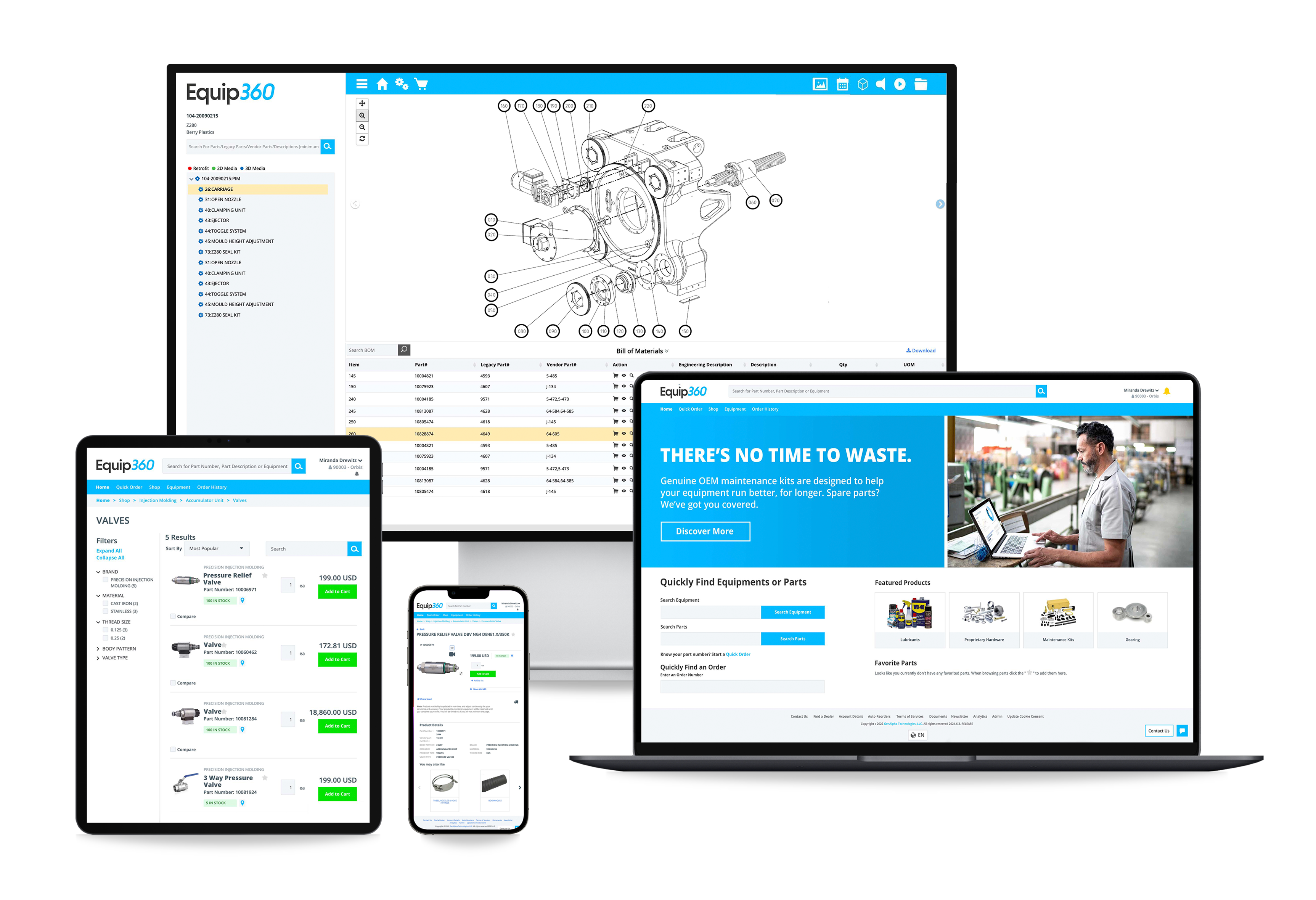
GenAlpha Technologies, the Brookfield, Wisconsin company Harrington co-founded in 2011, grew out of that mismatch. The first job was not “put manufacturing on the internet.” It was narrower and more useful: give an equipment owner the current bill of materials for the exact machine they own. Search by serial number or VIN. Open the assembly. Click the component in a 2D drawing or 3D model. See the current part even if two older numbers have come and gone.
Then came the second insight. If the software was already talking to the manufacturer’s enterprise resource planning system, it could retrieve price and availability. Add a cart, and a visual catalog becomes a store. GenAlpha’s flagship product, Equip360, is the extended version of that thought - a configurable SaaS platform for selling equipment and aftermarket parts, publishing interactive manuals, tracking orders, handling warranties and returns, configuring complex products, and reading the resulting customer behavior.
The cart is the easy part
Consumer commerce assumes the buyer knows what to type. Industrial commerce often begins with a description such as “the seal behind the thing that started leaking Tuesday.” A 15-year-old vehicle may have a legacy number in its manual, a replacement number in the ERP, a dealer-specific price, and a configuration that applies only to its VIN. A generic storefront can display a SKU beautifully while remaining useless at answering the question that matters: will this fit my machine?
That sequence explains GenAlpha’s market position. It overlaps with B2B commerce platforms, product-information systems, configure-price-quote tools, digital catalog vendors, customer portals and custom systems integration. But it packages those jobs around the life of industrial equipment. The buyer is not a fashion shopper. It may be a dealer, fleet manager, technician, equipment owner or parts-counter employee trying to keep an expensive asset working.
Equip360’s modules cover eCommerce; commerce-enabled 2D and 3D parts manuals; warranty, product registration and return-material authorization; product configuration; analytics; customer and dealer portals; and integrations. The company says it can map into common ERP and dealer-management systems including SAP, Oracle, Epicor, Microsoft Dynamics, Infor, JD Edwards, Karmak and IntelliDealer, as well as custom or homegrown systems. That integration is the less photogenic half of the product and probably the more important half.
The first two figures were disclosed when GenAlpha announced the expanded Equip360 platform in 2022. They are evidence of meaningful transaction flow, not a claim about GenAlpha’s own revenue. The third figure comes from the company’s deployment guidance. Together they reveal the shape of the business: subscription software sold by consultation and custom quote, with implementation, catalog conversion, integration and advisory work wrapped around it. Public pricing is not available.
“Our vision is to provide manufacturers with the digital tools they need to meet the growing expectations of customers and distribution partners.”Kris Harrington, announcing Equip360 in 2022
Who pays - and what they are buying
The customer list is a tour of things that move, lift, sweep, cut and keep other things moving. Publicly named users include Gradall Industries, Tiger Mowers, Dixie Chopper, Rhino, Overhead Door Corporation, TICO, Grote Industries, Patterson Equipment, Salford Group and Humphrey Service Parts. GenAlpha groups its market into original equipment manufacturers, specialty vehicle businesses, aftermarket organizations and distributors.
They are buying several outcomes at once. A searchable catalog can reduce wrong-part orders and inbound “where is my order?” calls. Live account pricing protects dealer arrangements. Self-service gives buyers a path after business hours. Warranty and return workflows replace email chains. Configuration tools make a complex equipment quote less error-prone. Analytics can reveal what customers search for, abandon or repeatedly buy. The sales pitch is revenue growth; the operational pitch is fewer routine interruptions.
Humphrey Service Parts offers the cleanest recent example. Before its Equip360 launch, routine ordering and tracking ran through branches, phone calls and email. But the dealer did not start with a blank slate. It had adopted Karmak Fusion as its dealer-management system, joined VIPAR Heavy Duty, and gained access to organized product information. Equip360 connected those foundations into a 24/7 catalog with online ordering, tracking, invoice history and account management.
A vertical-software advantage
GenAlpha’s differentiation is less about owning every feature than knowing which details make industrial features work. Harrington’s résumé includes aftermarket and sales roles at Enerpac, Caterpillar and Bucyrus International. The company says its team holds more than a century of combined aftermarket experience. Its public culture is correspondingly hands-on: discovery, data extraction, custom mapping and a named customer-success manager are presented as part of the deployment, not inconvenient services hiding beside the software.
That approach matters because manufacturing data is rarely clean enough to stroll directly onto a website. GenAlpha accepts bills of materials in spreadsheets and text files; drawings in PDF and CAD formats; and several 3D engineering formats. It can move scheduled files over SFTP or make dynamic calls through middleware. It also has to preserve customer-specific visibility: one dealer should not necessarily see another dealer’s pricing, and an anonymous visitor may not be allowed to buy at all.
The chart is conceptual, not GenAlpha data. Its point is practical: the visible store is only the surface. This is why the company competes differently from a quick Shopify launch, while still facing alternatives from Adobe Commerce, BigCommerce, specialized parts-catalog vendors, CPQ suites and internal IT teams. A customer can assemble similar capabilities. GenAlpha’s bet is that buying a manufacturing-shaped system and an experienced implementation team costs less than teaching a generic stack every rule of the aftermarket.
Acquired, then expanded
In November 2017, Shore Points Capital led an acquisition of GenAlpha with Greyrock Capital Group. The price was not disclosed. The deal put veteran software executive Stan Eames in the chief executive role at the time and kept Harrington and other senior staff central to the business. Harrington is now CEO; the current leadership page also lists Kathleen Shea as chief technology officer, Kevin Heisler as CFO and business-development director, and Annabel Briquet as vice president of customer success and product.
The platform broadened in 2022, when the Equip360 name gathered catalog, commerce and analytics alongside warranty, returns and product configuration. More recent partnerships extend the edges. VizSeek lets a user search with a photo, sketch or drawing. Mavenoid adds a conversational assistant for product and account questions. VIPAR opens a route into independent heavy-duty parts distribution. Karmak connects dealer operations. Revolution Payments addresses the checkout plumbing.
In 2026, GenAlpha announced work with Aksibu on product development and operational AI, and with Joyn Collective on strategy and change enablement. The pairing is revealing. One partnership is about making the software and the company’s processes move faster; the other acknowledges that technology fails when the organization never changes around it.
What failed first?
In the founding story, paper failed first. It froze equipment knowledge at the moment of printing while the factory kept changing. In a deployment, the first weak link is more likely data or adoption. A beautiful portal cannot rescue incomplete bills of materials, inconsistent descriptions, missing account rules or an ERP connection nobody owns. Nor will it create value if dealers keep phoning the same trusted parts expert because nobody trained them to use the new route.
The company’s own customer stories quietly support that conclusion. Humphrey’s launch worked because the distributor had already invested in a DMS, a parts network and product data. Grote’s webstore recognition followed a broader commitment to centralized product information. The repeatable idea is not “buy Equip360.” It is “make equipment identity and product truth govern the experience.” The software is the delivery system for that decision.
The playbook worth stealing
Start with the embarrassing artifact. Find the binder, spreadsheet or heroic employee holding a revenue-critical workflow together. Make that specific pain the wedge.
Resolve identity before adding commerce. In complex B2B markets, “which exact thing do you own?” often matters more than search design or checkout polish.
Use the integration twice. GenAlpha first used ERP data to keep parts current, then reused the connection for price, stock and transactions. One hard pipe supported adjacent products.
Automate the known questions. Order status and invoice retrieval belong online. Let experienced people handle ambiguous failures and genuinely technical work.
Treat adoption as product work. Assign owners, prepare data, train the channel and measure use. A launch date is not the same thing as a changed habit.
The model will not work everywhere. A merchant with simple products and clean consumer demand would be paying for industrial complexity it does not need. A manufacturer unwilling to expose or reconcile core data will create a polished dead end. A company without executive ownership, internal subject-matter experts or a plan to move dealer behavior may merely add another channel nobody trusts. And a business demanding a weekend launch will dislike a system whose typical implementation is measured in months.
But under the right conditions - long-lived equipment, valuable aftermarket demand, confusing parts, multiple buyer roles and an ERP worth connecting - GenAlpha’s thesis is hard to argue with. The online store is not the transformation. The transformation is making the right answer available when a customer needs it, then letting that customer do something useful before the machine stops earning money.