A cotton fiber is a rather small thing on which to hang a $50 million agreement. Yet that is the arrangement GALY reached with Suzuran Medical, a Japanese medical-supplies manufacturer. The commitment runs for ten years. The cotton is grown from plant cells in tanks. And the detail that makes the story interesting is what a medical buyer values: purity.
- GALY cultures cotton and cocoa from plant cells.
- Suzuran committed to future cotton supply through a $50 million agreement.
- Clothing-grade fiber length and manufacturing scale required further development.
- In May 2026, GALY announced plans for its first commercial facility that year.
Fashion buyers care about purity too. They also care about fiber length and strength. In September 2024, founder Luciano Bueno acknowledged that GALY still needed to improve strand length for clothing. Medical cotton offered an opening while that work continued. The same material could be promising to one buyer and unfinished to another. Procurement departments, inconveniently for inventors, have particulars.
01 / The plant is doing too much
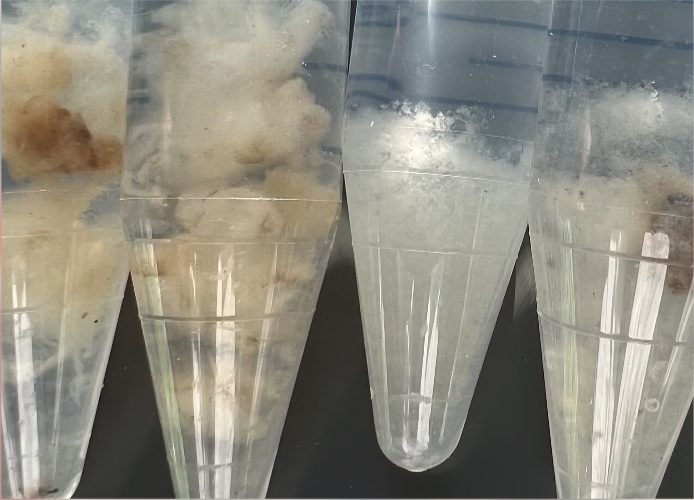
Conventional cotton arrives at the mill after a plant has spent months producing roots, stems, leaves and the fibers people actually want. GALY’s proposition is to shorten that biological itinerary. Take plant cells, multiply them in a nutrient-rich medium, then encourage them to develop into cotton fibers. The vessels invite comparisons with a brewery, although the eventual product is unlikely to improve a Friday evening.
“Instead of growing the whole plant, we go from the cell directly to the fiber”
Luciano Bueno · April 2020
This distinction matters. GALY is growing cotton-derived material, rather than making another substance resemble cotton. Its expertise sits between plant biology and process engineering: understanding what cells can become, then arranging conditions in which they become it reliably. A successful culture is the beginning. A repeatable manufacturing process is a much longer assignment.
There is an advantage in making something familiar by unfamiliar means. A buyer already knows what cotton should feel like and how to judge it. There is also a disadvantage: the comparison is immediate. A persuasive environmental story cannot do the work of a fiber specification.
02 / Before the tank, a troublesome shirt
Bueno’s relationship with textiles preceded GALY. He sold T-shirts door to door as a teenager and later worked with textile companies at Deloitte. His earlier venture, Horvath, attempted sweat-resistant shirts. It became entangled in an exclusivity agreement. After stepping away, he studied business in Silicon Valley, where the investment enthusiasm around cultivated meat suggested another possibility: apply cellular agriculture to cotton.
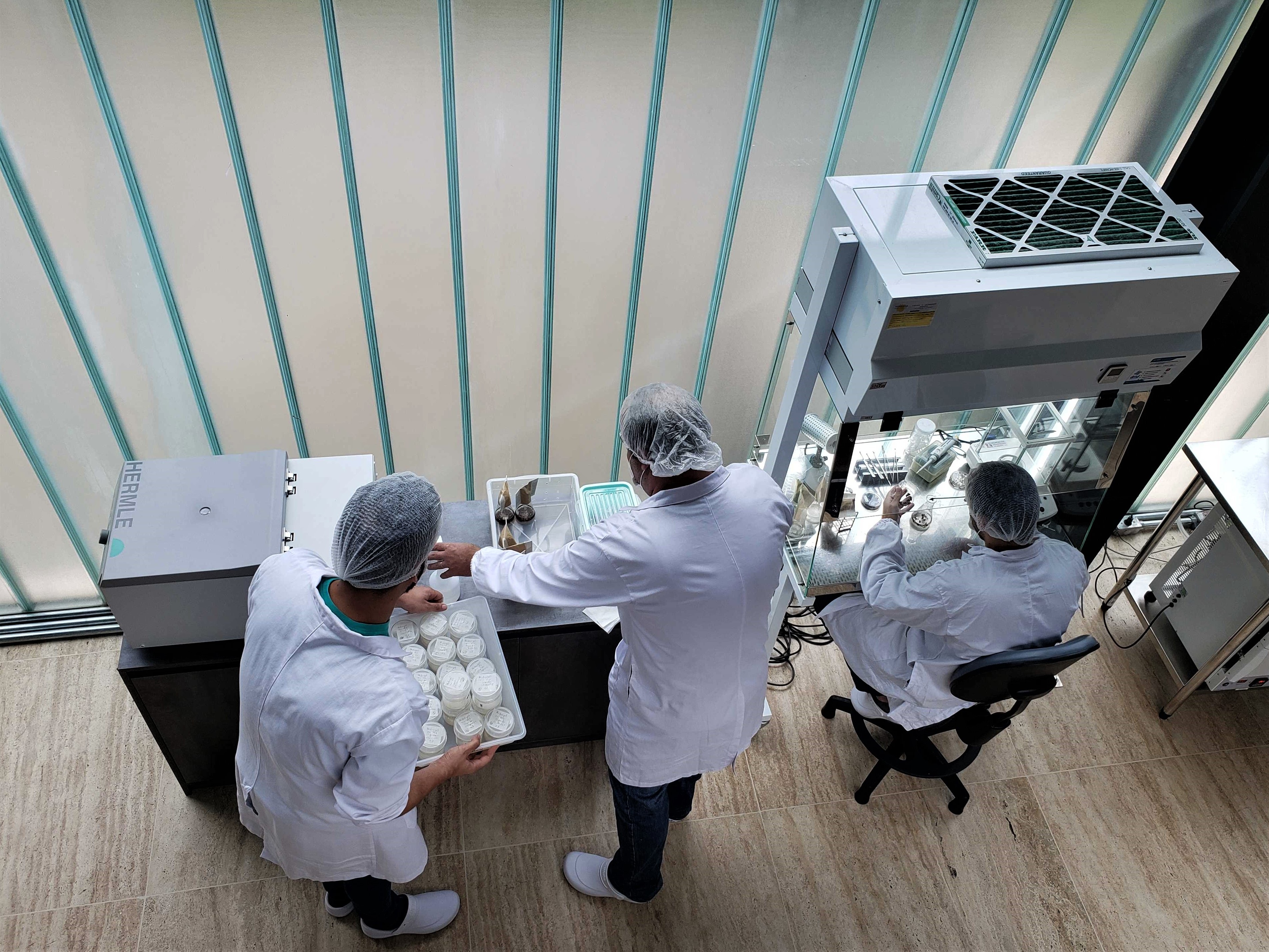
That was a change in the object of his attention. The ambition moved upstream, from improving a garment to changing how its raw material was produced. GALY launched in 2019. Its own timeline places its first company-owned laboratory inside a shipping container in 2020. That year, the H&M Foundation awarded its cotton idea €300,000 through the Global Change Award.
The container is an appealing origin image, but the consequential part is the connection to an industry. The award included an accelerator designed to introduce innovators to fashion insiders. For a materials company, someone willing to test a sample can be more useful than someone willing to applaud it.

03 / The customer decides what “ready” means
GALY sells a business proposition to other businesses: materials and ingredients, collaborative development, and future supply. Its cotton page lists applications spanning fashion, beauty, home goods, industrial uses and medicine. These are markets with different tests and different tolerances. A clean cotton sample does not qualify itself for every application by being clean.
The Suzuran agreement illustrates a practical way through that problem. Match an existing strength with a buyer who values it, while improving the remaining properties. This is an interpretation of GALY’s public milestones, rather than evidence of a deliberate abandonment of fashion. Clothing remains part of the company’s stated ambition.
Series B capital
September 2024
Ten-year cotton
offtake agreement
The 2024 financing brought in H&M Group and Inditex, Zara’s parent, alongside lead investor Breakthrough Energy Ventures. Their presence offers access to people who understand textile specifications and purchasing. It does not establish that GALY cotton is hanging on their shop rails. The H&M Foundation’s April 2024 showcase described late-laboratory capacity in grams to kilograms.
04 / A field-sized promise, a factory-sized test
The environmental proposition is substantial. GALY publicized reductions of 99% in water use, 97% in land use and 77% in carbon dioxide emissions against conventional cotton. Reporting linked those figures to a Quantis assessment of the process at industrial scale. They describe the proposed manufacturing comparison, rather than a census of savings from an established fleet of factories.
A prospective customer has useful questions to ask: Does the sample meet our specifications? What volume can arrive, when, and at what price? Which production assumptions sit behind the footprint? The comparison must include the actual manufacturing arrangement. A tank removes exposure to field weather; it still needs nutrients, energy, equipment and competent operation.
05 / Now pass the chocolate
By May 2026, the story had acquired a second material. GALY won Edison silver for Biocrafted Cocoa & Cotton, and its chocolate appeared in a live tasting alongside Cargill and Voyage Foods’ cocoa-free NextCoa. The juxtaposition was instructive: one approach grows cacao-derived material in tanks; the other recreates a confectionery experience with alternative ingredients.
GALY’s cocoa offering targets ingredient buyers, with applications including powders, spreads and beverages. The company described Swiss collaborators on chocolate development and planned its first commercial production facility for 2026. That prospective factory is the meaningful next test. Buyers can explore partnerships through GALY’s contact page; they should bring specifications, quantities and purchasing constraints. The cotton agreement suggests a useful starting question: who needs the thing these cells can already do?