Foray Dispatch
WOOD WITHOUT TREES — it began with a single zinnia leaf at MIT $3M SEED raised to protect & restore ecosystems with biomanufacturing PANDO LAUNCHED — an operating system for plant science 34+ VARIABLES in one plant production process — the AI navigates them all 100x FASTER growth claimed in the controlled lab — far less land DECADES TO MONTHS — the timeline she wants to compress
Founder & CEO · Foray Bioscience · Cambridge, MA

Ashley Beckwith

She grows wood, plant materials, molecules and seeds from a single plant cell - no forest required. A mechanical engineer who learned to talk to leaf cells, and built an AI to translate.

Plant Cell CultureBiomanufacturingLab-Grown WoodMIT PhDPando
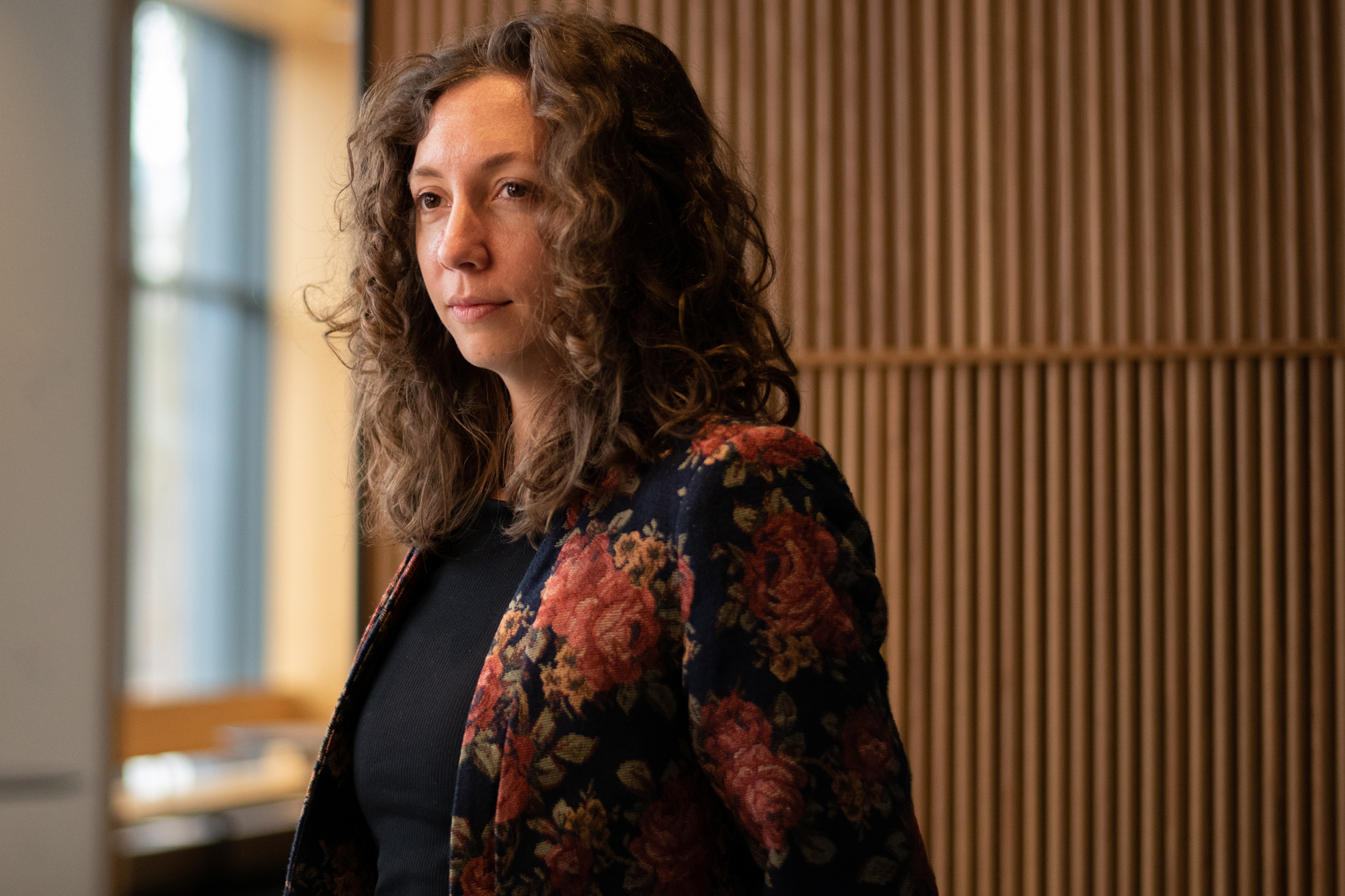
Ashley Beckwith, founder and CEO of Foray Bioscience
Ashley Beckwith — coaxing forests out of flasks

A leaf cell, a little patience, and an argument with how plants are supposed to grow

Ashley Beckwith runs a company that does something plants have spent 400 million years insisting only they can do: make wood, make seeds, make the strange and useful molecules that flow through stems and bark. Foray Bioscience does it from single cells, in a flask, on a lab bench in Cambridge, Massachusetts. No trunk. No canopy. No decade of waiting for a sapling to become a board.

The trick is older than it sounds and newer than it looks. Take a few live cells from a plant - in her foundational work, a common garden zinnia. Float them in a liquid broth until they multiply. Move them into a gel laced with two plant hormones, auxin and cytokinin, and start steering. Turn one dial and the cells stiffen. Turn another and they soften. Push the lignin up and you get something firm, something that behaves like wood. Beckwith and her team did exactly this, and then they did the thing scientists rarely get to do: they founded a company to find out how far it goes.

2022
Foray Founded
$3M
Seed Raised
100x
Faster Growth Claimed
34+
Variables Per Process
We're bringing biomanufacturing to forestry, and leveraging its tools to protect and restore forests.
— Ashley Beckwith, founder & CEO, Foray Bioscience

Pando: a Google Maps for plant growth

Growing wood-like tissue was the proof. The product is the map.

In May 2026, Foray launched Pando - named, with a botanist's wink, after the clonal aspen colony in Utah that is one of the largest living organisms on Earth. Pando the platform is what Beckwith calls "the operating system for plant science." It pairs what the company describes as the world's largest structured in-vitro plant knowledge base with AI-native research tools, protocol infrastructure, and laboratory operations.

Why a map? Because growing a plant from cells is a navigation problem. Beckwith points out that more than 70% of plant product and crop-variety translation projects fail, sunk by the sheer complexity of protocol design. A single production process can depend on more than 34 individual variables - temperature, hormones, media, light, timing, the order you change them in. Miss the route and the cells refuse to cooperate.

Pando is built to help scientists search, structure, manage, share and generate plant culture knowledge from one place. Foray says customers reach successful in-vitro protocols more than three times faster, retain institutional knowledge that usually walks out the door when a postdoc leaves, and bring junior staff up to speed without years of trial and error.

The ambition is not subtle. Beckwith wants Foray to become the comprehensive operating system for plant science globally within five years - an innovation engine sitting under agriculture, pharmaceuticals, materials, and conservation alike. "We want to shorten plant development timelines," she says, "so solutions can be built in months, not decades."

There is a quiet inversion here worth lingering on. Most plant-tech promises to make farming more efficient. Foray is closer to the opposite proposition: that for a growing list of products, you may not need the farm, the orchard, or the felled forest at all. The plant becomes a recipe rather than a resource. And because the recipe lives in software, it can be searched, copied, improved, and handed to the next scientist instead of being lost when an expert retires or a lab notebook goes missing.

That is the part that turns a clever experiment into a business. Foray has worked with academic researchers, nurseries, conservationists, and companies to develop molecules, materials, and fabricated seeds. The early collaborations were narrow and hand-picked; Pando is the move to open the method to everyone who works with plant cells, whether they want a disease-resistant tree or a fragrance compound that today comes from bark.
From a leaf to a beam, in five moves

01

Harvest

Live cells pulled from a plant leaf - originally a zinnia, later black cottonwood.

02

Multiply

Cells float in a liquid broth and reproduce, no soil or sunlight needed.

03

Set

Cells move into a gel scaffold that gives the growth a shape to follow.

04

Steer

Auxin and cytokinin tune stiffness, density, and how much lignin forms.

05

Form

The result: wood-like material - and a path toward molecules, oils, and seeds.

A kid who ran in the woods, a farmer who left the lab, an engineer who came back

Beckwith grew up near Colorado's forests, and she ran in them. What stuck was not nostalgia but a slow alarm: she watched new housing developments push into the treeline, and the question of what we take from forests - and whether we have to keep taking it the same way - lodged itself early.

Her training reads like an engineer's, because it is. She earned a master's at MIT in 2018 in the Department of Mechanical Engineering, working at the intersection of biology and materials manufacturing, building platforms aimed at precision treatment of human disease. Then she did something most graduate students would never dare: she left. She went to work on a regenerative, self-sufficient farm designed to mimic natural ecosystems, trading the cleanroom for the soil.

She came back changed and returned to MIT for a PhD, this time in the lab of research scientist Luis Fernando Velasquez-Garcia, studying regenerative plant systems. There she published the work that would become Foray: wood-like plant material, grown indoors, with stiffness and density you could dial in. In 2021 she started circling entrepreneurship through the E14 Fund and The Engine, MIT's deep-tech incubators. In February 2022, doctorate in hand, she founded the company. Foray grew out of her research and out of her time at Draper Laboratory.

The throughline is the seam itself. Beckwith has spent more than a decade working where biology, materials, and manufacturing meet - which is exactly the seam a problem like "make a forest's worth of products without the forest" lives in. "This is a very intersectional problem," she says. So she built an intersectional team: biologists, engineers, and data scientists, pointed at the protection and restoration of ecosystems.

The funding followed the thesis. In June 2024, Foray closed a $3 million seed round led by ReGen Ventures, joined by The Engine Ventures, Susquehanna Sustainable Investments, Understorey Ventures, and Superorganism - a roster of investors who back the long, science-heavy bets that take years to mature. It is patient money for a patient problem, which suits a founder who once decided the fastest way forward was to leave a top engineering program and go learn how a whole ecosystem feeds itself.

There is a temperament underneath all of it. Beckwith treats failure as instrumentation, not embarrassment. "We don't see failure as a bad thing, but as an essential tool to move us forward," she says - which is roughly what you would expect from someone whose central technology is thousands of small experiments in coaxing cells to do something unfamiliar. In a field where most translation projects collapse, that posture is not optimism. It is method.

Career, in dates

2018
MIT, master's degree. Mechanical engineering, focused on biology and materials manufacturing for precision treatment of human disease.
2018
Off to the farm. Works on a regenerative, self-sufficient farm built to mimic natural ecosystems.
2021
The breakthrough. Publishes research on lab-grown wood-like tissue with controllable stiffness and density; begins exploring startups via E14 Fund and The Engine.
2022
PhD, then Foray. Completes her doctorate and founds Foray Bioscience in February.
2024
$3M seed. Round led by ReGen Ventures, with The Engine Ventures, Susquehanna Sustainable Investments, Understorey Ventures, and Superorganism.
2026
Pando ships. Launches an AI-native operating system for plant culture; announces a commercial chestnut partnership with West Coast Chestnut.

Five sentences that explain the company

We want to shorten plant development timelines, so solutions can be built in months, not decades.

Plant systems underpin every aspect of our daily lives.

We don't see failure as a bad thing, but as an essential tool to move us forward.

This is a very intersectional problem.

Perfume, planks, and disease-proof chestnuts

The same cells, steered differently, become very different things.

Materials

Wood, made to order

From wood-based perfumes, cosmetics and oils to, eventually, entire beams and planks - grown without clearing a single acre of forest.

Molecules

The pharmacy in the bark

Tree-sourced compounds already serve as chemotherapeutics, vaccine adjuvants and anti-inflammatory drugs. Foray aims to produce them from cells.

Seeds

Fabricated seeds

Seeds grown from cells - including a commercial partnership with West Coast Chestnut to deploy disease-resistant chestnut trees.

Conservation

Restoration at speed

By compressing development from decades to months, the platform aims to give conservationists faster routes to resilient, plantable stock.

Software

Pando, the knowledge base

The largest structured in-vitro plant knowledge base, paired with AI research, protocol management and lab operations tools.

Speed

Three times faster

Foray says teams reach successful in-vitro protocols over 3x faster, and grow material up to 100x faster than nature in controlled conditions.

Five facts, lightly pressed

The Name

Pando, the AI platform, is named after a clonal aspen colony in Utah - one single organism spread across 100+ acres, and one of the largest living things on Earth.

The Origin Plant

The first lab-grown wood didn't come from a mighty oak. It came from a zinnia, the cheerful annual you find in flowerbeds.

The Credential

Her doctorate is in mechanical engineering, not botany. She works the seam between biology, materials, and manufacturing.

The Detour

Between degrees she left MIT to work on a regenerative farm - a deliberate step away from the bench and toward whole ecosystems.

The Math

One plant production process can hinge on 34+ variables. Most translation projects fail. Pando exists to fix that ratio.

The Spread

Foray's outputs span perfume to planks to seeds - all from the same starting point: a few living cells in a flask.

What's new

05·2026
Pando launches. Foray ships its intelligent research & development workspace and operating system for plant culture.
01·2026
"Google Maps for plants." AgTechNavigator profiles how Foray uses AI and biotech to speed plant R&D.
06·2024
$3M in the bank. Foray raises seed funding to protect and restore natural ecosystems with biomanufacturing.

Share Ashley Beckwith

A forest's worth of products, grown from a single cell. Worth sending to someone who still thinks wood only comes from trees.

The links