2014
Co-founded iMicrobes
He spent a decade in physics labs. Then he taught bacteria to make paint without the oil well.
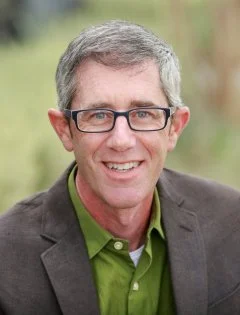 Noah Helman • iMicrobes, Alameda CA
Noah Helman runs a company whose best employees are too small to see. At Industrial Microbes - everyone calls it iMicrobes - the work is to redesign what a microbe eats. Most fermentation runs on sugar. Helman's microbes are engineered to run on ethanol and methane, two of the cheapest carbon sources on Earth, and to turn them into the exact molecules that today come out of oil refineries.
The target list is unglamorous on purpose: acrylic acid, the stuff inside paints, adhesives, coatings and superabsorbent diapers; and acrylonitrile, the precursor to carbon fiber. These are commodity chemicals, made by the millions of tons, almost always from petroleum. Helman's pitch is that you can make the identical molecule from a renewable feedstock, at the same price, with net-zero emissions. Same product. Same cost. Different planet.
"Everybody wants to have a sustainable product at the same price. It's a no-brainer if you offer it."
That sentence is the whole strategy. Helman is a techno-optimist, but a hard-nosed one. He does not ask customers to pay a green premium or change their supply chains. A "drop-in" chemical is one a manufacturer can pour into the same vat it already uses, with no new equipment and no new price. The sustainability is invisible. He thinks that is the only version that scales.
Helman did not start in biology. He earned a Ph.D. in applied physics from Stanford and spent close to a decade inside academic physics departments before a postdoctoral fellowship at UC San Francisco dropped him into one of the country's leading synthetic biology labs. He later turned the crossover into a talk with a tidy title: "From physics to synthetic biology & entrepreneurship."
The physics background is not a footnote. Modern strain engineering looks less like classic wet-lab biology and more like an engineering discipline: high-throughput cloning, statistics, robotics, machine learning, code. Helman has argued that the people who win in industrial biotech now need computer programming and quantitative methods as much as they need molecular biology. He arrived already fluent in the quantitative half.
His first stop in industry was LS9, a startup engineering bacteria to make biofuels and commodity chemicals. There he built software and bench techniques to speed up the directed evolution of enzymes - essentially, letting proteins improve themselves across generations while the data pipeline kept score. Directed evolution and metabolic engineering became his core craft. They are still the engine of what iMicrobes does.
In 2014, Helman co-founded Industrial Microbes with two fellow LS9 alumni, Derek Greenfield and Elizabeth Clarke. Between them they held doctorates from Stanford, UC Berkeley and UCSF. The original idea was audacious even for the field: engineer the central metabolism of common industrial microbes so they could eat natural gas instead of sugar. The company went through Y Combinator's Winter 2015 batch - a rare hard-science fermentation startup in a room full of software - and won Alberta's CCEMC Grand Challenge for its gas-to-chemicals approach.
Over the following years the feedstock story sharpened. Methane is still in the mix, sourced from industrial by-products and agricultural waste, but ethanol became what Helman calls the "backbone" of low-carbon manufacturing. Ethanol is abundant, already produced at industrial scale, and easy to handle. Feed it to the right engineered organism and you get acrylic acid out the other end.
The choice of targets is deliberate. Acrylic acid and acrylonitrile are not boutique compounds. They are pillars of the chemical economy, made at enormous volume and consumed in everything from house paint to diapers to the carbon fiber in bikes, planes and wind turbines. If you can shave the carbon out of molecules made at that scale, the absolute impact dwarfs anything you could do with a niche specialty product. Helman is chasing volume because volume is where the carbon is.
The technical bet is that a single-celled organism, properly rewired, is a better chemist than a refinery for these specific reactions. Petroleum routes to acrylic acid burn through energy and emit carbon at every step. A microbe does the conversion at low temperature and ambient pressure, powered by its own metabolism, using carbon that was recently pulled from the air rather than dug out of the ground. The company has described two distinct production routes built around its ethanol and methane platforms, and it talks in the language of net-zero rather than merely "lower." That is the difference between a marketing claim and a chemistry one.
iMicrobes has also chased a second prize beyond acrylic acid: turning waste streams - ethanol and captured carbon dioxide - into bio-based carbon fiber, work pursued under a grant-funded "Sustainable Carbon Fiber Made from Waste" effort. Carbon fiber is light, strong, expensive and made from petroleum-derived acrylonitrile. A cheaper, cleaner route would ripple through aerospace and clean energy at once.
"It is critical for national security, for climate change, to have secure supply chains here in the US."
That second argument - supply chains - has become louder in his telling. A fermentation tank in Ohio is not subject to the same geopolitics as a barrel of crude. Helman frames bio-based chemicals as a way to rebuild a domestic, secure source for materials the country currently imports or refines from oil. It is climate and economics and national security braided into one pitch, which is a useful thing when you are raising money from people who care about all three.
Designing a clever microbe in a flask is the fun part. Making it work at the scale of a chemical plant is where most synthetic biology companies stall. The gap between a one-liter benchtop run and a commercial bioreactor is where promising organisms go to disappoint. iMicrobes has spent years grinding on exactly that - bioprocess scale-up, strain robustness, purity.
The grinding paid off. In 2024 the company closed the first tranche of a $10M-plus seed round led by First Bight Ventures and Universal Materials Incubator Co. (UMI). Its pilot bioreactors were producing more than ten kilograms of product per run. And in 2025 iMicrobes announced what it had been chasing: scaled production of 100% bio-based, high-purity acrylic acid through fermentation. Not a lab curiosity - a real, drop-in commodity chemical, brewed instead of refined.
"This funding empowers us to advance towards commercial-scale production, decreasing global reliance on fossil fuels while providing cost-effective alternatives."
Helman keeps good company. The iMicrobes advisory bench reads like a who's-who of industrial biotech, including Jennifer Holmgren, the CEO of LanzaTech, the company that arguably proved gas fermentation could work at scale; Johan van Walsem, COO of Lygos; and Jim Barber, the former CEO of Metabolix. Helman is building in a lineage, not a vacuum.
He also talks openly about the tools that have changed his field. On the Grow Everything podcast in early 2025, he laid out how machine learning and AI are reshaping enzyme design - letting researchers predict and engineer proteins faster than the old cycle of guess, build, test. It is a long way from the physics departments where he started, and exactly the kind of cross-disciplinary fluency he keeps insisting the modern biotechnologist needs. The lab he runs is as much a data operation as a wet lab.
Industrial Microbes describes itself, plainly, as techno-optimist - a company that believes science and technology can take on climate change while turning waste into value. That is the philosophical center of the place, and it is Helman's too. He is not betting against industry; he is betting that industry will switch the moment the clean version costs the same. His whole career has been an argument that the boundaries between disciplines - physics and biology, software and chemistry, idealism and economics - are softer than people think, and that the interesting work happens where they blur.
Strip away the chemistry and Helman is selling a simple proposition to manufacturers: keep your product, keep your price, lose the carbon. He likes that the sustainability is the part the customer never has to think about. "As biological organisms in our environment," he has said, "that's a natural way for us to interact with the world." It is a gentle line from a man whose day job is rewiring the metabolism of bacteria - a reminder that he sees biology not as a gimmick but as the obvious tool.
A decade in, the company he co-founded has outlasted a lot of louder biotech promises. The microbes are still too small to see. The acrylic acid they make is real, and it is starting to pour.
// the iMicrobes loop, simplified
Everybody wants to have a sustainable product at the same price. It's a no-brainer if you offer it.
It is critical for national security, for climate change, to have secure supply chains here in the US.
As biological organisms in our environment, that's a natural way for us to interact with the world.
This funding empowers us to advance towards commercial-scale production, decreasing global reliance on fossil fuels.
He trained as a physicist for about ten years before switching to biology. The company he runs now lives in both worlds.
His microbes don't run on sugar like most fermentation. They're engineered to eat ethanol and methane.
iMicrobes was a Y Combinator company - a hard-science bacteria startup in a batch mostly full of software.
Two of his target chemicals end up in paint, diapers, adhesives and carbon fiber - things you touch every day.
LanzaTech CEO Jennifer Holmgren, a pioneer of gas fermentation at scale, sits on the iMicrobes advisory board.
The company nickname, iMicrobes, doubles as its web address and its entire business model.