A financial advisor changes firms. The decision is made; the clients are coming along. Then the forms arrive. Account applications. Transfer instructions. Household details entered again, and again. One missing field can send a document back. In wealth management, this has a name: NIGO, or “not in good order.” It is a small bureaucratic phrase with the power to turn a business move into weeks of unfinished work.
- gAI Ventures co-founds AI companies with people who know an industry’s work.
- A four-week sprint tests demand, founder fit, data access and a first product.
- Its published model pairs staged capital with engineering and a minority equity stake.
That is the sort of problem gAI Ventures goes looking for. The venture builder helps industry insiders turn particular frustrations into AI companies. Its current focus covers financial services, enterprise productivity and commerce. The interesting word is “particular.” A convincing demonstration of artificial intelligence has limited value to someone waiting for a custodian to accept a form.
The form that sends everyone back
FastTrackr AI, one of gAI’s portfolio companies, works on advisor transitions. It collects client information, maps that information into the receiving firm’s and custodian’s paperwork, prepares signatures, and tracks completion. Its users include advisor teams and the consultants who manage their moves. The product’s usefulness depends on understanding the exceptions that make this job irritating.
In an August 2026 announcement, FastTrackr described a transition involving approximately $100 million and 150 households, with zero NIGO errors from repapering. The release’s detailed milestone matters: 70% of households were signed and moved by the end of week two. AdvizorStack, the transition consultant, ran the move using FastTrackr. This is a company-reported case, with a named operating partner.
The distinction is useful. A broad claim that AI saves time leaves a buyer guessing. A workflow with identifiable forms, exceptions and completion states gives the buyer something to inspect. FastTrackr’s transition page also describes custom form mapping during onboarding. The software has to learn the institution’s peculiarities before anyone gets the benefit.
Four weeks to earn a company
gAI starts its own process with a test. In its published four-week validation sprint, the first question is demand: do buyers need this urgently, and will they pay? Then comes the operator: does this person have working knowledge and the commitment to go full-time? Data and workflow access follow. Finally, can a narrow first version ship?
- 01DemandA buyer with urgency and budget
- 02OperatorExperience, access, commitment
- 03DataA defensible route into the work
- 04First releaseSomething small enough to ship
The sequence puts inexpensive questions before expensive work. An interested buyer without a budget can stop the process in week one. No path to useful data can stop it later. These are stated decision rules; they make a practical point about building software. Enthusiasm does not remove a dependency, and adding features does not create purchasing urgency.
A team, a check, a piece of the cap table
For an operator, the offer bundles several jobs that usually arrive separately. gAI supplies product and AI engineering, helps with going to market, and brings early money. Its October 2026 explanation describes approximately $50,000 at incorporation and another $200,000 tied to milestones. The combined fund and operating-company stake is roughly 20%. These are published typical terms, rather than a fixed price for every founder.
Capital is staged. The builder and fund describe roughly 20% combined ownership.
The cost to the founder therefore includes ownership. An agency can build against a cash budget; an individual technical co-founder creates a different working relationship and equity discussion. gAI’s proposition is to supply an established building team and share the company’s outcome. An operator choosing among those routes has to value continuity, execution and the equity being exchanged.
The fund is a separate piece of the machinery. A January 2026 Form D records $165,000 sold in that specific offering to five investors. Decile later identified itself as the fund’s first institutional backer. Neither fact should be read as revenue for the builder or as a current total for its fund.
The person who knows where work gets stuck
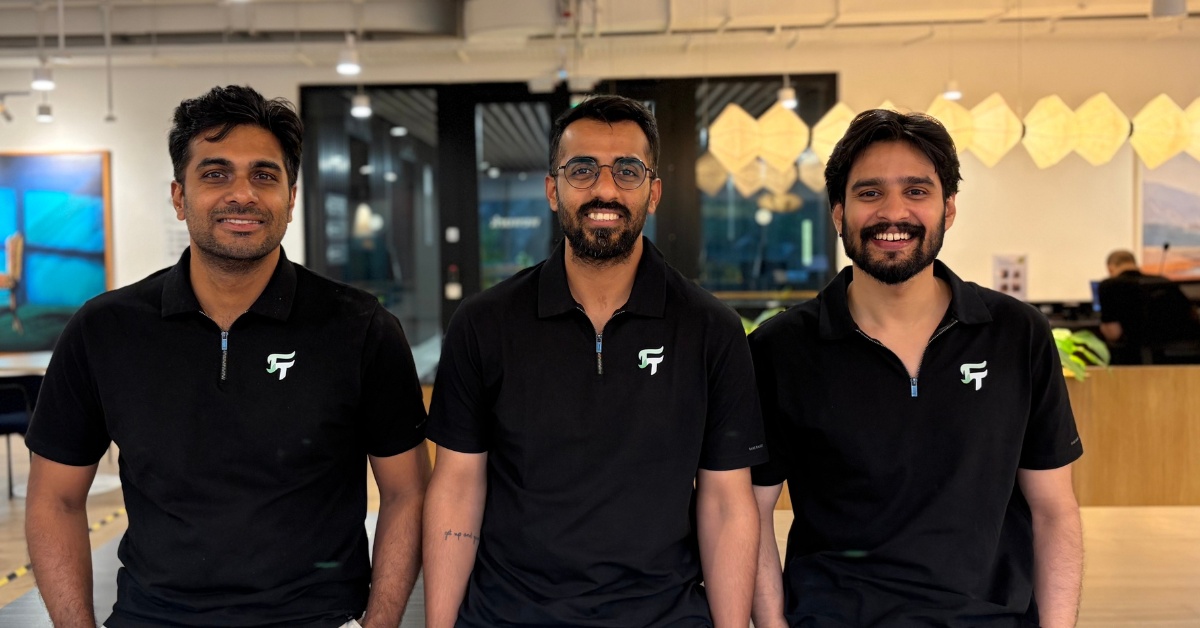
The leadership pairs Amit Goel, founder and CEO, with founder and CTO Kushal Prakash and investment head Vijay Rajendran. The team works across San Francisco and Bengaluru. Goel brings an operating background in payments and identity; Prakash leads the technical work. That division makes the outside operator’s contribution clear: knowledge of the customer and the ability to win business.
 Amit Goel / CEO
 Kushal Prakash / CTO
“A task is not a job.”
Amit Goel, on the Top Decile Podcast
The portfolio shows how that thinking travels. Swik AI targets receivables verification for factoring teams, organizing evidence and surfacing exceptions before funding. Turtle AI addresses business AI operations, including workflow creation, evaluations, costs and security. gAI also lists ContentsIQ for insurance and asset-management contents intelligence. Each description points toward work with constraints beyond generating a plausible answer.
The technical requirements follow from those customers. In its writing on production engineering, gAI emphasizes reliability, integrations and governance at the first customer stage. A bank or advisory firm has existing systems and people responsible for what happens inside them. A founder has to build for that setting. A clever answer that cannot enter the workflow leaves the customer doing the awkward part by hand.
Copy the questions before the company
The useful lesson is available before anyone signs a co-founding agreement. Identify a buyer, establish urgency, check access to the necessary information, and define a first release with an observable result. A process that requires an entire platform before helping its first customer deserves a harder look.
Founders can also copy the two-way evaluation. During the sprint, the operator gets to see how the team handles weak evidence, works through discovery and responds to the industry’s constraints. The working relationship is being tested alongside the idea. It is a sensible moment to discover whether both sides can disagree usefully.
This approach depends on the operator’s access being real and the problem being worth a purchase. A founder seeking only a check may value a different arrangement. gAI’s stated plan is to reduce its involvement as companies become self-sufficient. That makes the eventual test straightforward: can the founder run the company, and can the customer finish the work?