A toothbrush is a strange object to bring to a venture capital meeting. It has no pitch deck. Nobody needs a tutorial. Its chief advantage is that tomorrow morning, you will need it again. At SHAKTI, that ordinary recurrence is an investment idea: find a familiar activity, then ask what new technology could let people do differently.
- Physical and digital AI, applied to large, repeated needs.
- Initial checks of $250,000 to $2 million, from pre-seed through Series A.
- Operator help with hiring, customers, and the next fundraise.
That puts an autonomous delivery vehicle and a content moderation system in the same conversation. One moves goods. The other examines online material. Both address work that keeps coming back. The useful question is whether a new tool can remove a constraint from that work. A clever demonstration, by itself, does not answer it.
The habit hiding under the technology
Consider Gatik. SHAKTI’s records show an investment at Series A in 2020, followed by Series B and C investments. Gatik develops autonomous vehicles for middle-mile logistics: the journeys between facilities that help keep goods moving through a supply chain. The appeal here is refreshingly unglamorous. Shelves need replenishing. The task repeats.
Glacier, a 2021 seed investment, brings robots and machine learning to recycling. Its work concerns material moving through a sorting facility. SHAKTI quotes co-founder Areeb Malik’s compact ambition: “Recycling that works.” The connection to trucking is the recurring operational burden. Neither business depends on persuading the world to invent a new pastime.
Investment lens, illustrated. This is a way to frame a question, not a forecast of returns.
The digital side is equally varied. Musubi, listed as a 2024 seed investment in SHAKTI II, develops adaptive AI moderation for trust and safety teams. AlphaXiv, also listed at seed in 2024, helps researchers discover, read, and discuss papers. These are different users with different needs. The common thread is an activity worth returning to.
An expensive lesson before the fund
Founder Keval Desai arrived at this approach with an unusually broad apprenticeship. He co-founded online payments company Achex, worked at Google before its IPO, and spent a decade as a general partner at InterWest. Engineering, product, entrepreneurship, and investing all appear in his biography. The toothbrush metaphor has an operator’s interest in what gets used.
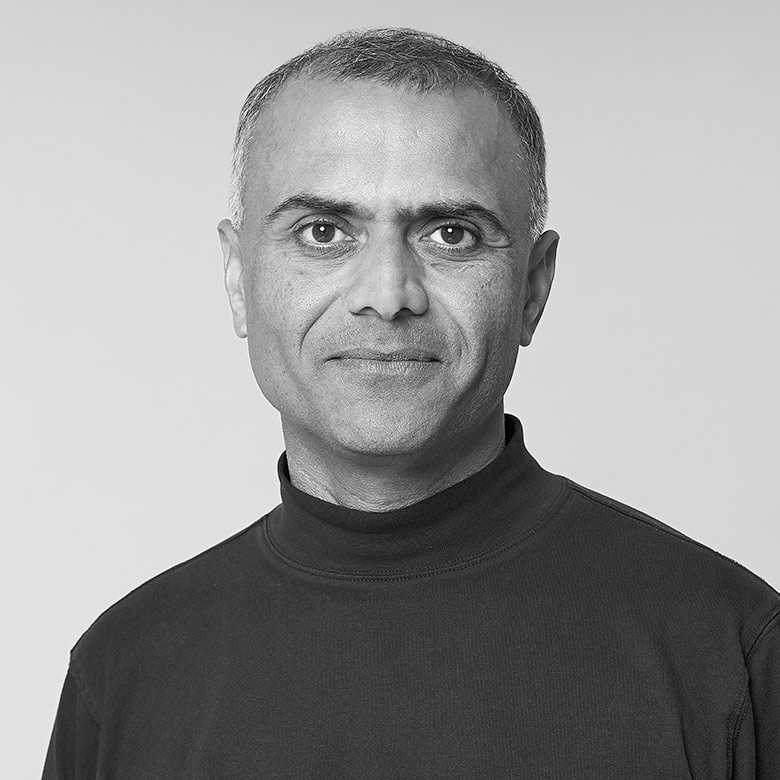
In a September 2026 interview with VC Uncovered, Desai recalled his own startup raising $25 million in 1999 and spending approximately $24 million on computing infrastructure before publishing a web page. It is a retrospective account, but a memorable one: the equipment bill nearly swallowed the financing. He connects the subsequent arrival of cheaper, open-source infrastructure with his interest in falling AI costs.
There is also a distinction worth keeping straight. SHAKTI lists Canva’s 2012 seed investment under InterWest X. Canva belongs to Desai’s earlier investing history; treating it as a SHAKTI fund investment would blur the record. His experience travels with him. The original fund attribution travels with the investment.
What happens after the money?
For a young company, an investor’s network matters when a particular person answers a particular question. SHAKTI’s Titan program provides some concrete examples. Its mentors participate voluntarily, bringing operating experience and introductions. The firm describes a network of more than 50 operators. The useful unit of measurement, though, is the problem they help a founder address.
For Gatik, former J.P. Morgan vice chair Cristina Morgan introduced senior finance candidates as the company sought a CFO. For Stable, which gives businesses an address and online management of physical mail, Tanium CEO Dan Streetman advised on sales strategy, enterprise selling, and marketing. For student-loan platform Sparrow, Dave Girouard contributed guidance drawn from lending and Upstart’s growth experience.
The useful unit of a network is a problem someone can help solve.Our reading of the Titan model
These are founder accounts published by the firm, rather than controlled measures of performance. Still, they describe recognizable work. A CFO search has candidates. A sales strategy has decisions about customers and timing. A founder can ask an investor for examples at this level, then speak with the entrepreneurs involved. That is a more revealing reference check than counting famous names.
The team adds other perspectives. Partner Liz Harrow spent more than a decade at Morgan Stanley across equity research and venture work. Partner Sydney Landau joined after interning at SHAKTI and studying psychology and economics at Colby. Venture partner Jesse Haines brings marketing experience from 17 years at Google. Their backgrounds suggest several ways to examine the same business problem.
The newer portfolio entries also show how widely the habit question can travel. TRACE, listed as a 2026 seed investment, is building a marketplace around resale or rental demand before a purchase. That puts a familiar consumer decision at the center of a different transaction. It is still a proposition to be tested, rather than evidence that the model has already won.
SHAKTI’s October 2026 public commentary extends the same argument into AI’s application layer. Its blog lists a discussion with The Information about increasingly accessible open-weight models. The implication is straightforward: as the underlying technology becomes more available, founders need a sharper account of the customer’s job. Access to a model alone offers less of an explanation for why a particular company should exist.
A useful question, with a price attached
SHAKTI sits in the early-stage venture market, where founders exchange an ownership interest for capital and support. Its investment range is a financing offer, not a consulting price list. A Fund II regulatory filing identifies a management fee payable to the general partner or its designee. For founders, the economic decision includes dilution and the expectations that accompany venture funding.
The approach has boundaries. SHAKTI specifies US incorporation, although operations can be global. A frequent activity can still be a poor business if nobody will pay, distribution costs too much, or the new tool adds little. Nor does an early investor’s willingness to back an idea make the next round inevitable. Repetition supplies a question to investigate, not a shortcut around economics.
There is something readers can borrow without raising a dollar. Write down the activity. Count how often it happens. Find the constraint. Then test whether removing it matters enough for someone to change behavior or pay. SHAKTI’s toothbrush is useful because it sends a technical conversation back to the person doing the task. Tomorrow morning, what will they need again?