The Robot Builder Who Found His Highest Stakes in a Cleanroom
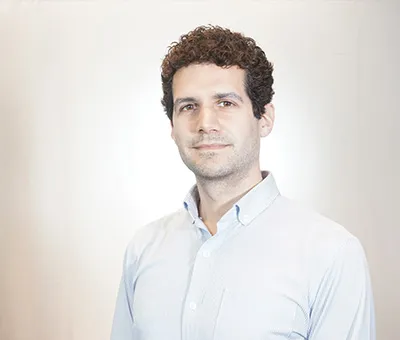
Fred Parietti grew up in Italy building things. Legos. Erector sets. Anything with pieces that clicked together into something that hadn't existed before. By the time he arrived at MIT in 2011 for his PhD in mechanical engineering and robotics, the childhood instinct had sharpened into a precise question: where in the world is the highest-value problem that no one is solving with robots?
He found the answer not in a strategy deck, but in a conversation with a friend. She was a biologist. She worked with cell therapies - living cells, genetically modified, meant to cure cancers and degenerative diseases. She showed him what manufacturing those therapies looked like in practice: a PhD scientist in a sterile gown, inside a pressurized cleanroom, pipetting cells by hand, step by step, for weeks. A single human breath too close could ruin a batch worth half a million dollars.
She showed me what she did in a lab and how difficult it was, and I couldn't believe it - I thought drugs were made like chips, and this was insane but also real.
- Fred PariettiThat moment became Multiply Labs. In 2016, Parietti co-founded the company with Alice Melocchi - another Italian, from Bergamo, whom he met at MIT - along with Joe Wilson and Tiffany Kuo. The original pitch was narrower: 3D-printed personalized dietary supplement capsules. A clever idea, but Parietti was already running the calculus. Pizza robots can justify $20 of value per unit. Gene-edited cells for saving lives justify $20,000. Maybe more. The math pointed in one direction.
Multiply Labs pivoted toward pharmaceutical automation, then locked in on cell therapy manufacturing as the company's definitive mission. The problem space was everything Parietti had been looking for: technically brutal, economically enormous, and crowded only with people who'd given up before trying.
He identified three barriers keeping robotics companies out: regulatory fear of the FDA, the biological complexity that makes engineering assumptions dangerous, and the simple fact that most roboticists solve problems they personally experience - and no roboticist has ever needed a CAR-T cell therapy. Parietti moved toward the barriers instead of around them.
It needs to be sterile, and you don't want anyone breathing anywhere near the cells, so it was an obvious high-value application of robotics.
- Fred Parietti, Audrow Nash PodcastThe Multiply Labs approach is deliberately unromantic. Their robots don't force biologists to change their protocols. They pick up the exact same instruments scientists use by hand - the pipettes, the centrifuges, the culture flasks - and replicate the exact same procedures. Multiple robotic arms surround modular bays. No human hands touch the cells. No human breath enters the chamber. The contamination vector that ruins million-dollar batches is simply removed.
To train their robots, Parietti's team built an imitation learning pipeline around video. Scientists perform their processes on camera. The software segments the footage, extracts implicit biological knowledge - the subtle tilt of a flask, the pause before a transfer - and trains control policies that replicate the behavior. The company then publishes peer-reviewed data proving the robot's output is statistically equivalent to the best human scientist's output. No other company in the industry has done this.
We're literally training the robot on the exact video example of the best scientist, and we prove that they are statistically equivalent.
- Fred Parietti, NVIDIA BlogThe $20 million Series A in April 2021 - led by Casdin Capital, with Lux Capital, Founders Fund's Pathfinder, Fifty Years, and Garage Capital - validated the thesis. Michael Doherty, former head of regulatory affairs at Roche, joined the board. The signal was clear: serious pharmaceutical operators believed Parietti was building something the industry needed and had not yet found a way to build itself.
By 2024, Multiply Labs announced an $85 million partnership with Retro Biosciences to advance cell therapy manufacturing for age-related diseases. By 2025, published data showed a 74% reduction in cell therapy costs through robotics. The company's order book is sold out two years ahead. Five to ten major deployments are planned. The question has shifted from whether robotic cell therapy manufacturing works to how fast it can scale.
Parietti added humanoid robots to the system - pragmatically, not aspirationally. Loading and unloading turned out to be the main bottleneck. A $30,000 Unitree humanoid handles it. Legs and a face add no functional value, but they come with functional arms, and functional arms at $30,000 are worth buying. He is not chasing humanoid hype. He is solving a bottleneck with whatever tool costs least and works most.
On AI, Parietti is similarly deflating. He sees the label as mostly marketing. The real frontiers, he argues, are hardware advancement and real-world robotic data collection - the unglamorous work of making machines that can handle actual biology in actual sterile environments. That is the work Multiply Labs does.
He moved Multiply Labs to San Francisco, not Boston. The distinction matters to him. Boston's startup culture, he observes, tends to require established credentials - professors, industry veterans, decades of track record. San Francisco tolerates, even welcomes, younger founders with contrarian ideas. He was younger. His idea was contrarian. San Francisco was the right address.
Parietti built his team the same way he built his argument: deliberately interdisciplinary. Mechanical engineers. Software developers. Pharmaceutical scientists. The mix isn't aesthetic - it's functional. Biologists catch engineering assumptions that would compromise delicate biological processes. Engineers propose automations that biologists would never think to demand. The cleanroom where neither discipline feels entirely at home turns out to be exactly where both disciplines are needed most.
The aspiration is not modest. A world where cell therapies are made at industrial scale - reliably, reproducibly, at a fraction of current cost - is a world where treatments that today reach thousands of patients reach millions. Parietti frames this as business logic as much as moral ambition. Society pays most for what extends life. He intends to make the machines that do it.