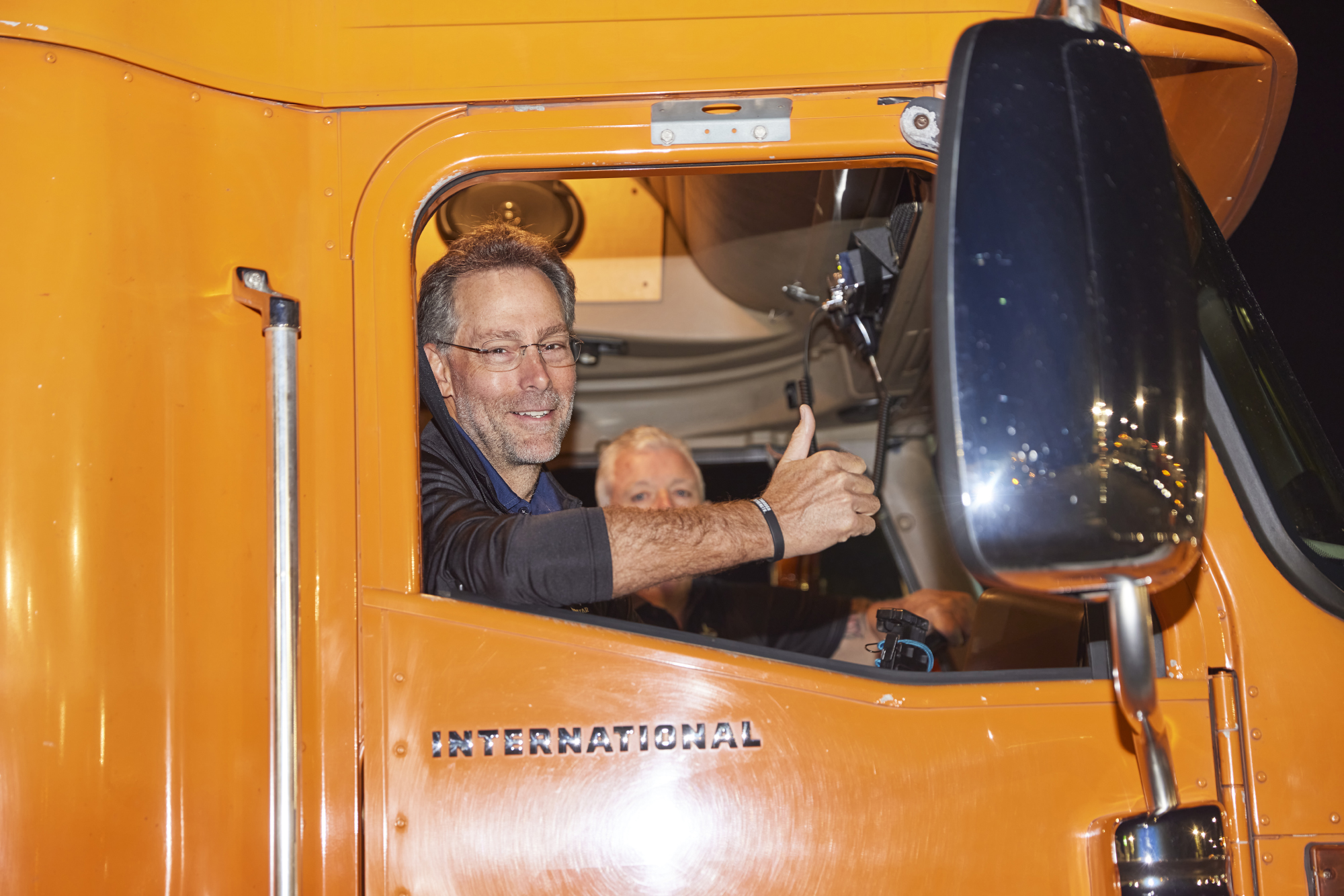
Frank Lonegro took the passenger seat. Jeff Stone, an independent truck owner in the Landstar network, had the driving to do. Their day ran from Georgia to Tennessee and back, through customer pickups, deliveries and a live unload. For a chief executive accustomed to discussing transportation in financial terms, the assignment was refreshingly specific: go along and pay attention.
The trip, described in October 2025, puts a useful frame around Lonegro's career. Here was a former lawyer, railroad technology president and twice a public-company chief financial officer, learning about his business from the person at the wheel. In trucking, the corner office occasionally comes with a very large side mirror.
“There’s no substitute for seeing it firsthand”
Frank Lonegro, on riding with Jeff Stone
Stone had his own business disciplines: putting money aside for maintenance, looking after his equipment and maintaining relationships with freight agents. He also had friends on the road. When another Landstar operator appeared, the CB radio became a way to catch up. The corporate network had acquired a voice.
A lawyer keeps changing departments
Lonegro was born in Baltimore and built much of his working life in Jacksonville. He studied political science at Duke, then earned a law degree and an MBA at the University of Florida. His early professional work was in commercial litigation and business transactions. These are useful places to discover how easily a promising agreement can become an expensive disagreement.
He worked at Holland & Knight and McGuire Woods before joining CSX in June 2000 as assistant general counsel. A railroad offered plenty of scope for a legal career. Lonegro's route soon became more circuitous. After serving as associate general counsel, he moved into an assistant-to-the-chairman role, then internal audit, before becoming president of CSX Technology in 2007.
Those moves matter because each job examines the same enterprise through a different window. A lawyer follows obligations. An auditor follows controls. Technology leadership follows the systems that allow other people to work. Moving between them gives an executive repeated chances to discover that the explanation accepted in one department sounds rather less convincing in the next.
By 2012, he was vice president of mechanical; in 2014, he moved to service design. The titles place equipment and the organization of rail service alongside his earlier software responsibilities. Before he became a finance chief, his working vocabulary already included several of the things that make a railroad run, and several of the things that can stop it.
- LawCommercial cases & counsel
- RailTechnology & operations
- FinanceCSX & Beacon
- LeadershipLandstar, from 2024
Selected roles, grouped by discipline. The route was anything but a straight line.
The brakes behind the technology talk
One responsibility followed him across jobs: Positive Train Control, or PTC. Lonegro led CSX's initiative from 2008 to 2015. The technology was intended to intervene before certain kinds of rail accidents, including collisions and derailments caused by excessive speed. Software, communications, trackside equipment and locomotives all had to cooperate.
On January 28, 2015, he appeared before the Senate Commerce Committee as CSX's vice president of service design. His argument was about implementation. Railroads needed more time to install and test a complicated system across a national network. Money alone could not make every component ready, or make different railroads' systems work together.
His testimony described the variables that determine how a train stops: speed, terrain, length, weight and the distribution of locomotives and cars. It is a wonderfully practical antidote to an airy technology presentation. A slide can stop wherever the speaker pleases. A freight train has other considerations.
At the end of 2014, CSX had invested about $1.2 billion in PTC, he told senators. That figure was a company investment, rather than a personal accomplishment to be pinned on one executive. His task was to explain how a large technical program met the physical and regulatory demands of the railway. It was an early, visible example of his work between disciplines.
Two CFO jobs, two kinds of movement
In 2015, Lonegro became CSX's executive vice president and chief financial officer. He held the position until 2019, through a period of operational change. On his departure, CEO Jim Foote credited him with helping create shareholder value. The acknowledgment connected the finance job to changes in the underlying railway, where productivity and equipment decisions eventually arrive in the accounts.
Beacon Building Products was the next stop. He joined in April 2020, becoming executive vice president and CFO. A distributor of roofing and other building materials presents a different set of daily transactions from a railroad, although both businesses depend on getting physical things to the people who need them.
At the time of his appointment, Beacon described a network of more than 500 branches serving customers across the United States and parts of Canada. CEO Julian Francis emphasized Lonegro's combination of financial, functional and operational experience. The attraction was the range of the résumé, and the possibility that someone who had worked beyond finance would ask useful questions within it.
The distinction is worth keeping. Lonegro did not arrive at Landstar directly from the railroad. He had spent nearly four years in building-products distribution. His career had acquired another view of the customer waiting for a delivery, the inventory behind it and the money committed along the way.
An outsider, with insiders beside him
Landstar named Lonegro its next president and CEO in December 2023. He took office on February 2, 2024, succeeding Jim Gattoni and joining the board. Gattoni stayed on as a special adviser during the transition. Lonegro was the company's fourth CEO since its 1993 initial public offering, and its first hired from outside the organization.
That makes his appointment an interesting combination of familiarity and distance. He knew freight transportation and Jacksonville. He was also entering a company with its own habits, relationships and long-serving people. The job required learning the particular business behind the familiar industry vocabulary.
One early decision placed established Landstar executives in expanded sales roles. In March 2024, Matt Dannegger became chief field sales officer, while Jim Applegate became chief corporate sales, strategy and specialized freight officer. The assignments divided attention between the independent agent network and corporate sales, strategy and specialized transportation.
The appointments offer a concrete example of how Lonegro began. An outside CEO put internal experience to work. Agents needed support for their own businesses; customers needed access to a broad set of transportation services. Giving each responsibility a senior advocate made the organizational chart say something useful about the work.
Landstar network figures reported in March 2026. Business capacity owners, or BCOs, are independent owner-operators.
Independence still needs equipment
Landstar's model gives Lonegro a particular leadership problem. Many of the people essential to a shipment are independent business owners. They bring their own customer relationships, equipment or operating expertise. The central company provides the structure and support that help those separate businesses work together.
In March 2026, the network included approximately 1,000 independent agents, more than 8,000 BCOs and access to 70,000 capacity providers. Those are distinct descriptions of the network, rather than numbers to add into a convenient total. For Lonegro, they describe how widely the consequences of a headquarters decision can travel.
He met Congressman John Rutherford after the congressman rode with Landstar operator Michael Smith that winter. Their discussion covered freight transportation and the role of independent capacity. Lonegro's own ride provided a practical point of connection. An owner-operator's day had become part of the conversation between business leadership and government.
By September, there was another tangible development: Landstar announced the purchase of 2,000 dry van trailers, scheduled for delivery during 2026. Lonegro and safety and operations chief Matt Miller stood beside the refreshed equipment in Jacksonville. The purchase put investment behind the network that his remarks so often describe.
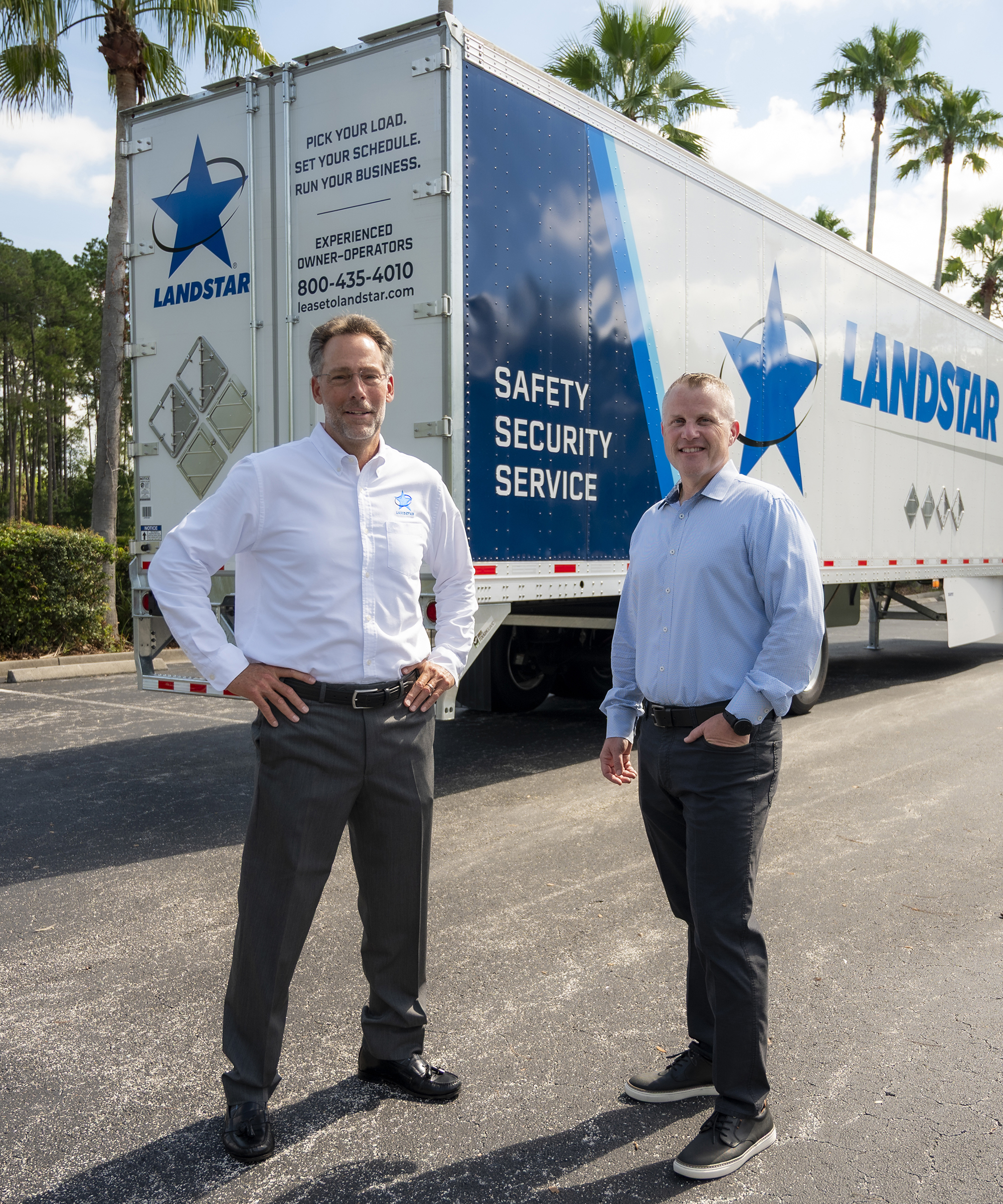
The changes extended beyond paint. The trailers included pulsating brake lights for visibility, components intended to deter theft and flip-style hazardous-material placards. A phrase such as safety, security and service can become wallpaper through repetition. Here it had fittings, lights and doors. Someone would have to use all of them.
The work of keeping people connected
Lonegro's rail interests have continued alongside the Landstar role. He joined the board of Duos Technologies in July 2023, bringing experience with operations and PTC to a company developing rail inspection technology. At the time, he said its inspection portals addressed an unmet need. The connection between technology and equipment had survived his move into finance.
Inside Landstar, he championed an inaugural Women's Leadership Forum at the Jacksonville headquarters, intended to encourage collaboration, connection and mentorship. It is a different sort of infrastructure: an opportunity for people to meet and develop working relationships. Its stated purpose fits a business whose daily activity crosses organizational boundaries.
In September 2026, nearly 900 BCOs, guests, agents, vendors and employees attended Landstar's two-day Appreciation Days event. Lonegro thanked the independent operators, and participants had a question-and-answer session with leadership. The occasion ended with Dean Webb winning a new truck, the 54th owner-operator to receive one through Landstar's giveaway programs. A truck makes a fairly persuasive thank-you note.
Lonegro and his wife, Kris, live in Jacksonville and have three children. His public working life keeps returning to the same city, across law firms, a railroad and now Landstar. The roles have changed considerably; the geographical thread has held.
His next chapter will be judged through the performance of the business and the experience of the people running their businesses within it. The passenger-seat episode offers a modest, useful standard for the job: spend time where the work happens. Even a résumé with this many departments on it can make room for another lesson.