Profile
The Man Rewriting the Surgery Playbook
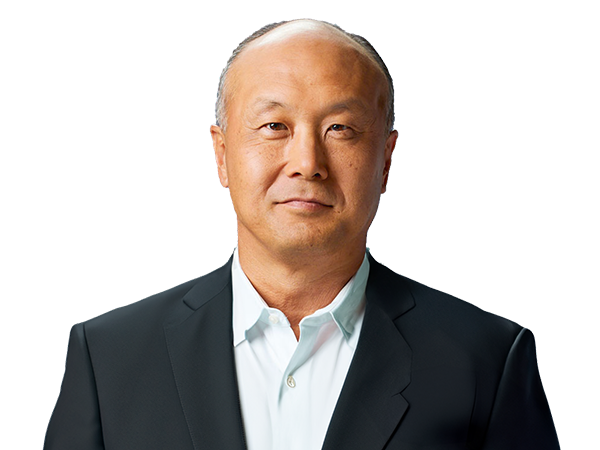
The Jersey Shore wasn't just a vacation destination. For Frank Lee, it was a classroom. Early in his pharmaceutical career, he drove up and down that coastline making sales calls - not because he had to, but because he wanted to understand how drugs reach patients. That instinct - go where the friction is, learn what's actually happening - still runs everything he does.
Lee became CEO of Pacira BioSciences in January 2024, stepping into a company already known for EXPAREL, a bupivacaine liposome injectable suspension that provides extended postsurgical pain control without opioids. What he brought was the conviction - and the 5x30 strategy - to transform Pacira from a commercial-stage specialty pharma company into something more ambitious: a fully integrated innovative biopharmaceutical organization by 2030.
"We are at an inflection point. By aligning innovation, access, and patient education, we can reduce unnecessary opioid exposure and fundamentally change the pain management paradigm."
- Frank D. Lee, CEO, Pacira BioSciences
The opioid crisis is not abstract to Lee. Four out of five heroin misusers started with prescription painkillers. Youth prescribed opioids before high school graduation face a 33% increased risk of misuse by age 23. These are not statistics that live in a policy brief on his shelf. They are the reason he took the job.
Before Pacira, Lee spent three years turning Forma Therapeutics - a small biotech on the edge of launching its first drug - into a clinical-stage powerhouse. He appointed Dr. Wayne Frederick, the president of Howard University and a patient living with sickle cell disease, to Forma's board. He hired a Chief Patient Officer with 25 years of sickle cell experience. He called the culture "the science of giving a damn." In October 2022, Novo Nordisk paid $1.1 billion for what he built.
Before Forma, Lee spent 13 years at Genentech, rising to Senior Vice President and overseeing global product sales of $11 billion across immunology, ophthalmology, and infectious disease. He shepherded oncology drugs like Herceptin and Xeloda. He made contrarian bets - including deprioritizing a lead drug candidate that would have been second-to-market, redirecting resources to a higher-risk, higher-potential molecule. He was right.
His path to pharma was not a straight line. He came to the United States from South Korea and studied chemical engineering at Vanderbilt University. He almost went into petrochemical refining. Then an Eli Lilly recruiter gave a campus talk and changed the trajectory entirely. "What if we could do it in one year and not 10?" he once said about accelerating drug development timelines. He has been asking that question ever since.
"The path of least resistance isn't always the right one."
- Frank D. Lee
At Pacira in 2026, the flagship EXPAREL product grew 7% in volume in Q1 - a direct beneficiary of the NOPAIN Act, which Lee championed and which took effect in January 2025. The Act mandates Medicare reimbursement for non-opioid pain medications at ASP plus 6%, removing cost as a barrier for surgery patients. Total Q1 2026 revenue hit $177 million, up 5% year-over-year.
But the real bet sits in the pipeline. PCRX-201, a gene therapy for knee osteoarthritis, has received FDA Regenerative Medicine Advanced Therapy (RMAT) designation - the first gene therapy in its class to earn this status. Phase 2 data shows that a single intra-articular injection provided sustained improvements in pain, stiffness, and function for up to three years. Topline Phase 2 Part A results are expected before the end of 2026.
In February 2025, Pacira acquired GQ Bio Therapeutics GmbH, adding a novel high-capacity adenovirus (HCAd) gene therapy vector platform to its toolkit. It is the kind of calculated risk Lee has made his career on: move early, move toward the science, don't wait for someone else to define the category.
Lee currently serves as a Director of Bausch Health Companies (NYSE: BHC) and as an Advisor to Lightstone Ventures. He holds a BS in Chemical Engineering from Vanderbilt and an MBA from the Wharton Graduate School of Business. He lives in San Francisco.