At Standard Steel, the warning concerned a bearing. It was beginning to lock on a wheel press boost pump, a small component with an outsized job. Had the pump failed, maintenance engineer Andrew Boyer explained in a Fluke customer account, the entire wheel mill production line could have stopped. A vibration sensor helped the team catch it. The drama was in what did not happen.
- Fluke Reliability combines machine monitoring, maintenance software, and repair tools.
- Its bet: an early warning becomes more valuable when it creates an assigned job.
- Buyers still need people, parts, and a plan to turn that warning into uptime.
That quiet outcome explains Fluke Reliability better than a catalogue of sensors. Factories already contain machines that make noises, systems that record readings, and people who know something is wrong. The difficult passage is between knowing and doing. Who checks the warning? Which part needs ordering? When can production spare the machine?
A bearing meets a calendar
Fluke Reliability works across that passage. eMaint supplies the computerized maintenance management system, or CMMS: the place for assets, work orders, spare parts, and maintenance history. PRÜFTECHNIK supplies alignment and condition monitoring equipment. Azima DLI contributes vibration diagnostics and remote analysis. Together, they give maintenance teams a route from a physical symptom to a scheduled intervention.
Standard Steel had reconsidered its previous vibration provider because of cost and value, according to the published account. Azima helped the team understand the diagnostic portal as well as installing equipment. Fluke reports that three critical asset failures were averted within a month. Boyer’s explanation of usability is revealing:
“I’m no vibration specialist, but this is simple enough that I can read it and understand what’s happening.”Andrew Boyer, Standard Steel
The purchasing lesson is quite practical. A technically capable system must also make sense to the person who receives its warning. Training belongs in the buying decision alongside the sensor specification.
Three purchases, one industrial argument
The familiar Fluke name goes back to John Fluke’s founding of the parent business in 1948. The present reliability portfolio took shape much later. Fluke acquired eMaint in 2016, PRÜFTECHNIK in 2019, and Azima DLI in 2023. Each acquisition supplied a different part of the maintenance job.
The sequence matters because ownership alone does not join a workflow. In July 2025, Fluke announced full integration between eMaint and Azima’s Watchman Services. Machine-condition findings and recommendations could flow directly into work order management, creating a ticket and assigning action to a facility manager.
For a maintenance buyer, that is the distinctive proposition: instruments, diagnostic interpretation, and the system that coordinates repairs under one portfolio. It sits between enterprise software and the physical business of keeping rotating machinery working.
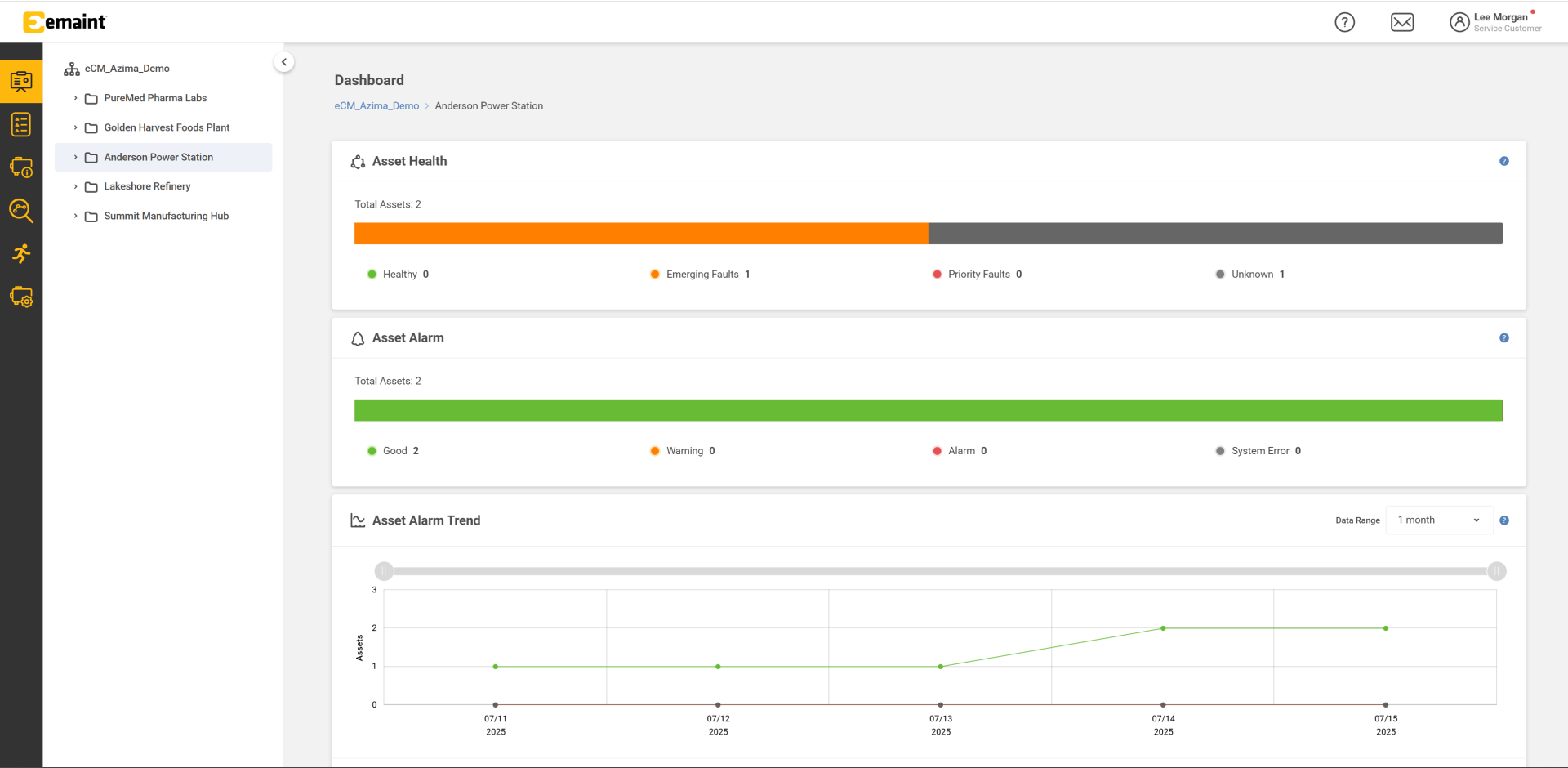
The dashboard still needs a wrench
The product range includes wireless vibration sensors, online monitoring such as VibGuard, and remote diagnostic services. eMaint’s current condition monitoring offering describes prioritized recommendations and automatic work order triggers. This is useful for teams whose machinery needs specialist attention but whose payroll cannot stretch to every kind of specialist.
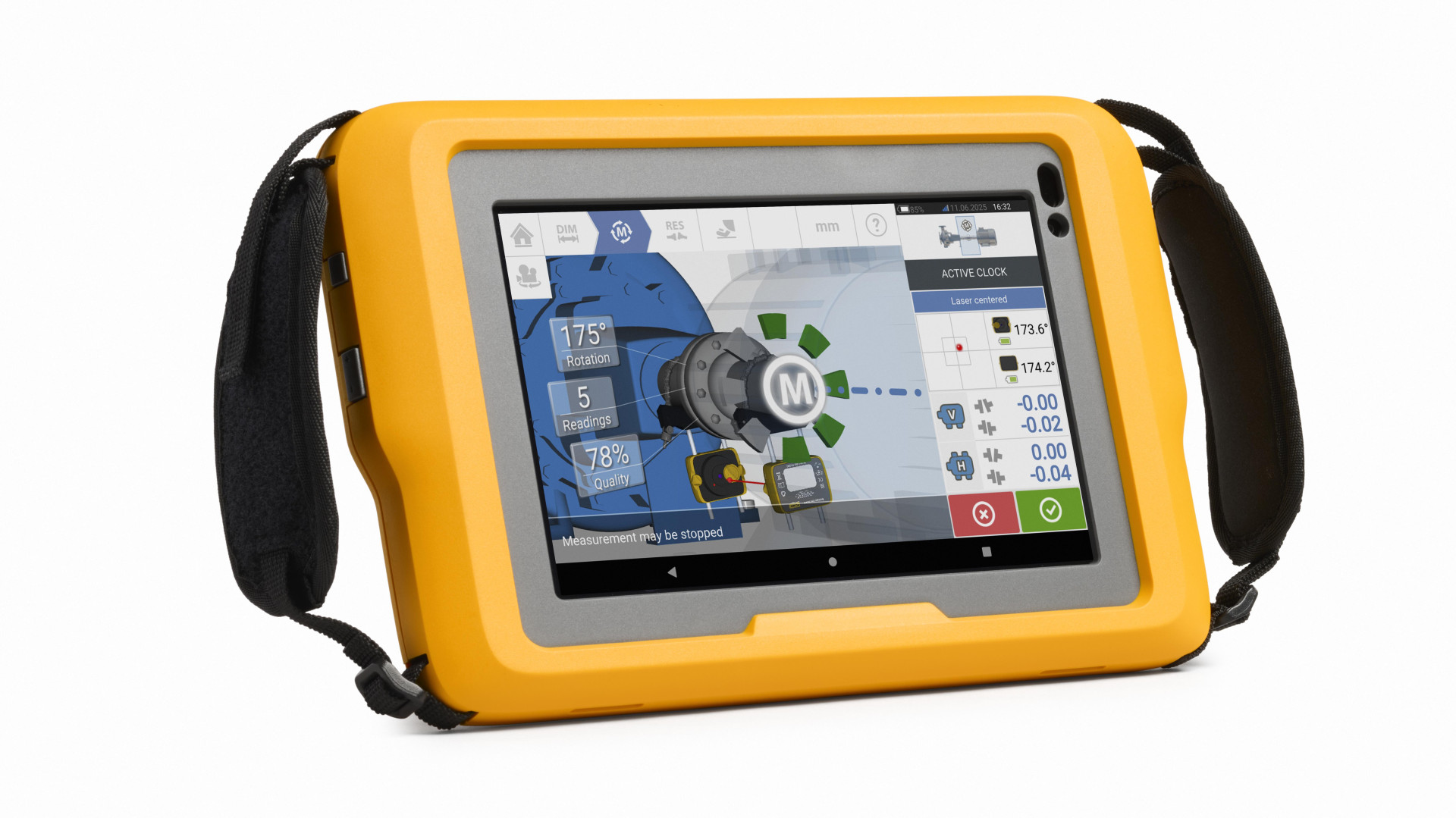
There is also the correction itself. RotAlign instruments help technicians align shafts. The Core and Elite models announced in March 2026 use single-laser, dual-detector technology. Elite adds video replay so users can review a measurement and remove disruptive readings without repeating the alignment. The ambition is concrete: spend less time taking the same measurement twice.
Software continues to expand too. In March 2026, Fluke announced beta eMaint functions for asking questions of maintenance data, generating procedures from technical documentation, and creating work requests from voice messages. Those were beta capabilities for selected customers at announcement. They address familiar friction: finding instructions and recording what needs doing.
The surrounding services matter for adoption. eMaint University supplies online learning, while Xcelerate brings maintenance practitioners together for training and discussion. A buyer can ask a useful question during a demonstration: can a new technician follow this workflow with the instruction we can realistically provide? The answer affects how quickly software becomes part of the shift, and how often people return to their old spreadsheets.
Put the savings in the right column
The customers are organizations with expensive equipment and consequences when it stops: manufacturers, utilities, facilities operators, and maintenance contractors. eMaint advertises 150,000 users in 116 countries. In another published example, JLL began using Azima analysis at one managed site before expanding to five.
A building materials manufacturer offers a larger financial illustration. Across a 13-facility predictive maintenance program, Fluke reports 637 hours of avoided downtime and approximately $8.1 million in avoided downtime costs over six months after adopting Azima. The company combined diagnostics with monitoring and alignment equipment.
Downtime avoided over six months.
Vendor-reported customer result; not a forecast.
That figure describes an avoided operational loss. Net return requires subtracting software, equipment, services, implementation, and internal labor. A buyer can copy the measurement discipline: establish the cost of a stopped line, record interventions, and compare the full program cost with credible avoided losses.
The commercial model combines hardware sales, software subscriptions, and services. eMaint’s current Professional and Enterprise plans use prepaid annual commitments, with three-user and five-user minimums respectively. Implementation and on-site training can add cost. The relevant budget is the deployed maintenance program.
Start where a stoppage hurts
Alternatives overlap in different places. IBM Maximo addresses enterprise asset management; SKF offers condition monitoring. Fluke’s appeal is the connection across those activities. Buyers should test that connection against their existing systems and the particular machinery they need to protect.
The practical inference from these examples is to begin with critical assets, assign responsibility for alerts, and test whether the recommended repair actually gets completed. Vibration monitoring needs a relevant mechanical signal. Even an accurate diagnosis will have limited value if parts are unavailable or nobody can schedule the work. Fluke Reliability’s proposition rests on making that whole chain function. The bearing is merely where the story becomes audible.