The interesting number in Fellow Barber’s origin story is forty. In New York in 2006, Sam Buffa saw a choice that seemed unnecessarily cruel: a neighborhood haircut for about $12, or a salon appointment starting around $90. Those figures come from the company’s account of its beginnings. Buffa wanted another possibility. His first shop charged $40. It offered a considered haircut in a barbershop, with a walk-in waitlist. Apparently, he was not the only person who had been looking.
- The opening: professional barbering in the space between budget cuts and salon prices.
- The extension: Fellow haircare, sold in shops, online and through other retailers.
- The useful lesson: teach the service, demonstrate the product, and respect the customer’s time.
Buffa’s entry point was unusually literal. As he told The Manual, the first shop occupied the back of Freemans Sporting Club. A conversation with the restaurant’s owner about a clothing store became a conversation about haircuts. The opportunity was small enough to fit behind another business, yet substantial enough to produce queues. Fellow Barber began with a frustration its founder shared with his customers.
A gap you could put a chair in
The original proposition had three parts: price, competence and atmosphere. A customer wanted to look good without making an occasion of it. The shop supplied the familiar rituals of barbering with a wider stylistic brief. Fellow’s account of the market was its own, rather than a census of every New York barber. Still, the $40 price explains its positioning more clearly than any adjective about luxury.
Today the service menu includes fades, longer cuts, beard trims and straight-razor shaves. A standard haircut is listed as taking 30 to 45 minutes; shampoo, a hot towel and styling are available upon request. This is a practical purchase for someone who wants help translating a haircut into an everyday routine. It competes with independent barbers and salons through the combination of skill, service and setting.
The queue charged its own fee
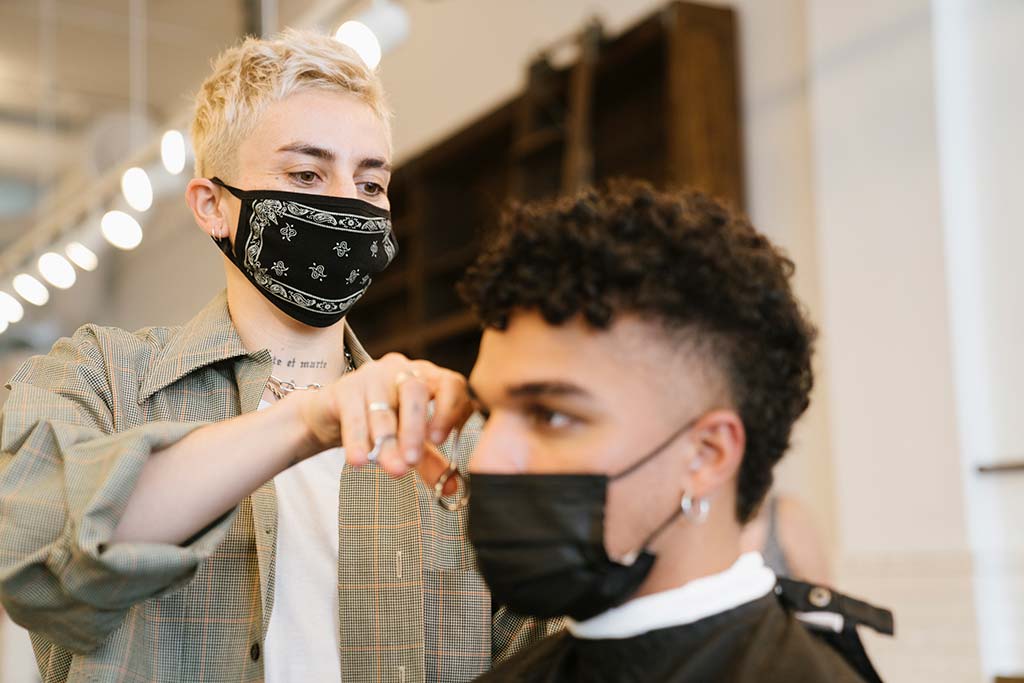
Early customers sometimes waited one or two hours, The Manual reported in 2021. A long line is excellent publicity until you are the person standing in it. Fellow eventually adopted appointments. The inconvenience is documented; the precise internal moment that changed the policy is not. What matters for the customer is the resulting ability to choose a time rather than surrender an afternoon.
Growth introduced less picturesque problems, too. Boulevard’s customer case study describes a need for reporting across shops and useful client records. Fellow became a customer in March 2020. Later automated campaigns, including birthday messages and outreach to lapsed clients, were credited with more than 1,000 appointments in one July. That is a vendor-reported result, not proof that every appointment was incremental. The mechanism is nevertheless sensible: remember people before asking them to return.
The haircut has to survive the bathroom
A haircut leaves the shop looking finished. The next morning, its owner is alone with a mirror. That interval is where Fellow’s retail business makes sense. The barber can show a customer what a product does, how much to apply and how to distribute it. A sale then follows an observable result. In its 2022 Barber Evo interview, Fellow stressed staff product knowledge and teaching clients how to use their purchases.
The expanded Fellow range arrived in July 2019. Summer Wash is a gentle cleanser pitched for warmer weather; Winter Wash is a non-foaming formula aimed at cold-weather dryness. Their listed prices at the time of writing are $29 and $33. Styling Cream, at $28, offers light hold and a little shine. These are premium everyday purchases, supported by advice rather than mystery.
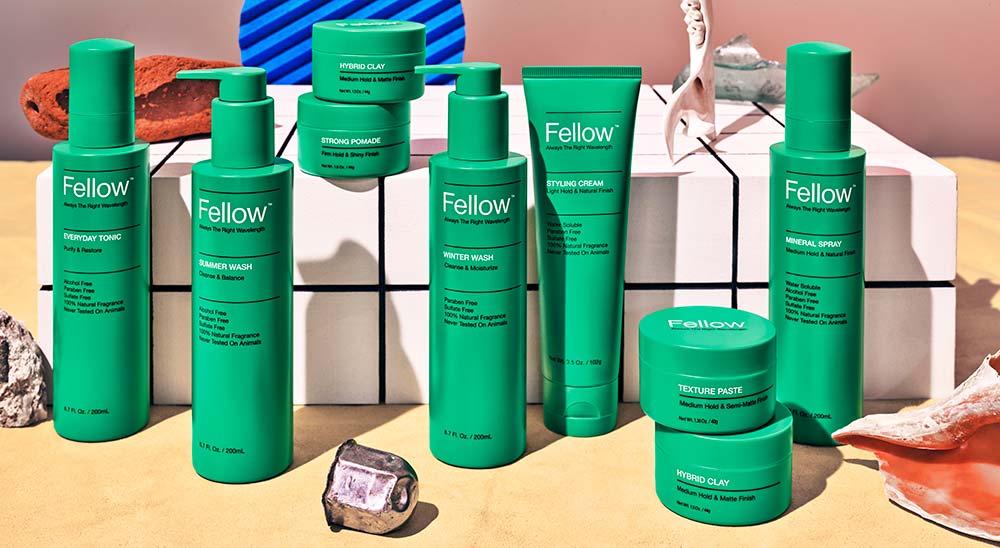
Mineral Spray adds sea salt and algae to the styling cupboard; the brand’s site records its 2019 Esquire grooming recognition. Retail also carries the business beyond its chairs. Fellow offers wholesale to other barbershops and retailers, naming Nordstrom and Saks among its distribution partners. A customer need not live near a Fellow shop to buy the products.
The customer corrected the label
There is a pleasing twist in the packaging story. RoAndCo created Fellow Barber’s identity in 2013, drawing inspiration from vintage oil and paint cans. By 2019, Buffa returned with evidence that the products appealed beyond men. The redesign concentrated on the name Fellow. The company had learned something about its audience that its original category could not accommodate.
That is a useful instruction for anyone selling a product: watch who actually buys it. Fellow’s barbershop roots explain its expertise, but they need not limit the people who use a cleanser or styling cream. The broader audience emerged from the product’s use, rather than an abstract declaration that everyone was a target customer.
Six chairs that were there to teach
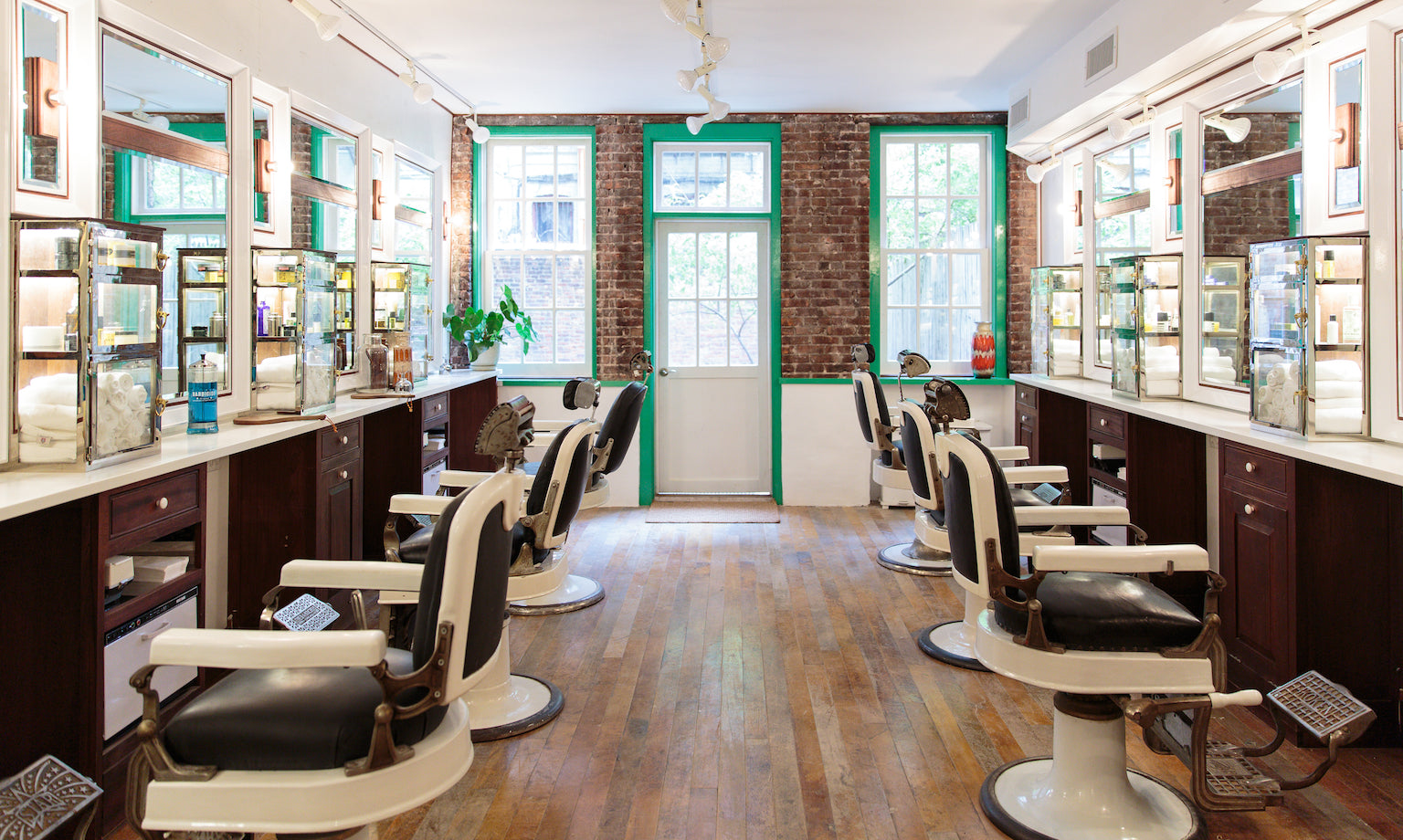
Expansion creates a particular difficulty for a craft business. The next location needs another set of capable hands. At its Hudson Yards flagship, opened in May 2022, Fellow allocated fourteen chairs to the shop and six to training. The company’s careers page also advertises a free ten-week apprenticeship for newly licensed barbers, alongside continuing education.
14 service chairs + 6 training chairs
Training had physical space in the business.Barbers are commission-paid employees; Fellow says it does not rent chairs. Training, progression and benefits options form part of its employment offer. The implication is straightforward: a consistent experience depends on making skill repeatable. Interiors can vary. Customers still need the person holding the scissors to know what they are doing.
“We’re a neighborhood shop and we should reflect the neighborhood.”Sam Buffa, WWD, May 2022
A local room with a larger back office
The pandemic exposed the vulnerability of a business requiring physical proximity. Fellow closed during lockdown; its 2022 WWD interview described an uneven recovery. In July that year, an agreement with Sortis Holdings joined Fellow with Rudy’s under shared infrastructure while retaining separate brands. The announcement placed Buffa in charge of both. The rationale included capital access, operations and education.
The live directory now lists eight Fellow shops across New York, Los Angeles and San Francisco, compared with twelve in 2022 reporting. For a prospective customer, the live booking page is the useful map. For another operator, the lesson has limits: a price gap needs enough local demand, trained staff and repeat visits. Attractive packaging cannot compensate for an inconvenient appointment or an indifferent cut. Fellow’s most portable idea remains modest: find an everyday frustration, solve it visibly, then show people how to keep the result.