In October 2013, a vending machine appeared in a Chicago food court between a McDonald’s and a Dunkin’ Donuts. It wore reclaimed wood and plants. Inside were salads in jars. On its first day, people gathered around it as if someone had brought a curious animal into the building. They had questions. Eventually, they bought lunch.
- Fresh meals, sold through more than 2,000 refrigerated Fridges nationwide.
- One Chicago production system feeds machines in hospitals, airports, campuses, and workplaces.
- The difficult business is predicting lunch, keeping it cold, and arriving before it runs out.
Founder Luke Saunders had spent enough time traveling for work to recognize an odd imbalance. Finding packaged snacks was easy. Finding vegetables required planning. His company, Farmer’s Fridge, would put those vegetables where people already were. The proposition was wonderfully literal: improve the thing inside the vending machine.
The food court was the laboratory
Saunders first considered supplying health clubs with fresh food. That pitch found no takers. Building a machine from scratch looked expensive, too: engineering quotes reached roughly $500,000 for a prototype. He adapted existing vending equipment instead. Of his $25,000 in savings, about 85% went toward that first machine.
The setting mattered. Here were people who could choose familiar fast food and chose a jar of salad instead. Saunders had evidence of demand, though his cooking needed work. Early customer research exposed a gap between enthusiasm for the convenience and enthusiasm for the recipes. He hired a chef.
“That’s when I gave up my title as the recipe developer and hired a chef.”
Luke Saunders, founder and CEO
That decision is easy to miss in a story about technology. A convenient lunch still has to taste good. Today’s menu reaches beyond salad into bowls, sandwiches, wraps, breakfast, and snacks. A Shawarma Spiced Chickpea Wrap and a Steakhouse Chopped Salad address rather different appetites. The company says local and organic ingredients are used when possible, rather than across the entire menu. Buyers should also check individual allergens: the kitchen handles ingredients including peanuts, milk, wheat, fish, and sesame.
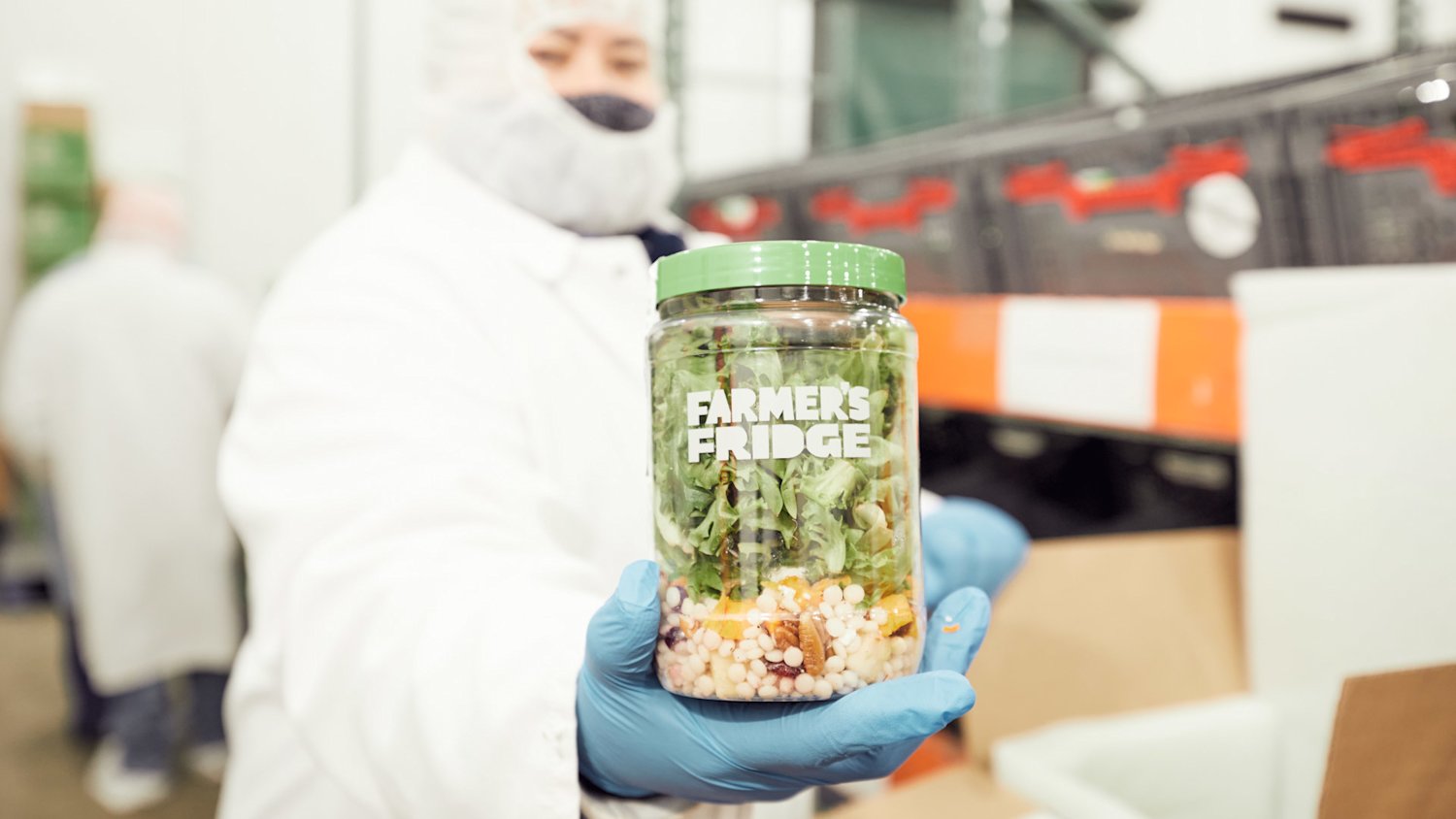
A kitchen with thousands of front doors
The customer meets a touchscreen. Behind it sits a food manufacturer and a delivery operation. Recipes pass through a test kitchen and shelf-life testing before production. Kitchen employees wash, chop, and portion ingredients. Refrigerated transport carries finished meals toward a network whose smallest storefront needs no cashier.
Drivers are essential. They replenish food, remove aging items, clean machines, and collect returned jars for recycling. Their app tells them what each location needs. The stocking mix changes with local demand. An airport and an office lobby can draw from the same menu while receiving different quantities.
- 01MakeChicago kitchen
- 02MoveRefrigerated delivery
- 03MatchStock to local demand
Sales inform the next delivery. Freshness limits what can be sold.
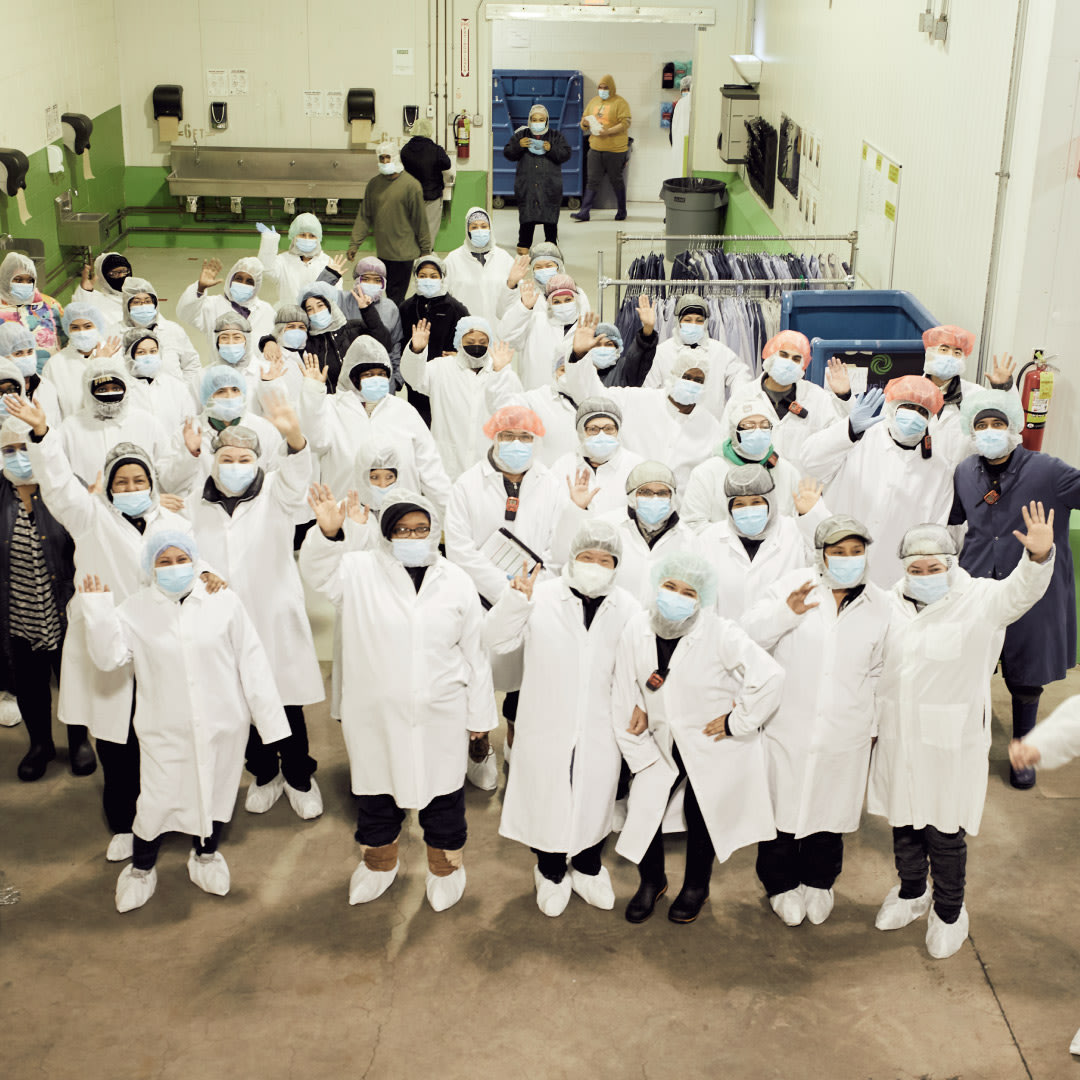
Food safety also shapes the company’s stated culture. Its published values put employee dignity alongside product quality and describe practical problem solving as a team habit. In the kitchen, the company says it favors internal promotion and provides benefits and employee meals. These policies belong in the story because the machine sells the work of people the buyer never meets.
The machine also knows when to refuse a sale. Food beyond its designated freshness window disappears from the available menu. Temperature checks run every five minutes; a temperature problem triggers an alert and locks vending. Those controls help address the obvious hesitation about buying lunch from an unattended box.
The expensive part is being there
Farmer’s Fridge earns money from individual meals and wholesale sales to retailers. It remains privately operated and does not franchise its machines. Institutional buyers can request a Fridge for a building, giving staff or visitors a food option without assembling a restaurant operation.
The hardware is real capital. Custom machines cost about $10,000 each, according to January 2026 reporting. Salads averaged about $8 at most vending locations, with airports higher. Those are reported benchmarks, not a universal menu price. Installation, food production, servicing, and waste all sit behind the sticker.
Outside investment helped finance expansion. Innovation Endeavors led a $30 million round in 2018, with investors including Finistere Ventures, Cleveland Avenue, and GreatPoint Ventures. The investment thesis depended on using sales data to match perishable supply to demand, then serving locations that could not justify restaurant overhead.
Below 20 items in a Fridge, Saunders says traffic drops 80%. An almost-empty machine can send the next customer elsewhere.
Founder’s observation, reported January 2026. Not a controlled experiment.When the customers stayed home
In early 2020, the location strategy hit a wall. Offices, campuses, and airports emptied. Saunders reported an approximately 85% revenue drop. The supply chain still existed; its usual customers were elsewhere. Within weeks, the company launched home delivery and wholesale programs.
Survival required money as well as ingenuity. A $2.6 million Paycheck Protection Program loan helped keep the business afloat. But the delivery detour brought its own friction: acquiring customers became increasingly expensive, and margins were difficult. The original home-delivery program ended in December 2022 as the company refocused on Fridge expansion.
Wholesale gives the company a second kind of customer: the retailer buying food to put on its own shelf. Target and Amazon Go appear among the partners named on the company’s website. That arrangement extends the reach of the kitchen without requiring every sale to pass through a Farmer’s Fridge machine. It also makes the company harder to place in a single aisle: part prepared-food brand, part vending operator, part supplier.
That was a decision about distribution. Retail partnerships offered another destination for the kitchen’s output. The company’s current website also advertises home-delivery boxes, illustrating how channels can return in a different form. Its defining operation remains the network of fresh-food machines.
Make the good choice the nearby choice
For a traveler or hospital worker, the useful move is simple: check nearby Fridges and live stock in the app, reserve a meal, then collect it. The app includes nutrition and allergen information. Building access still matters; a machine’s availability does not make a locked workplace public.
For a property manager, the decision starts with a less romantic checklist: a visible, busy spot, 14 square feet, a standard power outlet, wireless connectivity, and a budget. A quiet corner with spare electricity is not automatically a lunch business. The machine needs to sit along the path of people who want to eat.
The transferable lesson is to test convenience beside real alternatives, listen when customers dislike the product, and keep distribution flexible. The limits follow directly. Too little foot traffic leaves perishables waiting. A missed cold delivery or poor inventory forecast undermines the promise. A salad chain such as Sweetgreen, a cafeteria, and a convenience store compete for the same lunch occasion; Farmer’s Fridge competes by bringing a prepared meal closer. Someone still has to get it there.