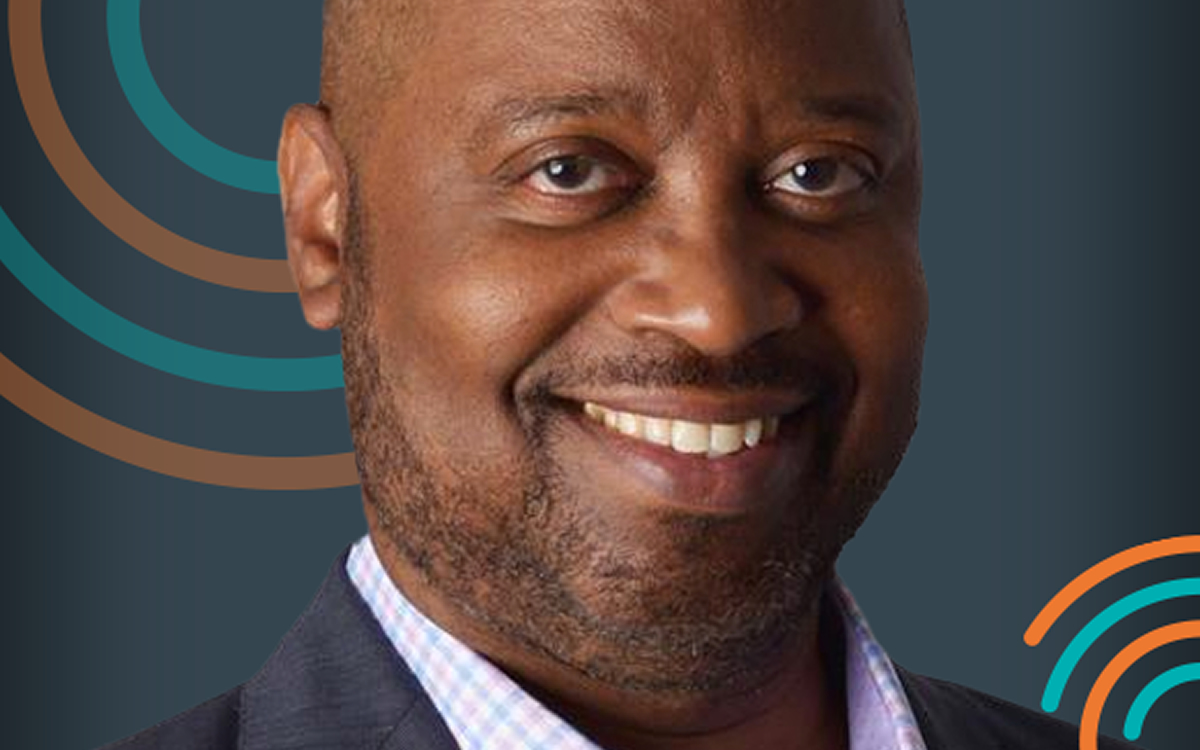
Everett Hamilton Jr. was running an event-planning business when he began to see another profession inside it. Bringing people together also meant communicating with them. Public relations offered a way to pursue that part of the work. He became a founder of Octane Public Relations and Advertising in Washington, a city where an invitation can carry nearly as much meaning as the speech that follows.
There is a useful business story in that small adjustment of perspective. A career can change because someone spots a connection between tasks already on the desk. The company name changes. The underlying question survives: how do you get people to participate?
Hamilton’s subsequent work has taken him through community organizations, corporate assignments and political communications. In June 2026, it brought him onto the board of Destination DC. Put those settings beside one another and a pattern emerges. Much of his career has involved organizations trying to explain themselves to people who have other things to do.
The work before the words
An event is an unusually candid medium. People attend or they do not. They talk to one another or watch the clock. The organizer can declare the occasion a success, but the empty chairs are entitled to their own opinion.
That makes Hamilton’s starting point useful for understanding the agency he leads. Octane’s current services still include events and community engagement, alongside brand strategy, creative work and digital marketing. The practical work of convening people has remained part of the business.
Consider what happens before anyone hears a message. Someone has selected the language, the setting and the way an invitation travels. Each choice makes participation easier for some people than for others. A communicator is already shaping the audience before the first sentence of the presentation.
Octane’s approach puts research at the beginning of an assignment. It considers the audience’s behavior, the surrounding institutions and the cultural context. For Hamilton, that provides a professional setting for the connection he noticed in event work. Getting attention is one task. Giving people a reason to stay involved takes further thought.
A Washington education, in several rooms
Hamilton attended Washington and Lee University from 1983 to 1987. His listed activities include Sigma Nu, Mock Convention, the Reeves Center and the Multicultural Student Association. Fraternity life, politics, arts and student organization work appear together in that brief account of his college years.
They offer a more interesting introduction than a degree alone would. These are settings in which people organize around different interests and expectations. They also provide a reminder that a communications career can draw on experiences outside a communications classroom. Knowing the subject and understanding the people in the room are separate accomplishments.
His later civic service included chairing the Edgewood/Brookland Family Support Collaborative board and serving as vice chair of the DC Citywide Collaborative Council. He also served on a tourism LGBT marketing committee. In 2018, DC Black Pride recognized Hamilton and Octane with its Small Business Award.
His other former appointments included the Marriott Customer Diversity Advisory Board and the DC Housing Finance Agency. Hospitality and housing put different obligations around the same broad subject: the people a city serves. These roles give the business biography a local geography, extending beyond the clients on an agency roster into institutions that shape how Washington works.
The community roles matter to the portrait because they place him inside organizations with responsibilities beyond a campaign. A board member has to think about what an institution can do, whom it serves and how it keeps its commitments. Those questions can make the word “community” rather less abstract.
- 1983–87Washington and Lee University
- 2018DC Black Pride business recognition
- 2026Destination DC board appointment
Two new projects, one practical test
The corporate side of Hamilton’s work becomes concrete in Octane’s relationship with PHI/Pepco. During 2021, the client expanded the agency’s assignments. Hamilton described the change with a sentence any small-business owner could appreciate.
“They added two new projects.”
Everett Hamilton, on expanded work in 2021
The agency supported the development of Grow Together and What Drives Us?, programs concerned with workplace inclusion and community impact. The assignment included giving related efforts a shared identity. Octane had also supported corporate responsibility reporting.
There is an organizational problem hidden in work of this kind. Separate activities can be worthwhile while remaining difficult to explain together. Employees may recognize their own part of the effort without seeing the relationship to someone else’s. A useful identity gives people language for that relationship.
The commercial detail matters, too. Expanded work from an existing client can provide continuity for a small firm. Hamilton’s account links the relationship to Octane’s ability to keep going through an unsettled business period. The client needed communication; the agency needed assignments it could deliver. Corporate purpose still arrives with a scope of work.
Back to the room
In 2022, Octane created CONTACT, a Black media cannabis summit in Washington, in cooperation with Black CannaBusiness. The project brought the agency back to an event, with a particular professional audience in mind.
The creative direction began with research into that audience. The visual identity used bright colors and a focus on media and community. It is an example of the decisions that follow when a creative team asks whom an event is for before deciding how it should look.
The agency’s later recognition included a 2023 MarCom Platinum award and a 2024 AVA Gold award for the Black CannaBusiness brand refresh. Those are team credits. They belong in the story of the company Hamilton leads without turning every designer’s contribution into a personal trophy for the CEO.
That October, the agency also announced a marketing and outreach partnership with the Black CannaBiz Expo & Conference in New Orleans. The stated assignment included social media and media relations, connecting an event’s physical gathering with the conversations around it.
For a former event planner, the continuity is easy to appreciate. The room remains important, but its boundaries extend into the material people see beforehand and the discussions they carry away. An event gives a message a date and a place. Communication gives people a way to encounter it beyond the registration desk.
The business behind the public face
By 2023, chief operating officer Marcelle Brawner and a small operations team were handling daily business functions at Octane. Hamilton could devote more attention to direction and client relationships. “I have to constantly source for new business,” he said.
It is a short sentence with a considerable workload attached. Founding an agency does not retire the need to find its next assignment. Nor does finding that assignment settle who will carry it out. The public face of a business depends on people doing less public work.
A visual interpretation of the responsibilities Hamilton described in 2023.
Octane’s federal supply schedule makes another part of the business visible: government purchasing. It identifies Hamilton as the company’s contact and describes a range of professional services. Behind the creative work sits the machinery that allows a public institution to buy it.
That combination is a useful corrective to the glamorous picture of agency life. Ideas need contracts. Contracts need delivery. A business can have an excellent point of view and still require someone to keep an eye on the calendar. The less photogenic responsibilities have an impressive attendance record.
Industry awards reported by Octane across its work. An agency total, earned by its teams.
When connections draw attention
Washington relationships can also attract scrutiny. Hamilton managed communications for Muriel Bowser’s first mayoral campaign. In June 2019, Octane appeared among the proposed subcontractors in the District’s sports-betting arrangement, which drew criticism over the connections between participating businesses and city officials.
The proposed overall contract was worth $215 million. That was the total arrangement, not Octane’s fee. Council member Mary Cheh publicly questioned the plan and indicated that she was prepared to oppose it.
This episode belongs alongside the community appointments and client work. It shows the different ways a professional network can be understood in a city where business and government overlap. Relationships may help people find collaborators; public contracts invite questions about how opportunities are distributed.
For a communications founder, that is a particularly direct encounter with the public’s judgment. The agency can become part of a story it did not originate. A career spent helping organizations explain themselves can include moments when the organization needing explanation is one’s own.
Now the room is a city
Destination DC announced Hamilton among its new board members on June 24, 2026. The organization markets Washington as a destination for conventions, tourism and special events, with attention to the city’s arts, culture and history.
The new board cohort also included NoMa BID president Maura Brophy and RASA co-founder Rahul Vinod. A neighborhood organization and a restaurant business bring their own views of the destination. Their presence helps explain the institution’s range: selling a visit involves people whose working lives occupy different parts of the city.
It is a fitting new setting for his earlier tourism committee experience. The assignment concerns how people encounter a place before arriving, what they expect to find and which experiences become part of their understanding of it.
A city presents a communicator with an abundance of material and a shortage of space. Familiar sights help visitors recognize it. Neighborhoods, businesses and cultural institutions give them reasons to keep looking. Choosing what to emphasize is an editorial act with practical consequences for the people hoping to welcome them.
Hamilton’s career has brought him repeatedly to that choice: who belongs in the picture, and how to invite them in. He began with events. Now one of his board responsibilities concerns the city in which he built the business. The guest list has become considerably more complicated.
Continue the conversation
- Octane: the company
- Everett Hamilton Jr. on LinkedIn
- Destination DC board announcement
- 2018 DC Black Pride recognition
- 2023 business interview
- 2018 Business of Pride profile / video page
- Exelon’s 2021 business report
- CONTACT: creative portfolio
- 2019 contract reporting
- Black CannaBiz partnership announcement