Barbara Martin was under her desk, trying to work out a crisis communications plan for a vodka client in Europe. Elsewhere in the same office, her team was waiting for her to lead a meeting. The problem was rather more awkward than a scheduling conflict. The meeting belonged to her day job. The client belonged to the business she was building on the side.
She had accumulated seven clients while still employed, making trips from Chantilly into Washington during lunch breaks to see reporters or deliver products for photographs. The arrangement had reached its natural limit. In her later telling, she quit the following day. Entrepreneurship sometimes arrives with a business plan. In Martin’s case, the decision arrived when the desk became an absurd place to conduct business.
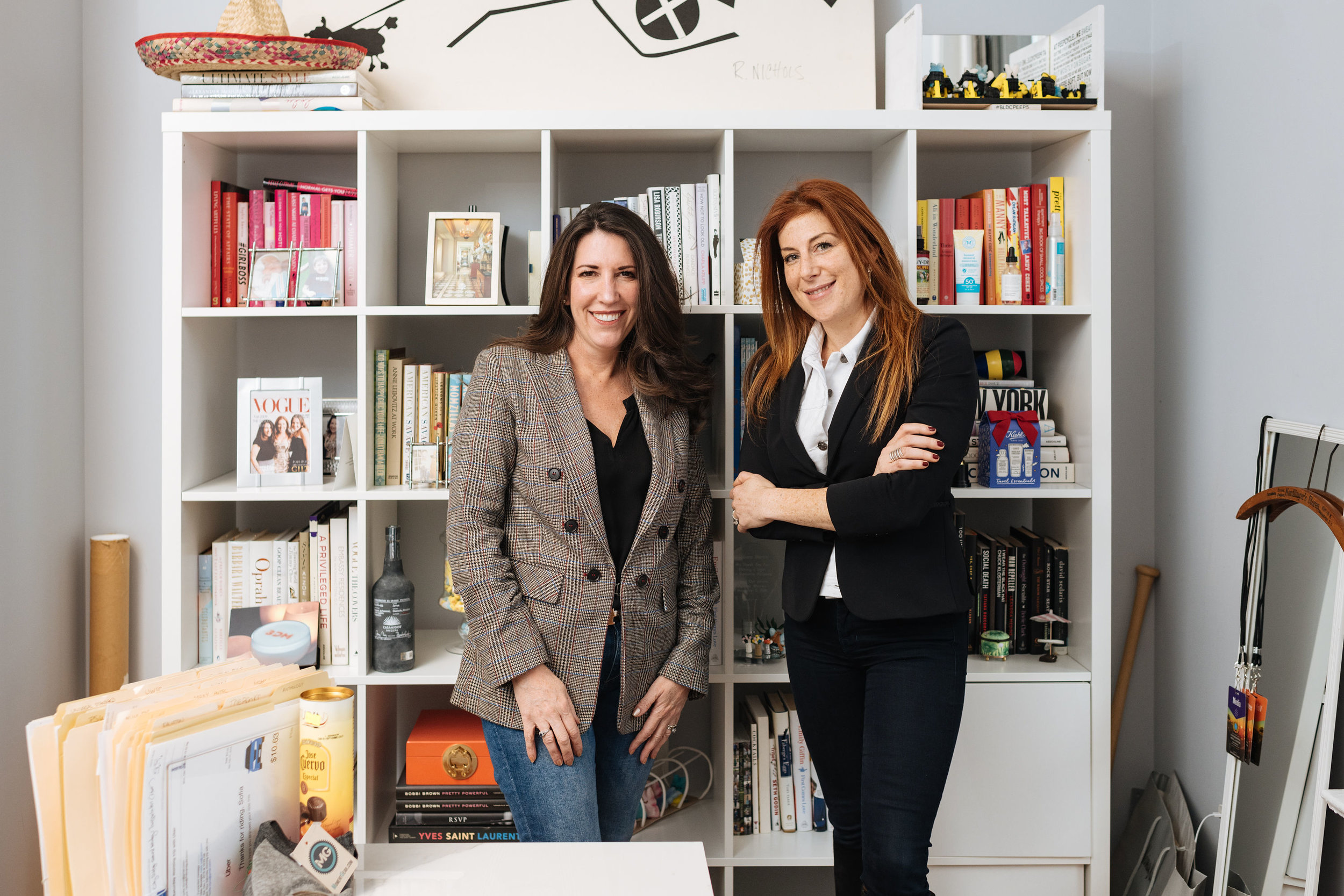
Today, she is co-founder and co-CEO of The Brand Guild, the Washington and New York communications and marketing agency she started with Jayne Sandman in 2010. Its work includes public relations, marketing, creative and events. But a list of services gives only a partial view of Martin. Her career is also a story about choosing collaborators, keeping relationships alive and finding a use for professional skills outside the office.
An audition among the clothes racks
Before there was an agency, there was the District Sample Sale. Martin and Sandman were among its founders, along with Mary Amons, Shannon Haley and Liberty Jones. The inaugural sale took place in fall 2006. It put local boutiques, designer bargains and charitable fundraising into the same room. By the spring 2011 edition, shoppers were supporting E.L. Haynes Public Charter School while making their way through clothes, shoes and accessories from more than twenty participating boutiques and designers.
The charity assignment gave Martin and Sandman a chance to see each other work. They had not known one another beforehand. That matters in a business where knowing people is supposed to be half the job. Here, the useful knowledge came from making something happen together. The sales racks offered a practical audition: a shared undertaking with enough moving parts to reveal whether a partnership might function.
Their temperaments did not match neatly. Martin tends toward boundaries and the immediate problem; Sandman is more inclined to say yes and look further ahead. Martin’s description of the difference is wonderfully economical: “I’m very today, and Jayne thinks nine steps ahead.” Someone has to see the distant turn. Someone also has to notice the furniture in the way.
The W Washington DC became an early agency client. It was a consequential account for a young firm, giving the partners substantial work from the outset. Their brief was connected to the Washington they wanted to help describe: a city of restaurants, hotels, shops and creative businesses, with a social life extending well beyond official functions. They were building a business in the capital while helping other businesses become part of its daily life.
Sixteen years is a different kind of headline
A launch gives a publicist a date to work toward. A long client relationship offers fewer convenient endings. There is another assignment, another audience, another change in the business. The Brand Guild’s record makes that less photogenic part of the job worth examining. Its client roster has repeatedly included Room & Board, Sweetgreen and other brands across successive years, alongside new accounts.
Martin’s affection for Room & Board is particularly apparent. She has described the furniture company as a partner since 2010 and credited it with teaching the founders about running their own business. Recently, she celebrated its founder John Gabbert’s appearance on How I Built This with Guy Raz, recalling a pitch pursued since 2018. That is a long time to keep a story in mind. Persistence acquires a less romantic appearance when measured in calendars.
The agency’s 2023 account of its growth describes building capabilities as clients needed them. It also describes new business coming mainly through referrals. Those two ideas belong together. A client who has already trusted an agency with one problem may bring it the next; someone who likes the answer may recommend it elsewhere. Growth then becomes partly a question of whether the team can expand its expertise without making the relationship feel newly unfamiliar.
By 2025, that expansion included affiliate marketing, connecting earned coverage with trackable revenue for clients such as Jeni’s Splendid Ice Creams and Floura. The agency also worked on Sweetgreen’s Ripple Fries launch, using a media preview, tastings and take-home gifts. These are recognizably different tasks. One asks what a piece of coverage produces. Another asks how a new product becomes an experience worth talking about.
Martin and Sandman establish the agency.
BrandLinkDC becomes The Brand Guild.
The founders receive Inc. recognition.
The name change in 2018 acknowledged a business that had outgrown its original description. BrandLinkDC became The Brand Guild as the firm expanded its geographical reach and services. The word guild made room for different specialists working toward a common purpose. A new name is easy to announce. Coordinating the people it describes requires considerably more maintenance.
In 2026, the agency’s work spans furniture, food, spirits and commercial real estate, with new clients including Graza, Museum of Ice Cream and Spindrift. It expanded its MGP Ingredients relationship to cover the branded spirits portfolio and corporate communications. Martin remains one of the two executives responsible for making this collection of assignments into a functioning company. The variety supplies opportunity; it also supplies a rather crowded to-do list.
The office gets a vote
Martin’s recollections of the early office are less polished than a founder photograph. She and Sandman shared a desk above a 7-Eleven. She remembers cold-calling reporters and arranging the details of openings. She also remembers Sandman’s loud typing, which is the sort of detail a sixteen-year partnership earns the right to preserve. A business can change its address. A good complaint travels.
In 2024, the Washington team moved into a 10,600-square-foot Georgetown space previously occupied by The Wing. About fifty employees moved from a smaller M Street office. The agency also had a New York office, opened in 2018. The Georgetown move gave the founders more than additional floor area: it gave them an opportunity to choose the surroundings in which their colleagues would spend their working days.
Martin identified flexible space, daylight and a lively neighborhood as priorities. Those choices fit a business whose departments need to work together. There is a practical difference between saying collaboration matters and arranging an office where people can actually collaborate. The floor plan cannot settle a creative disagreement. It can at least make it easier to find the person with whom to have it.
“Five years from now, we’ll be leaning into platforms that don’t exist today.”
Barbara Martin, 2024
The agency has also described professional development stipends and a desire for employees to have full lives outside work. In 2022, it outlined an internal diversity committee, outreach to historically Black colleges and universities, and company-matched charitable donations. These are specific attempts to shape who joins the company and how people participate once there. They make workplace culture a matter of decisions, rather than an adjective attached to a recruitment page.
In March 2026, Martin publicly celebrated a Washington Business Journal Best Places to Work recognition, emphasizing employee reviews. The distinction matters to her because the judgment came from inside the company. A publicist is accustomed to persuading an audience. Colleagues have the advantage of seeing what happens after the presentation.
A garden that asked people to join in
At Glen Echo Park in Maryland, Martin found another kind of neglected story: a crumbling stone fountain obscured by weeds. It dated to a miniature golf course built in 1959. She began planting it in 2020 and nicknamed it Beeler Fountain after her friend Stephanie Beeler. Sandman supported the effort, bringing their partnership into a setting where the work involved soil rather than a client brief.
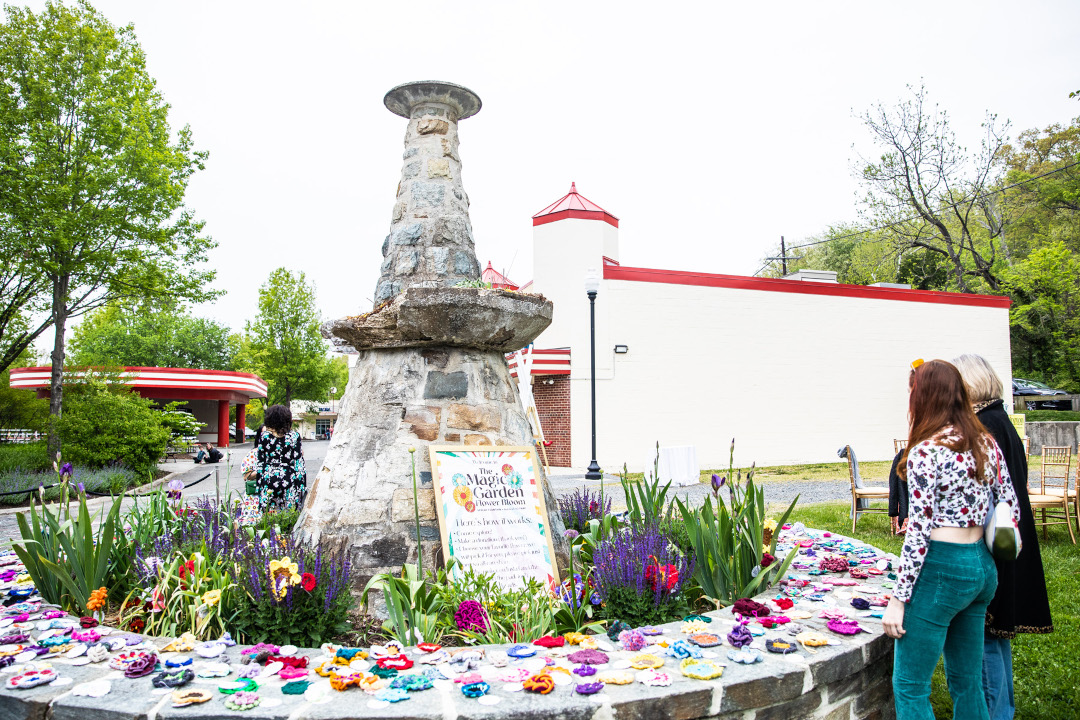
In May 2022, Martin and five friends, calling themselves the Secret Magic Garden Society, staged the Magic Garden Flower Bloom. Nearly a thousand crocheted flowers decorated the fountain and a white oak sapling. After a brunch, the garden opened to the public; visitors could choose a flower in exchange for a donation. The fundraising effort had reached $70,000, supporting clearing, stabilization and native planting. The invitation gave people an object to take home and a place to return to.
Her involvement continued through larger park fundraisers. Martin and John Martin chaired the 2024 Gala in the Park, which brought guests into the historic Bumper Car Pavilion and Spanish Ballroom and added a disco dance party. In 2025 they joined Marsha Ashley and Dhani Jones as gala co-chairs. The theme was A Midsummer Night’s Dream. Historic buildings do occasionally deserve an evening with better lighting and dancing.
Raised over two years, the achievement highlighted in Martin’s 2026 Inc. founder profile.
By 2026, the park partnership’s board materials listed Martin as vice president. Her Inc. Female Founders profile highlighted the fundraising achievement. The recognition ties her professional identity to a public place: an arts destination, an architectural landmark and a site with civil rights history. Her skills have found a second setting, with benefits that can be visited.
What remains after the party
Martin’s career offers several measures of a successful gathering. There is the launch that introduces a business, the charity sale that tests a partnership, the office that brings specialists together and the garden that invites strangers to participate. Each has a different purpose. Each also depends on people choosing to spend time with one another.
The enduring thread is the work afterward. Clients stay. A partnership develops its own jokes. A fountain gets flowers, then repairs, then another fundraiser. Sixteen years after founding an agency, Martin is still involved in making those continuations possible. Opening night has its charms. There is also something to be said for the person who keeps caring about the room.