For months, the software sat there, purchased and stubbornly unhelpful. Evan Liang’s team at Caring.com had brought in Marketo, the marketing automation platform, but getting it to work with Salesforce proved another matter. The company lacked specialists to run it. Data and processes needed attention. A purchase meant to make work easier had become a substantial piece of work itself.
Liang would later describe spending six to nine months sorting out the problems. The experience supplied a question with commercial possibilities: how many other companies were buying these tools and discovering the same mess? There is a particular indignity in acquiring automation and then doing its homework. Liang knew that indignity from the inside.
In 2012, he and Kelvin Cheung founded LeanData. Its early product tackled duplicate records; matching leads to accounts and routing them followed. The premise was practical: help information reach the people who could act on it. Liang’s career has kept returning to that gap between having a system and making it useful. In 2026, a new venture, Pareto Agent, brought him back to the same question with different technology.
Before the pitch, the apprenticeship
Liang first encountered entrepreneurship from a seat at Battery Ventures. He had an engineering background and went straight into venture capital after college, listening to founders explain what they intended to build. It was an education in possibility. The dot-com bust supplied an education in consequences.
Working on troubled companies during that period, he discovered that he liked the pace of operating. Ideas had to survive contact with decisions, cash constraints and unfinished tasks. His attraction to entrepreneurship grew through the business of repairing things. It is an origin story with fewer dorm rooms and considerably more adult supervision.
His subsequent experience included business development at Microsoft, where he helped launch the Xbox 360, and product management at eBay, focused on the buyer experience. He earned an MBA from Northwestern’s Kellogg School of Management, graduating in 2006; his undergraduate degree was in industrial engineering at Stanford. Those stops exposed him to different parts of a transaction: the product, the marketplace, the partnership and the capital behind it.
At Shasta Ventures, he evaluated investments and supported portfolio companies, helping the firm decide to invest in Caring.com. He later joined that business as a vice president and general manager. The move put him inside a company he had helped assess from outside. Eventually, its unfinished integration project would give him a problem worth taking elsewhere.
A company hiding in the cleanup
The Marketo episode mattered because Liang had to solve it before he could turn it into a pitch. The opportunity came with the memory of implementation: what broke, what took time and what improved when the pieces finally worked together. That experience gave the proposed business a more demanding test than an attractive market slide.
He took the idea to a venture-capital mentor and connected with Cheung. Their backgrounds complemented one another. Cheung had founded Wertago, a mobile-app business that won Google’s Android Developer Challenge; at LeanData, he became responsible for the application’s design and architecture. Liang brought the operating problem and the work of explaining why someone should pay to solve it.
The product’s progression tells a story about attention. Removing duplicate records addressed one frustration. Understanding which account a lead belonged to addressed another. Sending that lead to the appropriate person made the information actionable. Meeting scheduling extended the path into a conversation. The company expanded by following adjacent customer problems rather than stopping at its first useful answer.
- CleanRemove duplicate records
- ConnectMatch a lead to an account
- RouteFind the right owner
- MeetTurn interest into a conversation
Twenty customers, one salesman
Liang sold LeanData’s first 20 customers and handled customer service himself. He had no background in either function. That arrangement offered an unusually direct feedback loop: the person making the promise also heard about the trouble when it failed to land. Job descriptions could catch up later.
One of those customers was Vendavo. When the original supporter of LeanData left, Bruno Trimouille inherited the account without knowing what the software did or why the company needed it. Liang drove to Trimouille’s office on Middlefield Road to explain in person. It was an ordinary meeting with a long afterlife.
By Liang’s 2024 account, Trimouille had become a LeanData customer three times across different companies and was CMO at Litera. The two also appeared together in a buying-groups session at MSP Live, held on a docked boat. Enterprise software occasionally gets a change of scenery; apparently, the handoffs follow it aboard.
The episode makes a customer relationship tangible. A contract can outlast its original champion, but its purpose may need to be explained again. Liang’s early work involved that patient translation. The connection with Trimouille suggests how a founder’s first sales calls can travel farther than the accounts recorded in the original pipeline.
Sold by Liang, who also handled customer service.
Hiring faster than the answers
Growth did not arrive as an uninterrupted sequence of good decisions. In 2018, Liang described a sales hiring push made ahead of fundraising. LeanData brought in representatives before it had worked out a repeatable sales approach for each of them. Quotas went unmet, numbers were missed and layoffs followed.
That admission lends weight to his interest in process. A company can add people while leaving the hardest operating question unresolved: what, exactly, enables each person to succeed? Headcount is easy to count. Readiness demands a more awkward examination of how the work actually happens.
He was equally specific about another hiring lesson in 2018. He would have paid closer attention to the sequence and backgrounds of executives at each stage, and brought in a product marketer earlier. LeanData waited until its fourth or fifth year to make that hire.
Both reflections concern timing. There is a moment to add capacity and a moment to clarify the job. Founders are asked to distinguish them while the business keeps moving. Liang’s willingness to discuss those decisions gives his career more texture than the usual tidy itinerary of employers, funding and growth.
Giving the backstage crew a room
LeanData also became a gathering point for operations professionals through OpsStars. At its 2025 keynote, Liang looked back on an event that began in a small restaurant during Dreamforce. The idea was to make room for the people doing the operational work behind sales and marketing.
By its tenth year, the event offered a place to discuss buying groups, post-sale processes and AI alongside practical workshops. The company describes an OpsStars community of more than 5,000 people worldwide. For a founder whose first product grew out of implementation trouble, that audience makes sense: these are the people who discover whether a business process works after the presentation ends.
His own learning has also been social. Kellogg’s 2013 alumni notes record that Liang and VoloMetrix founder Ryan Fuller formed a small group to exchange practices and tips as first-time founders. It is a modest detail, but a useful one. Even people selling a better way to organize work need somewhere to ask how to organize their own.
The title he chose to hand over
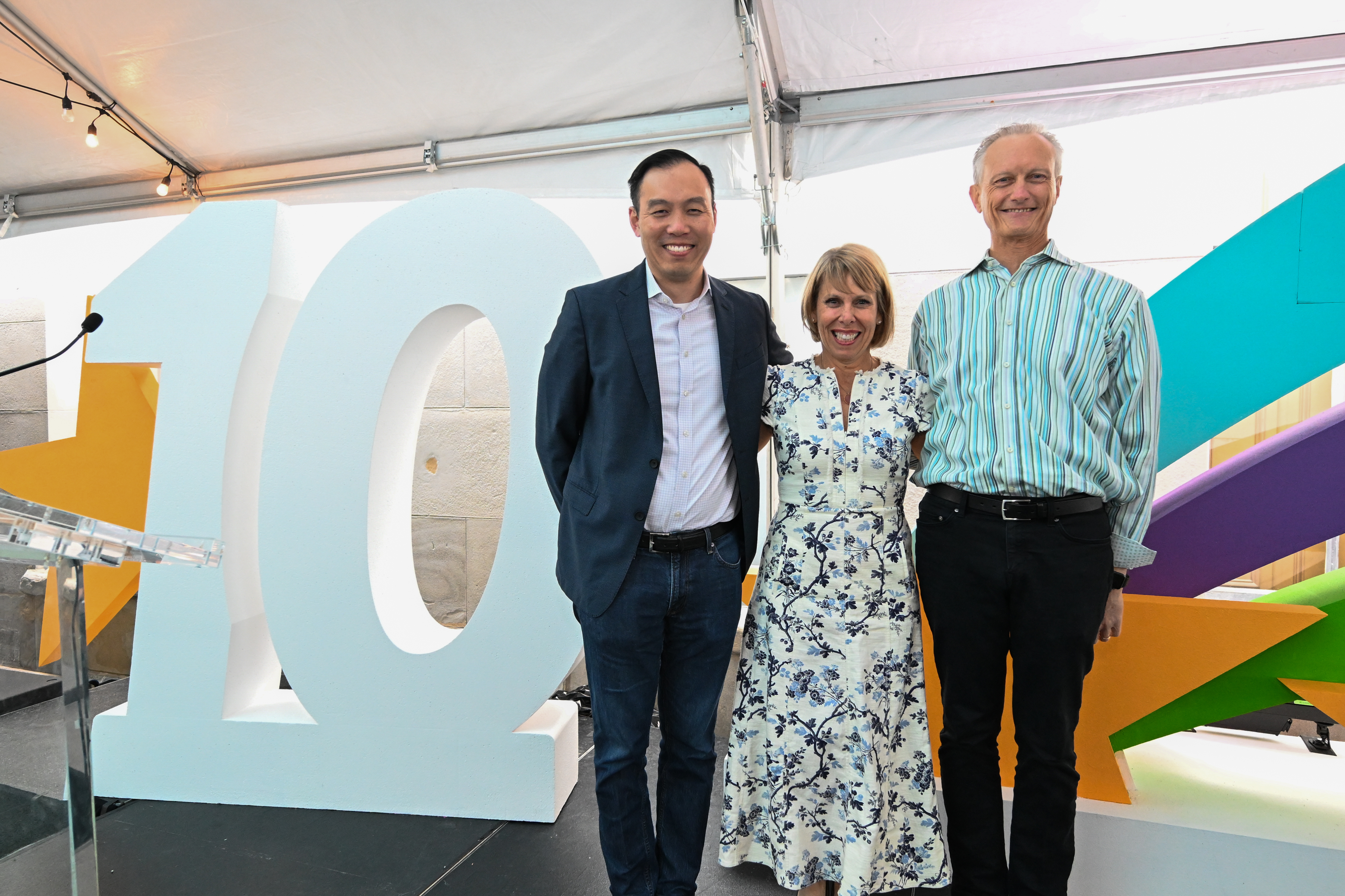
On July 22, 2025, LeanData appointed Katy Keim CEO, following Liang’s move to chief strategy officer. Keim arrived with experience running LQ Digital and leading marketing at Lithium Technologies and ServiceSource. The change placed a different operating background at the head of the business.
Liang explained the decision with unusual clarity: “I never aspired to be a public company CEO.” In his announcement, he described his enduring interest in building products, teams and cultures. He would remain on the executive team and support Keim as she took over.
It is a revealing distinction between an ambition and a title. Building a company can mean choosing who should run its next stage. By then, LeanData reported more than 1,000 customers. The founder had enough history with the business to know that continuity might require a change in leadership.
There was continuity in the people, too. Jim Bell, LeanData’s marketing chief at the 2025 keynote, introduced Liang as the person who first sold him LeanData in 2015 and hired him in 2024. A former buyer was now helping explain the company to other buyers. The early customer conversations had become part of the organization itself.
“I never aspired to be a public company CEO.”Evan Liang, July 2025
The next problem still looks familiar
Liang’s interests extend beyond software. Asked in 2024 what he would study with a free year, he chose economics and World War II history. He also identified Ravi Mohan, his first boss at Battery Ventures, and David Hartwig as longstanding mentors and friends. His career’s changes have occurred alongside relationships that stayed.
In 2026, he publicly introduced Pareto Agent, working with CTO Maurizio Greco. Liang said the venture had closed more than $3.5 million in pre-seed funding in January, naming returning backers and familiar colleagues among its supporters. The announcement set out an ambition to reduce friction in business buying through AI agents.
Pareto’s current product focuses on renewals, particularly smaller accounts that can be expensive to cover with a conventional sales team. It describes agents that prepare account plans, develop proposals and negotiate within a company’s rules. Those are the company’s stated capabilities; the ambition is to make attention economical across more of the customer base.
The connection to the visit on Middlefield Road is hard to miss. A customer’s champion leaves. Someone must establish context again, explain value and keep the relationship moving. Liang once drove over to do that work himself. He is now building around the possibility that software can take on more of it. The task remains recognizably human: help the next person understand what happens next.
- 2012Co-founds LeanData with Kelvin Cheung
- 2018Publicly reflects on sales and marketing hiring lessons
- 2025Moves to strategy as Katy Keim becomes CEO
- 2026Introduces Pareto Agent