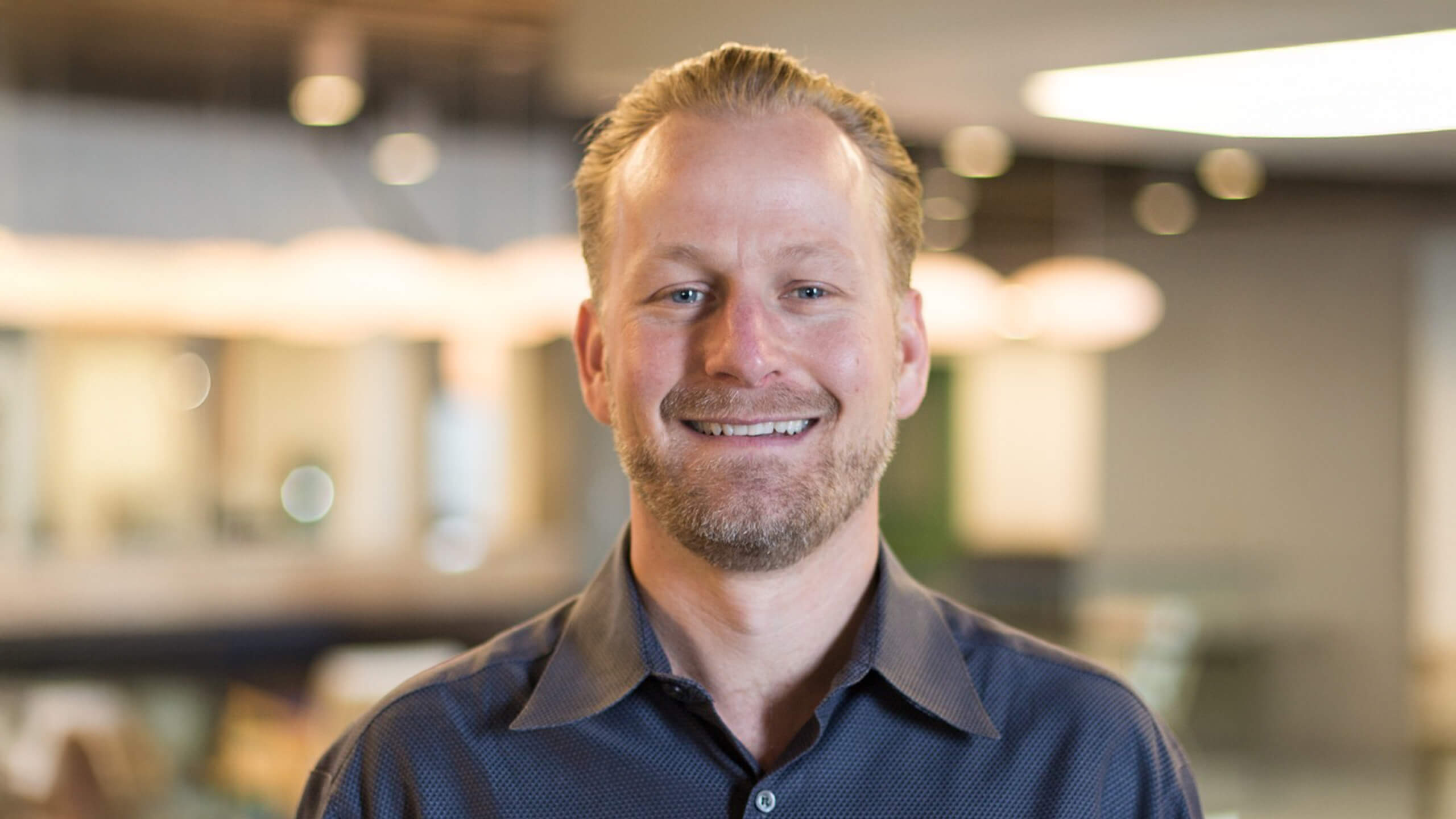
The Architect Who Shows His Work
In November 2024, when Andreessen Horowitz introduced its newest General Partners, the announcement included a phrase that doesn't get used lightly in Silicon Valley: "defied gravity." That's how David Ulevitch, managing partner at a16z, described Andy McCall. Not "built strong teams." Not "delivered results." Defied gravity - as if the rules of organizational physics bent around him on the way to two revenue miracles.
McCall's origin isn't what you'd expect of a VC headliner. He didn't found a company or code a breakthrough product. He joined Meraki in 2009 as Vice President of Worldwide Sales, when the company was selling something the market didn't yet have a language for: cloud-based network device management, subscription model, SaaS billing, the whole package - years before enterprise buyers trusted putting their infrastructure on someone else's servers. His job was to convince them anyway.
He did. By the time Cisco acquired Meraki in 2012, McCall had grown the sales organization from single-digit millions in annual revenue to several hundred millions. The arc was steep, the timeline short, and the product category barely existed when he started. McCall's contribution wasn't just the numbers - it was the gospel of cloud networking he preached to enterprise buyers who were skeptical down to their server rooms.
The Second Act Nobody Saw Coming
Most careers peak once. McCall started a different kind of company in 2017. Samsara was building IoT solutions for industries that digital transformation had largely overlooked - trucking fleets, construction sites, cold-chain logistics. The kind of operations where "enterprise software" meant a clipboard and a radio. He joined as Chief Revenue Officer when revenue was, again, in the single-digit millions.
What followed is one of Silicon Valley's cleaner growth narratives. McCall built what observers inside and outside a16z describe as "an amazing go-to-market machine." By the time Samsara went public in December 2021 on the NYSE, McCall had taken the company from no-name startup to one of the most-watched IoT plays of the decade. He stayed on as CRO until July 2023, when ARR crossed the billion-dollar threshold. His exit came with a consulting agreement - Samsara didn't want to lose the institutional knowledge entirely even after he stepped back.
Two companies. Two different verticals. Two revenue trajectories from single-digit millions to the hundreds of millions or billions. Neither required McCall to be the CEO. That specificity matters: most VC firms have partners who scaled companies from the top. Far fewer can point to someone who orchestrated the go-to-market architecture from the CRO seat, at multiple stages of growth, in multiple technology cycles.
The EdD Nobody Talks About
Here's the detail that doesn't fit the standard VC biography template: between 2004 and 2007, McCall earned a Doctor of Education in Organizational Leadership from Pepperdine University's Graduate School of Education and Psychology. An EdD. Not an MBA. Not a JD. A doctorate in how organizations actually behave under stress, change, and growth. The kind of credential that signals someone spent three years thinking carefully about why teams succeed or collapse - and reading the literature about it.
It shows up in how he operates. Colleagues describe his leadership style as process-driven, structured, and deliberately accountable. He's known for going first in demos and prospecting exercises, setting the bar publicly before asking others to clear it. His philosophy on relationship-building is compound-interest logic: consistent, repeated helpfulness builds trust over a decade in ways that transactional wins never can. It's the kind of framework you develop when you've spent time reading Senge and Heifetz alongside quarterly targets.
What a16z Is Getting
McCall joined a16z in November 2024 alongside BK Roberts, focusing on the firm's American Dynamism and AI Apps funds. American Dynamism is a16z's thesis on revitalizing sectors that make America physically function - defense, manufacturing, aerospace, public safety, transportation. AI Apps is the consumer and enterprise software layer being rebuilt around large language models. McCall's operator background - especially Samsara's IoT penetration of physical industries - maps directly to both bets.
His role at a16z is explicitly board-level: providing go-to-market guidance, helping portfolio companies navigate the CRO decision, and advising on sales incentive design, enablement infrastructure, and organizational scaling. The pitch to founders is direct - and unusually credible. Most VC partners who offer GTM advice are speaking from the CEO seat or from pattern-matching across portfolios. McCall is speaking from the room where the quota was set, the comp plan was debated, and the pipeline was built from zero.
Earlier advisory roles included board membership at Indeni and advisory work with Highfive, Swarm (acquired by SpaceX), and Vectra AI - a portfolio of companies where his operator credentials translated into early-stage guidance before he formalized the investor identity.
On Modesty as Competitive Advantage
David Ulevitch, in his announcement, noted something that doesn't often make it into VC press releases: McCall's modesty. Specifically, that his extraordinary achievements are belied by how little he pushes them forward. In an industry where self-promotion is a survival skill and LinkedIn posts are personal brand instruments, that trait stands out.
The quiet architect. He built the revenue machines and let the numbers speak. The fact that those numbers included a Cisco acquisition and a NYSE IPO didn't seem to change the operating philosophy. Now, from the investor side of the table, the question is what McCall does with that credibility when founders bring him their messy, early-stage revenue problems - and he can say, without exaggeration, that he's held the exact chair they're sitting in.