Eric Schiermeyer had helped turn virtual farms into a business. By 2014, he was walking along the cliffs at Half Moon Bay, discussing a smaller company and a different way to divide the proceeds. His new studio, Luminary, had seven employees. He wanted them to share profits. After helping build Zynga, he had developed a particular suspicion of the promises wrapped around stock options.
The setting suited the conversation: a coastal path, away from the meeting room. Schiermeyer could explain what he wanted without a presentation intervening. A successful game could generate money; the people making it could receive some of that money promptly. The arrangement had a pleasing lack of ceremony. Getting rich someday is an excellent recruitment pitch. Getting paid has certain practical advantages.
That question of who receives the rewards runs through his career. At Zynga, he pushed for a better understanding of player behaviour. At Luminary, he reconsidered employee incentives. At Gala, which he co-founded in 2019 and leads as CEO, he has argued that players should hold transferable digital assets. The audience changes. So does the technology. The division of value keeps returning to the conversation.
The social network hiding inside a game
Before Gala, before the blockchain vocabulary, there was the internet business that became Intermix Media, parent company of Myspace. Schiermeyer was part of that earlier generation of online companies. His career crossed social networking before social games supplied his next large audience. These businesses were built around people coming back, finding other people, and having a reason to stay.
He helped found Zynga in 2007. Its games, including Zynga Poker, Mafia Wars and FarmVille, made playing with friends part of the daily traffic of social media. His work was in product and analytics: understanding what players actually did once the software was in their hands. The resulting business depended on a continuing relationship with an audience, rather than a single purchase at a shop.
One revealing detail is the way he remembered World of Warcraft. He saw the game as a social network as well as an entertainment product. A world could become a meeting place. People had reasons to return because other people were already there. That observation helps explain the bridge between his earlier internet work and Zynga: the game itself could organise a community.
There is a smaller, funnier bridge in his public recollections. When Take-Two bought Zynga, Schiermeyer remarked on LinkedIn that an earlier startup he had worked with had also been acquired by Take-Two. He suggested they might eventually have a chat, given their apparent taste for companies he started. Entrepreneurs often talk about pattern recognition. Occasionally, the pattern appears to be following them.
When the spreadsheet needs a game designer
Schiermeyer’s account of early Zynga contains a useful complication. He pushed for measurement, then became dissatisfied when measurement crowded out creative judgment. The argument was about how to combine the two. A designer could invent something worth playing. Data could reveal whether people agreed. Neither side benefited much from pretending the other had nothing to contribute.
In his telling, introducing analytics involved heated arguments, including one with an old school friend working on Zynga’s technology. Later, the pendulum travelled far enough for him to complain about product managers and their presentations. The advocate for numbers had become a critic of their ceremonial use. A dashboard, it turns out, can acquire all the mystical authority of the intuition it was supposed to test.
“I want to express something creatively.”
Eric Schiermeyer, 2014
His next venture offered a chance to try a different arrangement. Luminary’s proposed profit sharing made hiring a collective economic decision: another colleague had to improve what the team could produce. He wanted a small organisation with a clear relationship between its work and its rewards. The plan was ambitious in its commercial goals, while noticeably restrained in its enthusiasm for expanding the payroll.
He also described taking a two-year break after Zynga, travelling and doing enough remodelling to joke about his expertise. It is an oddly domestic interlude in a career usually narrated through companies and platforms. Houses provide immediate feedback of their own. A wall is either where you wanted it or it is an expensive conversation.
In 2013, he became an investor and adviser to Bee Cave Games, adding another route for working with game makers. His career between Zynga and Gala was therefore more varied than a neat leap from social games to crypto suggests. He was trying new teams and structures, carrying experience forward without simply reproducing the company he had left.
The player gets a place in the bargain
Gala extended the rewards question to the audience. In 2020, Schiermeyer described players trying to preserve value from years of time and money spent inside games. Selling accounts and items outside official systems could be an uncertain business. He saw blockchain records as a way to make ownership and transfers verifiable. Town Star, an early Gala farming game, gave that proposal a familiar landscape.
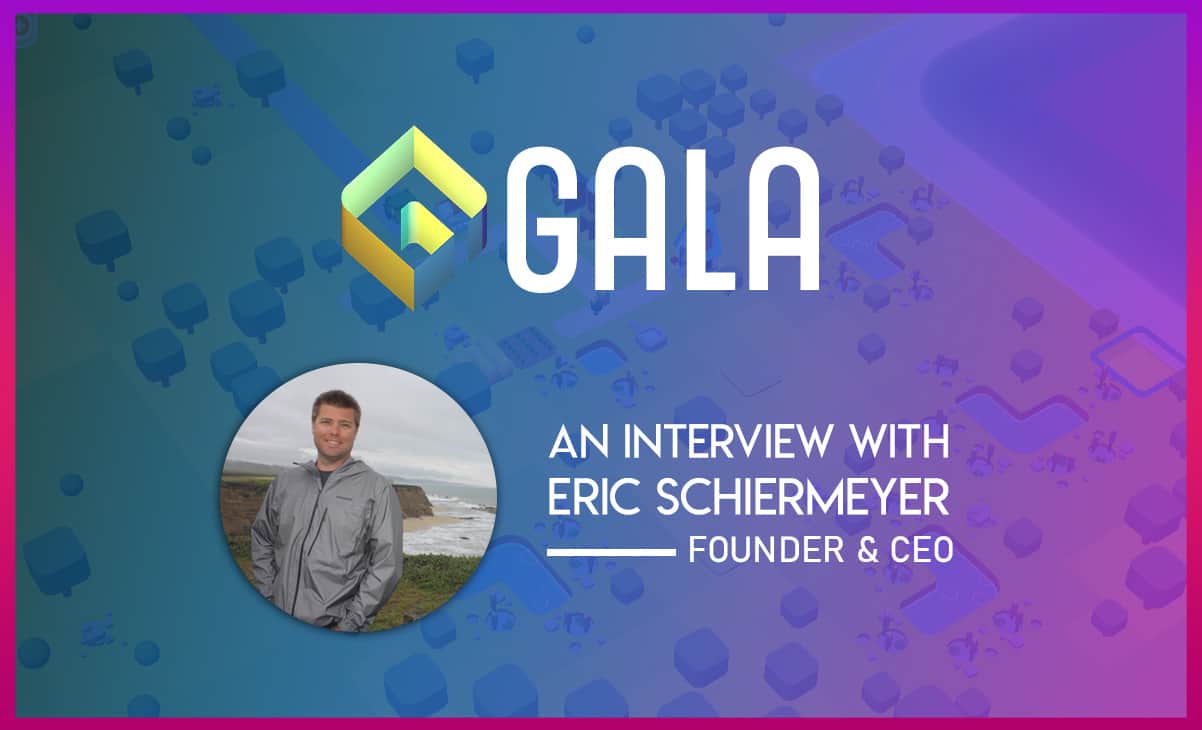
His recollection of childhood gaming was wonderfully physical: hours spent attempting to connect computers for multiplayer sessions, with cables and printer ports pressed into service. The original ambition had been to play together. By Gala’s early years, he was talking about what players could keep or transfer after participating. Both ideas begin with somebody wanting more from a game than its current arrangement allows.
That ambition has boundaries. A transferable item still needs a game in which it matters, people who want it, and rules that give it a purpose. Holding a digital asset cannot by itself keep the surrounding world interesting. This is an editorial distinction worth making when considering his proposal: a record of ownership answers one question, while enjoyable play answers another.
A reading of Schiermeyer’s successive business experiments, rather than a claim that their economics are identical.
Old colleagues, new doors
Gala’s development also followed relationships formed in earlier businesses. John Osvald, who had worked at Zynga, joined as president of games in June 2021. Osvald and Schiermeyer had previously founded Carnivore Studios together. Its projects included Clan HQ, a mobile messenger for gaming clans, and Rival 1v1, a platform for head-to-head competition. The shared interest in the social organisation around play was already visible.
Gala’s announcement placed its teams across several countries, including the United States, Canada, the United Kingdom, South Korea and the Philippines. That gives the company’s ambitions a concrete setting beyond a founder’s pitch. Making a platform means coordinating people, products and audiences across different places. The work of connecting them is less picturesque than the original idea, and considerably more persistent.
The circle widened beyond games. Leila Steinberg, known for her work with Tupac Shakur and Earl Sweatshirt, offered Schiermeyer advice on Gala’s music business before he asked her to build its team as president. Gala Music brought the company into questions of artist participation and fan relationships. The rewards argument now had a soundtrack, and a different group of professionals to persuade.
Schiermeyer’s interest in reaching ordinary users was explicit early on. He wanted Gala to attract people outside crypto. That makes ease of entry a useful measure of the project. The machinery behind a game may fascinate its builders; a player still needs a reason to start, a comprehensible first few minutes, and enough pleasure to return tomorrow.
Ownership comes with maintenance
The company has also provided difficult tests of its proposition. In August 2023, Schiermeyer and fellow founder Wright Thurston brought competing shareholder lawsuits. Schiermeyer alleged token theft; Thurston’s side alleged misuse and waste of company assets. These were opposing claims. In August 2024, a federal court denied True North’s request to install a custodian in place of Gala’s leadership. That decision addressed preliminary relief, rather than resolving every allegation.
The episode matters to a profile of Schiermeyer because a business promising more distributed participation still has directors, corporate assets and disagreements over authority. A ledger can record a transaction. It cannot eliminate a quarrel between founders. The company running the platform remains part of the bargain, however widely its digital items travel.
In September 2026, Gala reported an August attack involving unauthorised transfers from nine wallets. Its account identified a flaw in the relationship between what a signature covered and the operation executed. Gala described fixes to bind permissions more closely to actions, alongside additional controls. Its account also distinguished externally checkable claims from assertions resting on internal records. These remain the company’s reported findings.
Other changes show the less dramatic, continuing work of operating a platform. In October 2026, Gala announced a transition towards wallet-only access, with email login still available during the transition. That puts practical responsibilities alongside the ownership language. Access, approval and keeping control of an account become part of the player’s experience, rather than matters that can remain entirely behind the curtain.
A game still has to earn tomorrow
One of Gala’s more recent projects brings the story back to making something people can play. Gala Playworks lets creators describe a browser game, generate a working draft, test it and revise it. The company’s June 2026 guide concentrates on controls, scoring, failure and the feel of the first playable version. Reward options follow the particular game’s terms.
There is a recognisable discipline in that sequence: create, observe, change. It connects with Schiermeyer’s earlier argument that imagination and evidence belong in the same process. The tools have changed considerably since Zynga’s beginnings. The awkward question of whether a stranger wants another turn has survived every upgrade.
Schiermeyer has spent his career revisiting the terms on which people gather around software. Friends became players; employees became prospective profit sharers; players became prospective asset holders. Each arrangement asks for confidence in somebody else’s work. His next chapter will be written in those everyday decisions: whether a developer builds, whether a creator publishes, whether a player comes back. Even a farm with a deed needs somebody who enjoys farming.